A puppy’s first night in a work-from-home household should not be an all-night rehearsal for constant access to you. The practical goal is to give your puppy enough closeness to feel supported while introducing very small, calm periods of rest that do not depend on your voice, hands, or lap. For tonight, use a sleeping setup close enough that you can notice genuine needs; for tomorrow, protect only one or two short focus blocks and build from there.
This plan is intentionally narrow. It does not replace a complete puppy-safe-room setup or a full potty schedule. Instead, it helps you decide when to be close, when to pause interaction, and how to prevent your first workday at home from becoming a cycle of puppy requests and instant attention.
Compare the three first-night approaches
Working from home creates a special trap: because you are physically present, it is easy to respond to every movement, whine, or invitation to play. That can make the first night feel peaceful while quietly setting an unrealistic expectation for the next morning.
| Approach | What it looks like | Likely first-night result | Effect on tomorrow’s work |
|---|---|---|---|
| Constant access | Puppy is on your lap, follows every step, and receives attention whenever awake | May reduce protest in the moment | Makes meetings and focus time harder because your presence always predicts interaction |
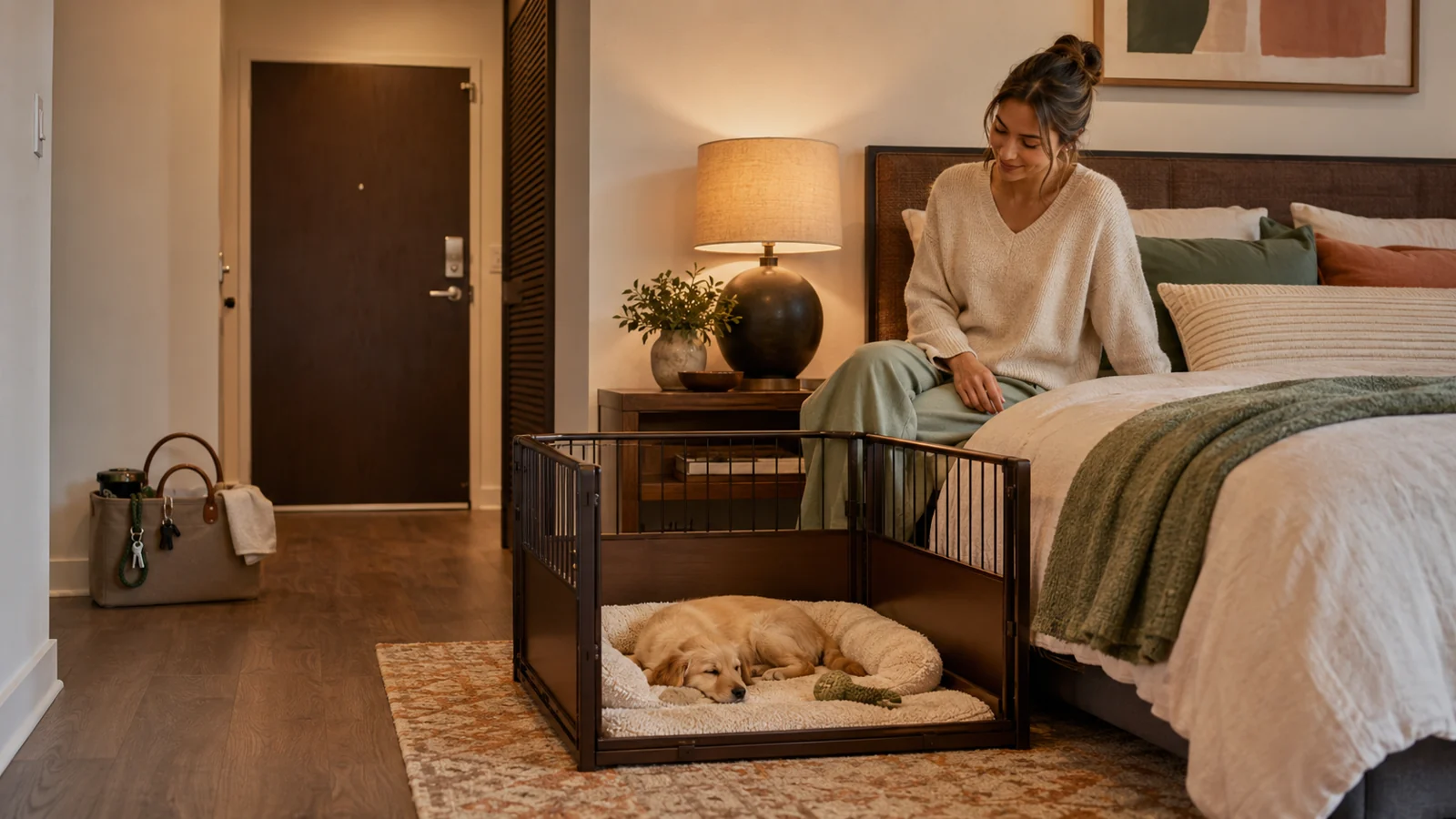
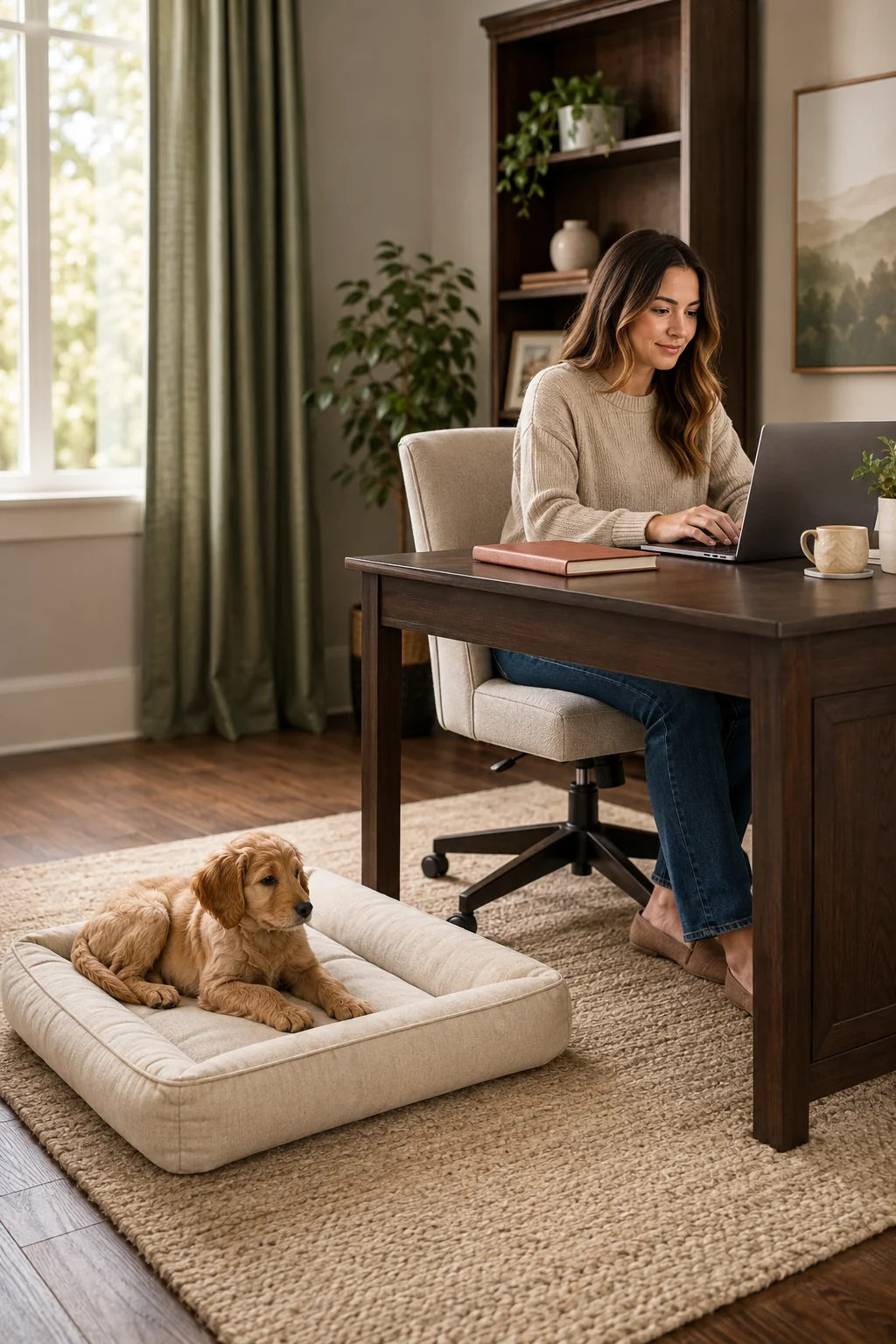
| Planned proximity | Puppy rests near you, but attention happens in short, intentional windows | Offers reassurance without making you the only settling tool | Best starting point for brief meeting blocks and independent rest |
| Immediate isolation | Puppy is placed alone behind a closed door for a long period on the first night | May be too difficult for a puppy who has not learned the space | Can create escalating vocalization or frantic behavior rather than useful independence |
For most work-from-home dog moms, planned proximity is the most practical first-night model. AAHA’s new-puppy guidance recommends building comfort with a crate through positive association, not forcing a puppy inside or relying on “cry it out,” and suggests placing a nighttime crate close enough for the puppy to sense your presence and for you to hear genuine needs (AAHA). A crate is optional; a small pen or gated resting area may be more suitable if your puppy is not comfortable in a crate.
Make a first-night plan around real work demands
Do not design tomorrow as if it were a normal high-output day. Choose the minimum work structure you must protect, then arrange the puppy plan around it.
Use this four-part planning card before bedtime:
- Non-negotiable meeting: Identify the single meeting during which you cannot repeatedly step away. If possible, keep it short, turn off your camera when appropriate, and prepare backup coverage from another adult for that block.
- One focus block: Choose one modest period for concentrated work rather than expecting several uninterrupted hours.
- Puppy connection windows: Plan brief, calm attention before the meeting and before the focus block. These are not exhausting play marathons; they are predictable moments for an age-appropriate bathroom opportunity, a little interaction, and then a transition to rest.
- Fallback action: Decide now what you will do if the puppy cannot settle. Options include moving the resting area closer, shortening the block, asking another adult to supervise, or postponing nonessential work.
The important comparison is not “puppy time versus work time.” It is unplanned interruptions versus planned transitions. A puppy who receives attention every time you touch the keyboard may quickly learn that work starts a negotiation. A puppy who experiences a calm sequence—needs met, brief connection, rest cue, quiet environment—has a clearer pattern to follow.
Keep the first-night environment low-key. Avoid repeatedly exciting the puppy to “wear them out” just before sleep. Close the laptop when you are actively connecting, then make your return to the desk boring and predictable. This helps separate genuine interaction from constant partial attention.
Rehearse tomorrow’s meeting block in tiny steps
The first night is not the time to prove your puppy can tolerate a long separation. It is the time to learn what level of distance is easy enough for success.
Try two or three very short rehearsals while you are still awake:
- Settle the puppy in the chosen rest area with a safe, familiar activity appropriate for that puppy.
- Sit nearby without touching or talking continuously.
- Open your laptop or put on headphones for a brief interval.
- If the puppy remains relaxed, stand up, take one or two steps away, then return before distress begins.
- End while the puppy is still coping, not after a long struggle.
AAHA behavior guidance recommends starting absences at a duration short enough for the animal to remain calm—even a few seconds—and increasing gradually rather than waiting for visible distress (AAHA). Another AAHA article aimed at preventing separation problems suggests beginning with very short periods, sometimes only two to three minutes, and letting the dog’s behavior guide progression (AAHA).
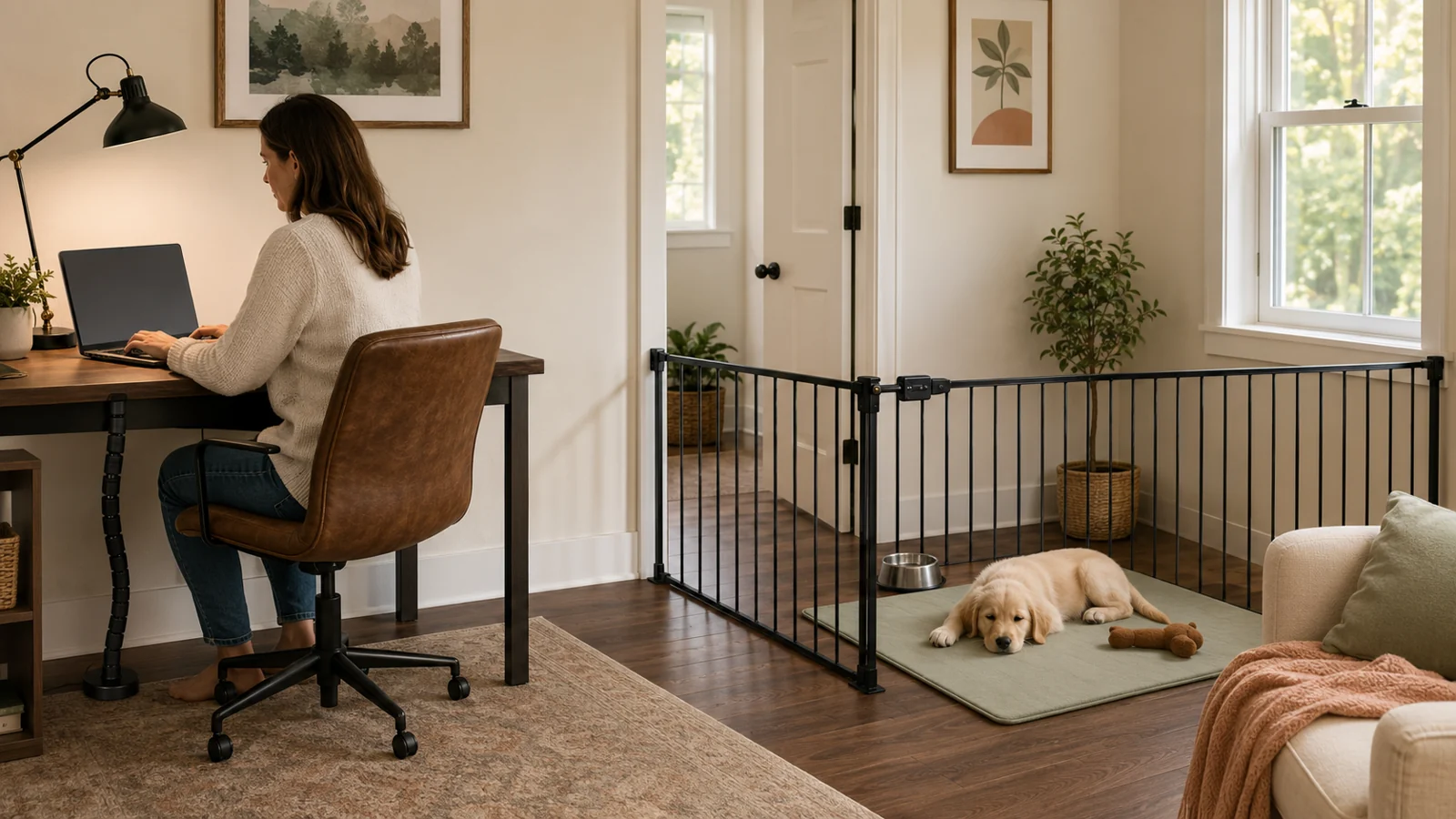
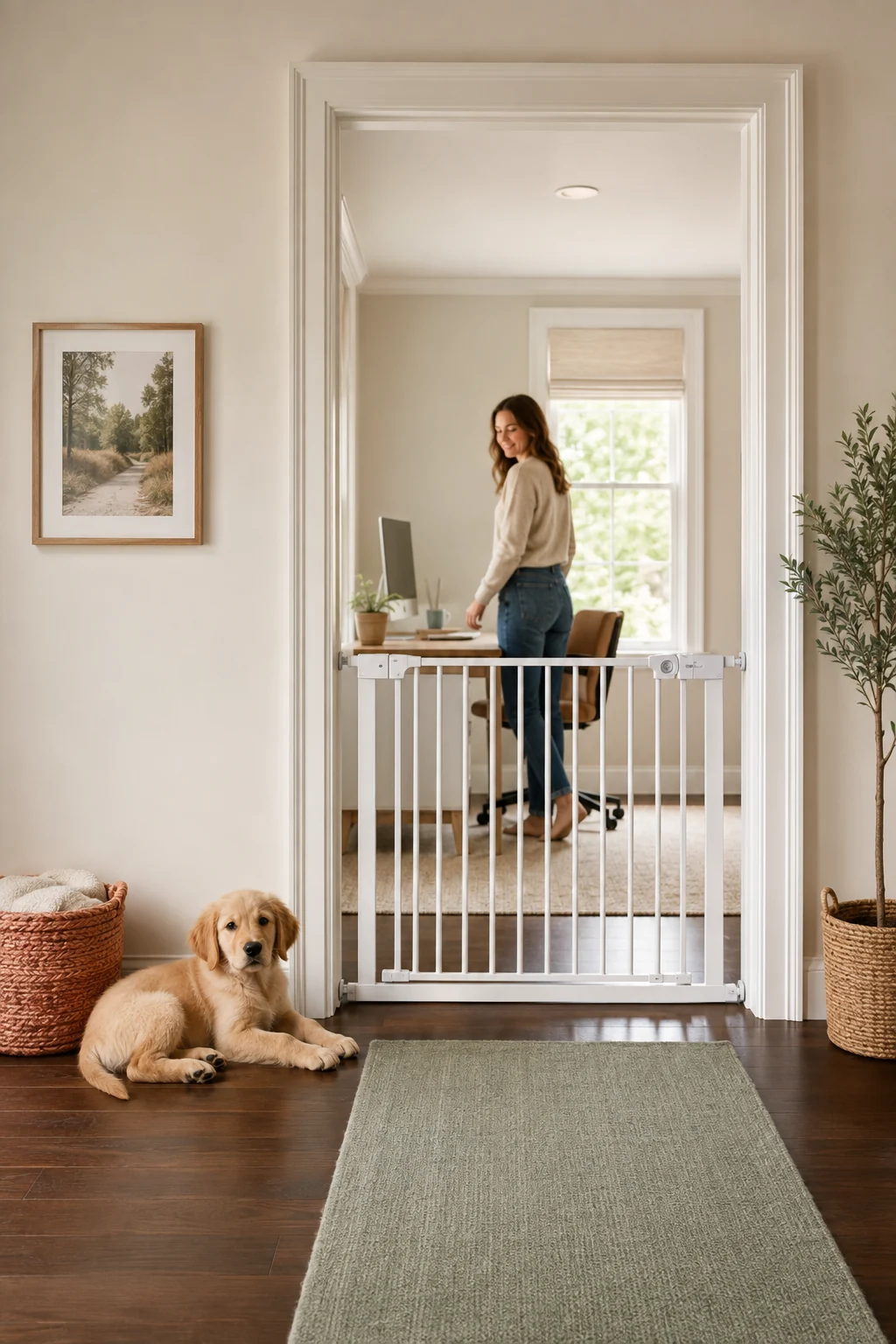
For a work-from-home puppy, “alone” does not have to mean leaving the house. It can mean that you are at the desk and unavailable, on the other side of a baby gate, or briefly out of sight. The lesson is not abandonment. The lesson is that proximity and attention are different things.
If you use a crate, VCA describes a gradual sequence: first create positive, quiet experiences with the door open; then close the door while the puppy is occupied and you remain nearby; only later step out of the room, returning before the puppy becomes overwhelmed (VCA Animal Hospitals). This progression fits a work-from-home schedule better than suddenly closing the puppy away for a full meeting.
Prevent constant attention without ignoring real needs
“Do not reward whining” is too blunt for a first-night puppy. Vocalization can reflect many things: a bathroom need, unfamiliarity, frustration, fear, or a learned request for interaction. Your job is to respond thoughtfully rather than instantly or rigidly.
Use three response levels:
Level 1: Quiet observation. If the puppy makes a brief sound but remains physically relaxed, pause for a moment. Avoid immediately talking, touching, or opening the barrier. A short pause gives the puppy a chance to resettle.
Level 2: Calm need check. If the puppy has just awakened, has been active, or shows behavior that makes you suspect a bathroom need, take a quiet, businesslike break and return to the sleep area. VCA recommends keeping nighttime elimination trips calm and brief so waking the household does not become playtime (VCA Animal Hospitals).
Level 3: Reduce difficulty. If vocalization escalates, the puppy cannot take food, repeatedly throws their body at a barrier, pants heavily without heat or exertion, or appears unable to recover, do not continue simply to meet a timer. Move closer, open the setup safely, or end the exercise. The ASPCA notes that crates help some dogs but add stress for others, so behavior during confinement should guide whether a crate is appropriate (ASPCA).
The distinction matters: meeting a genuine need does not “spoil” a puppy, and preventing panic is not the same as providing entertainment on demand. Keep your response calm, brief, and consistent.
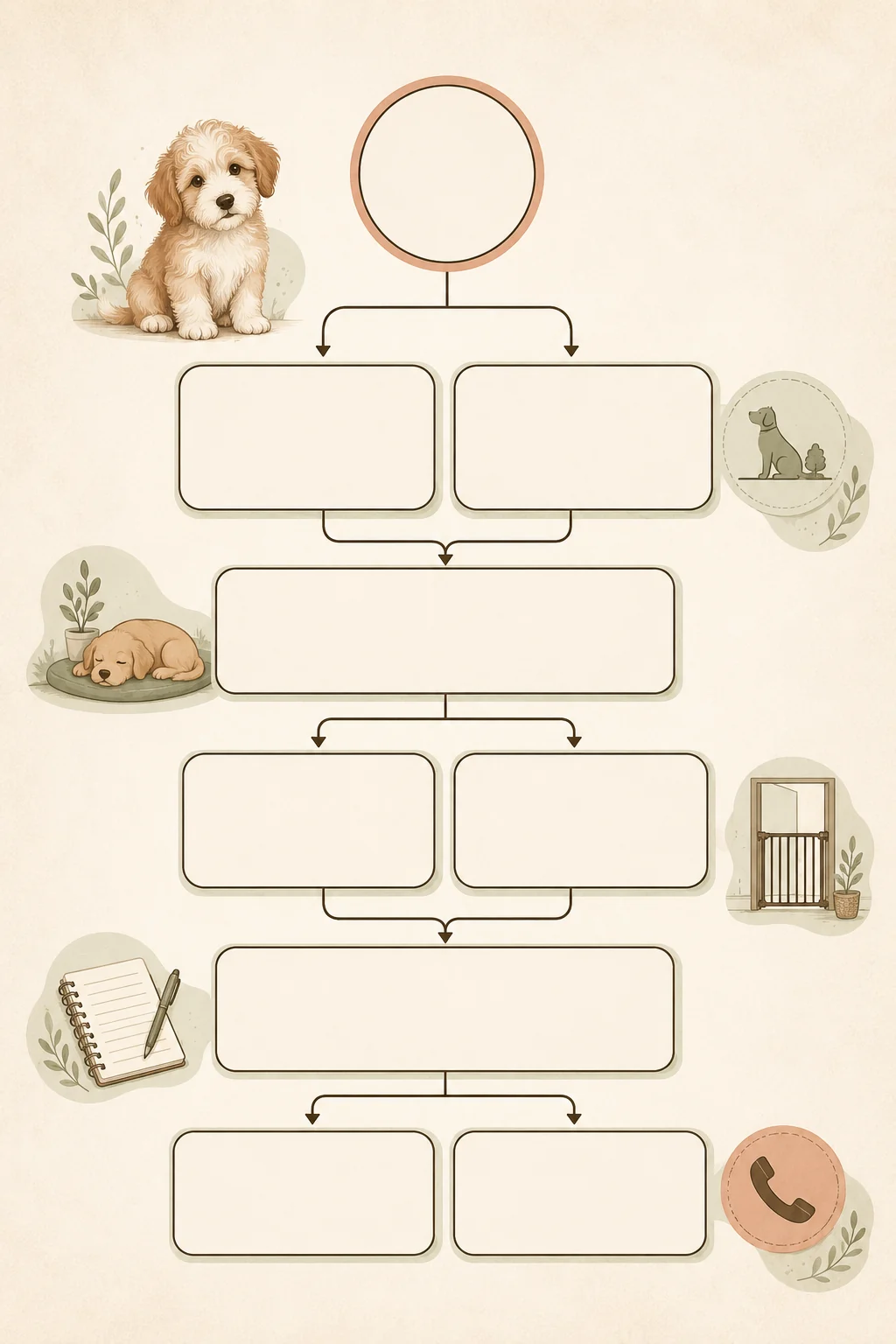
Puppy’s first-night troubleshooting decision tree
Use this decision tree whenever the puppy vocalizes during a practice focus block, at bedtime, or when you briefly become unavailable.
START: The puppy whines, scratches, or gets up.
- Did the puppy just wake, finish activity, eat, or drink, or show a familiar elimination signal?
- Yes: Take a quiet bathroom break using the location and method already chosen for your household. Keep it brief and low-energy. Return to the rest setup, offer a calm transition, and restart at an easier level.
- No: Go to Question 2.
- Is the behavior mild and stable, or is it escalating?
- Mild and stable: Pause briefly. Stay neutral. If the puppy settles, quietly reinforce calm by remaining predictable rather than starting play.
- Escalating: Go to Question 3.
- Do you see possible distress, such as frantic escape attempts, sustained heavy panting, excessive drooling, trembling, continuous pacing, or inability to engage with a normally valued food item?
- Yes: End the confinement or separation safely. Stay nearby, reduce the challenge, and do not repeat the same duration. If severe signs recur, contact your veterinarian or a qualified behavior professional.
- No: Go to Question 4.
- Can the puppy settle when you reduce only one variable—move closer, shorten the interval, or restore visual contact?
- Yes: Record the successful version. Use that easier version for the next meeting rehearsal and increase only one small step at a time.
- No: Change the setup rather than repeating failure. Try a different resting location, a gate instead of a closed crate, or direct supervision. Arrange human backup for tomorrow’s critical meeting.
- Does the same problem happen in two consecutive work blocks?
- Yes: Stop extending duration. Protect the puppy from another difficult repetition, lower tomorrow’s work expectations, and seek individualized guidance if the puppy cannot settle even with very short, supported practice.
- No: Repeat the last successful duration before increasing it.
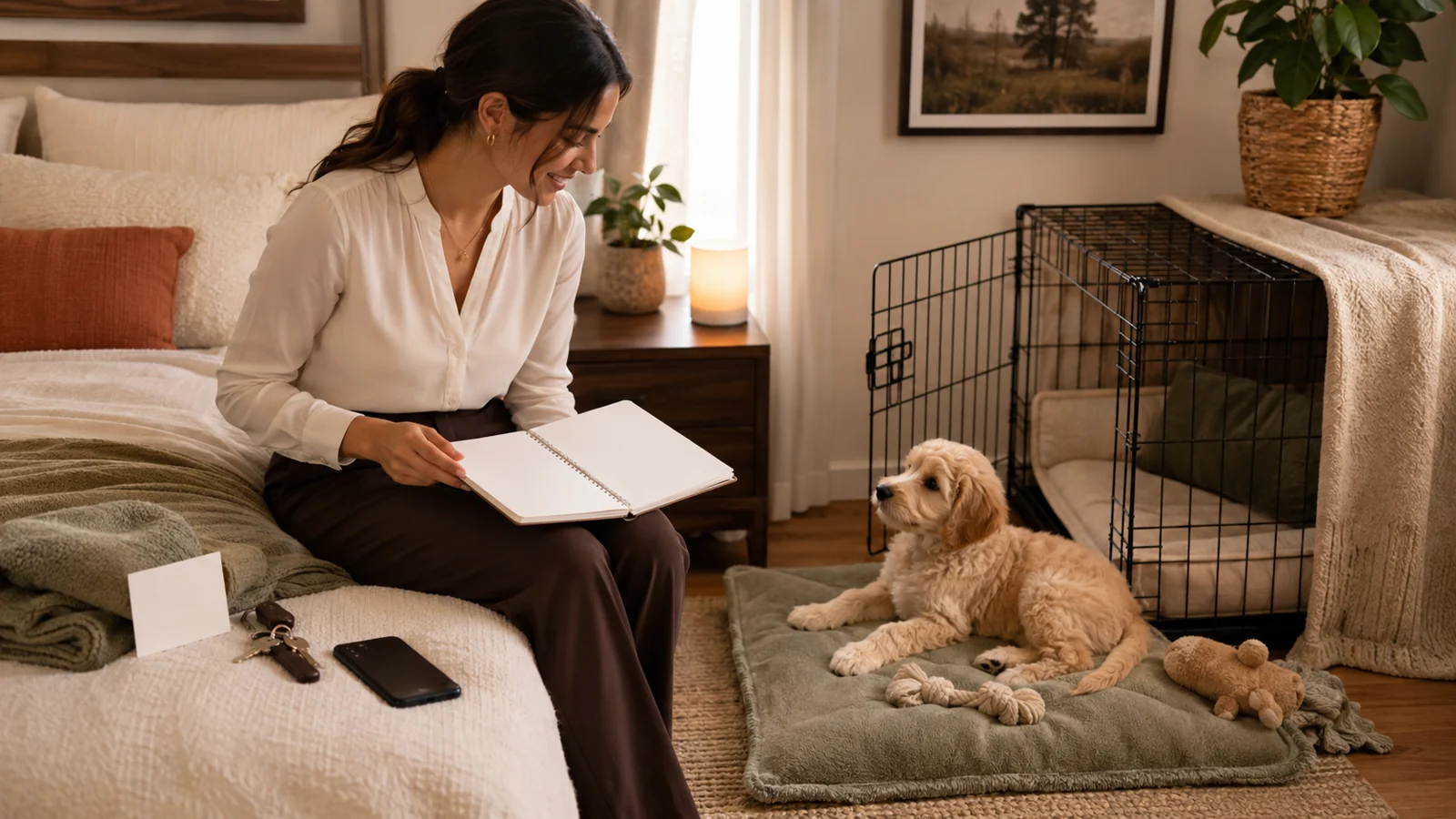
Keep a one-line log after each attempt: time, setup, distance, duration, puppy response, and next easier step. This turns the first night into useful observation instead of a test the puppy must pass.
A realistic first-night and first-morning example
Imagine your most important meeting is at 9:30 a.m. and your first focus block is at 11:00 a.m.
First night: After the puppy’s immediate needs are met, spend a short period calmly together. Introduce the sleep area without forcing entry. Practice sitting at your desk for one minute while the puppy rests nearby. Later, stand briefly behind the gate or doorway and return before distress begins. At bedtime, keep the sleep setup near enough to hear the puppy and use low-energy responses overnight.
First morning: Do not open the laptop the instant the puppy wakes. Complete the puppy’s immediate morning needs first, then offer a short calm connection window. Before the 9:30 meeting, repeat the easiest successful rest setup from the night before. Start the setup several minutes before the call so the meeting itself is not the cue for sudden separation.
During the meeting: If the puppy makes one or two mild sounds and remains relaxed, pause before intervening. If behavior escalates, use the decision tree. A shortened meeting, camera-off moment, or backup helper is better than turning a first-day puppy into a prolonged distress experiment.
Before the focus block: Reconnect briefly, meet immediate needs, and then use the same transition sequence. Do not make the focus block longer just because the meeting went well. Repeat success before increasing duration.
Common work-from-home mistakes on the first night
Letting the puppy rehearse shadowing every step. Closeness is appropriate, but following you continuously is different from resting safely while you move around.
Using work as background during every interaction. Half-working while constantly touching or talking to the puppy blurs the boundary. Give short periods of full attention and separate periods of calm unavailability.
Testing the longest possible separation. The useful question is not “How long can the puppy endure?” It is “What duration can the puppy complete calmly enough to repeat?”
Starting confinement only when a meeting begins. If the crate, pen, gate, or bed appears only when you become unavailable, it may predict frustration. Introduce the area during easy, low-pressure moments first.
Changing several things at once. Do not simultaneously move the puppy farther away, close a door, add headphones, and double the time. Change one variable so you know what the puppy can handle.
Treating every sound as manipulation. First-night behavior is information. Observe the whole body and context, then choose a measured response.
Conclusion
A successful first night for a work-from-home puppy is not perfectly quiet, and it does not guarantee a full uninterrupted workday. Success means you created a repeatable pattern: needs are met, connection is intentional, rest happens near you without constant interaction, and any separation practice stays below the puppy’s distress threshold.
Choose one important meeting, one modest focus block, and one easy rest setup. Use the troubleshooting tree when the puppy struggles, record the easiest successful version, and build from that—not from the duration your calendar demands.
Helpful visuals from this guide
Use these five visuals as quick reminders, then return to the full guide for context, limitations, and source details.
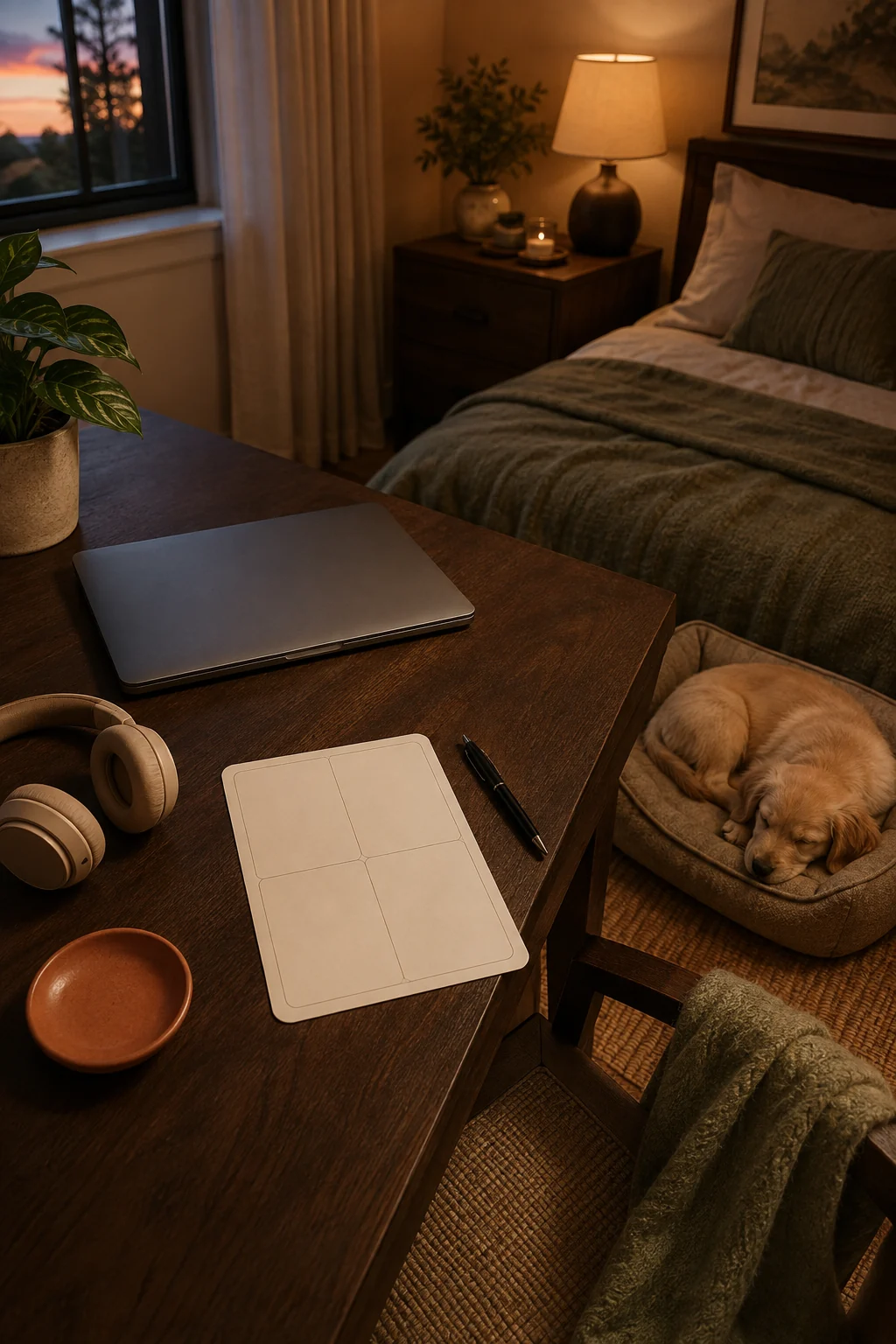
Pinterest does not let websites prefill its Title field. Each button below copies the correct title and opens that Pin. Click the Title field in Pinterest, press Ctrl + V, then save it to the board above.
Start with Pin 1 and repeat through Pin 5.
- Planned Proximity for a Work-from-Home Puppy
See how a nearby rest area can support a new puppy while helping a work-from-home dog mom create gentle attention boundaries on the first night.
- Prepare Your Puppy Before a Work Meeting
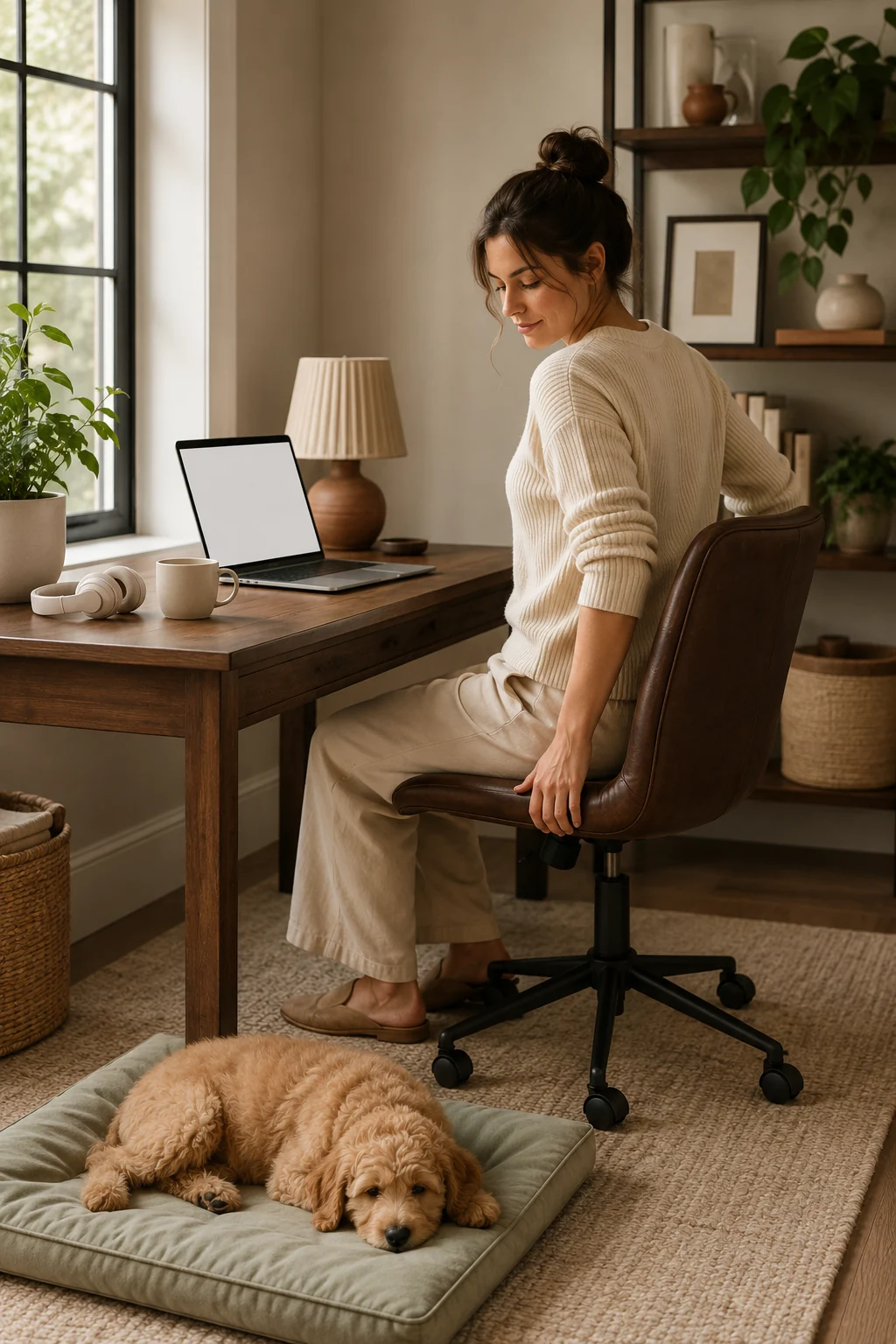
A visual reminder to meet immediate needs, settle the puppy early, and begin the rest setup before an important work-from-home call.
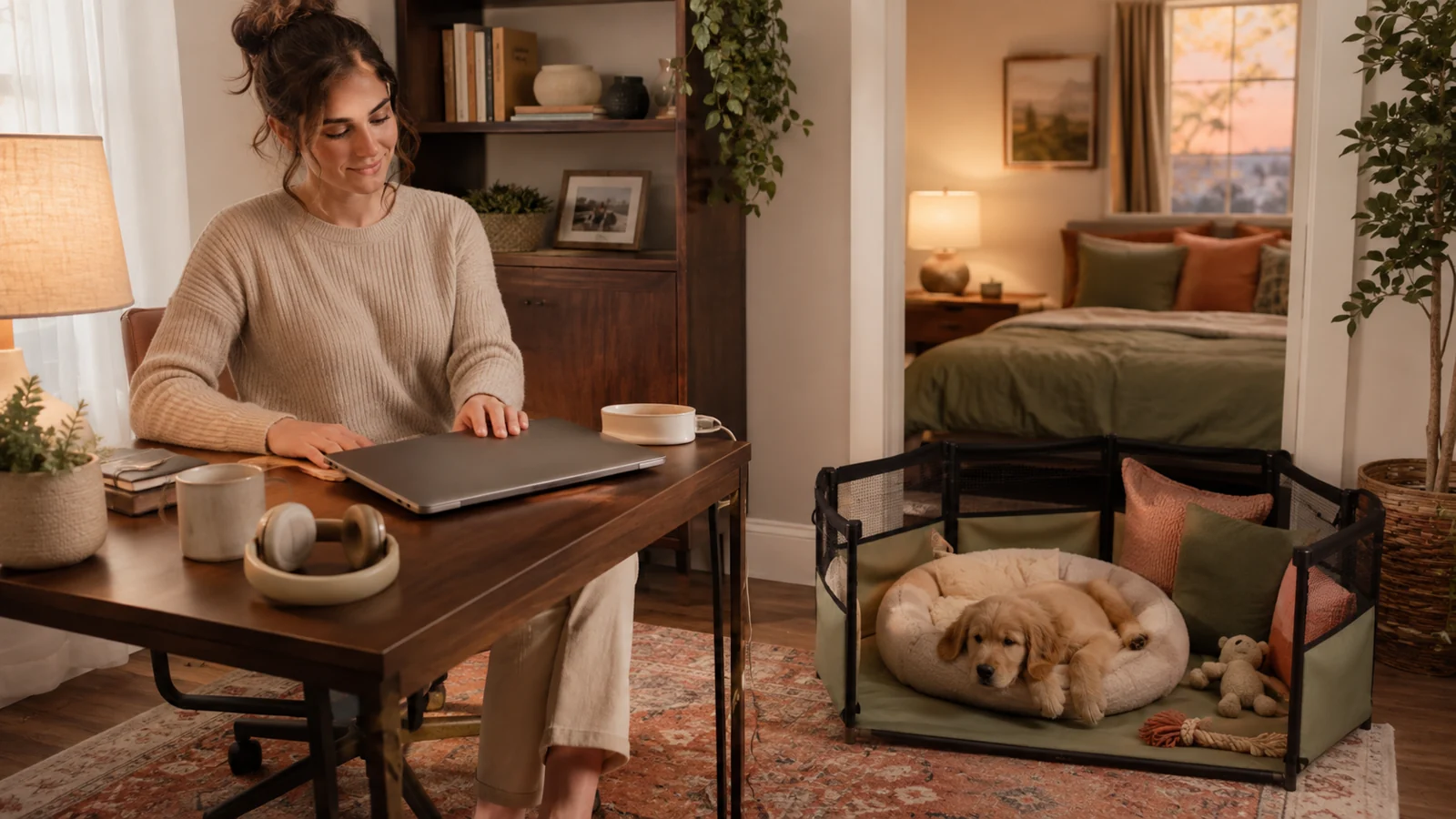
- Practice Tiny Puppy Separation Steps
Use very short, calm distance changes on the first night so your puppy can practice resting while you become briefly unavailable.
- Puppy First-Night Troubleshooting Tree
A visual companion for deciding whether to check an immediate need, pause, reduce difficulty, change the setup, or seek qualified help.
- Plan the First Workday With a New Puppy
A calm first-night planning visual for choosing one essential meeting, one focus block, and a realistic fallback for a newly arrived puppy.
Optional: choose all 5 images at once
Frequently asked questions
Should my puppy sleep in my home office on the first night?
Only if the office is the calmest practical place and the setup lets you notice genuine needs. A nearby bedroom setup may be easier if it supports sleep without tying rest to your work desk.
Can I hold my puppy during an important video meeting?
You can use holding as a short emergency fallback, but it should not be the default plan because it teaches that meetings always provide close physical attention.
What if my puppy settles only when I am visible?
Keep visual contact for now and practice smaller changes, such as turning slightly away or stepping back once. Increase distance only after the easier version is repeatably calm.
How many work blocks should I practice on the first night?
Two or three very short rehearsals are enough for observation. The goal is to find an easy, repeatable setup, not to simulate an entire workday before bedtime.
Does responding to first-night whining create a bad habit?
Not automatically. Check context and body language, meet likely needs calmly, and avoid converting every sound into play, prolonged talking, or lap time.
When should I stop a crate or separation practice?
Stop and reduce the difficulty when behavior escalates or the puppy appears unable to recover. Repeated severe distress warrants guidance from a veterinarian or qualified behavior professional.
Sources & further reading
- What to do when you first bring home a new puppyAmerican Animal Hospital Association · Accessed 2026-07-31
- Separation Anxiety and the “Pandemic Puppy”: What Lies Ahead After LockdownAmerican Animal Hospital Association · Accessed 2026-07-31
- Life Skills for Pets: Crate Training and Confinement for Puppies and DogsVCA Animal Hospitals · Accessed 2026-07-31
- Separation AnxietyASPCA · Accessed 2026-07-31