A puppy’s first night in an apartment works best when you reduce distance, decisions, and noise. Set one sleep station near you, pre-plan the quietest route to the approved toilet area, stage only the supplies needed overnight, and use the same calm response each time the puppy wakes. The goal is not a silent, perfect night. It is a safe, predictable first night that respects shared walls and gives you a workable plan for elevators, limited outdoor access, and small-space cleanup.
1. Map the apartment route before bedtime
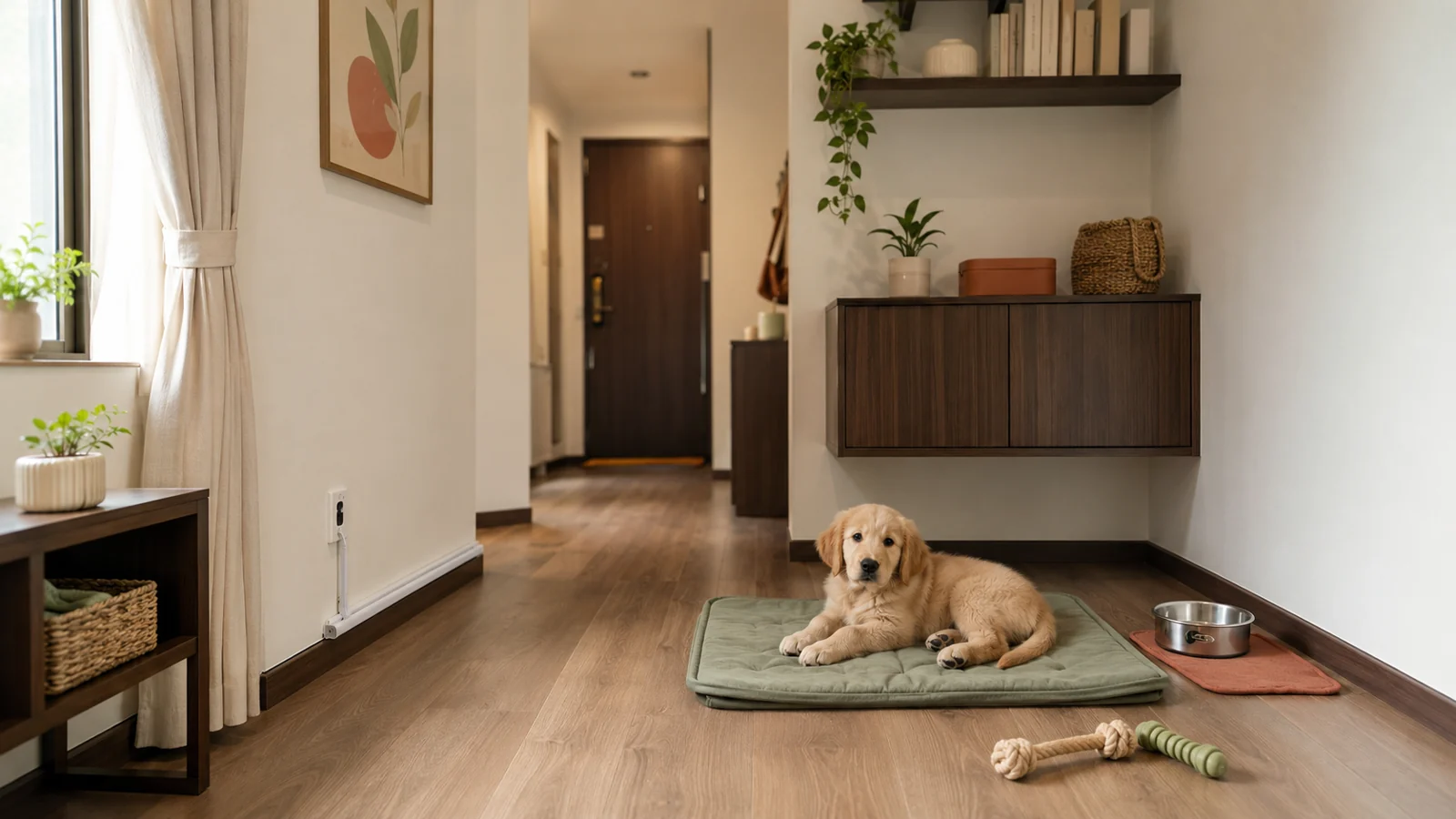
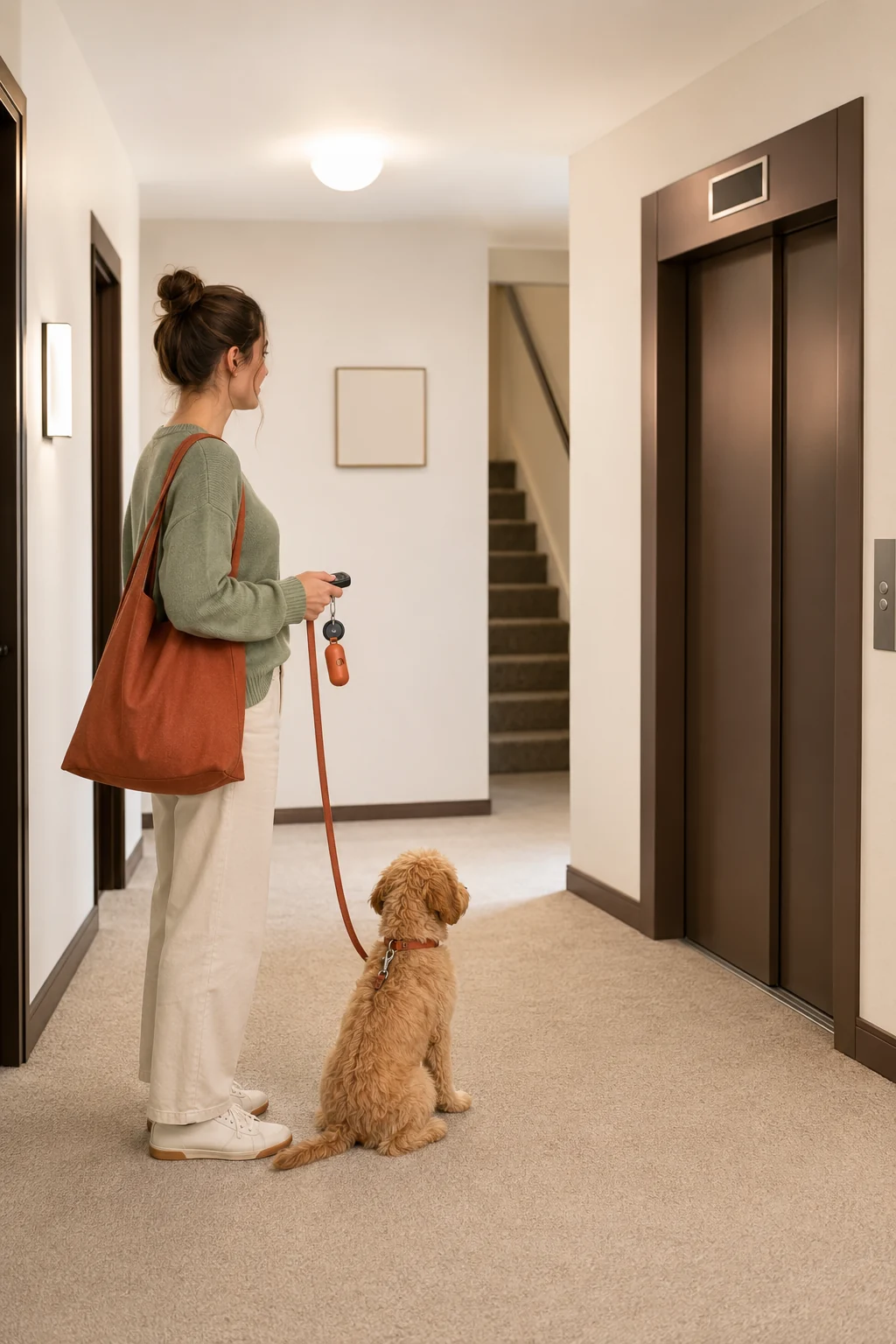
Walk the route without the puppy first. Start at the sleep station and continue to your apartment door, hallway, elevator or stairs, building exit, and the toilet area you are allowed to use. Note every delay point: keys, fob, elevator wait, security door, leash attachment, waste-bag access, and the distance to the final spot.
For the first night, choose one primary route and one fallback:
- Primary route: the quietest legal route that you can complete quickly and consistently.
- Fallback route: the safest alternative if the elevator is busy, out of service, or crowded.
- Indoor backup: only use an indoor toilet surface if it is already part of the puppy’s established routine or your veterinarian has advised it. This guide does not replace a full potty-training plan.
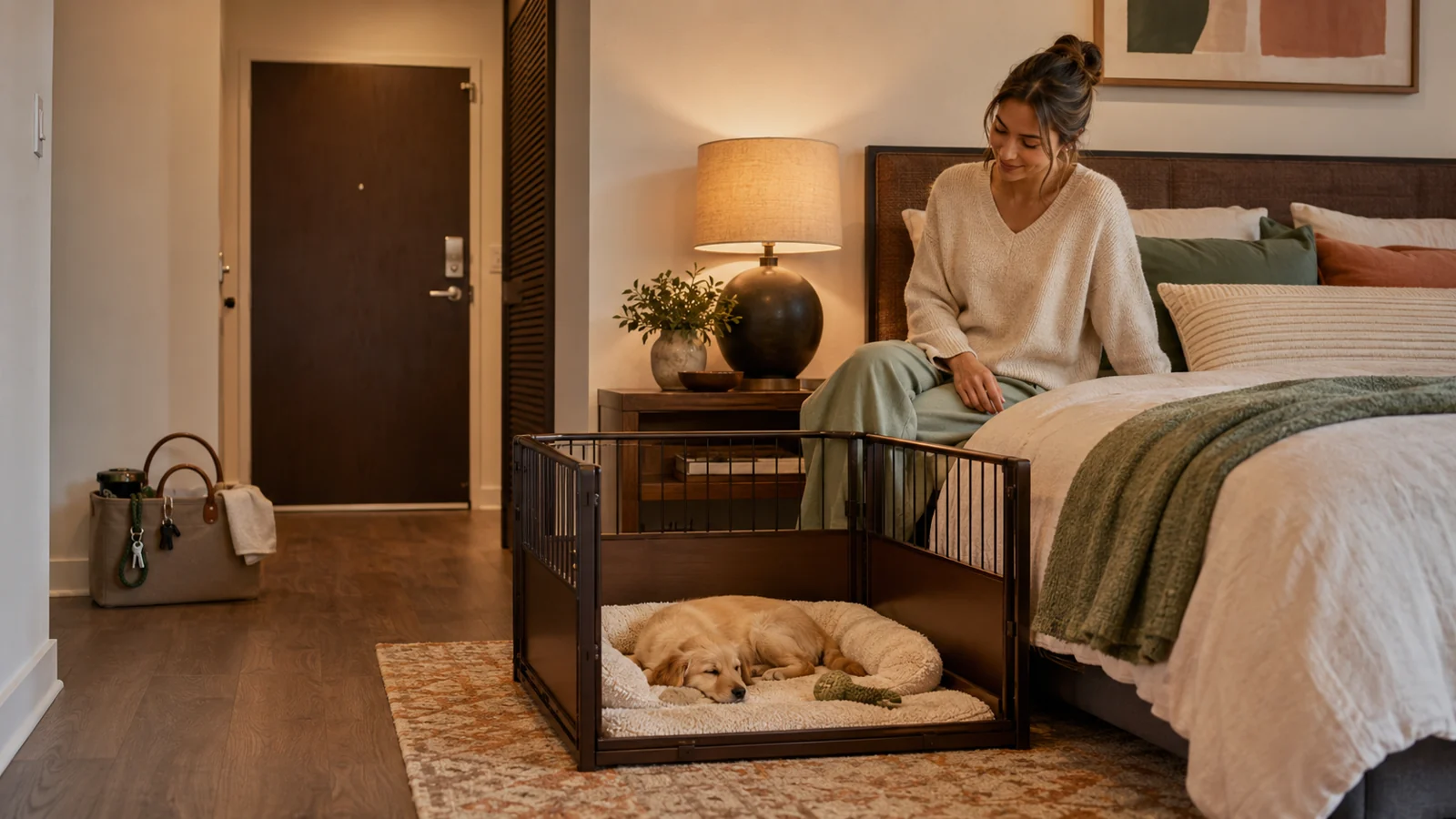
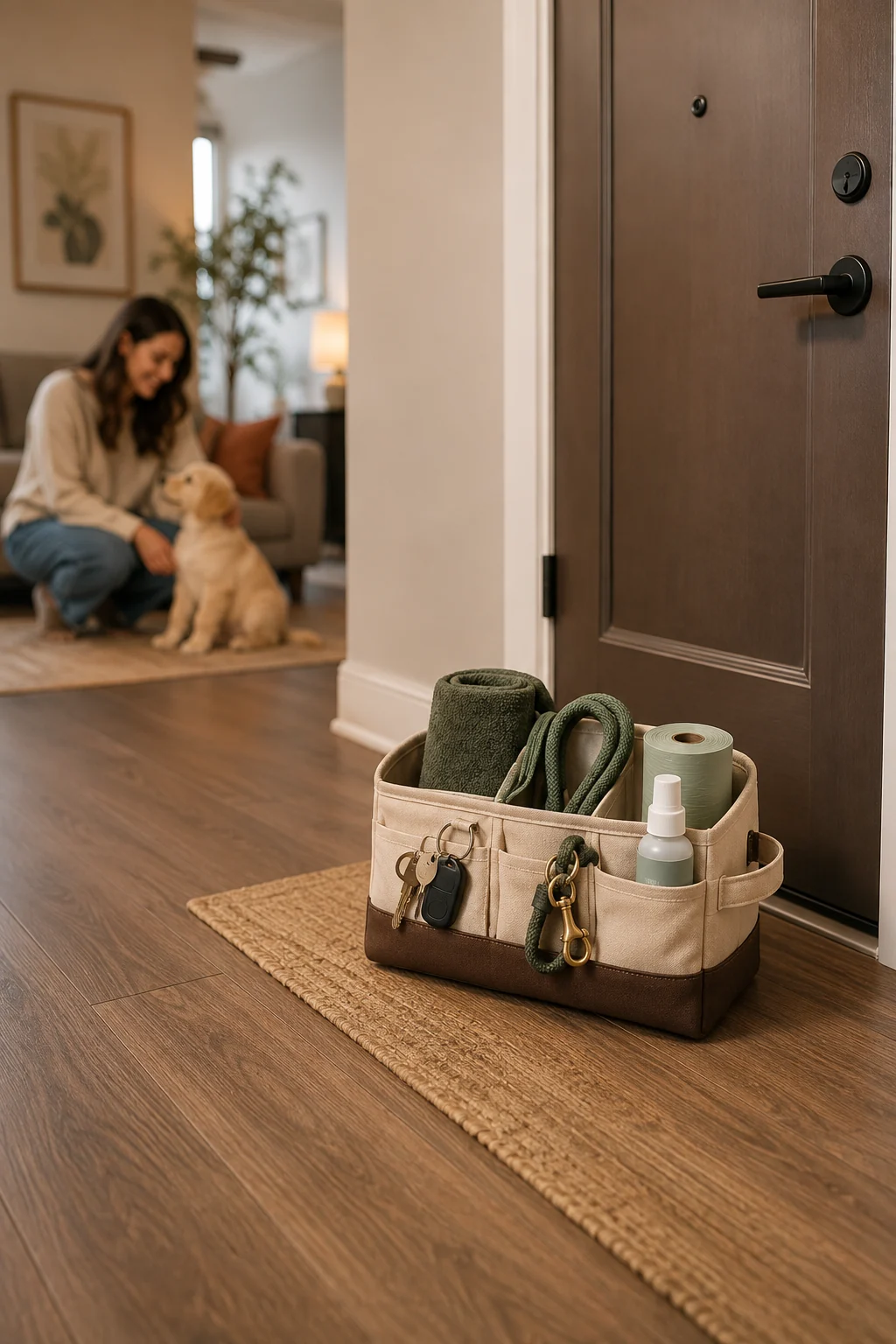
Put your keys, building fob, leash, shoes, waste bags, and a small cleanup kit together beside the door. In a small apartment, a single lidded basket or handled caddy is easier to manage than supplies stored in several rooms. Do not block the exit or create a tripping path.
Ask the breeder, rescue, foster, or previous caregiver three practical questions before nightfall: Where did the puppy usually eliminate? What signals did they show before going? Did they sleep in a crate, pen, bed, or another setup? Keeping the first night close to familiar patterns can reduce unnecessary changes.
If vaccination status or the safety of shared dog areas is unclear, ask your veterinarian which elimination location is appropriate for your puppy and local disease risk. That decision should be made before the late-night trip, not while waiting in the lobby.
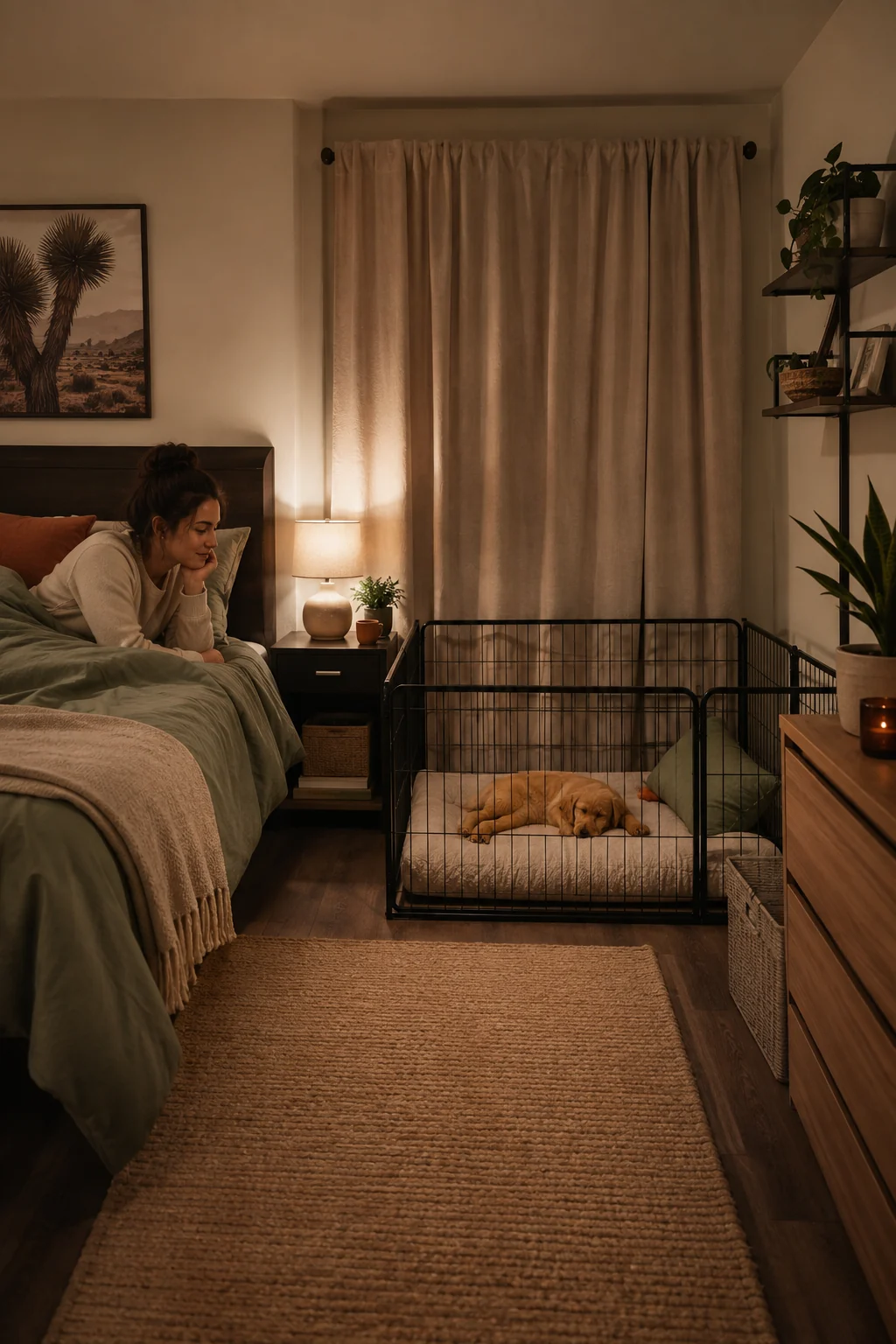
2. Build a sleep station for shared walls
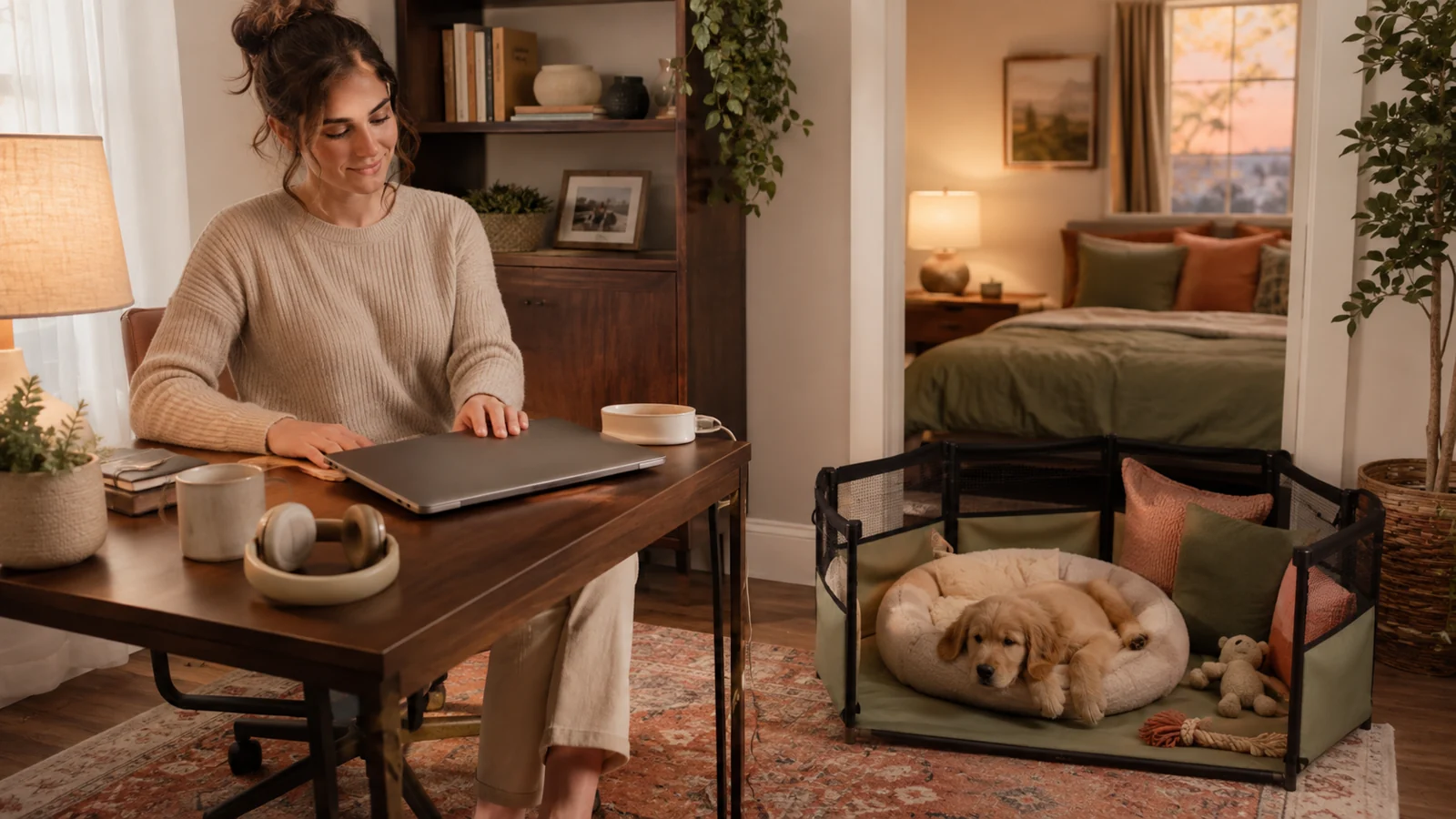
Place the puppy’s sleep station in your bedroom or immediately beside where you will sleep, rather than isolating the puppy across the apartment. VCA notes that keeping a crated puppy in the bedroom or another occupied room can make distress vocalization less likely than placing the puppy far away from the owner (Reasons to Crate Train Your Dog).
Use the setup the puppy already knows when possible. A crate is not automatically the right choice for every puppy. The ASPCA advises watching for heavy panting, excessive salivation, frantic escape attempts, or persistent vocalization because a crate can increase stress for some dogs (Separation Anxiety). A secure pen or a small puppy-safe area beside you may be a better first-night option when confinement has not been introduced positively.
Keep the station simple:
- washable bedding or the familiar blanket supplied by the previous caregiver;
- one safe comfort item already known to the puppy;
- a dim, calm environment with blinds closed if hallway lights or street movement trigger alerting;
- enough space for the chosen setup without placing it against a shared wall when another position is practical;
- white noise or a fan at a low, comfortable level only if it does not frighten the puppy and does not cover sounds you need to hear.
Apartment noise control begins with prevention. Close cabinets gently, silence unnecessary phone alerts, avoid late-night introductions to neighbors or resident dogs, and skip stimulating play just before sleep. The first-night target is decompression, not a tour of every room.
Do not use the sleep space as punishment. VCA’s puppy guidance describes a crate as a potential safe space and says it should not be used as a consequence for unwanted behavior (How To Crate Train Your Puppy).
3. Use one calm response when the puppy wakes
Before bed, decide exactly what you will do when you hear movement or whining. This prevents sleepy improvisation and inconsistent responses.
Use this apartment first-night loop:
- Pause and listen briefly. A few seconds can tell you whether the puppy is resettling, repositioning, or becoming more upset.
- Check the likely need. Consider how long it has been since the last toilet trip, what the previous caregiver reported, and whether the puppy is showing active pre-toileting behavior such as persistent sniffing or circling.
- Run the quiet route if needed. Clip the leash calmly, take keys and waste bags, use the planned elevator or fallback route, and keep the trip boring and brief.
- Return directly to the sleep station. Use low light, little conversation, and no energetic play.
- Record what happened. Note the time, whether the puppy eliminated, how long resettling took, and whether the elevator or hallway caused stress.
Young puppies may need multiple overnight checks. VCA advises owners to expect nighttime checks and notes that an all-night stretch may not be realistic for a young puppy (How To Crate Train Your Puppy). Use the puppy’s age, recent routine, individual behavior, and veterinary guidance rather than forcing a universal timetable.
Do not punish an accident. The ASPCA recommends supervision, attention to pre-toileting signals, praise for success, and cleaning mistakes without scolding (House Training Your Dog or Puppy). In an apartment, keep cleanup quiet and efficient: move the puppy to the secure sleep area, clean the surface, ventilate if needed, and return to the same plan.
4. Prepare for elevators and limited outdoor access
Elevators add waiting time, unfamiliar sounds, mirrors, doors, neighbors, and dogs. For the first night, reduce complexity rather than trying to “train through” every stimulus.
Before bedtime:
- Check whether your building has pet-access rules, restricted doors, or quiet hours.
- Confirm that the elevator is operating and identify the nearest safe stair option.
- Decide whether you can comfortably carry the puppy through a crowded common area when appropriate for the puppy’s size and your physical ability; do not improvise an unsafe lift.
- Avoid peak lobby traffic for the final planned outing when possible.
- Keep enough distance from unfamiliar dogs to prevent forced greetings.
- Let the puppy observe the elevator without pressure. If the puppy freezes or retreats, do not drag them forward; use the safer fallback you identified.
When the elevator arrives, stand away from the door until you can see who or what is inside. If the car is crowded, contains an excitable dog, or feels unsafe, let it go and wait for the next one. Shared-wall courtesy does not require rushing the puppy into an overwhelming situation.
Limited outdoor access also means that every forgotten item costs time. The door caddy should contain only first-night essentials: keys or fob, leash, waste bags, a small towel, and cleanup supplies permitted by your building. Store bulk supplies elsewhere. This keeps the exit zone usable in a small apartment.
5. Complete the puppy first-night caregiver handoff card
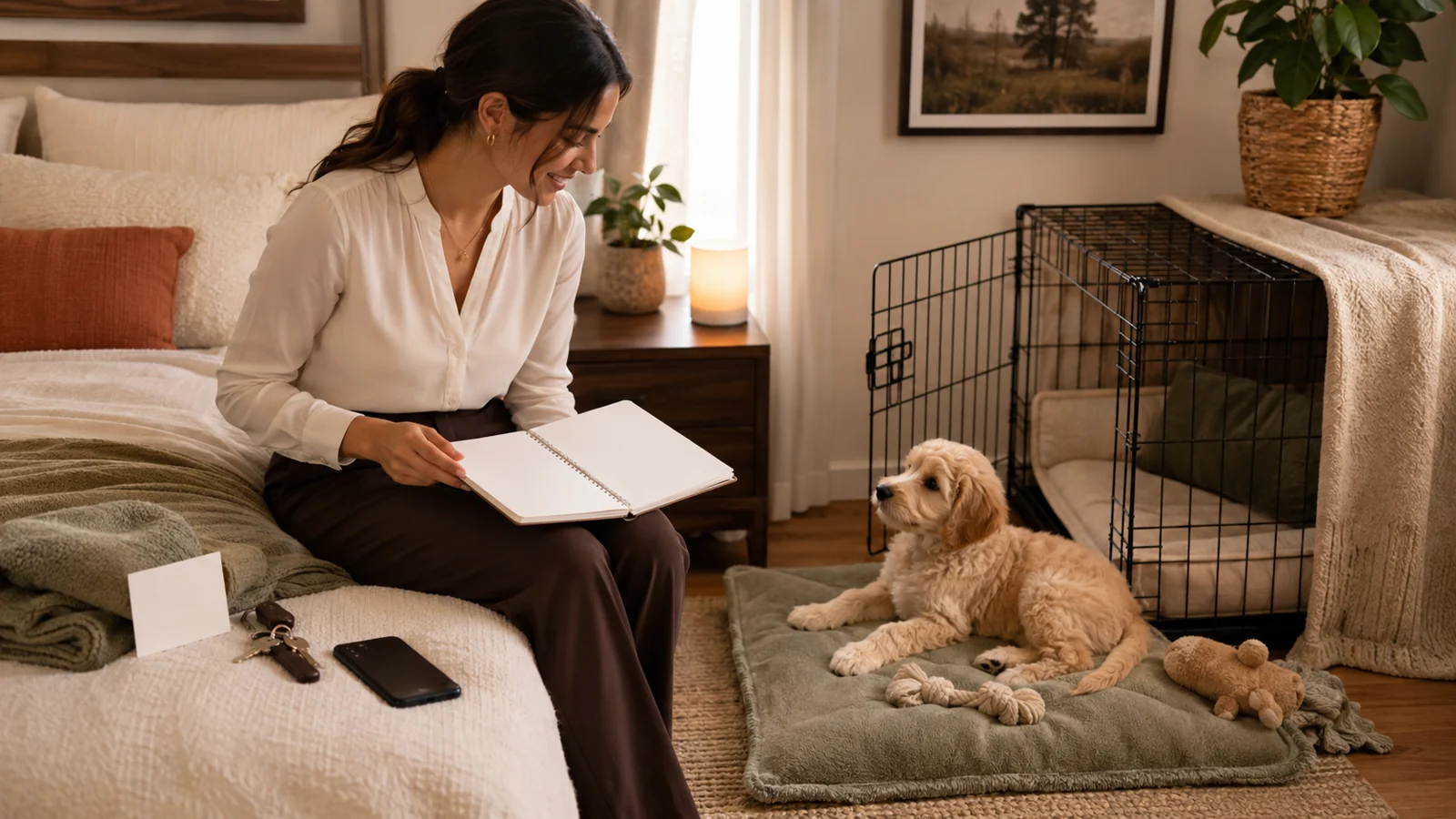
Use this card when two adults share the night, when a partner takes the next check, or when a sitter or family member may need to step in. Complete it before the primary caregiver goes to sleep. The card prevents conflicting responses and repeated searching in a small apartment.
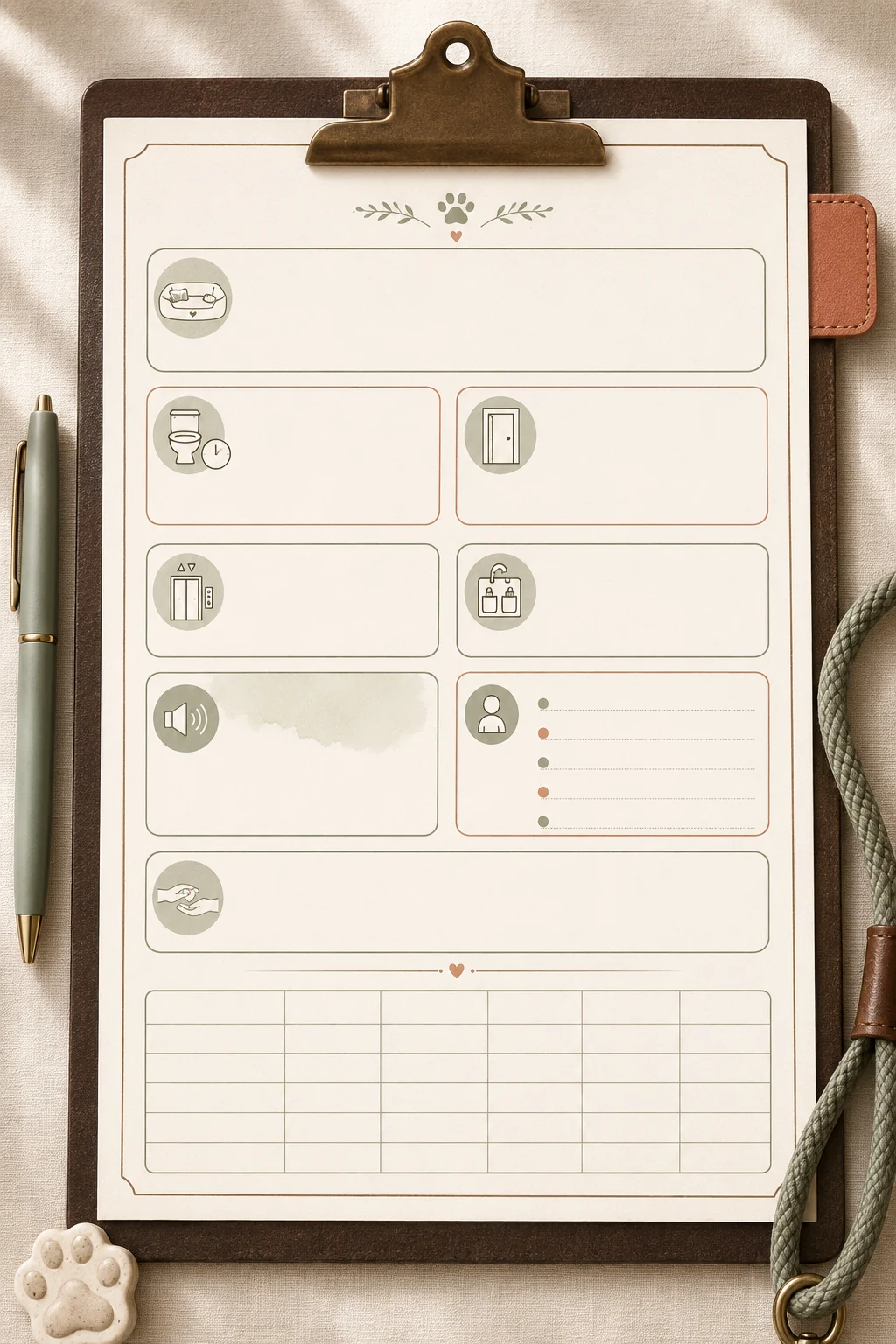
Apartment Puppy First-Night Handoff Card
| Handoff item | What must be recorded or confirmed |
|---|---|
| Sleep station | Exact room and setup being used tonight; confirm whether it is a crate, pen, or puppy-safe area beside the caregiver. |
| Familiar comfort | Identify the familiar blanket or approved comfort item already introduced to the puppy. |
| Last toilet event | Record the time, location, result, and any signal the puppy showed beforehand. |
| Primary exit route | Confirm the apartment door, hallway direction, elevator or stairs, building exit, and approved toilet area. |
| Elevator fallback | State what to do if the car is crowded, another dog is present, or the elevator is unavailable. |
| Door caddy | Confirm keys or fob, leash, waste bags, towel, and cleanup supplies are together. |
| Wake-up response | Pause, assess the likely need, take the quiet route if needed, return directly, and record the outcome. |
| Noise plan | Keep lights low, voices quiet, doors gentle, and play minimal; note any known trigger such as hallway footsteps. |
| Confinement check | Confirm the puppy can settle without frantic escape behavior; switch to the pre-approved secure alternative if the current setup causes escalating distress. |
| Contact order | Owner or primary caregiver first; veterinarian or emergency clinic for an urgent welfare concern; building contact for access failure. |
| Next handoff | Record the next caregiver’s start point and the most recent entry in the overnight log. |
A simple overnight log can sit below the card:
| Time | Puppy signal | Route used | Toilet result | Elevator or hallway trigger | Minutes to resettle |
|---|
The handoff card is intentionally limited to the first night. It is not a full potty schedule, medical record, feeding plan, or long-term behavior program.
6. Troubleshoot without turning the night into a battle
The puppy whines as soon as the lights go out
Stay close enough to observe. Check whether the puppy has a likely toilet need, is reacting to a new sound, or is escalating in the confinement setup. Keep your response calm and predictable. Avoid alternating between long periods of isolation and sudden exciting attention.
The puppy will not enter the elevator
Do not pull the puppy into the car. Wait for a quiet elevator, use the planned stair route if safe and practical, or follow the indoor backup that was approved before bedtime. The first night is not the time to force a complete elevator lesson.
A neighbor or dog appears in the hallway
Create distance, skip greetings, and let the other party pass. Keep the puppy near you and continue only when the route is clear. A polite “first night—please give us space” is enough.
The puppy has an accident near the door
Clean without punishment and record where it happened. The location may show that the route took too long or the puppy’s signal was noticed late. Adjust staging and response speed for the next wake-up, but do not redesign the entire routine in the middle of the night.
The puppy becomes increasingly distressed in the crate
Do not assume every vocalization is manipulation. Persistent howling, frantic escape attempts, heavy panting, or excessive salivation can indicate that the crate is increasing distress, according to the ASPCA guidance linked above. Use the secure alternative you prepared and contact a veterinarian or qualified reward-based professional for help if the distress continues.
7. Reset the apartment in the morning
After the first morning outing, review the log for practical apartment problems rather than judging the puppy. Did the elevator add several minutes? Was the fob hard to find? Did hallway noise trigger barking? Was the sleep station too far from you? Did the cleanup caddy block the doorway?
Make only the smallest useful changes for night two:
- move supplies into one reachable caddy;
- shift the sleep station away from a shared wall while keeping it near you;
- choose a quieter elevator window;
- clarify the fallback route with the next caregiver;
- ask the previous caregiver or veterinarian about any pattern you could not interpret.
A successful first night is not measured by uninterrupted sleep or zero noise. It is measured by whether the puppy remained safely supervised, the caregiver used a repeatable plan, shared-space disruptions were minimized, and useful information was recorded for the next night.
Helpful visuals from this guide
Use these five visuals as quick reminders, then return to the full guide for context, limitations, and source details.
Pinterest does not let websites prefill its Title field. Each button below copies the correct title and opens that Pin. Click the Title field in Pinterest, press Ctrl + V, then save it to the board above.
Start with Pin 1 and repeat through Pin 4.
- Set Up a Quiet Apartment Puppy Sleep Station
See how to arrange a first-night puppy sleep area near you while accounting for shared walls, hallway light, washable bedding, and a calm resettling routine.
- Plan the Puppy’s Elevator Route Before Bed
A practical visual for mapping the apartment door, hallway, elevator, building exit, and backup route before your puppy’s first night.
- Build a Small-Space Puppy Night Caddy
Organize the few items needed for overnight apartment trips—keys, fob, leash, waste bags, towel, and cleanup supplies—in one reachable place.
- Apartment Puppy First-Night Handoff Card
Use the guide’s caregiver card to coordinate the sleep station, last toilet event, elevator fallback, noise response, supplies, contacts, and next handoff.
Optional: choose all 4 images at once
Frequently asked questions
Should my puppy sleep in my bedroom on the first apartment night?
Keeping the sleep station near you can make observation and quiet responses easier. Use a secure setup the puppy can tolerate, rather than isolating them across the apartment.
What should I do if the elevator is slow at night?
Stage keys, fob, leash, and waste bags before bed, then use the pre-checked fallback route when it is safe and practical. Do not wait until the puppy is urgent to choose an alternative.
Is white noise useful for shared-wall puppy whining?
Low white noise may soften ordinary hallway sounds for some puppies, but it should not frighten the puppy or prevent you from hearing movement, distress, or a toilet signal.
How can I respond to a neighbor concerned about first-night noise?
A brief, courteous notice can explain that a new puppy is settling in and that you have a nighttime noise plan. Avoid promising complete silence, which may not be realistic.
Should I carry my puppy through the lobby?
Only carry the puppy when it is appropriate for their size, your physical ability, building conditions, and veterinary guidance. Never improvise a lift that risks dropping or frightening the puppy.
When should first-night distress lead to professional help?
Contact a veterinarian or qualified reward-based professional when distress is intense, escalating, persistent, or creates an urgent welfare concern, especially if the puppy cannot settle in the planned secure setup.
Sources & further reading
- How To Crate Train Your PuppyVCA Animal Hospitals · Accessed 2026-07-31
- Reasons to Crate Train Your Dog | VCA Animal HospitalsVCA Animal Hospitals · Accessed 2026-07-31
- Separation Anxiety | ASPCAASPCA · Accessed 2026-07-31
- House Training Your Dog or Puppy | ASPCAASPCA · Accessed 2026-07-31