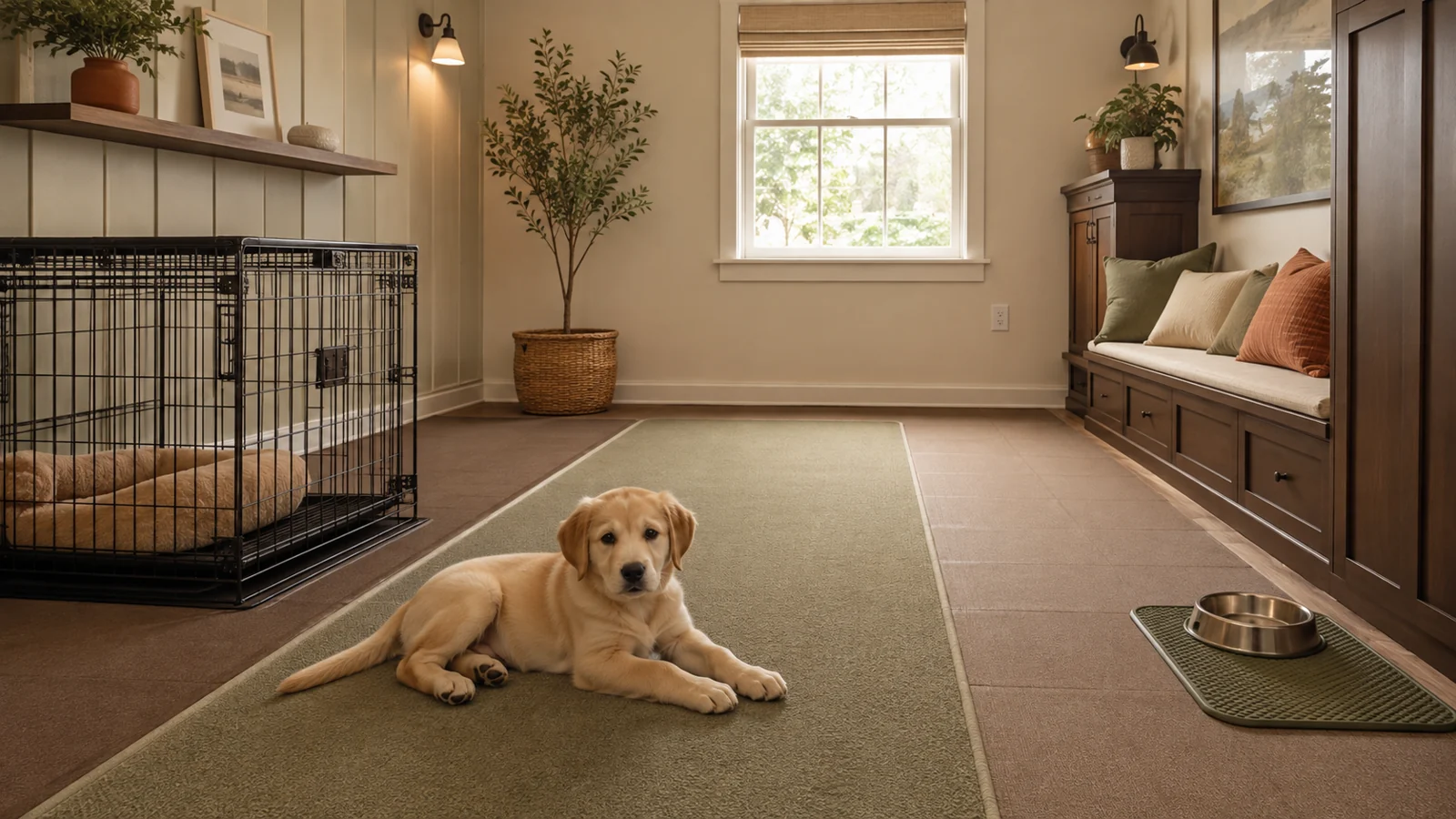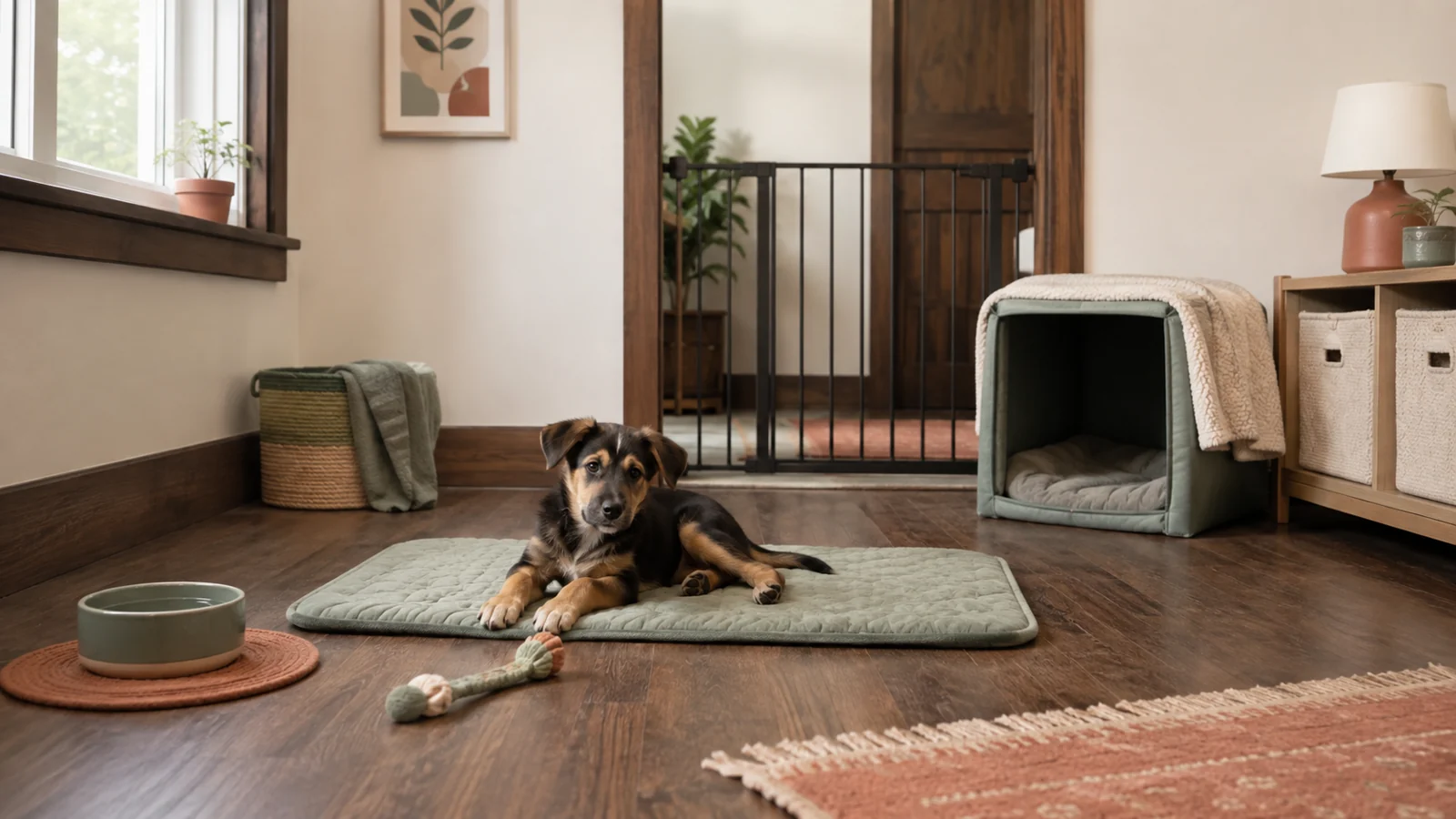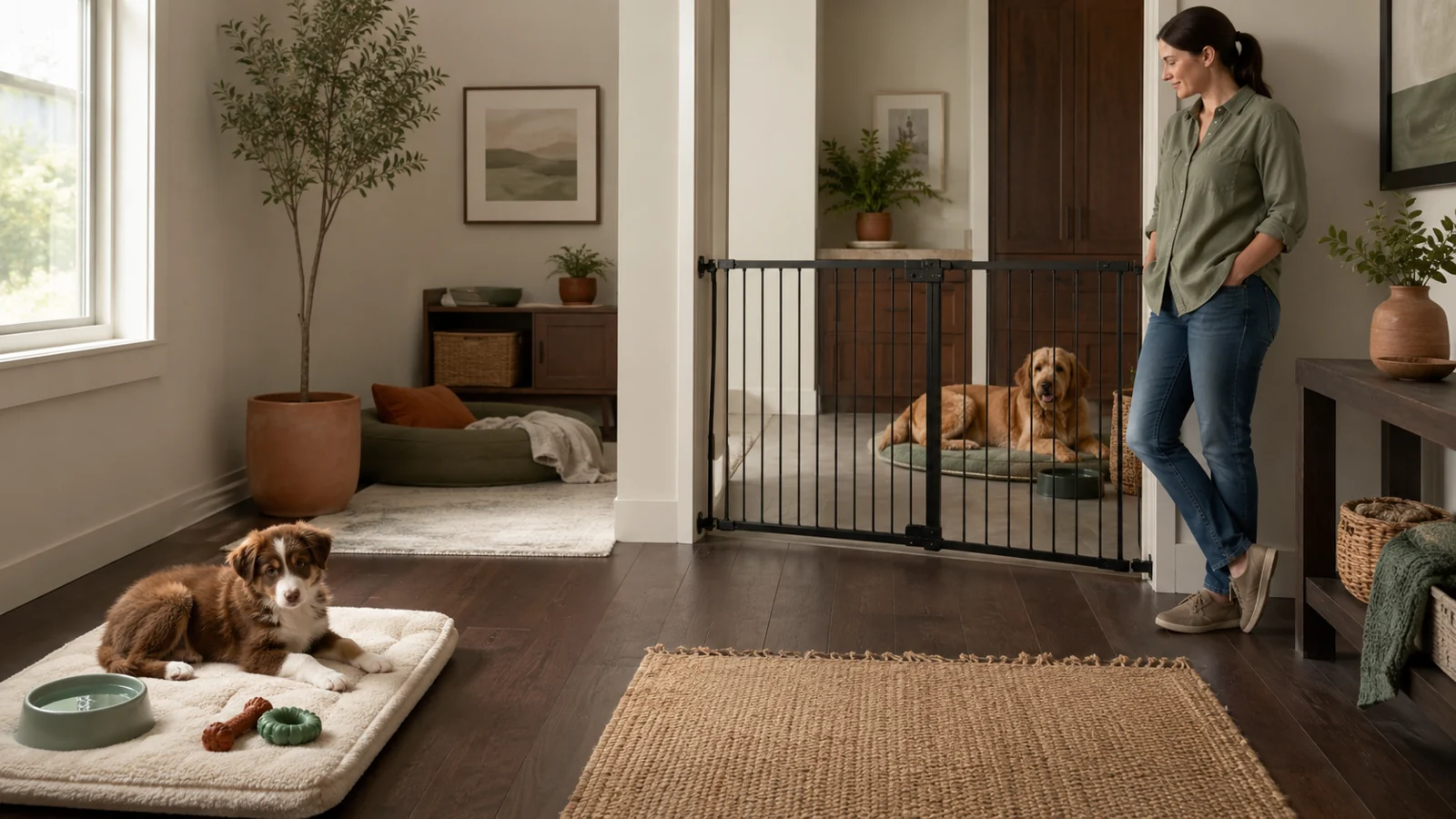
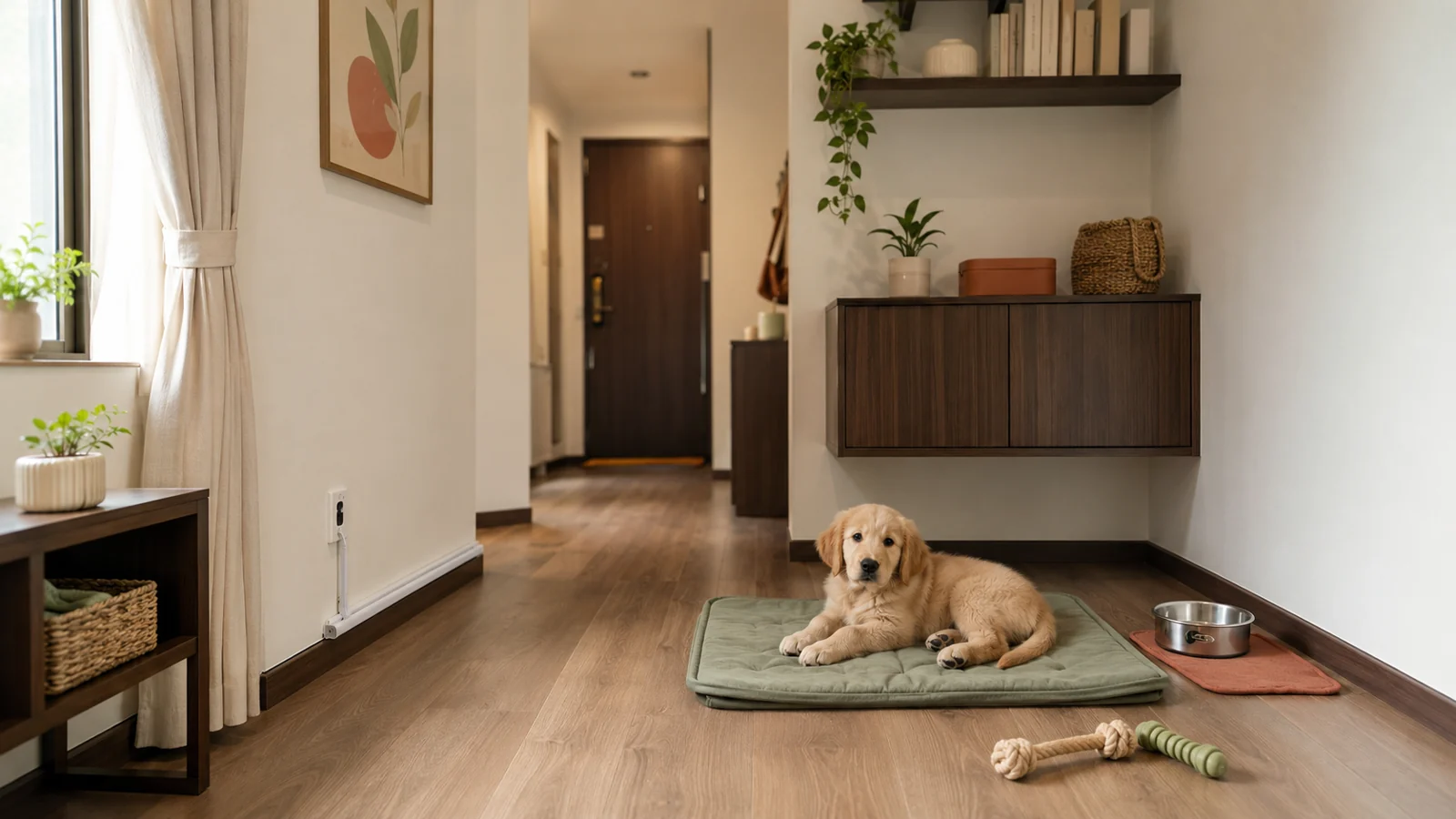
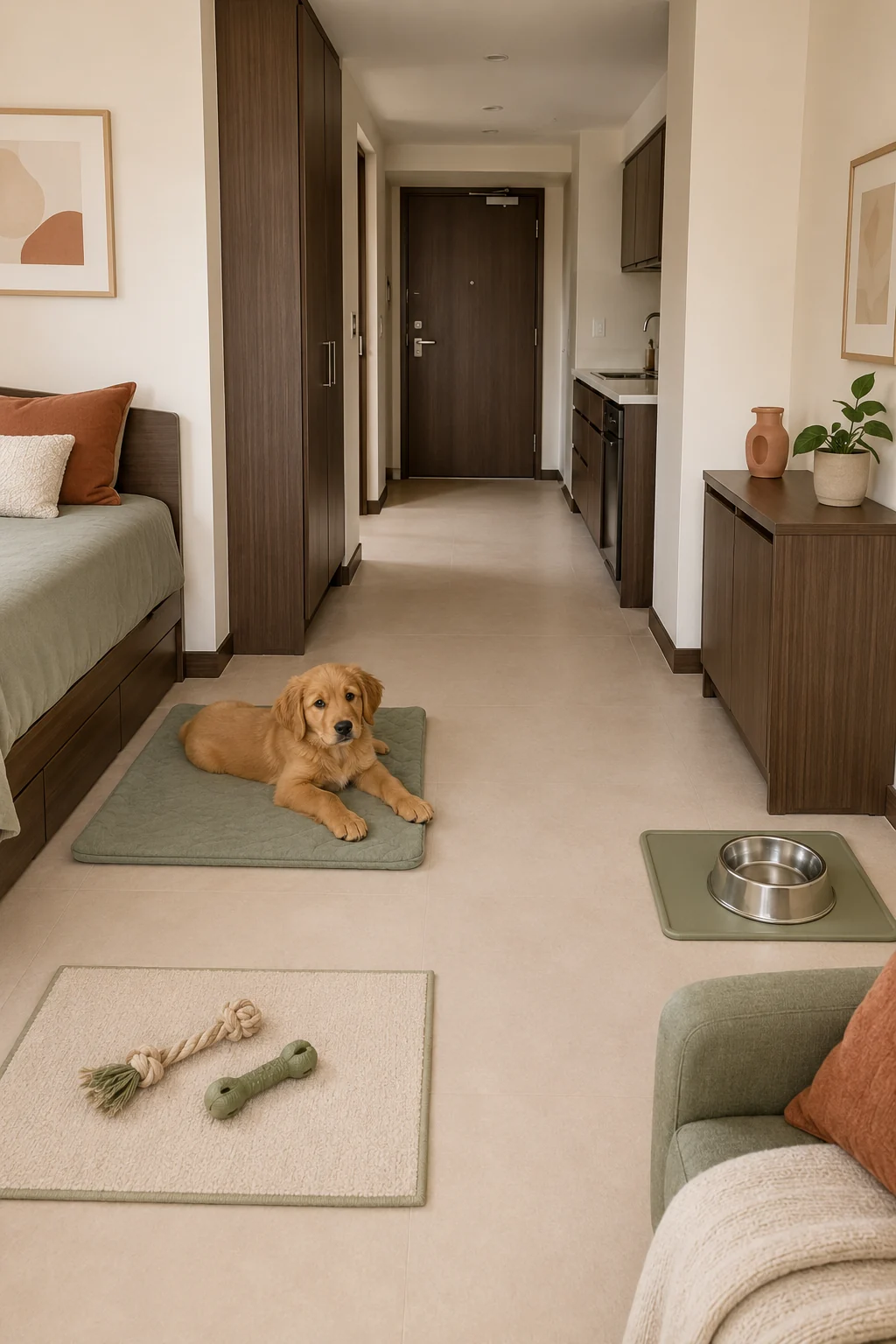
Set up one quiet, easy-to-clean room or gated room section as your puppy’s apartment home base. Keep it close enough to the apartment exit for fast, controlled trips outside, but not directly beside the front door, elevator wall, or busiest shared wall. Divide the space into a resting zone, water zone, approved-chew zone, and a clear path to the exit. Then remove reachable hazards, secure doors and windows, store supplies vertically in closed containers, and use the seven-day tracker below to adjust the setup based on noise, settling, chewing, and exit-route friction.
This is an apartment-specific room plan. It does not cover a complete first-day schedule, a first-night routine, medical care, or product rankings.
1. Choose the room by route, noise, and control
The largest room is not automatically the best puppy room. In an apartment, the useful room is the one you can control consistently.
Score each possible room from 0 to 2 on the following factors:
| Factor | 0 points | 1 point | 2 points |
|---|---|---|---|
| Exit route | Several obstacles or a long path to the door | Manageable path with one pinch point | Short, uncluttered path to the apartment door |
| Shared-wall exposure | Borders a noisy hallway, elevator shaft, or active neighbor wall | One moderate shared-wall exposure | Interior wall or generally quiet boundary |
| Hazard removal | Many cords, plants, bins, or low shelves | Some items must be moved | Most hazards can be removed or enclosed |
| Floor cleanup | Difficult to wipe or protect | Partly washable | Easy-to-clean surface with a washable layer |
| Door or gate control | Cannot be reliably closed or gated | Can be controlled with supervision | Secure door or properly fitted barrier |
| Storage | Supplies would remain on the floor | Limited closed storage | Vertical or closed storage is available nearby |
Choose the highest-scoring option, then perform a real floor-level inspection before using it. A bathroom may clean easily but contain chemicals, trash, toilet paper, and slippery surfaces. A bedroom may be quieter but contain cords, shoes, fabric, and under-bed gaps. A kitchen may be near the exit but usually has food, trash, appliances, and cleaning products. The point is not to pick a room by name; it is to pick the space that becomes simplest after hazards are removed.
The ASPCA recommends beginning in one “home base” room rather than giving a pet immediate access to an unfamiliar whole home. For an apartment puppy, that same one-room approach also makes sound, storage, and exit-route problems easier to observe.
2. Build four functional zones without crowding the floor
A small room works better when every item has a purpose and the center remains open.
Resting zone: Place the bed, mat, pen, or positively introduced crate against a quiet interior wall when possible. Do not wedge it beside a radiator, balcony door, front door, or speaker. The puppy should be able to rest without every hallway sound passing directly through the resting area.
Water zone: Put a stable water bowl on a washable mat away from bedding and electrical cords. Leave enough space to approach without squeezing between furniture.
Approved-chew zone: Keep only a few puppy-appropriate items available at once. Remove damaged items promptly. The goal is to make the legal chewing choices obvious, not to fill the floor with objects.
Exit lane: Preserve a direct, slip-resistant path from the puppy area to the room barrier and then to the apartment door. Shoes, delivery boxes, laundry baskets, and bags should never accumulate in this lane. In a building where every outdoor trip may involve a hallway, elevator, or stairs, a blocked lane creates preventable delay and excitement.
Confinement should be comfortable and taught positively, not used as punishment. VCA notes that a comfortable confinement area can protect an unsupervised puppy and provide an undisturbed resting place, while persistent vocalizing, escape attempts, salivation, or inability to settle are reasons to pause and seek veterinary guidance rather than simply increasing confinement (VCA: Crate Training and Confinement for Puppies and Dogs).
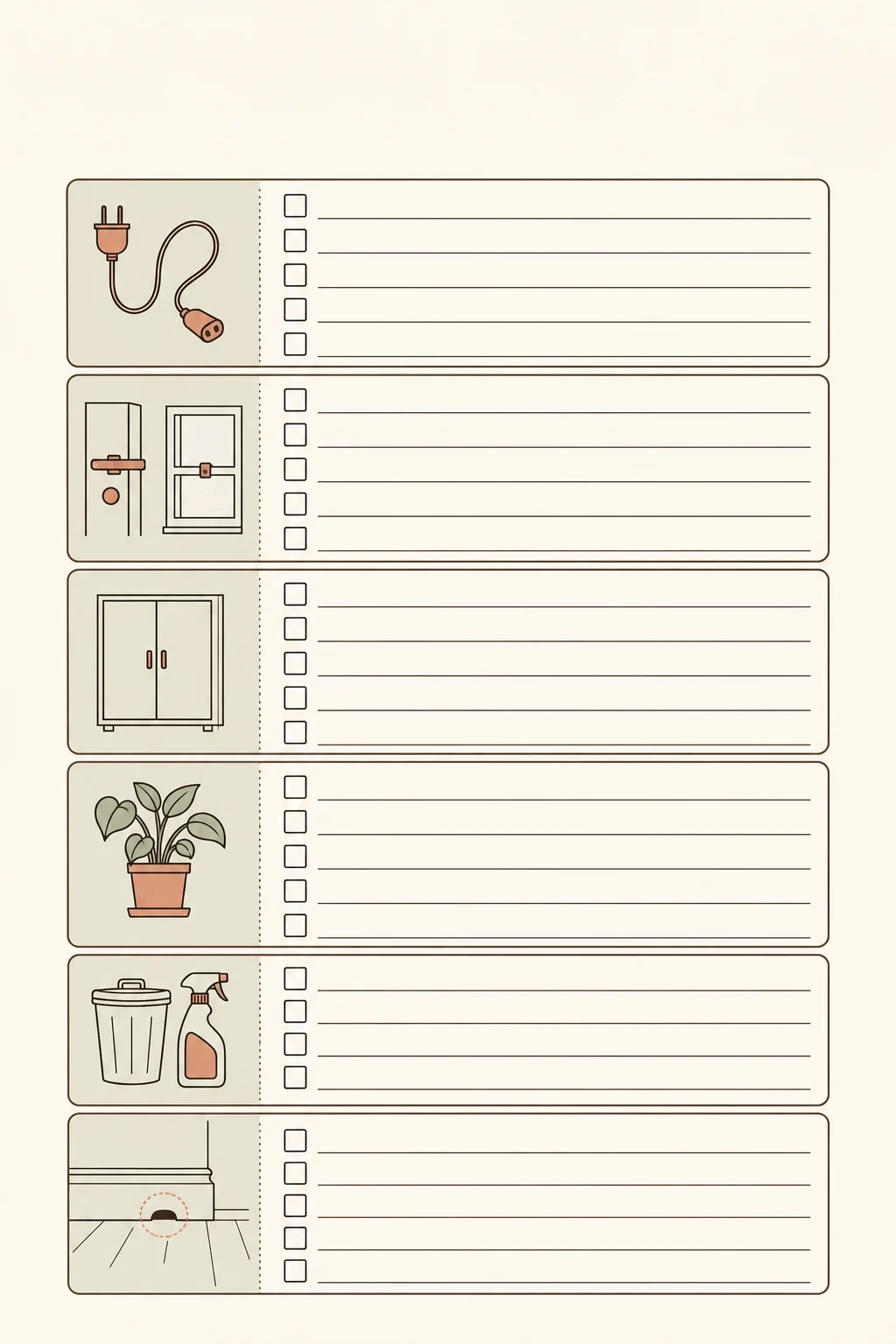
3. Complete a puppy-level hazard sweep
Inspect the room from the puppy’s height. Sit or kneel and scan every wall, corner, furnishing, and storage edge. Then check again while gently pulling on anything a puppy could mouth or paw.
Remove or secure:
- loose charging cables, extension cords, power strips, and lamp cords;
- shoes, socks, bags, children’s items, remote controls, batteries, and small objects;
- accessible trash, recycling, food packages, and delivery materials;
- medications, supplements, cosmetics, laundry products, and cleaning supplies;
- dangling blind cords, curtain ties, tablecloth edges, and unstable décor;
- reachable houseplants and loose potting material;
- gaps behind furniture or appliances where a puppy could become trapped;
- unsecured windows, screens, balcony doors, and the apartment entry door;
- pest-control baits or traps left by a landlord, previous tenant, or contractor.
VCA’s puppy-proofing guidance specifically recommends creating a decompression space, moving chewable household items out of reach, using secure food storage, checking door and window latches, controlling trash, hiding electrical cords, and keeping cleaning products and medications inaccessible (VCA: Puppy-proofing 101). The ASPCA likewise advises securing cords, openings, window screens, poisonous plants, and pest-control traps when pet-proofing a new home (ASPCA: Moving With Your Pet).
Treat “up high” as temporary unless the shelf is closed and stable. Puppies grow, climb, pull fabric, and knock objects down. Closed cabinets, latching containers, and cord channels are more dependable than moving hazards to the edge of a desk.
After cleaning, follow the product label and keep the puppy away until the area is ready for contact. The ASPCA’s household-products guide warns that some cleaners and laundry products can irritate or injure pets and advises immediate veterinary or poison-control contact after suspected toxic exposure (ASPCA: Poisonous Household Products).
4. Reduce shared-wall disturbance at the room level
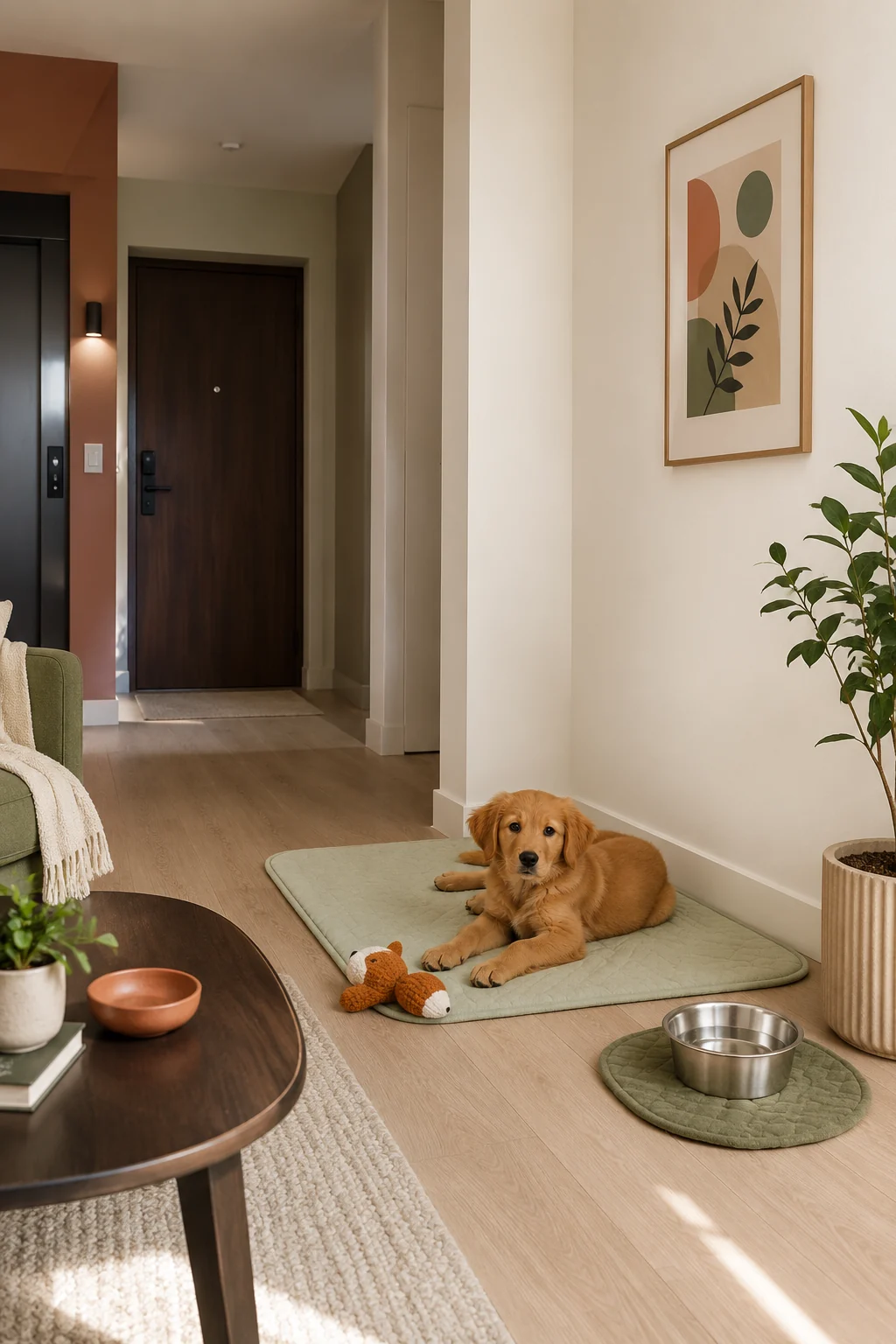
A puppy-safe room cannot guarantee silence, but the layout can reduce avoidable sound transfer and help you identify triggers.
Place the resting zone away from the wall shared with the elevator, stairwell, lobby, laundry room, garbage chute, or a neighbor’s main living area when another position is available. Add washable soft surfaces such as a fitted rug pad, mat, or curtain where appropriate, but do not create loose fabric edges the puppy can pull. Put noisy metal bowls, rolling toys, and the pen tray on a stable, washable layer so they do not rattle directly against a hard floor or wall.
Keep sound masking modest. A fan or low, steady household sound may soften sudden hallway noises, but it should not block your ability to hear the puppy or building alarms. Avoid placing speakers beside the resting zone.
Most importantly, track the exact trigger. “The puppy barked a lot” is too vague to improve the room. Record whether the sound followed an elevator bell, corridor footsteps, a neighbor’s door, plumbing, a delivery knock, or your own movement toward the apartment exit. Then change one variable at a time: move the bed, close an interior door, shift the pen away from the wall, or relocate a rattling bowl. The seven-day tracker makes those comparisons visible.
Do not punish alarm barking from inside the safe room. The room should remain a predictable place. If vocalization is persistent, escalating, or paired with frantic escape behavior, consult a veterinarian or qualified behavior professional rather than relying on thicker soundproofing or longer confinement.
5. Design the elevator and outdoor-exit handoff
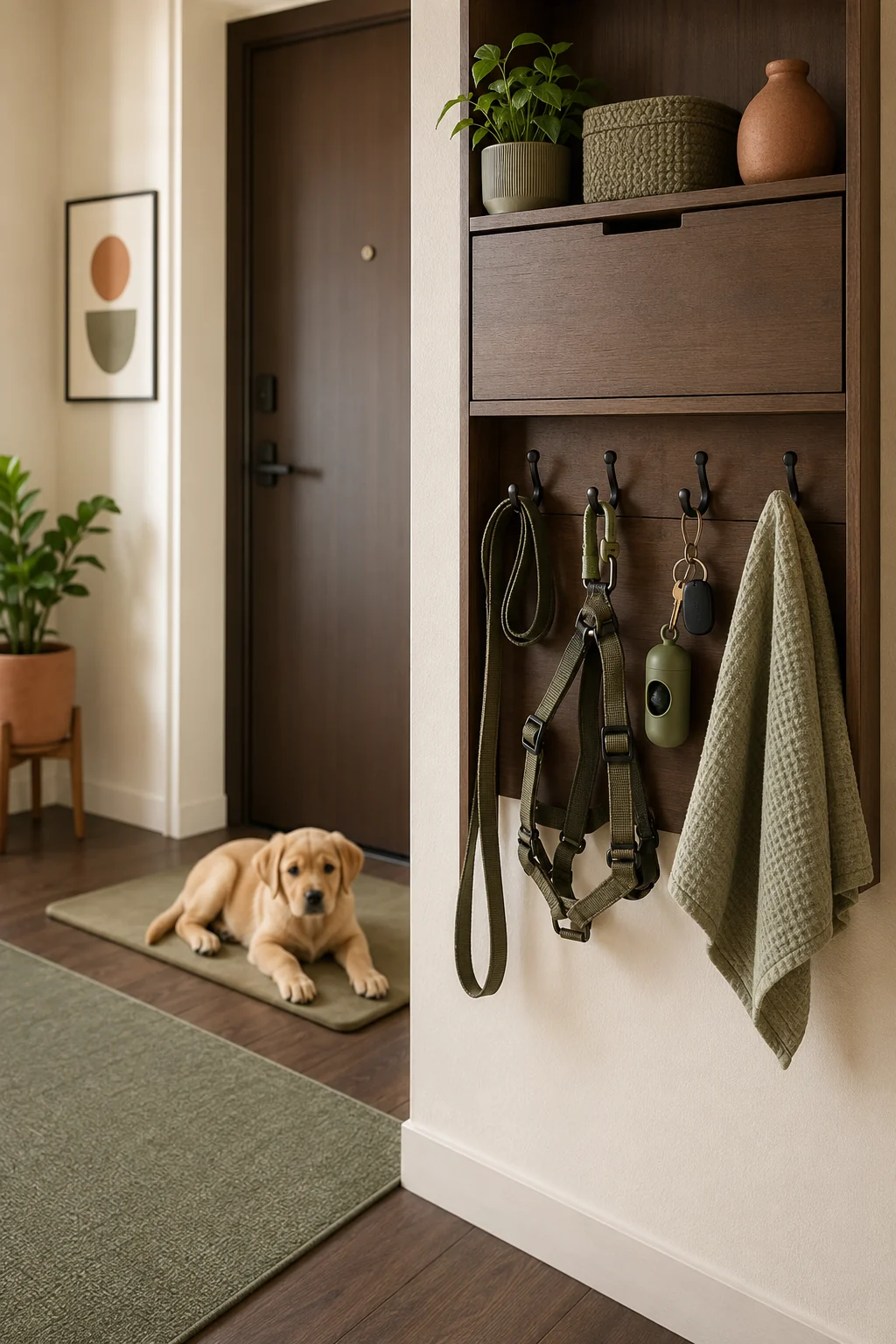
Limited outdoor access changes what belongs beside the puppy room. Create an adult-height “exit station” near the apartment door, not on the puppy-room floor. Store the leash, harness, waste bags, keys, building fob, and a small towel in one closed or unreachable location. This prevents searching for supplies while the puppy waits and reduces loose items that can be chewed.
Use the same controlled sequence every time:
- Clear the route from the puppy room to the apartment door.
- Attach the puppy’s walking equipment before opening the apartment door.
- Check the hallway before stepping out when possible.
- Keep the puppy close and controlled in corridors, stairwells, and elevators.
- Return directly to the home base and reset the exit station.
For elevator-sensitive dogs, Fear Free Happy Homes describes using brief elevator rides, rewards, and an immediate positive activity after exiting to build a better association rather than forcing prolonged exposure (City Dog Days: How To Make Them Fun, Not Frightening). With a young puppy, keep exposures brief and watch body language. Hesitation, a tucked tail, refusal to enter, or an inability to take food can mean the step is too difficult. Use stairs only when they are safe and appropriate for the puppy and building; ask your veterinarian about physical limitations specific to your puppy.
The room itself should support this route: no furniture blocking the gate, no toys scattered into the exit lane, and no storage bin that must be moved before every trip.
6. Use vertical storage and a two-minute reset
Small apartments become unsafe when puppy supplies spread across the floor. Keep daily items in one closed, adult-accessible cabinet, wall-mounted organizer, or stable high shelf. Store bulk food and treats in secure containers the puppy cannot open. Keep cleaning products physically separate from food, bowls, and toys.
Use three storage groups:
- Daily exit: leash, harness, waste bags, towel, keys, and building fob.
- Room care: spare washable bedding, cleanup supplies, and replacement chew items.
- Back stock: unopened food, extra supplies, and items not needed every day.
At each reset, remove damaged chews, wipe spills, return supplies, clear the exit lane, check the barrier, and scan for new objects dropped by people. This should take about two minutes. A short repeatable reset is more realistic than waiting for a weekly deep clean.
Avoid overfilling the room. A puppy-safe room needs open floor space, clear supervision sightlines, and a predictable set of legal choices. Rotating a small number of items also makes it easier to identify which object caused noise, chewing debris, or overexcitement.
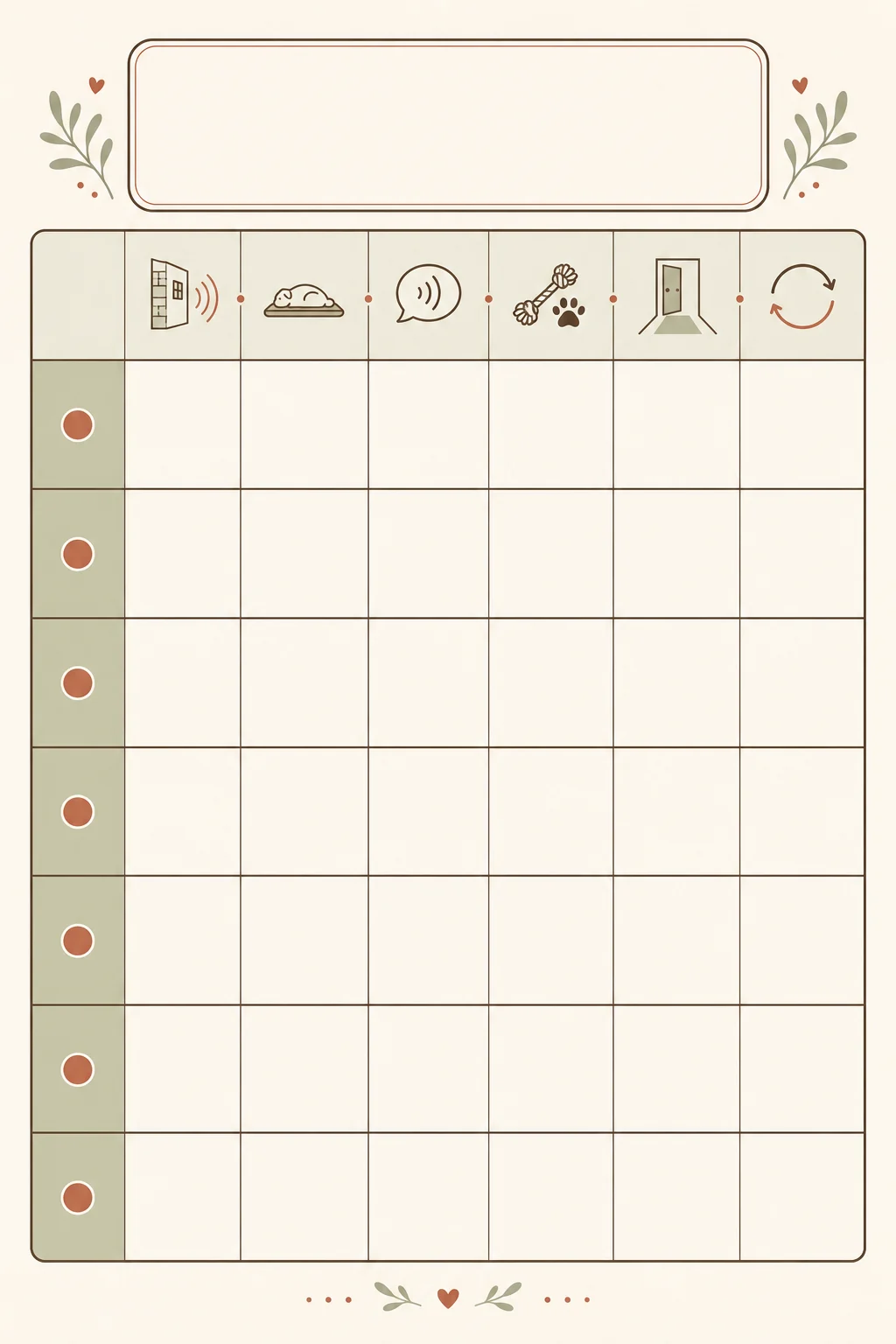
7. Seven-day apartment puppy-room observation tracker
Use this tracker after the physical setup is complete. Observe at several normal points each day rather than staging stressful tests. Change only one major room variable per day so you can tell whether it helped.
Vocalization scale
- 0: quiet or brief single sound;
- 1: short burst that stops without intervention;
- 2: repeated barking or whining that delays settling;
- 3: prolonged or escalating vocalization, frantic movement, or escape attempts.
| Day | Observation window | Trigger or building event | Settling result | Vocalization 0–3 | Chewing, pawing, or barrier contact | Exit-route friction | One change for the next day |
|---|---|---|---|---|---|---|---|
| 1 | Morning, midday, evening | Record elevator, hallway, plumbing, delivery, or household trigger | Note where the puppy chose to rest and whether settling was easy | Score each window | Identify the exact object or location | Note delays caused by missing gear or clutter | Choose one layout or storage adjustment |
| 2 | Same three windows | Compare with Day 1 triggers | Record whether the changed setup improved settling | Score each window | Check cords, fabric edges, baseboards, and barrier | Time the room-to-door handoff informally | Keep, reverse, or refine yesterday’s change |
| 3 | Include one normal departure cue | Record reaction to keys, shoes, door, or fob | Note whether the puppy remained able to rest | Score each window | Record pacing or door-focused behavior | Identify the narrowest pinch point | Move one object or alter one cue |
| 4 | Include a busier building period | Record neighbor doors, elevator traffic, or deliveries | Compare resting location with quiet periods | Score each window | Note sound-related pawing or rattling | Check control in hallway/elevator handoff | Adjust bed, mat, bowl, or barrier position |
| 5 | Include room cleanup/reset | Record response to cleaning and item rotation | Note return-to-rest time after reset | Score each window | Inspect all approved chews and room edges | Confirm supplies return to fixed storage | Simplify the room by removing one unnecessary item |
| 6 | Repeat the most difficult normal window | Record the known trigger without intensifying it | Compare with the earlier occurrence | Score each window | Note whether contact is less, equal, or greater | Recheck the complete exit sequence | Keep only the change supported by observation |
| 7 | Normal full-day review | List the three most common triggers | Identify the most reliable resting location and setup | Calculate the typical score range | List any unresolved hazard or repeated target | Name the remaining route problem | Write the final room plan and next review date |
At the end of Day 7, keep the room arrangement only if it passes all four checks:
- Physical safety: no reachable cord, toxic item, unstable object, escape gap, or unprotected door/window risk was observed.
- Functional settling: the puppy can rest in at least one predictable location during ordinary apartment activity.
- Neighbor-aware sound: the loudest repeatable room noises have been identified and reduced where practical.
- Exit readiness: one adult can move the puppy from the room to the secured apartment exit without searching for gear or stepping around clutter.
A score of 3, frantic escape behavior, or repeated failure to settle is not a reason to “wait it out” without review. Reduce the difficulty and seek professional guidance when distress persists.
8. Common apartment setup mistakes
Choosing the room closest to the door without checking noise. A short exit path is useful, but a room beside the elevator or lobby may expose the puppy to constant triggers.
Using the bathroom because it is easy to clean. A bathroom is only suitable after medicines, cleaners, razors, trash, toilet paper, cords, and accessible cabinets are secured and the floor provides stable footing.
Treating a baby gate as automatically secure. Fit, height, hardware, wall condition, and the puppy’s climbing or chewing behavior matter. Inspect the barrier daily and discontinue use if it shifts, creates a trapping gap, or becomes damaged.
Leaving all puppy supplies in the room. Bulk bags, extra chews, wipes, packaging, and laundry create clutter and new hazards. Keep only the current essentials inside.
Moving several things after every bark. Multiple simultaneous changes make the tracker useless. Change one major variable, observe, and compare.
Using the room as punishment. A safe room should predict rest, appropriate chewing, water, and calm supervision. VCA specifically cautions against using a crate as a punishment or prolonged daytime holding solution (To crate or not to crate?).
Conclusion
A successful apartment puppy-safe room is not a miniature pet store or a permanently closed-off box. It is a controlled home base with a clear exit lane, protected hazards, quiet resting position, closed vertical storage, and a layout you can improve from real observations. Build the simplest safe version first, use the seven-day tracker, and keep only the changes that make settling, neighbor-aware noise control, and elevator or outdoor handoffs more manageable.
Helpful visuals from this guide
Use these five visuals as quick reminders, then return to the full guide for context, limitations, and source details.
Pinterest does not let websites prefill its Title field. Each button below copies the correct title and opens that Pin. Click the Title field in Pinterest, press Ctrl + V, then save it to the board above.
Start with Pin 1 and repeat through Pin 5.
- Four Zones for an Apartment Puppy Room
See a practical small-space layout for a puppy home base with a quiet rest area, water, approved chews, closed storage, and a clear route to the door.
- Apartment Puppy Hazard Sweep
Use a floor-level room scan to check cords, latches, plants, bins, storage edges, and trapping gaps before giving a puppy access.
- Quieter Puppy Room Placement for Apartments
A practical apartment layout can separate the puppy’s rest area from the front door, elevator wall, rattling bowls, and the busiest shared boundary.
- Small-Space Puppy Exit Station
Organize leash, harness, waste bags, keys, a towel, and the building fob above a clear route from the puppy room to the apartment door.
- Seven-Day Apartment Puppy Room Tracker
Track building sounds, settling, vocalization, chewing, barrier contact, and exit-route friction for seven days before finalizing the room layout.
Optional: choose all 5 images at once
Frequently asked questions
Is a bathroom automatically the safest puppy room in an apartment?
No. A bathroom is easy to clean, but it may contain cleaners, medicines, trash, toilet paper, cords, slippery flooring, and accessible cabinets. Use it only after a complete puppy-height hazard sweep and a barrier check.
Should the puppy room be directly beside the apartment door?
Not necessarily. A shorter outdoor route helps, but a room beside the lobby, elevator, or busiest shared wall may receive more sudden noise. Balance route length with quietness, hazard control, and barrier reliability.
How much should I put inside a small puppy room?
Keep only the current essentials: a resting area, stable water, a few appropriate chew choices, and an open movement path. Store back stock, packaging, cleaning supplies, and extra gear in closed adult-accessible storage.
Can a fan or background sound solve apartment barking?
A low steady household sound may soften some sudden noises, but it cannot identify the cause or resolve persistent distress. Track the trigger, adjust the room layout one variable at a time, and seek professional guidance if the puppy cannot settle.
What belongs in an apartment puppy exit station?
Keep the puppy’s leash, harness, waste bags, a small towel, keys, and building fob together in a secure adult-height location near the apartment door, with the floor route kept clear.
When should I stop changing the puppy-room layout?
Keep a layout when it remains physically safe, supports ordinary settling, reduces repeatable room noise where practical, and allows a controlled trip to the apartment exit without missing gear or clutter. Reassess as the puppy grows.
Sources & further reading
- Puppy-proofing 101VCA Animal Hospitals · Accessed 2026-07-31
- Crate Training and Confinement for Puppies and DogsVCA Animal Hospitals · Accessed 2026-07-31
- Moving With Your PetASPCA · Accessed 2026-07-31
- Poisonous Household ProductsASPCA · Accessed 2026-07-31
- City Dog Days: How To Make Them Fun, Not FrighteningFear Free Happy Homes · Accessed 2026-07-31
- To crate or not to crate?VCA Animal Hospitals · Accessed 2026-07-31