A puppy-safe room for a future large-breed dog should be designed for the puppy you have today and the stronger, taller dog arriving month by month. Start with a low-clutter room, reliable traction, securely anchored furnishings, latchable storage, a growth-adjustable confinement setup, and barriers that cannot be pushed, climbed, or chewed apart. Then schedule recurring fit and strength checks instead of treating the first setup as permanent.
Large-breed puppies often keep growing longer than smaller dogs; VCA notes that many reach adult size between 12 and 18 months, while some may continue toward two years. That makes a growth-based inspection plan essential rather than optional (VCA Animal Hospitals).
1. Choose a room that will still work when the puppy is bigger
The best room is not necessarily the smallest spare space. It is the room that remains controllable when your puppy can reach higher, lean harder, carry larger objects, and cross the floor faster.
Prioritize these features:
- A door that latches fully. Test it by closing it firmly and applying pressure from the puppy side. A loose latch or lightweight folding screen is not a dependable primary boundary.
- Few exposed edges and low objects. Select a room where cords, baskets, shoes, plants, trash, and stored chemicals can be removed rather than merely rearranged.
- A washable, non-slick floor. If the existing floor is smooth, add stable, low-profile traction runners or mats that lie flat and do not slide, curl, or invite shredding.
- Good ventilation without an escape opening. Windows should close and lock securely; screens alone should not be treated as barriers against a growing dog.
- Enough turning and resting space. The puppy should be able to move between resting, water, and supervised activity areas without squeezing around furniture.
Avoid rooms that depend on fragile decor, open shelving, unstable freestanding gates, trailing curtains, or tall furniture that cannot be anchored. A laundry room may look practical but can be unsuitable if detergents, dryer sheets, cords, or appliance gaps remain accessible. A kitchen may be easy to clean but difficult to isolate from trash, food, cleaning products, and counters.
The ASPCA recommends enclosed storage for medications and cleaners, covered or inaccessible garbage, secure windows, and removal of reachable cords and curtain pulls (ASPCA). For a future large dog, interpret “out of reach” conservatively: today’s high shelf may become tomorrow’s nose-level shelf.
2. Build the room in zones, not as one open box
A useful large-breed puppy room has clear functions. The layout does not need permanent walls, but it should reduce collisions and keep essentials separate.
Rest zone
Place the crate or bed away from direct heat, drafts, door swing paths, and heavy foot traffic. Leave enough clearance around the crate to open its door fully and to inspect all hardware. Do not stack storage on top.
A home-confinement crate should allow the puppy to stand comfortably, lie down and stretch, and turn around. VCA advises that puppies may need a smaller crate first and a larger one as they grow (VCA Animal Hospitals). A divider-equipped crate can be practical only when the divider is secure, correctly fitted, and checked frequently. Do not buy for projected adult size and assume the setup is automatically appropriate today.
Water zone
Use a stable, washable water bowl on a grippy mat, away from bedding and electrical outlets. Confirm that the bowl cannot be flipped easily or trapped beneath furniture. Water should remain available unless a veterinarian gives case-specific instructions otherwise.
Activity zone
Keep the center of the room open. Offer only a small rotation of puppy-appropriate items that have been inspected for cracks, loose parts, torn fabric, exposed stuffing, or a size that could be swallowed. The purpose is not to fill the room with entertainment; it is to make every accessible object intentional.
Handoff zone
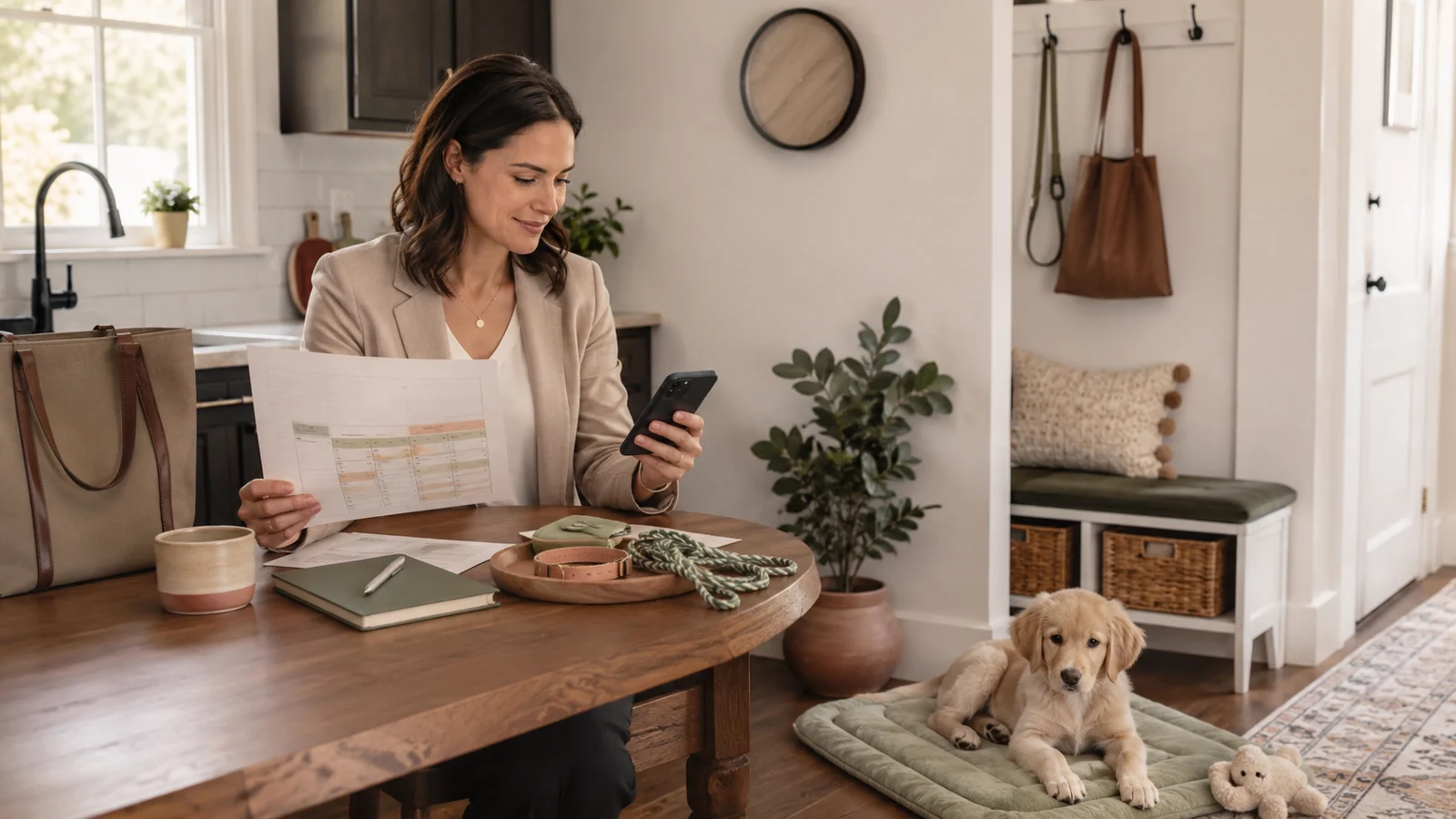
Outside the puppy’s reach, keep a simple room card with the puppy’s current weight, crate dimensions, gate check date, approved items, household emergency contacts, veterinarian details, and any observed escape or chewing attempts. This helps every adult use the same setup rather than improvising.
3. Size equipment for the current puppy and plan the next size
Rapid growth creates two common errors: buying equipment too small and leaving it in use too long, or buying adult-size equipment and using it without adjustment.
Use measurable fit checks instead of age labels:
- Crate: the puppy can stand without contacting the roof, turn without twisting, and lie comfortably stretched. The door, divider, tray, and fasteners remain secure.
- Gate or pen: the barrier does not flex excessively, walk across the floor, tip, expose pinch points, or leave a gap that can trap the head, jaw, or paw.
- Bed or mat: the puppy can rest without hanging substantially off the edge, and the cover has no holes, loose threads, or accessible fasteners.
- Bowls and stands: the setup stays stable under nudging and cannot be dragged into a cord, doorway, or crate entrance.
- Collar, harness, and room-only gear: remove unattended wearables unless a qualified professional has advised a specific setup. Any item used under supervision must be refitted as the puppy grows.
Measure the puppy and equipment on a fixed schedule—weekly during obvious growth spurts and at least monthly otherwise. Also re-check after any sudden change in reach, strength, chewing, climbing, or body size.
Professional input matters when estimated adult size is uncertain, when the puppy is between standard equipment sizes, or when confinement triggers persistent distress. VCA advises contacting a veterinarian if a confined dog salivates, vocalizes persistently, repeatedly tries to escape, or cannot settle. A certified, reward-based trainer or veterinary behavior professional can help assess barrier behavior; a veterinarian can guide health-related limitations without turning the room into a treatment plan.
4. Remove hazards for a stronger chewer and higher reach
Puppy-proofing advice should be applied beyond the puppy’s current height. VCA recommends securing chewable items, latching doors and windows, protecting cords, locking away cleaners and medications, controlling trash, and checking plants (VCA Animal Hospitals).
For a future large-breed dog, inspect four reach bands:
- Floor level: pills, coins, children’s toys, batteries, socks, rug corners, vent covers, cords, outlet strips, floor plants, and gaps behind appliances.
- Nose level: low shelves, baskets, trash lids, doorstops, dangling towels, table edges, crate covers, and gate latches.
- Paw-and-lean level: counters, windowsills, lightweight cabinets, freestanding shelves, and objects a puppy can pull down.
- Tail-and-body level: lamps, candles, narrow side tables, glass decor, unstable bowls, and anything a larger body can knock over while turning.
Anchor tall furniture to suitable wall structure using hardware appropriate for the wall and furniture. Remove tablecloths, hanging cords, blind loops, and lightweight objects that create a pull-down chain. Cover or reroute electrical cords so the puppy cannot reach them; simply tucking a live cord behind a movable bed is not enough.
Inspect door hardware and gates from the puppy’s side. Press, pull, and shake with more force than the puppy currently uses, while staying within the manufacturer’s installation instructions. A pressure-mounted gate may be unsuitable where a forceful push could send the puppy toward stairs or another hazard. Never rely on a barrier whose failure would expose the puppy to an immediate fall, exterior door, pool, garage, or toxic storage area.
5. Use the large-breed puppy-safe room decision matrix
Complete this matrix before the puppy uses the room unsupervised. Every row must pass. A “conditional” result means the room is not ready until the condition is corrected or a qualified professional approves a specific alternative.
| Check area | Pass criteria | Fail criteria | Action before use |
|---|---|---|---|
| Boundary | Door, gate, or pen stays closed, upright, and correctly installed when pushed and pulled; no climbable horizontal setup or trapping gap | Flexes, tips, slides, unlatches, exposes stairs/exits, or creates head/paw gaps | Reinstall, replace, or choose another room |
| Floor traction | Walking route is dry, level, and grippy; mats lie flat and do not shift under a firm foot test | Slick surface, curling edges, loose rugs, exposed pad, or shreddable foam | Add secure traction or remove unsafe covering |
| Crate fit | Puppy stands, turns, and lies stretched comfortably; divider and door hardware are secure | Head contact, cramped turning, excessive unused space without a safe divider, damaged wire, or loose fastener | Adjust divider or change crate size |
| Reach control | No cords, chemicals, medications, plants, trash, food, small objects, or pull-down items in any reachable band | Any hazard can be mouthed, pawed, climbed to, or pulled down | Remove it or lock it in enclosed storage |
| Furniture stability | Tall/heavy pieces are anchored; lightweight pieces cannot tip or trap; crate is not supporting stored objects | Wobble, accessible drawer climbing, unstable shelving, or objects stacked over the puppy | Anchor, relocate, or remove |
| Water and rest layout | Water is stable and accessible; bedding is intact; zones do not block exits or crate doors | Spill reaches outlets/bedding, bowl flips easily, fabric has holes/strings, or route is cramped | Reposition and replace damaged items |
| Growth capacity | Next review date is recorded; equipment has measurable remaining fit; replacement plan exists | No review date, nearly outgrown gear, or adult-size assumption without current fit check | Measure now and schedule the next check |
| Professional escalation | Household knows which signs require veterinarian, trainer, or behavior-professional input | Repeated escape attempts, distress, injury risk, or fit uncertainty is being ignored | Stop unsupervised use and obtain guidance |
Decision rule: the room passes only when all eight rows pass. Re-run the matrix after equipment changes, a growth spurt, a new chewing or climbing behavior, damage to a barrier, or any near miss.
This matrix is a screening tool, not a guarantee. Manufacturer instructions, building conditions, the individual puppy’s behavior, and professional advice take priority.
6. Run a controlled strength-and-growth test
Before unsupervised use, perform a supervised rehearsal:
- Remove the puppy and inspect the empty room at floor, nose, paw-and-lean, and tail level.
- Test every latch, anchor, gate, crate fastener, mat edge, and furniture item.
- Return the puppy for a short supervised session and observe where they mouth, push, climb, dig, pace, or become stuck.
- Record the first three targets the puppy investigates; those are your real priority hazards.
- Correct the setup, then repeat the decision matrix.
- Increase time only when the puppy settles safely and the equipment remains intact.
Do not “test” by leaving the puppy alone and checking whether anything bad happens. A near miss is evidence that the setup failed, even if there was no injury.
Common mistakes include trusting a screen as an escape barrier, leaving a collar or harness on during unattended confinement, using a decorative freestanding gate, storing food or cleaners above an accessible counter, placing a crate beside dangling cords, and waiting for equipment to look obviously too small before measuring it.
7. Maintain the room as the puppy grows
A large-breed puppy-safe room is a maintained system. Put the next inspection date on the handoff card and review:
- body and equipment measurements;
- door, crate, gate, and anchor hardware;
- new reach zones;
- floor traction and mat wear;
- bedding, toys, and bowl condition;
- evidence of chewing, rubbing, climbing, digging, or pushing;
- any signs that confinement is causing persistent distress.
Contact your veterinarian about individual physical limitations, unusual movement, pain, injury, or health concerns. Consult an appropriately credentialed behavior professional for repeated escape behavior or distress. For installation questions, follow the barrier or anchoring manufacturer’s instructions and use a qualified installer when wall structure or stair placement makes failure high consequence.
The finished room should feel intentionally plain: secure boundary, open movement space, stable traction, correctly fitted rest area, accessible water, a few inspected items, and no reachable household clutter. That simplicity is what makes the setup easier to reassess as a small puppy becomes a powerful adult dog.
Helpful visuals from this guide
Use these five visuals as quick reminders, then return to the full guide for context, limitations, and source details.
Pinterest does not let websites prefill its Title field. Each button below copies the correct title and opens that Pin. Click the Title field in Pinterest, press Ctrl + V, then save it to the board above.
Start with Pin 1 and repeat through Pin 5.
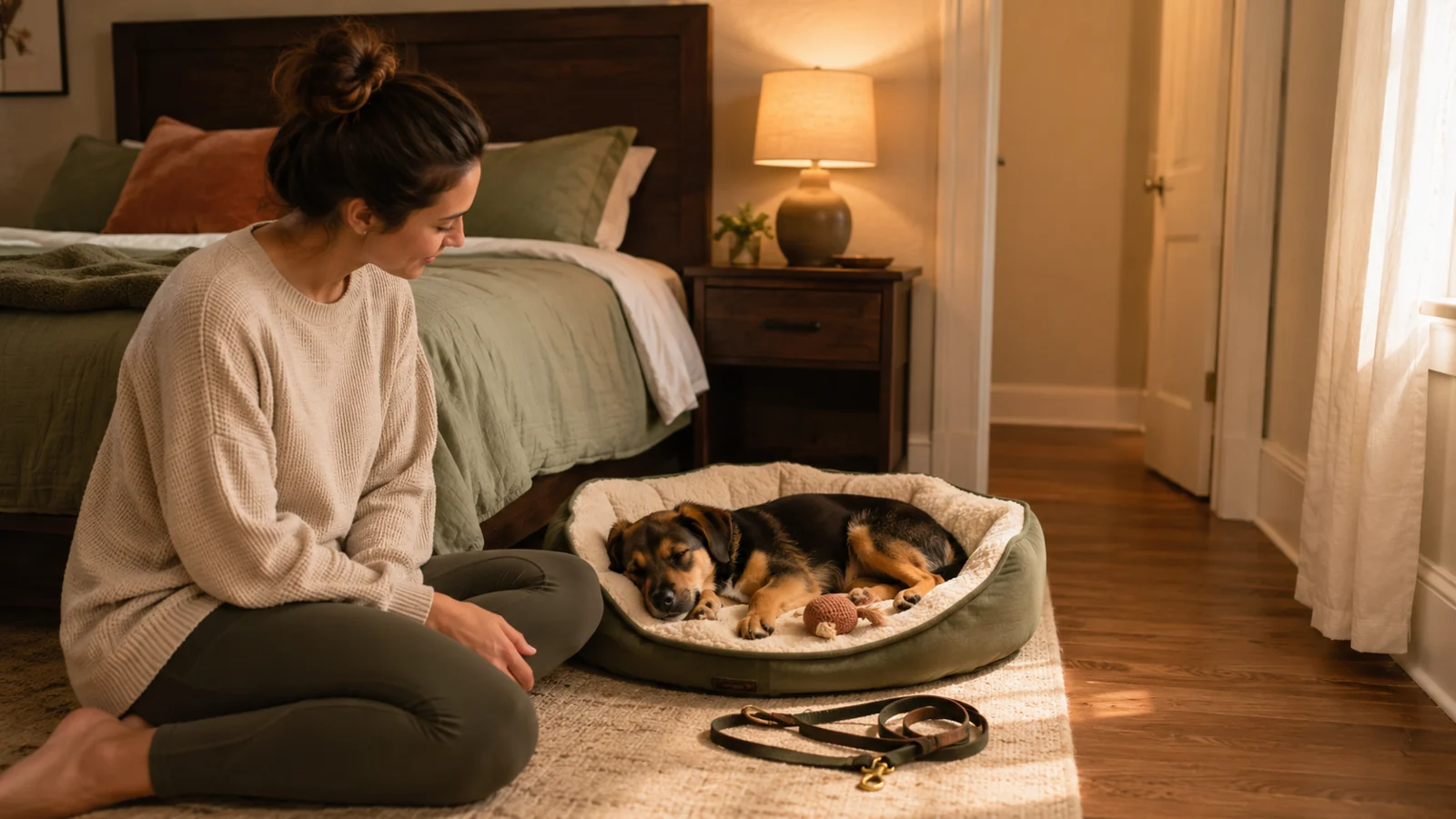
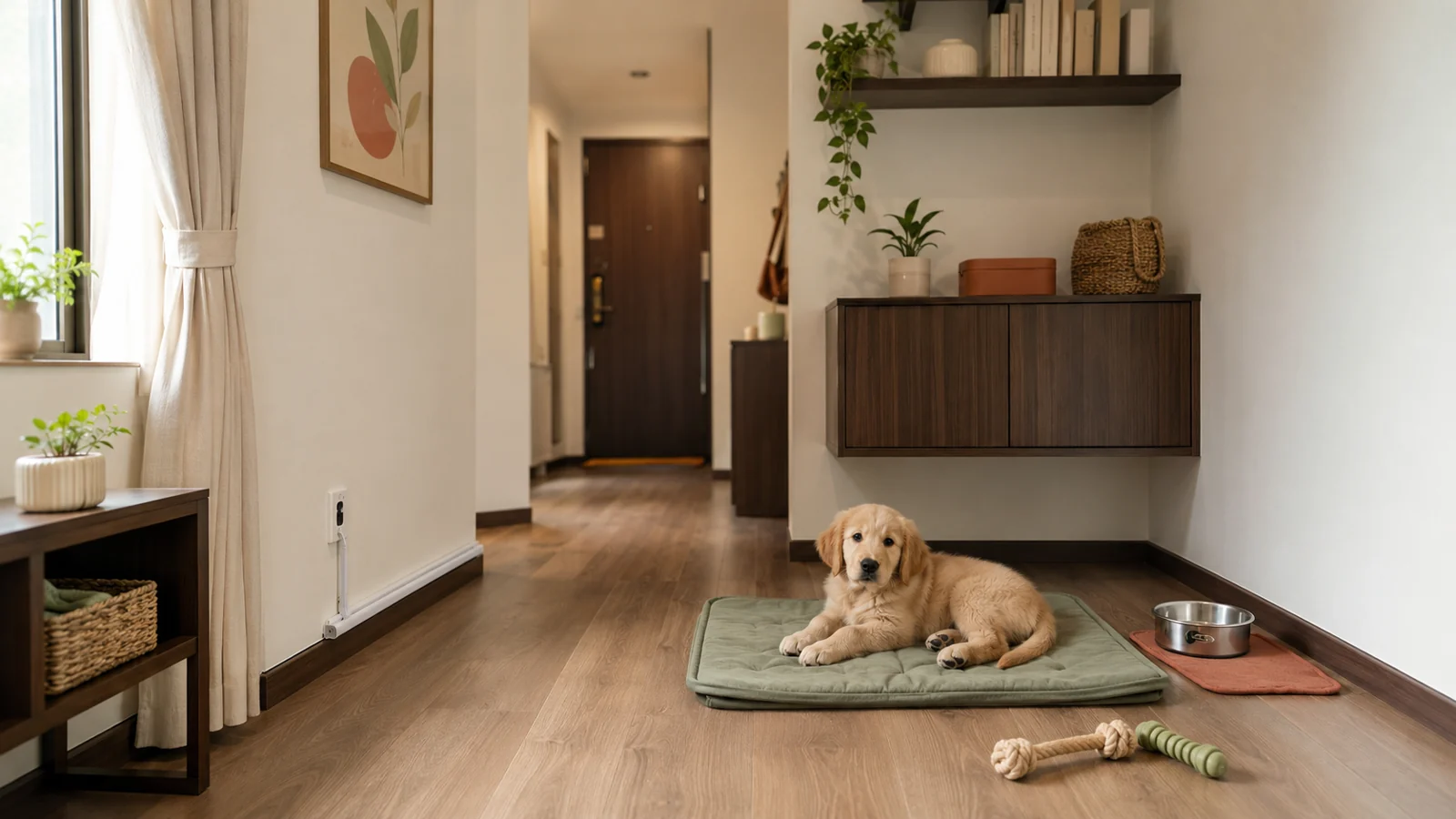
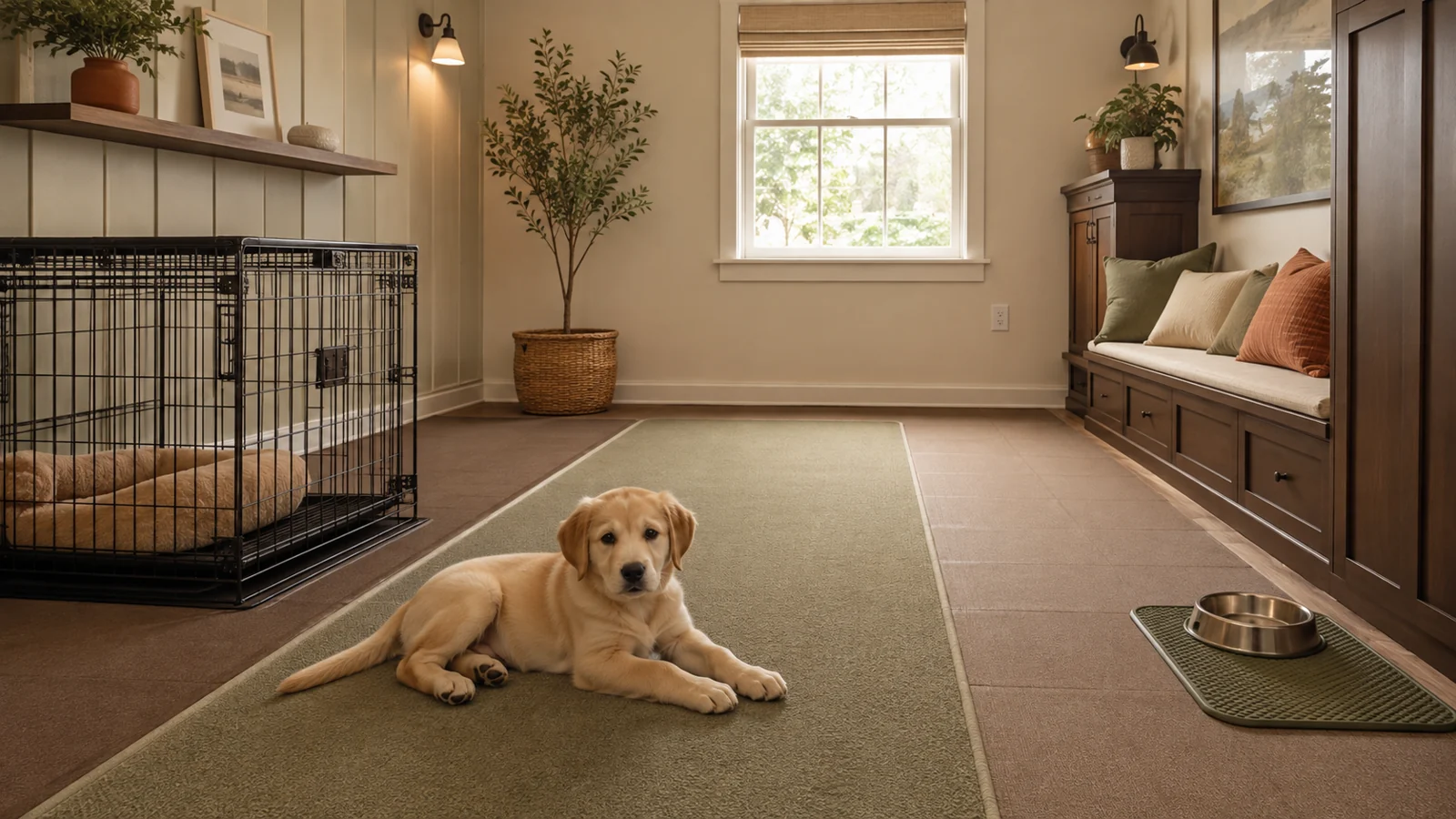
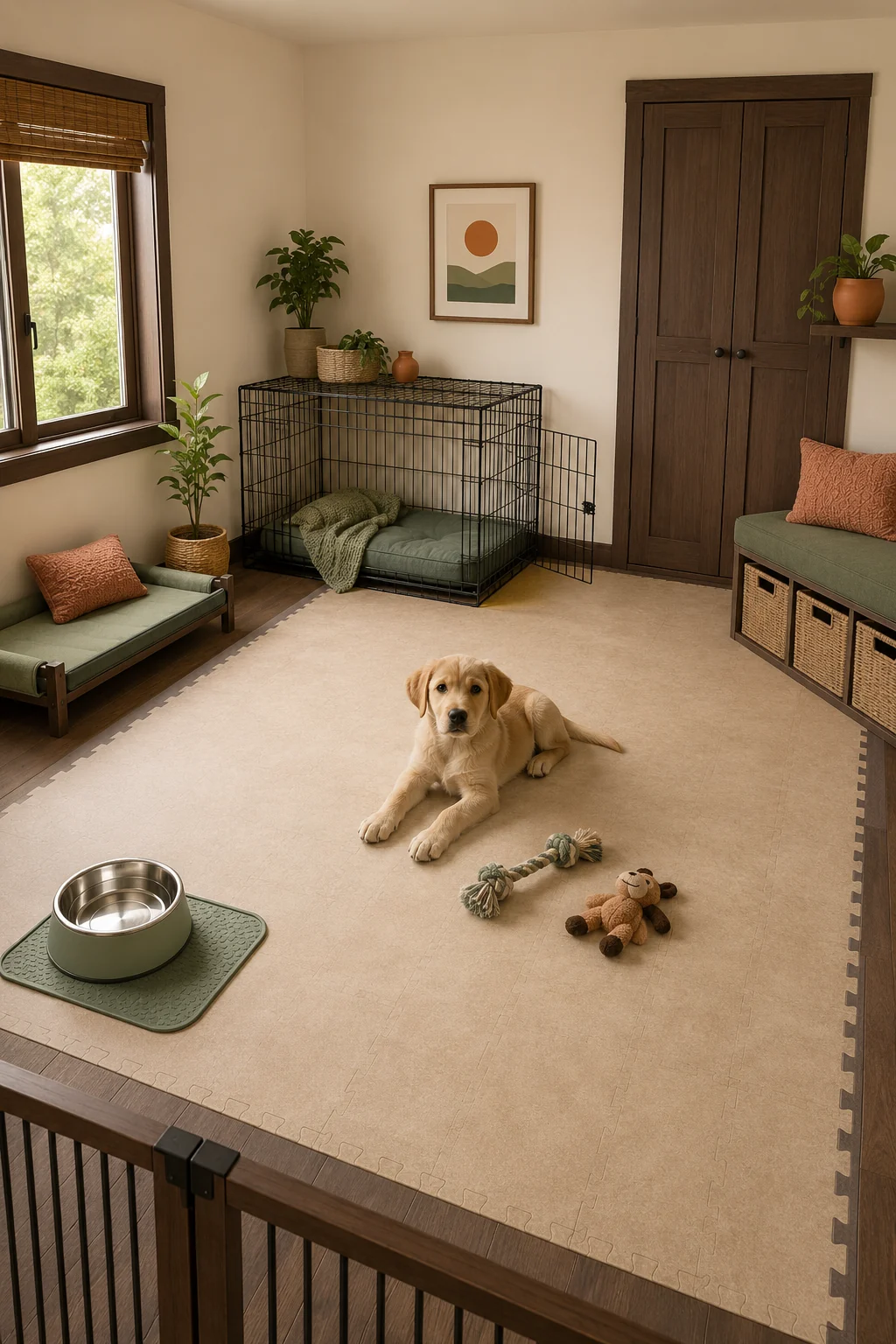
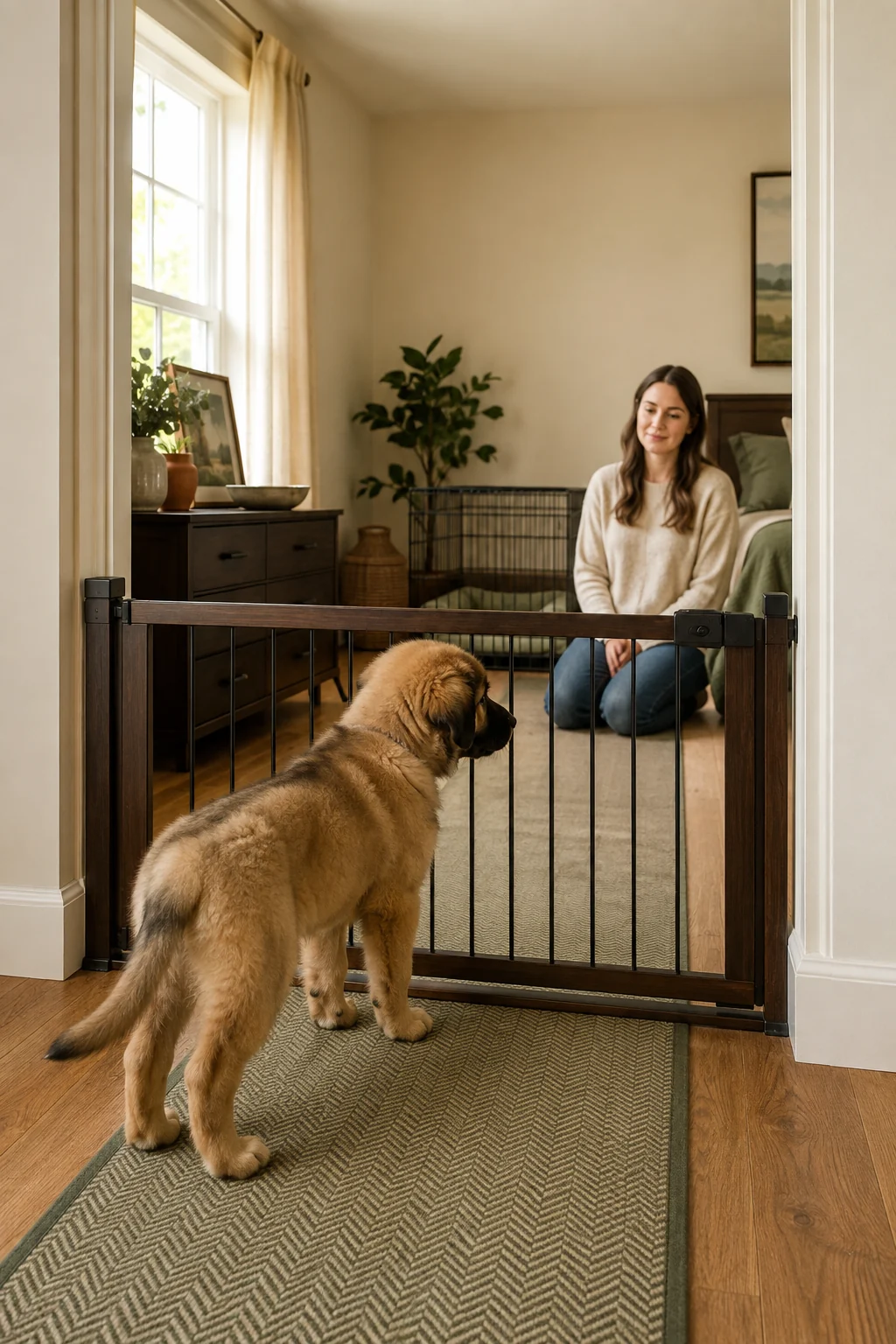
- A Growth-Aware Puppy Room Layout
See a practical large-breed puppy room layout with a secure rest area, stable water station, open movement space, and controlled storage.
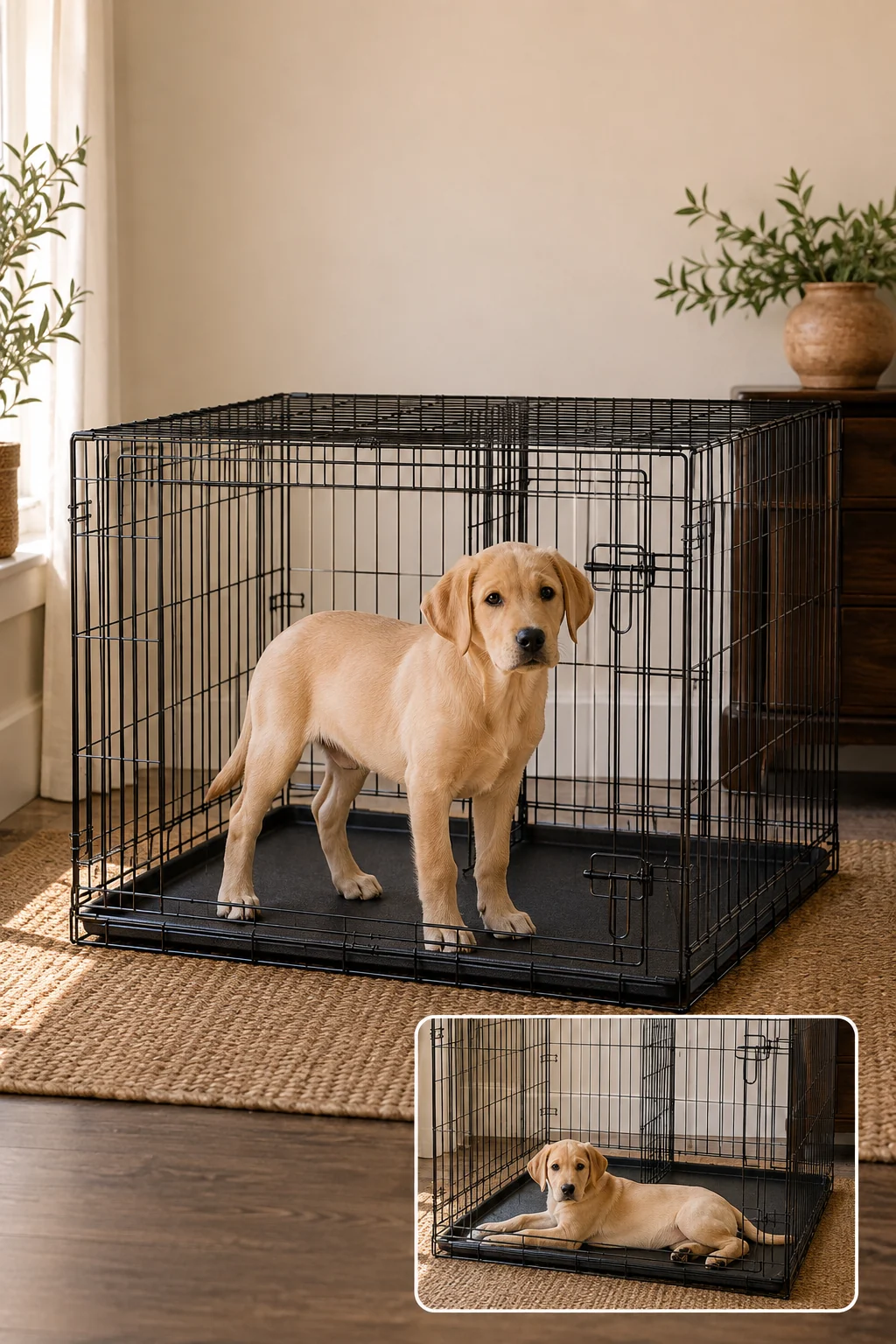
- Check Crate Fit as Your Puppy Grows
Use visible fit checks for standing, turning, stretching, door security, and divider placement as a large-breed puppy changes size.
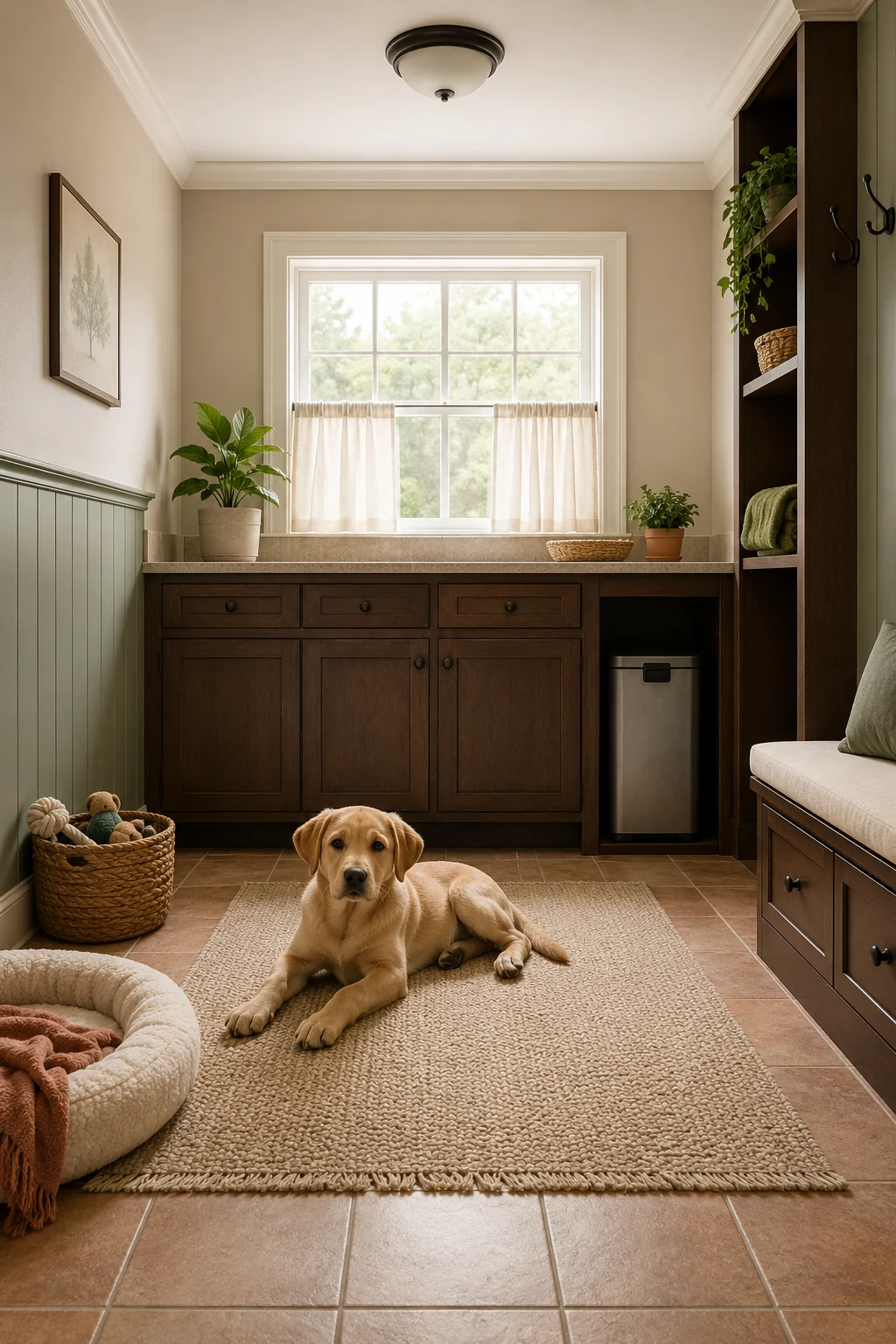
- Puppy-Proof Beyond Today’s Reach
A visual sweep from floor to counter height helps large-breed puppy owners remove cords, trash, plants, and pull-down hazards early.
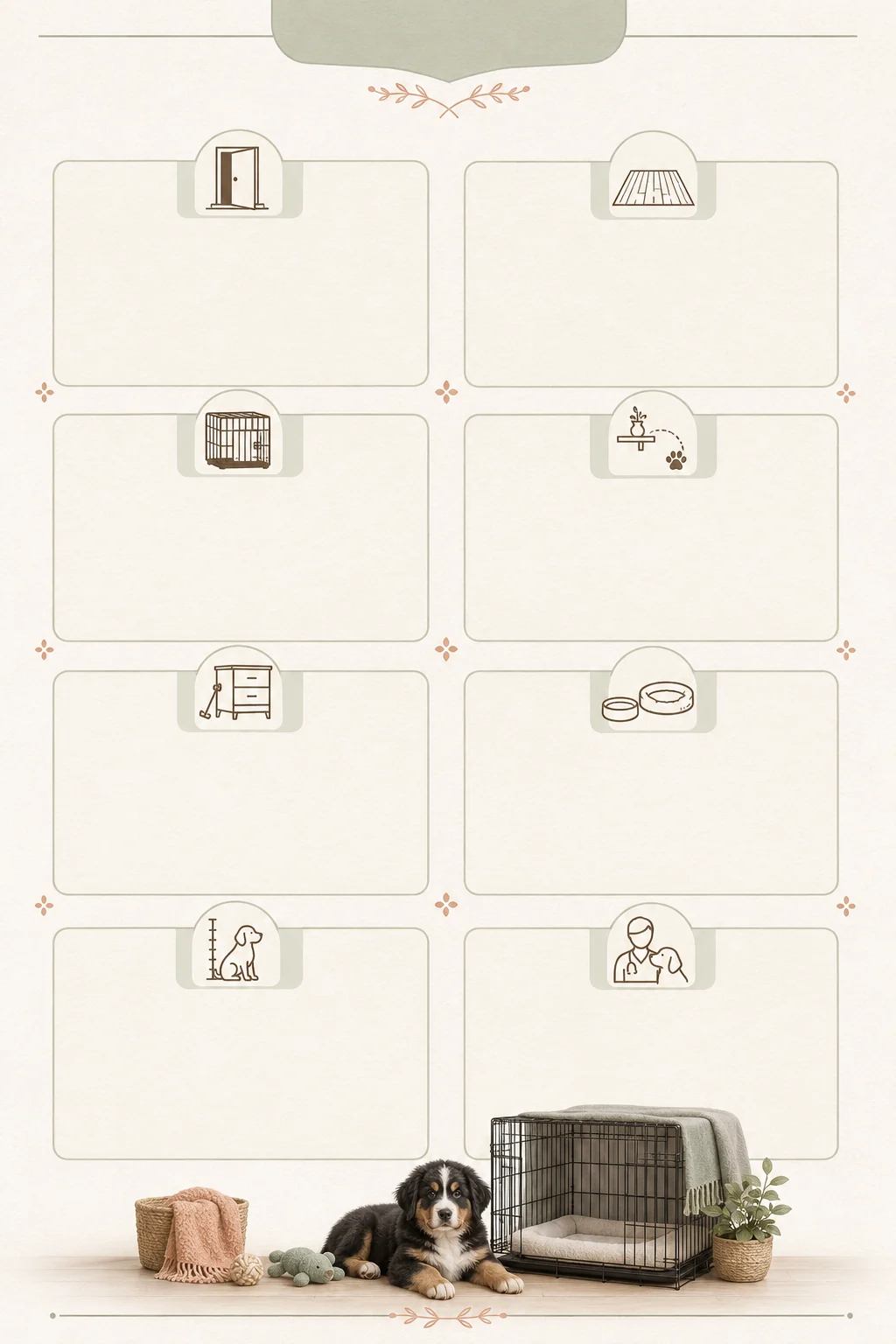
- Large-Breed Puppy Room Safety Check
Use the article’s eight-point matrix to check boundaries, traction, crate fit, reach control, furniture, layout, growth capacity, and escalation needs.
- Test the Room Before Leaving Your Puppy
A short supervised rehearsal can reveal real pressure points in gates, mats, crate hardware, and reachable objects before the room is used alone.
Optional: choose all 5 images at once
Frequently asked questions
Should](https://www.aspca.org/news/what-inspect-when-youre-expecting-puppy-or-kitten%22,%22publisher%22:%22ASPCA%22,%22accessedDate%22:%222026-07-31%22}],%22faqs%22:[{%22question%22:%22Should) I buy an adult-size crate immediately?
Not automatically. Use a crate or secure divider setup that fits the puppy now, then measure and adjust as growth changes standing, turning, and stretched resting space.
How often should I recheck the room?
Check weekly during visible growth spurts and at least monthly otherwise, plus immediately after damage, a near miss, a new escape attempt, or a change in reach or strength.
Is a pressure-mounted gate enough for a large-breed puppy?
It depends on the location, installation, manufacturer instructions, and consequences of failure. Do not use a barrier where a push-through could expose the puppy to stairs, an exterior exit, or another severe hazard.
Can I leave a collar or harness on in the safe room?
Unattended wearables can catch on crate or room hardware. Remove them for unsupervised confinement unless a qualified professional has given a case-specific reason and safer setup.
What flooring works best in the room?
Choose a dry, level, easy-to-clean surface with stable traction. Any runner or mat should lie flat, resist sliding, and have no curling edges or shreddable exposed material.
When should I ask a professional for help?
Seek guidance for persistent confinement distress, repeated escape attempts, uncertain equipment fit, physical limitations, unusual movement, injury, or a barrier installation where failure could have serious consequences.
Sources & further reading
- How to Puppy-Proof Your HouseVCA](https://vcahospitals.com/pediatric/puppy/prep-supplies/how-to-puppy-proof-your-house%22,%22publisher%22:%22VCA) Animal Hospitals · Accessed 2026-07-31
- Crate Training and Confinement for Puppies and DogsVCA](https://vcahospitals.com/know-your-pet/crate-training-your-dog---an-overview%22,%22publisher%22:%22VCA) Animal Hospitals · Accessed 2026-07-31
- Puppy Growth and MaturityVCA](https://vcahospitals.com/pediatric/puppy/behavior-training/when-will-my-puppy-mature%22,%22publisher%22:%22VCA) Animal Hospitals · Accessed 2026-07-31
- What to Inspect When You’re Expecting a Puppy or KittenASPCA · Accessed 2026-07-31