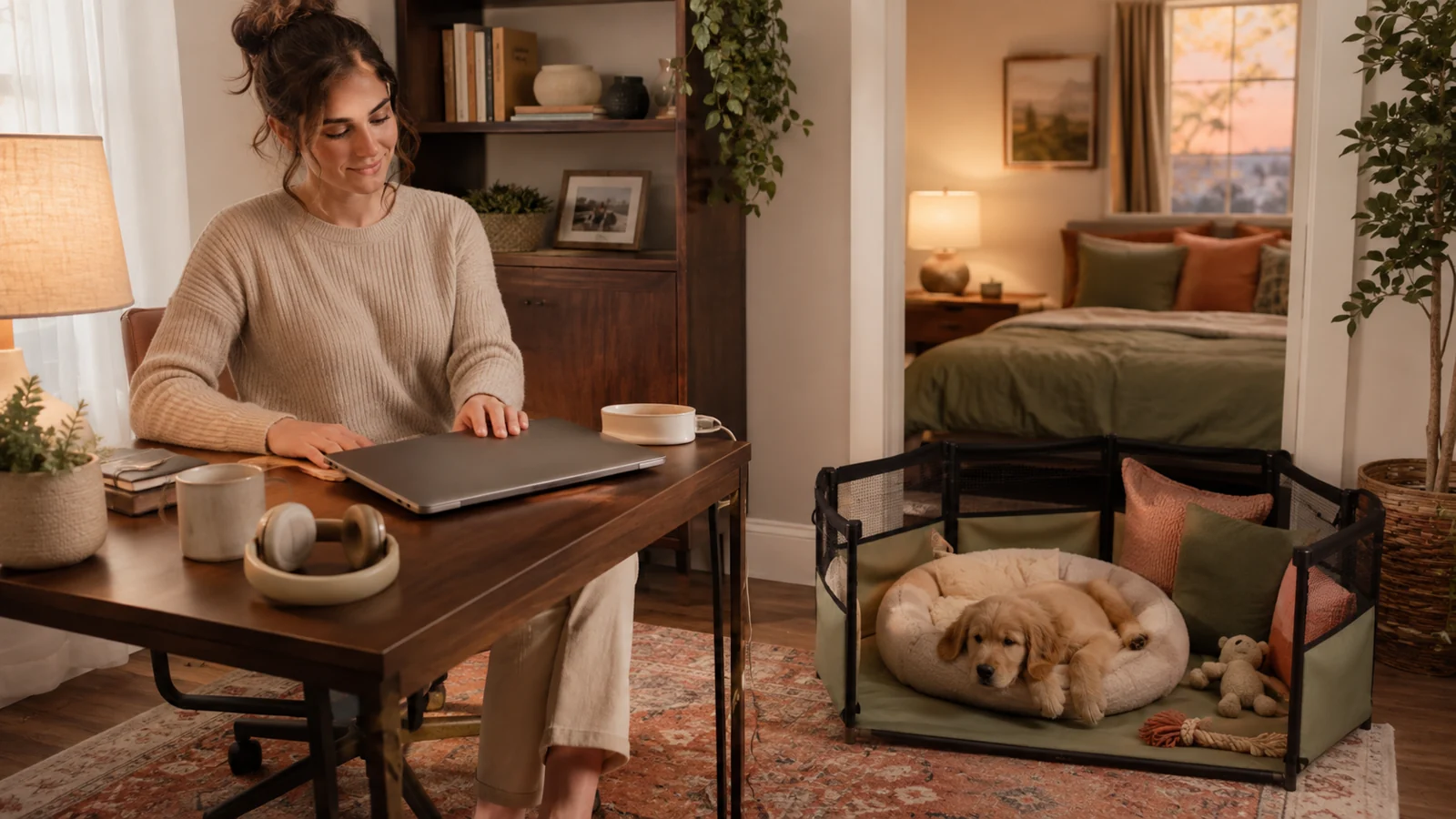
A puppy-safe work-from-home room should be a secure, puppy-proofed space close enough for you to monitor but separate enough that your puppy can rest without receiving attention every time you move. Build it around three zones—rest, quiet activity, and access—then match how you use the room to your meeting and focus blocks. The goal is not to keep a puppy confined through an entire workday. It is to create a predictable management space for the portions of the day when you cannot actively supervise.
Choose a room that fits your workday
The best room is not automatically your office. It is the room that gives you the safest combination of containment, visibility, low stimulation, and quick access between work blocks.
Use these four tests:
| Test | A workable setup | Fix before using the room |
|---|---|---|
| Containment | A closed door, securely mounted gate, or puppy-appropriate pen keeps the puppy inside | A freestanding barrier can be pushed over, climbed, or squeezed around |
| Visibility | You can check the puppy directly or with a camera without walking through the room constantly | The puppy disappears behind furniture or near an exit |
| Stimulation | The room is away from the front door, busy hallway, and repeated delivery noise | Every sound triggers running, barking, or frantic checking |
| Work separation | Your desk is outside the room or positioned so the puppy cannot reach cables, wheels, papers, or bags | The puppy can reach the power strip, chair base, headset cable, or trash |
A spare room, gated section of a living room, or quiet corner beside the office can all work. A kitchen, laundry room, or crowded office may be harder to make safe because food, chemicals, cords, small objects, and moving equipment are often within reach.
Choose the smallest area that comfortably supports rest and calm movement without creating a cramped obstacle course. VCA notes that a carefully puppy-proofed room or securely installed gate can be an alternative to a crate, while planned confinement should remain a management tool rather than an all-day substitute for interaction and activity (VCA Animal Hospitals).
Puppy-proof from floor level, not standing height
Before adding a bed or toy, empty the candidate room as much as practical and inspect it from the puppy’s height. Puppies explore with their mouths, and hazards that seem uninteresting from a desk chair can become targets during a video call.
Complete this room sweep:
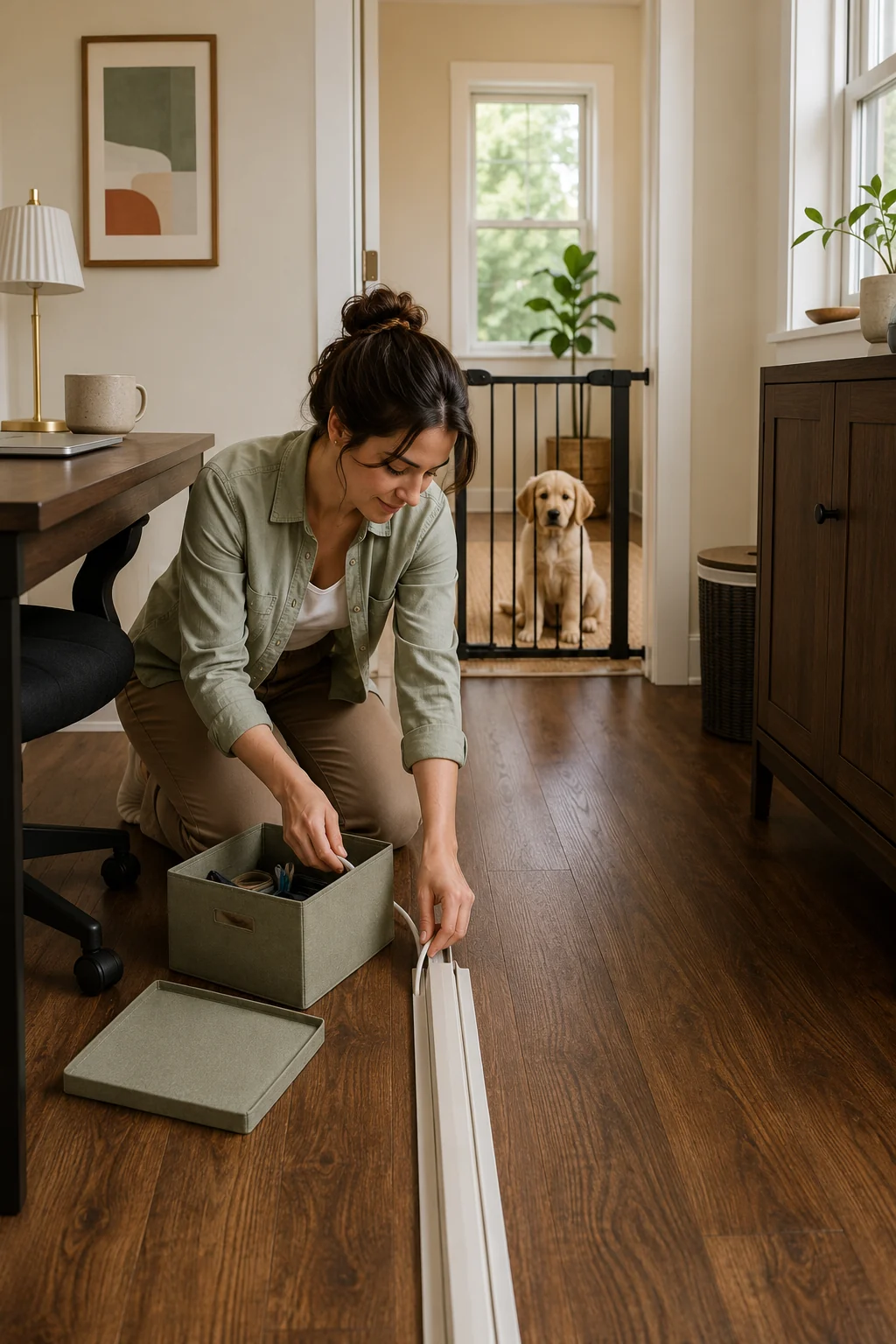
- Unplug, route, or physically block access to electrical cords, chargers, power strips, and dangling headset cables.
- Remove medications, cleaning products, pest-control products, candles, food, gum, supplements, and trash.
- Pick up small objects such as clips, erasers, batteries, children’s toys, rubber bands, and pieces of packaging.
- Move shoes, bags, blankets with loose fringe, and low-hanging curtain cords out of reach.
- Confirm that windows and doors close and latch securely.
- Remove or block access to plants unless you have verified that the specific plant is safe for dogs.
- Check underneath furniture for dropped pills, food, staples, cords, and gaps where a puppy could become stuck.
- Stabilize shelves, lamps, and lightweight furniture that could tip when bumped or pulled.
- Recheck the room after every workday because office supplies and cups tend to migrate back into the puppy zone.
The ASPCA advises keeping medications in enclosed cupboards, cleaners inaccessible, trash covered, small toys picked up, cords raised, and opening windows screened and locked (ASPCA). VCA similarly recommends securing cords, chemicals, medications, trash, plants, and doors or windows as part of puppy-proofing (VCA Animal Hospitals).
Do not rely on “I will notice before anything happens” during a meeting. If an item would be unsafe while your attention is on a screen, it does not belong within reach.
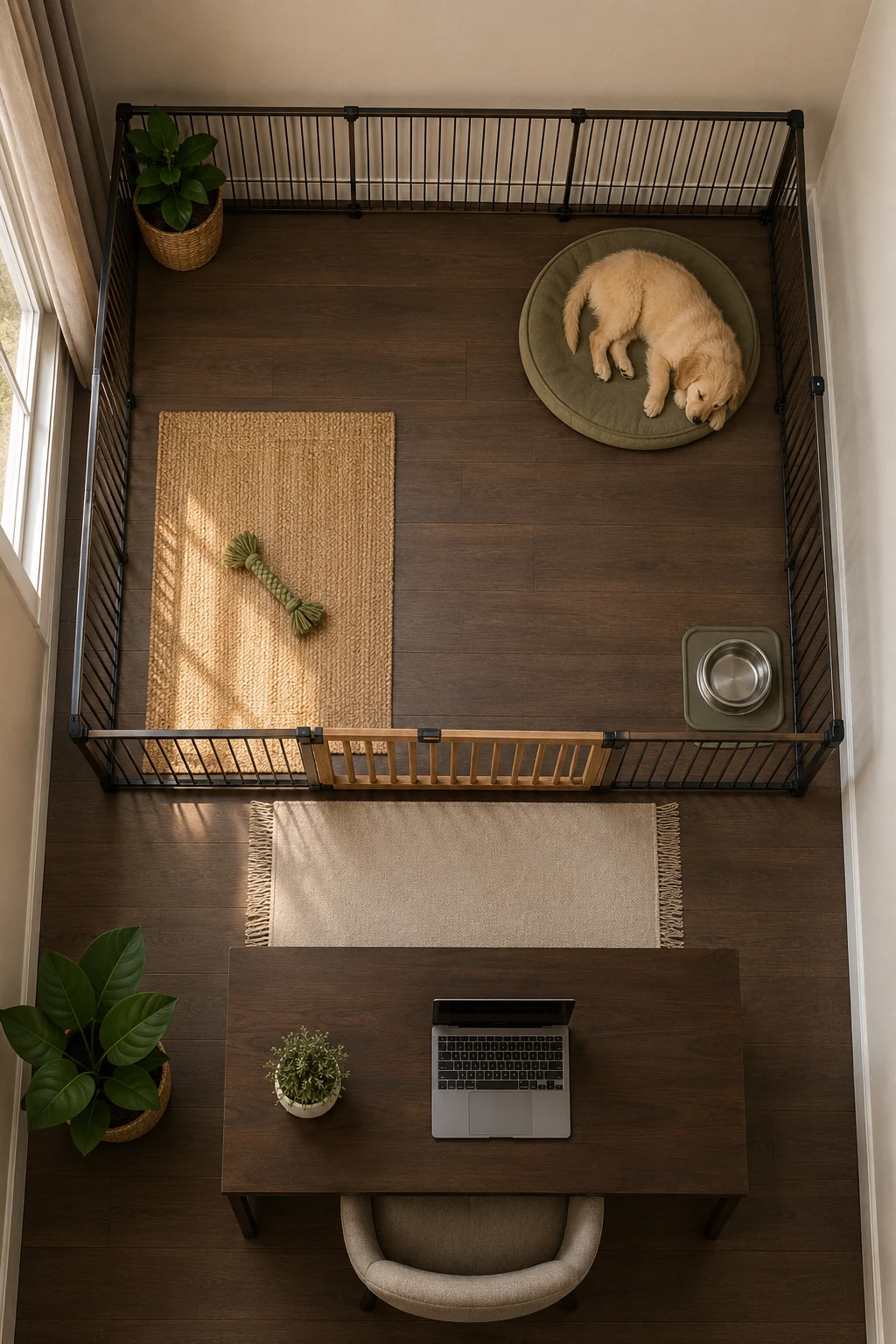
Build three simple zones
A work-from-home puppy room works better when every item has a purpose. Too many objects can create stimulation, clutter, and additional things to inspect.
1. Rest zone
Place a simple resting surface in the quietest part of the room, away from the gate, door, direct sun, rolling chair, and speaker. The puppy should be able to lie down and change position without being stepped over or watched continuously.
Use bedding only after you have observed how your puppy treats it. If the puppy tears, swallows, or becomes tangled in a material, remove it and choose a safer resting surface with guidance from your veterinarian or qualified trainer.
2. Quiet-activity zone
Offer only one or two owner-vetted items that you have already watched your puppy use safely. Inspect each item before a work block and remove it if it is damaged, small enough to swallow, or easy to dismantle. A meeting is not the time to trial an unfamiliar chew, puzzle, or improvised household object.
Rotate items outside meeting time rather than filling the room with choices. The room should support settling, not function as an indoor amusement park.
3. Access zone
Keep the entry clear so you can open the door or gate without the puppy rushing into cables or under your chair. Place fresh water in a stable location away from electronics and the main walking path. Keep cleaning supplies outside the room, even when you expect accidents.
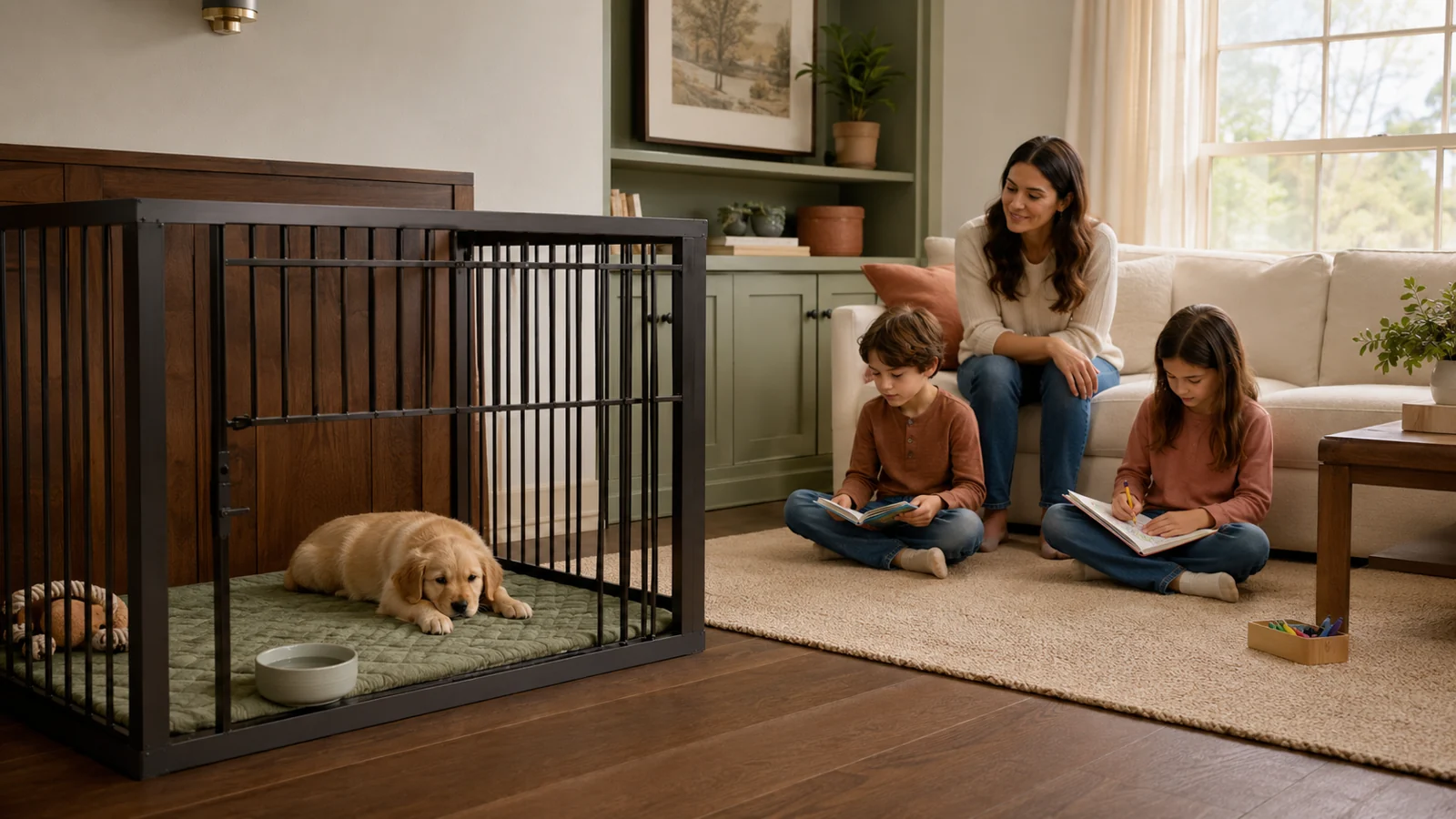
If you use a crate inside the room, treat it as an optional resting place unless your puppy has already learned to relax there. AAHA advises building positive associations and not forcing a puppy into a crate or leaving the puppy to cry it out (AAHA). A gated room or pen may be a better fit for some puppies, especially when a crate has not yet been introduced positively.
Match the setup to meetings and focus blocks
Do not plan confinement by copying a fixed online timetable. Puppies differ in age, size, development, previous experience, and ability to settle. Instead, use the puppy’s observed behavior and existing care routine to decide what kind of work block is realistic.
| Work block | Room use | Your job |
|---|---|---|
| Short admin block | Practice a brief calm separation while you answer email or organize files | Stay nearby, observe, and end while the puppy is still coping well |
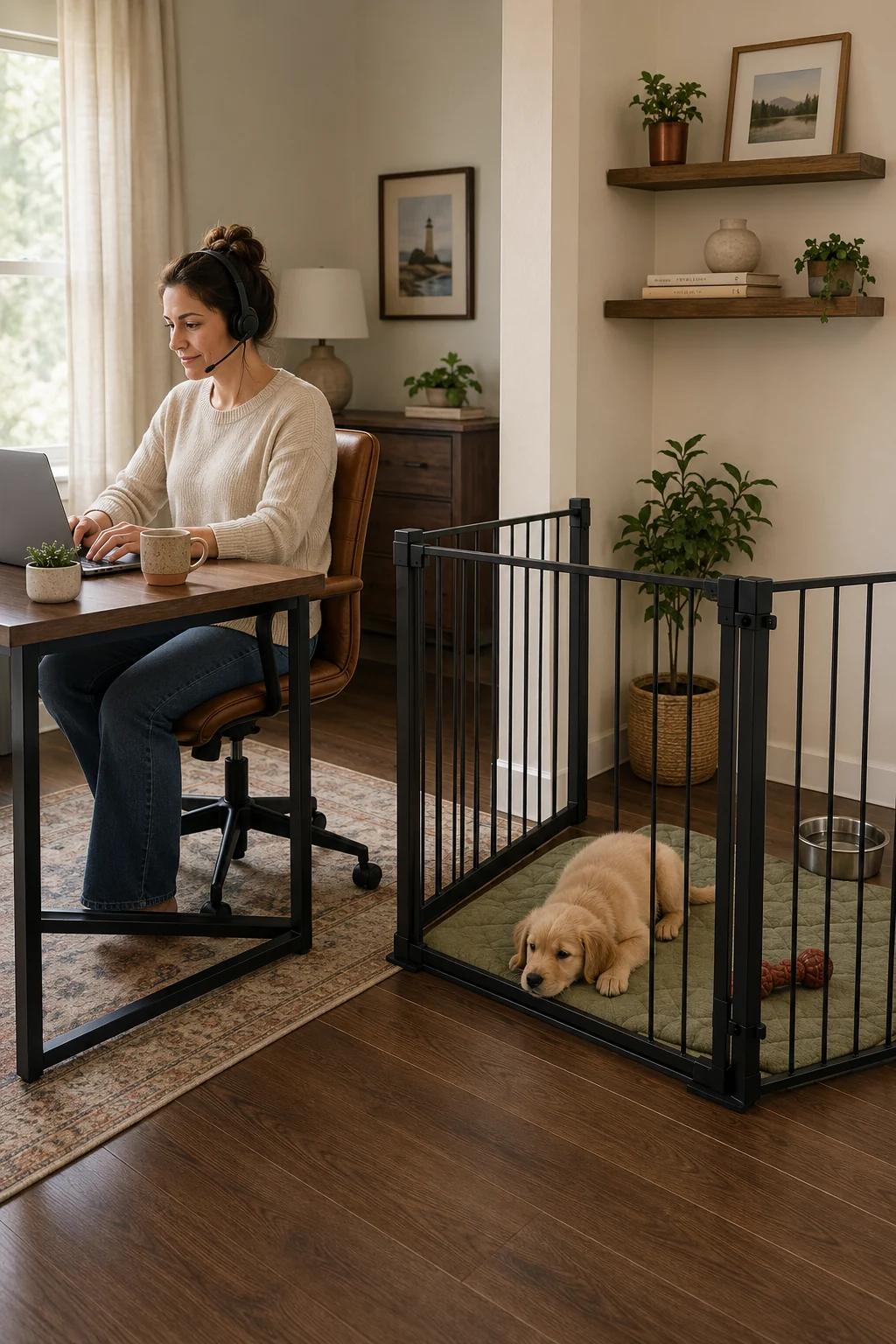
| Scheduled meeting | Prepare the room before joining; use a secure barrier and a familiar quiet activity | Keep the meeting length within what the puppy has already handled successfully |
| Deep-focus block | Use only after several shorter sessions have gone calmly | Plan a break before and after, and keep a safe way to check without repeatedly entering |
| Unexpected call | Use the room only if it is already swept and ready | Do not improvise by tossing in unfamiliar objects or shutting the puppy into an untested space |
For a scheduled meeting, use this sequence:
- Before the meeting: Complete the room sweep, attend to the puppy’s immediate needs according to the routine you already follow, check the water setup, and place only familiar safe items in the room.
- At transition: Guide the puppy into the room calmly. Avoid turning every meeting start into an exciting food-and-play event.
- During the meeting: Monitor at a level appropriate to the puppy’s experience. A camera can help you observe initial separations, but it does not make an unsafe room safe.
- At the end: Return calmly, check the puppy and room, remove damaged items, and note whether the block was easy, marginal, or too long.
VCA recommends gradually increasing confinement only after a dog can relax and using observation during early separations to check for distress (VCA Animal Hospitals). Treat your calendar as a planning tool, not as proof that the puppy is ready for a particular duration.
Prevent constant attention while you are home
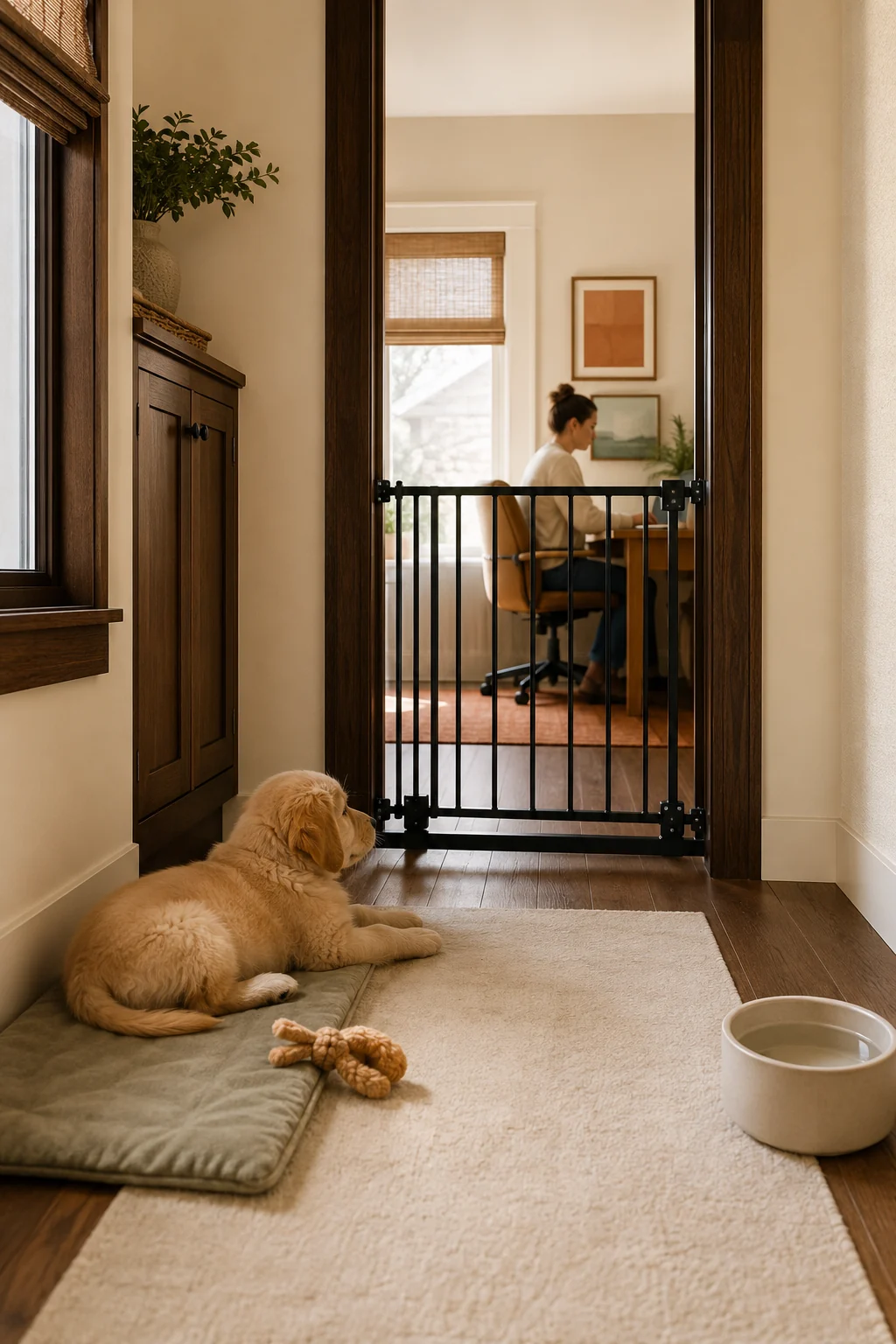
Working from home can accidentally teach a puppy that every chair movement, keyboard pause, or glance starts interaction. The room should create a gentle boundary: you are available at planned moments, but your presence does not always mean access.
Use these habits:
- Begin with very short calm periods while you remain nearby.
- Increase duration only when the puppy can settle without escalating distress.
- Schedule check-ins at natural work boundaries rather than reacting to every normal reposition, sigh, or glance.
- Keep arrivals and departures low-key so the room does not predict either excitement or punishment.
- Sometimes work where the puppy can hear you but not reach you; at other times, briefly move out of view after the puppy is comfortable with the easier version.
- Use the same simple transition routine before meetings so you do not rush, overtalk, or repeatedly return.
- Give full attention during planned interaction periods instead of scattering constant partial attention across the workday.
AAHA recommends beginning separations with a duration short enough that the pet remains calm, then increasing gradually; it also notes that a secure room or gated space can serve as a safe area (AAHA). This is not a “cry it out” plan. If vocalizing, pacing, escape attempts, drooling, or inability to settle intensifies, end the session safely, shorten the next attempt, and consult a veterinarian or qualified behavior professional if the pattern persists or the puppy risks injury.
The goal is calm independence, not silence at any cost.
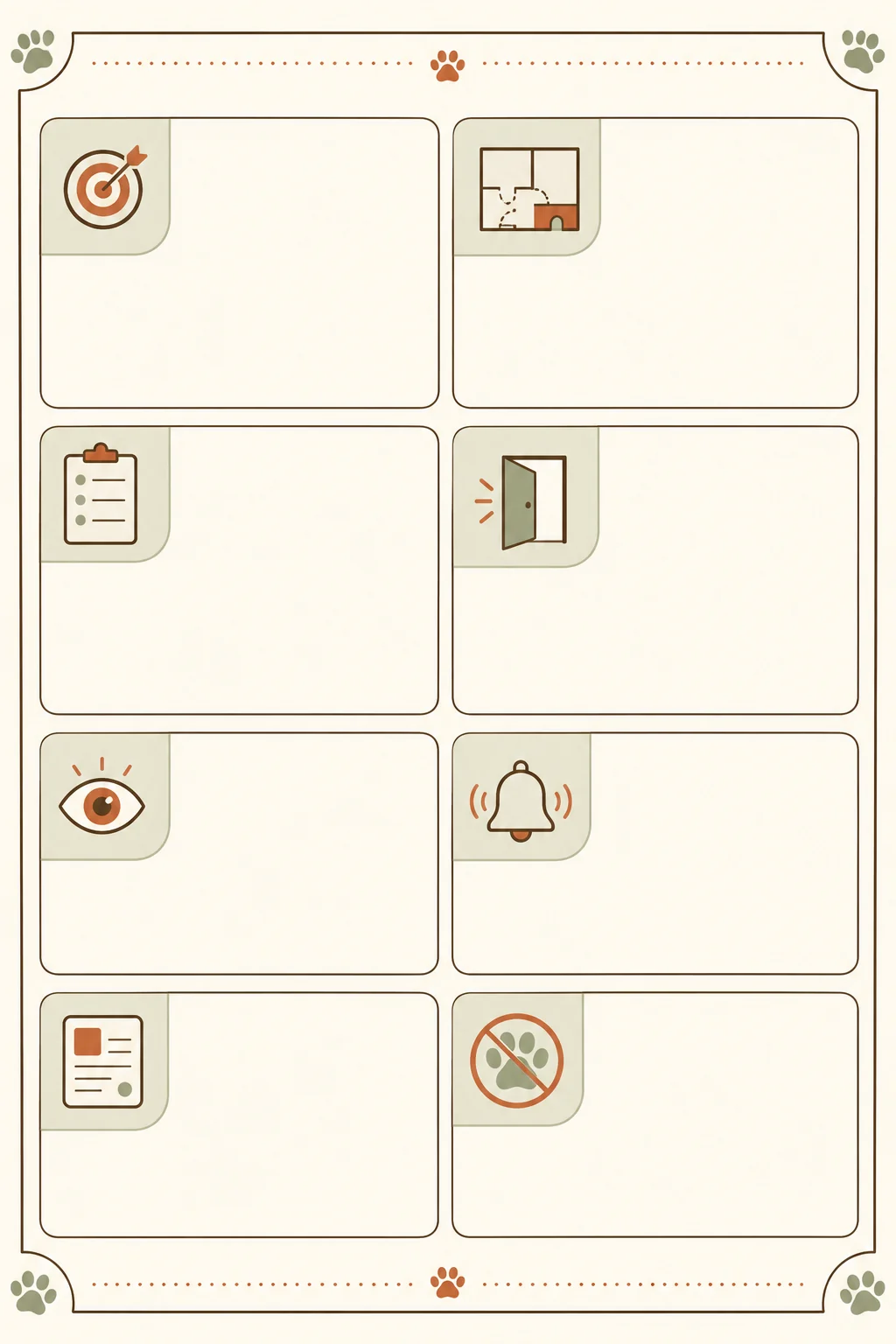
Puppy-safe room caregiver handoff card
Use this card when a partner, family member, or helper covers the puppy while you lead a meeting. It is deliberately concise so everyone follows the same plan.
| Card section | Instructions |
|---|---|
| Purpose | Keep the puppy safely settled during the owner’s meeting without adding new training challenges or constant entertainment. |
| Room map | Rest zone stays quiet; quiet-activity zone contains only the pre-approved item; access zone and doorway remain clear. |
| Before the meeting | Sweep the floor, secure cords and doors, check water, inspect the approved item, and attend to the puppy’s immediate needs using the household’s existing routine. |
| Start of block | Guide the puppy in calmly, close or secure the barrier, and leave without repeated goodbyes or exciting play. |
| During the block | Observe quietly. Do not add food, toys, bedding, household objects, or training steps that the owner has not approved. |
| Normal behavior | Resting, changing position, brief looking, and calmly engaging with the approved item do not require interruption. |
| Interrupt the owner | The puppy is caught on something, has accessed a hazard, is repeatedly attempting escape, is vomiting, is injured, or shows escalating distress that does not settle. |
| End of block | Open the area calmly, inspect the room and item, report any chewing, elimination, vocalizing, escape attempts, or difficulty settling. |
| Never do | Do not punish, shout, chase, force the puppy into a crate, or leave a newly introduced object in the room during the meeting. |
Save the card beside the room entrance or in the shared household notes app. Its value is consistency: the substitute caregiver should preserve the established setup rather than trying to improve it during a high-stakes work block.
Test the room before relying on it
Run a short rehearsal when you do not have an important call.
- Complete the floor-level sweep.
- Set the three zones.
- Secure the barrier and check every gap.
- Place the puppy in the room with the familiar setup.
- Work nearby for a short period while observing.
- Briefly move out of sight only if the puppy remains comfortable.
- End the test before the puppy becomes overwhelmed.
- Inspect the room again and record what changed.
Use this troubleshooting map:
| What you observe | What to change next |
|---|---|
| The puppy keeps soliciting attention but is otherwise calm | Shorten the block, increase visual separation slightly, and make interaction happen at planned boundaries |
| The puppy fixates on the gate or tries to climb it | Stop using that barrier until the setup is reassessed; use a more secure puppy-appropriate containment option |
| The puppy chews a room item | Remove the item completely rather than relying on verbal interruption during meetings |
| Calls or notification sounds repeatedly startle the puppy | Increase distance from the workstation, lower unnecessary sounds, or choose a quieter room |
| The puppy cannot settle as the block continues | Return to an easier duration and seek professional guidance if distress is persistent or escalating |
| The room works until you enter repeatedly | Check less often through a safe observation method and keep in-person visits purposeful and calm |
Common mistakes include choosing the office because it is convenient, leaving cables exposed, introducing a new chew immediately before a call, using the room only when the owner is stressed, making every release highly exciting, and assuming a quiet puppy is automatically safe without inspecting the environment.
A successful puppy-safe work-from-home room is simple, tested, and adjusted from observation. Secure the hazards first, keep the layout calm, practice short separations before important meetings, and use the handoff card so another caregiver can follow the same rules. That gives you a practical way to protect focus time without expecting a new puppy to manage an adult workday.
Helpful visuals from this guide
Use these five visuals as quick reminders, then return to the full guide for context, limitations, and source details.
Pinterest does not let websites prefill its Title field. Each button below copies the correct title and opens that Pin. Click the Title field in Pinterest, press Ctrl + V, then save it to the board above.
Start with Pin 1 and repeat through Pin 5.
- Three-Zone Puppy Room for Work-From-Home Days
See how to separate rest, quiet activity, and doorway access so a puppy-safe room supports meetings without filling the space with clutter.
- Puppy-Proof the Room Before Your Next Meeting
Use a floor-level safety sweep to remove cords, small objects, cleaners, plants, and unstable items before your attention shifts to a video call.
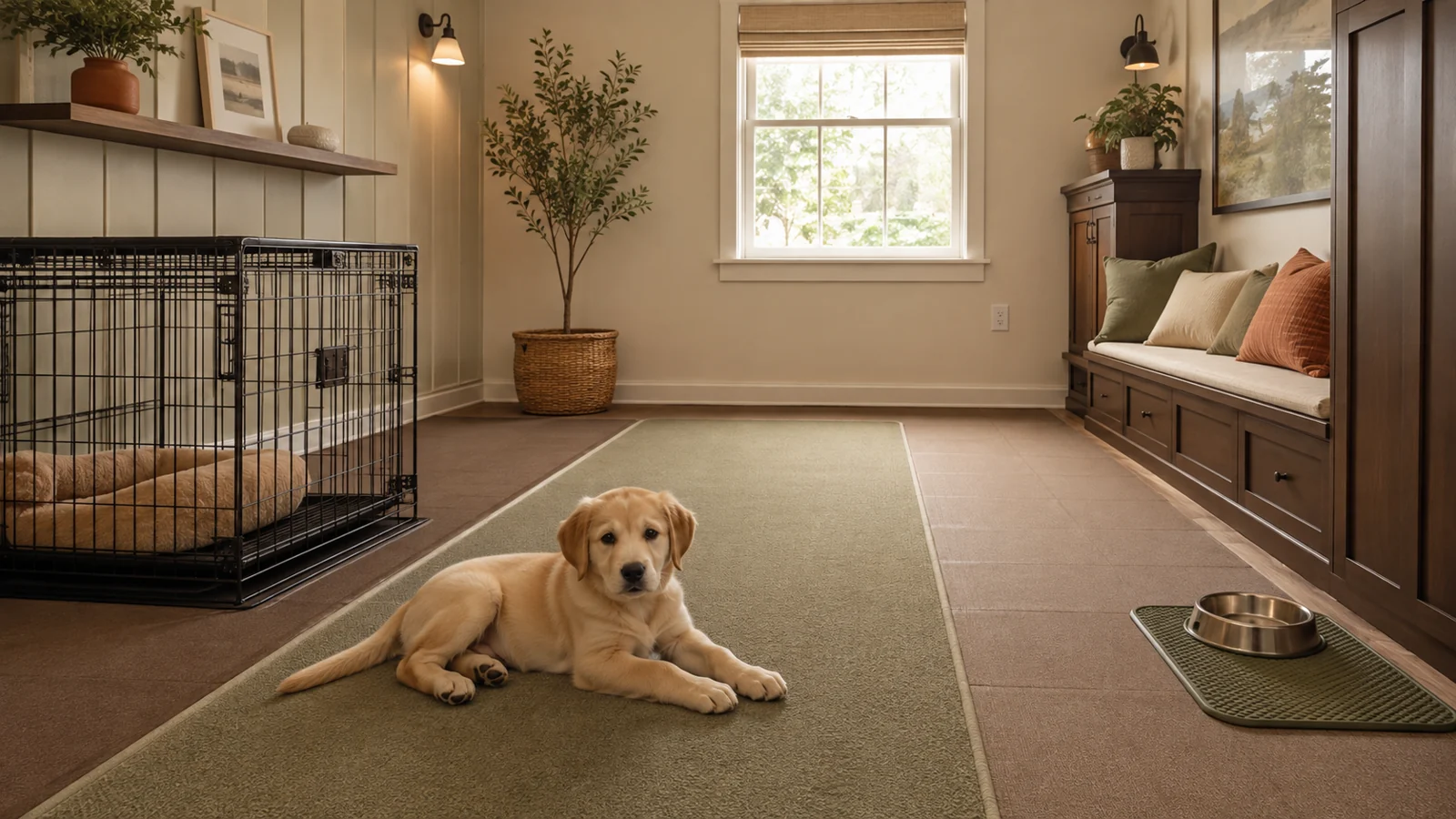
- A Calmer Puppy Setup for Video Meetings
Plan the room before the call with a secure barrier, familiar rest spot, clear floor, and only one owner-vetted activity item.
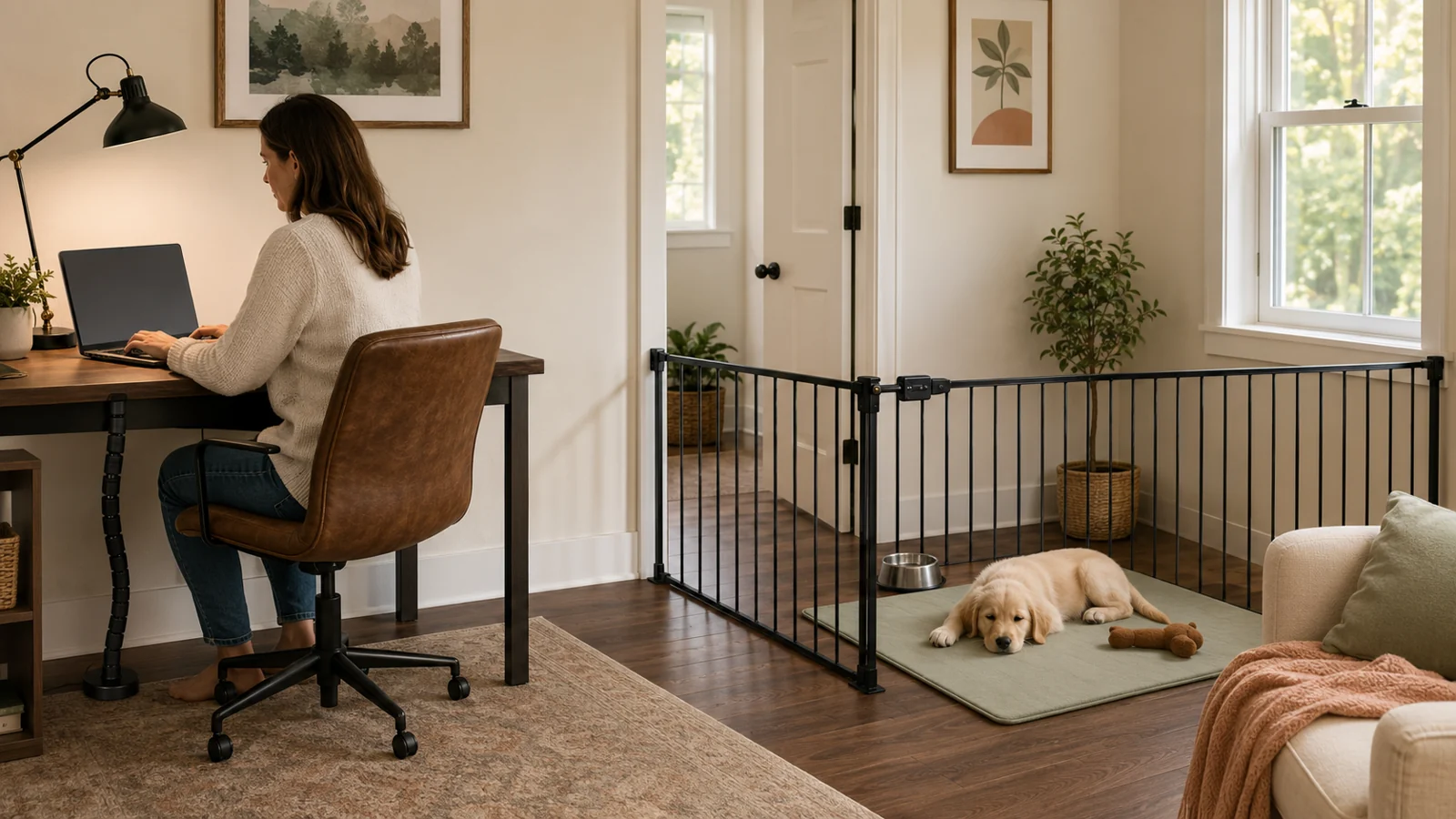
- Practice Calm Puppy Independence While Home
Working from home does not have to mean constant access. This guide shows how to build brief, calm separation into a safe room plan.
- Puppy Room Caregiver Handoff Card
Turn the guide's handoff card into a printable reference for partners or helpers covering the puppy during an important work call.
Optional: choose all 5 images at once
Frequently asked questions
Can the puppy-safe room also be my home office?
Yes, but only if the puppy cannot reach cords, rolling-chair parts, trash, bags, paper, or desk equipment. In many homes, an adjacent gated area is easier to secure than the office itself.
Should I leave the room door open or closed?
Use the option that provides secure containment and helps the puppy remain comfortable. Test a securely mounted gate, pen, or closed door during short practice sessions before relying on it for a meeting.
Can I place a crate inside the puppy-safe room?
A crate can be an optional resting place when the puppy already enters and relaxes there voluntarily. Do not force crate use or introduce closed-door confinement for the first time during an important call.
How long can a puppy stay in the room during work?
There is no universal meeting length that suits every puppy. Base duration on age, individual needs, prior successful practice, and guidance from your veterinarian rather than on your calendar alone.
Should I ignore whining while I am on a call?
Do not use a rigid ignore-everything rule. Brief sounds may settle, but escalating vocalization, pacing, escape attempts, drooling, or inability to settle means the plan should be shortened and reassessed.
Do I need a camera when I am working at home?
A camera is optional but useful when the room is out of sight, especially during early practice. It supports observation; it does not replace puppy-proofing or make an unsafe item acceptable.
Can I give a new chew or puzzle during a meeting?
Avoid first-time items during meetings. Use only items you have already supervised successfully, inspect them before each block, and remove anything damaged or easy for that puppy to dismantle.
Sources & further reading
- How to Puppy-Proof Your HouseVCA Animal Hospitals · Accessed 2026-07-31
- Crate Training and Confinement for Puppies and DogsVCA Animal Hospitals · Accessed 2026-07-31
- What to Inspect When You’re Expecting a Puppy or KittenASPCA · Accessed 2026-07-31
- What to do when you first bring home a new puppyAmerican Animal Hospital Association · Accessed 2026-07-31
- Separation Anxiety in Pets: Signs, Causes, and SolutionsAmerican Animal Hospital Association · Accessed 2026-07-31