A puppy-safe room in a home with young children should do more than contain the puppy. It should make the safe choice obvious for every person in the house: children stay outside the puppy-only retreat, an adult controls every shared interaction, and the family uses the same calm transition steps each time the puppy enters or leaves. The CDC advises that young children should not play with dogs without supervision, including the family dog, while the AVMA recommends supervising young children around dogs and carefully managing introductions.
Give the room two clear functions
Treat the room as two systems rather than one open play space.
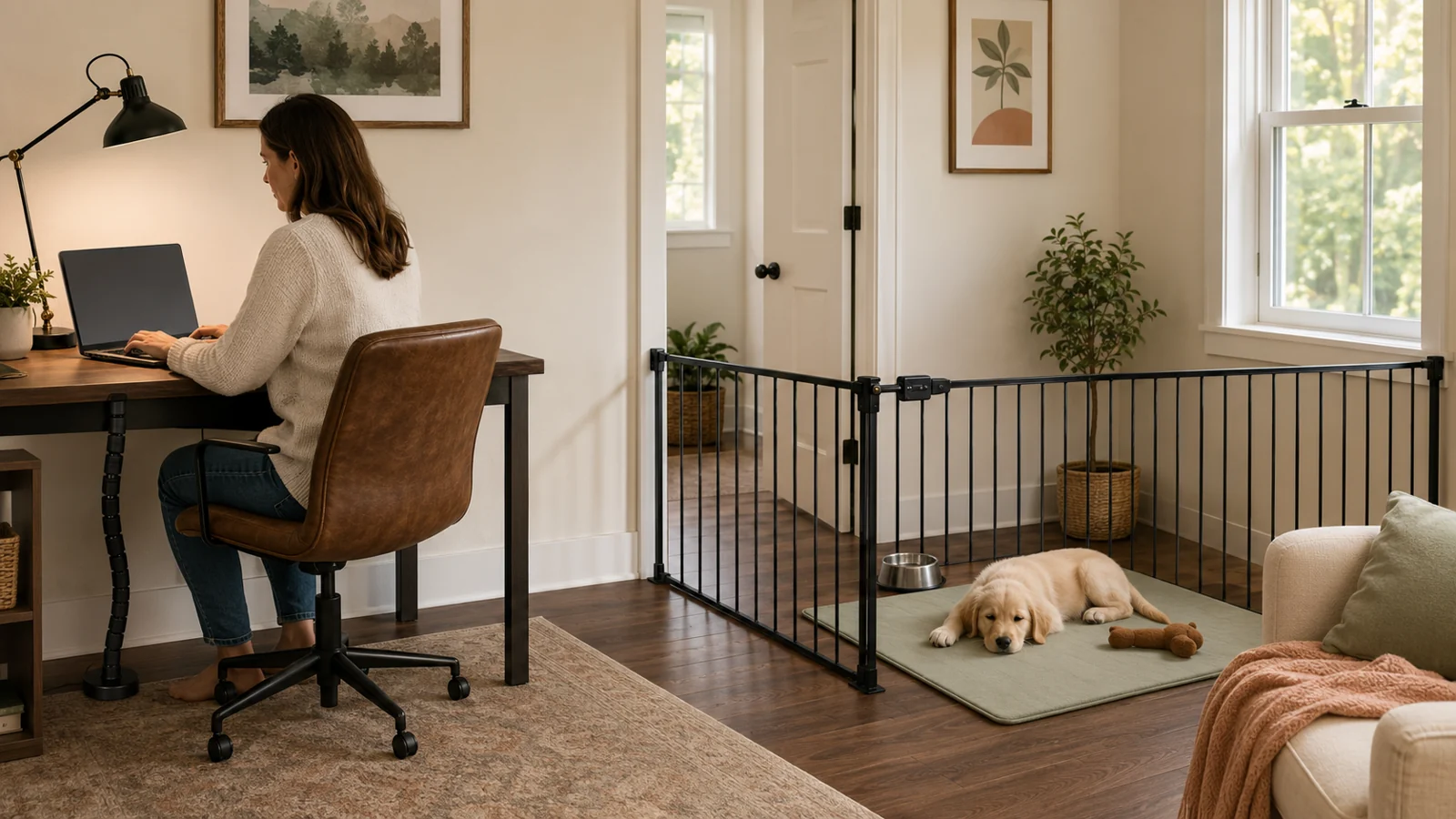
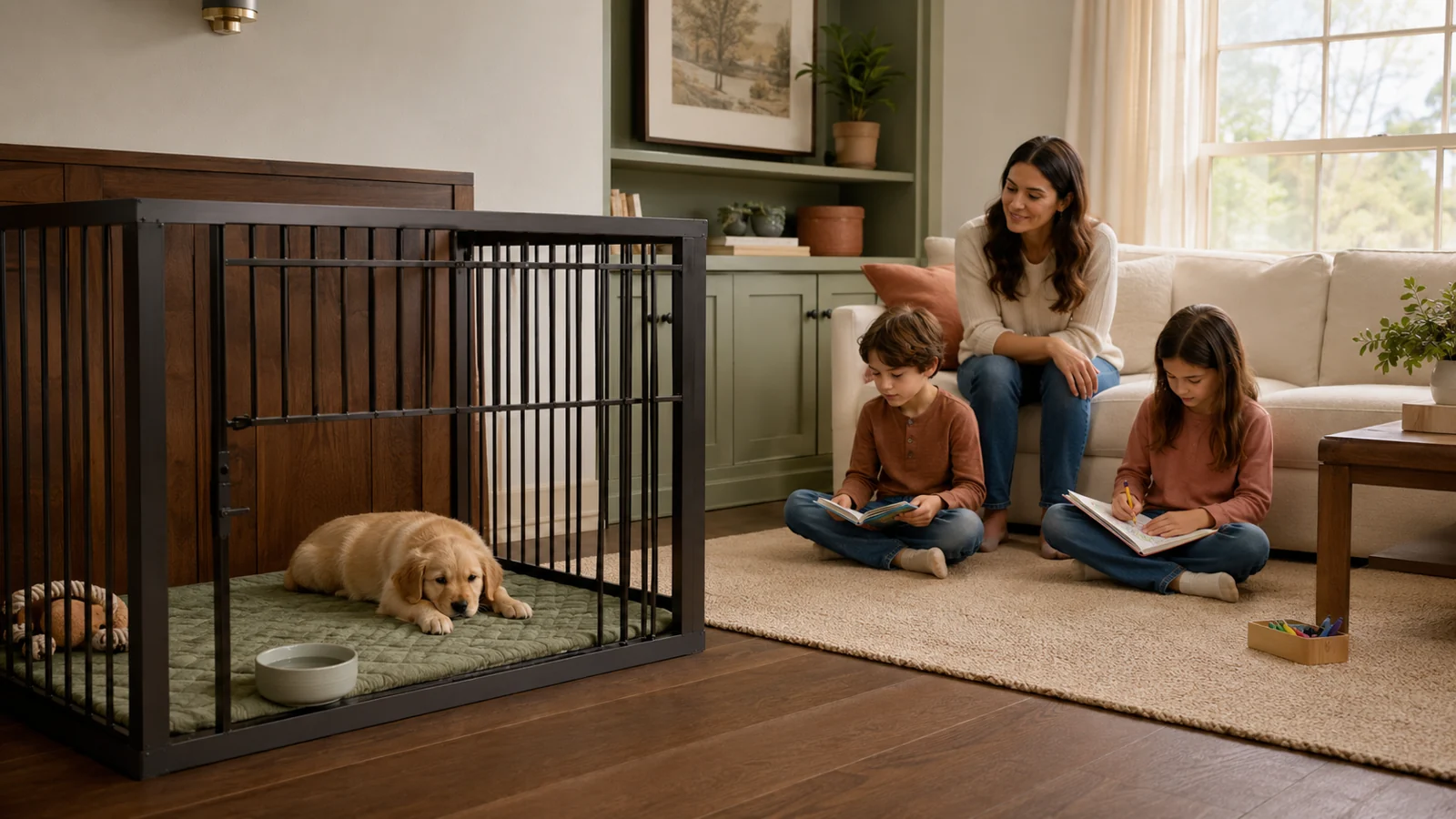
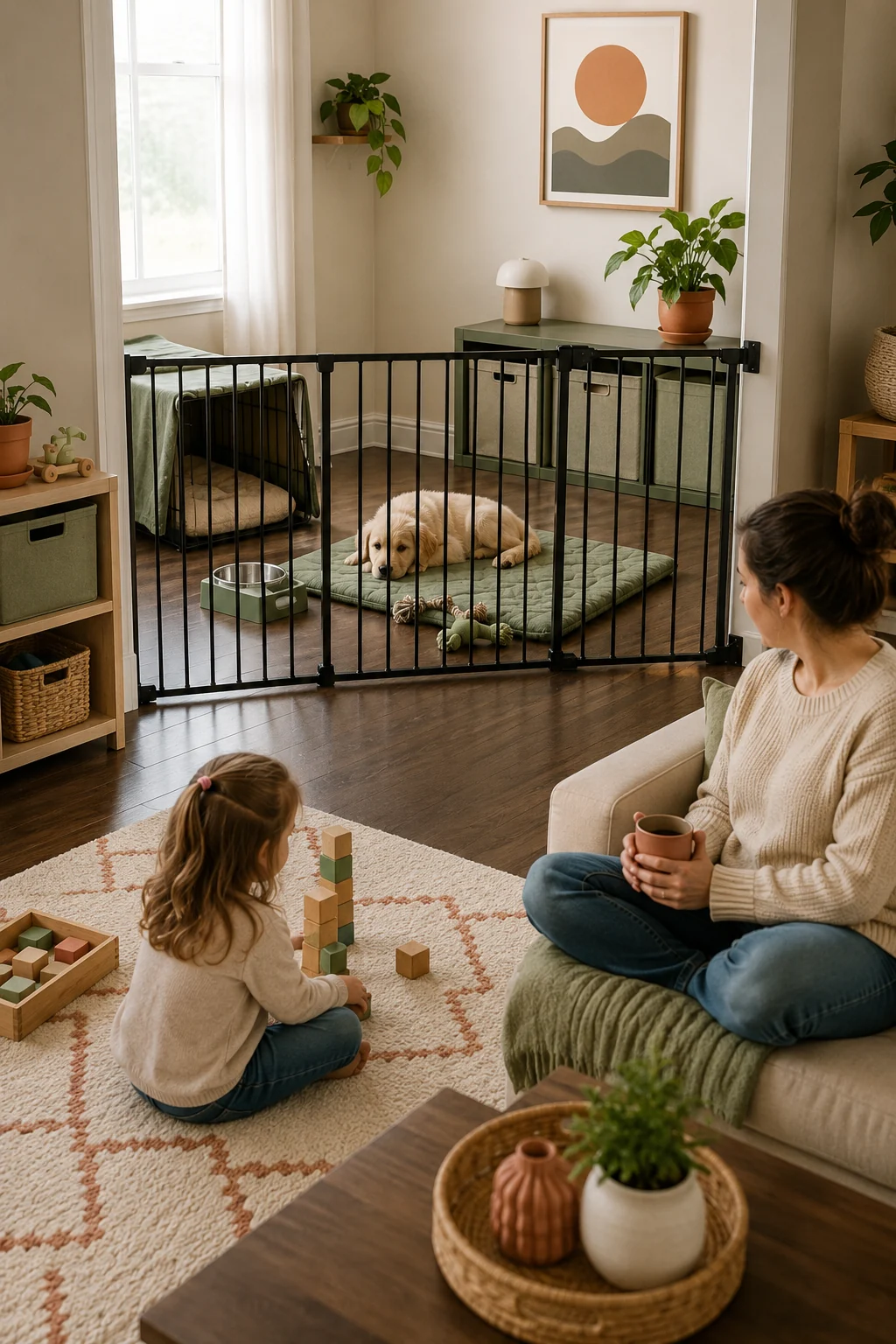
The puppy-only retreat is the protected resting area. It may be the entire room when the door or gate is closed, or a securely separated pen or gated section within the room. Young children do not enter this retreat, climb over its barrier, reach through it, or remove the puppy’s bed, water, toys, food, or chews. The puppy must be able to rest without being followed.
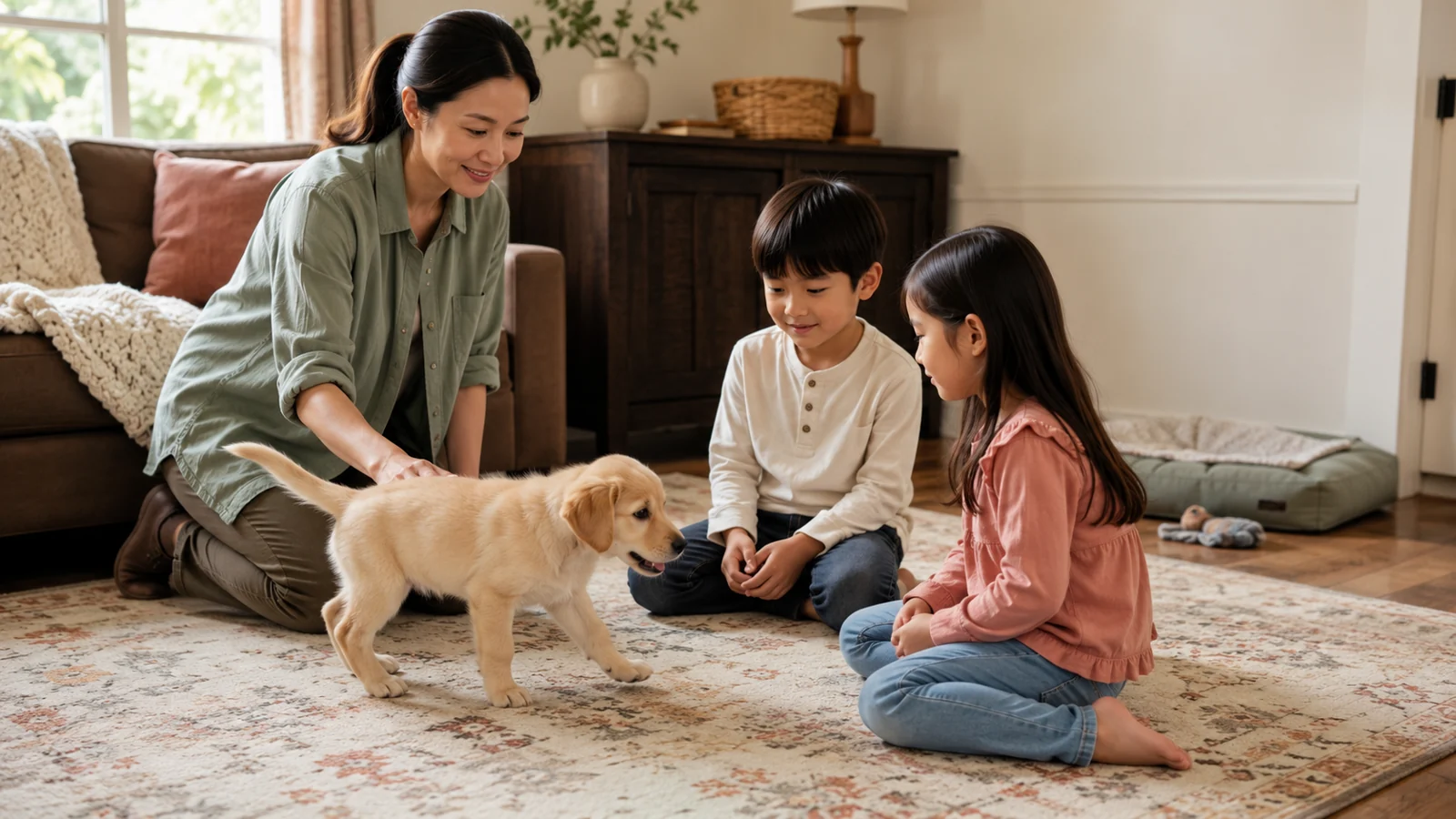
The supervised family zone is the part of the room where a child and puppy may be together only when an adult is actively managing the interaction. Keep it open enough for the puppy to move away rather than becoming trapped between furniture and a child. The ASPCA recommends giving dogs their own space and opportunities to rest, and its guidance on children and dogs emphasizes respecting a dog’s body, safe zones, and belongings.
This two-function design prevents a common mistake: creating a room that is physically puppy-proofed but socially uncontrolled. A room can be free of electrical cords and still be unsafe if a toddler can crawl into the puppy’s bed, corner the puppy, or interrupt eating and sleeping.
Choose the room and complete a child-plus-puppy hazard sweep
Choose a low-traffic room or section of a room that an adult can reach easily. The puppy should not be isolated at the far end of the home, but the space should not sit in the middle of constant running, shouting, toy throwing, or door traffic. Favor clear sightlines so an adult can see both the child and puppy without furniture blocking the view.
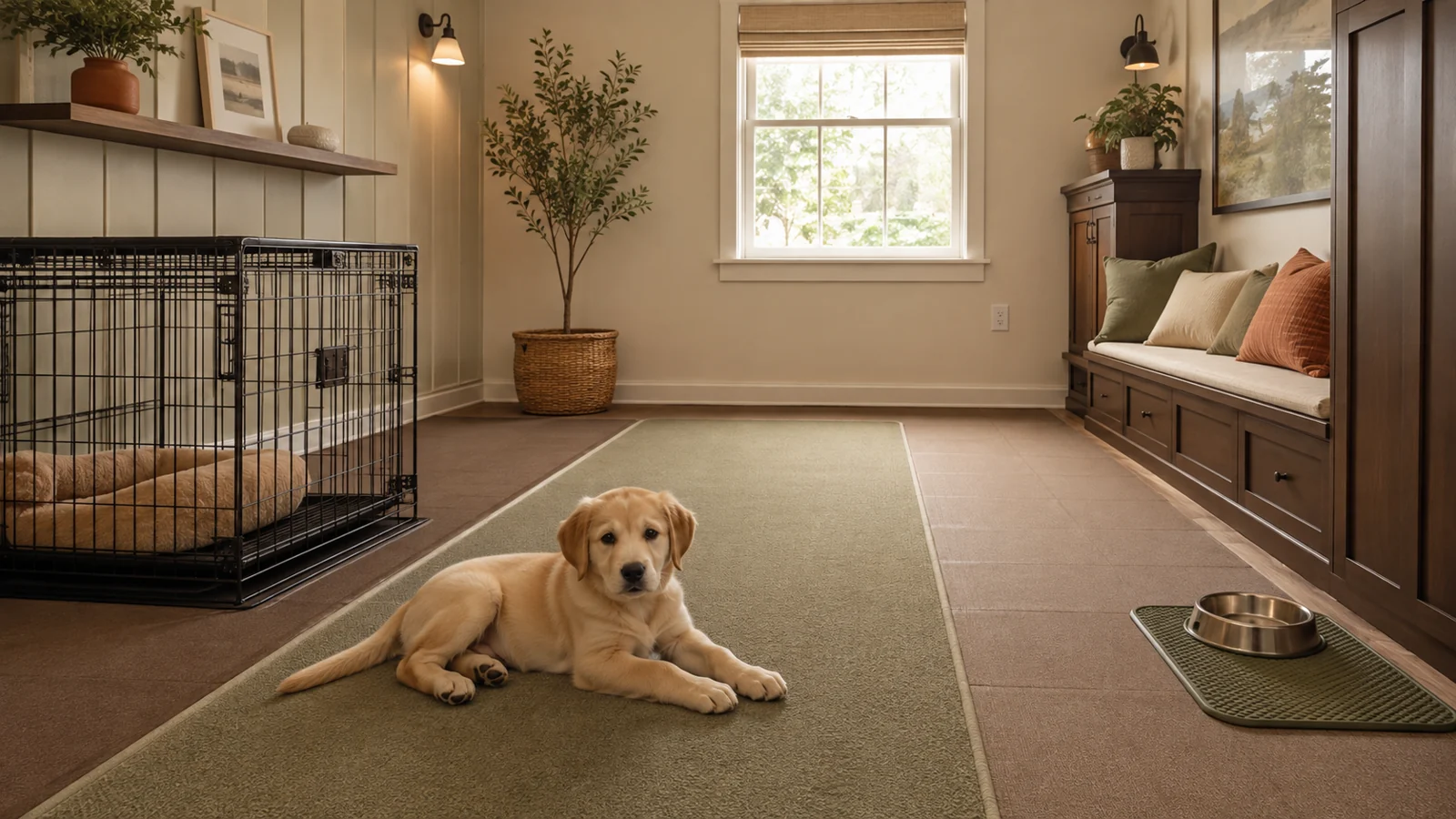
Inspect the room from two heights: first at puppy nose level, then at child hand level. Remove or secure:
- electrical cords, chargers, blind cords, floor lamps, unstable furniture, and anything that can be pulled down;
- small children’s toys, craft supplies, game pieces, hair accessories, batteries, coins, magnets, and loose packaging;
- cleaning products, medicines, diaper supplies, trash, food, and bags;
- shoes, laundry, stuffed animals, and blankets that the family does not want the puppy to chew;
- child snacks and puppy food or chews that could trigger grabbing, chasing, or competition.
Use closed storage rather than expecting a young child or puppy to ignore tempting objects. Place a stable water bowl where a child will not repeatedly step over it. Keep the puppy’s bed or resting mat away from the doorway so arrivals do not funnel directly into the retreat. If a crate or pen is used, it should be a protected resting space, never a playhouse for children.
Check every barrier for gaps, pinch points, sharp edges, and the possibility that either the puppy or child can push, pull, climb, or squeeze through it. Follow the barrier manufacturer’s installation instructions and recheck the fit as the puppy grows. No gate, latch, or closed door replaces adult supervision during shared access.
Use a three-state boundary system
A simple color system helps adults make the same decision even when the house is busy.
| State | What it means | Adult action | Child action |
|---|---|---|---|
| Green: together | Puppy and child share the family zone | Stay within reach, watch both continuously, and end the session before either becomes overexcited | Sit, stand, or play calmly as directed; touch only after permission |
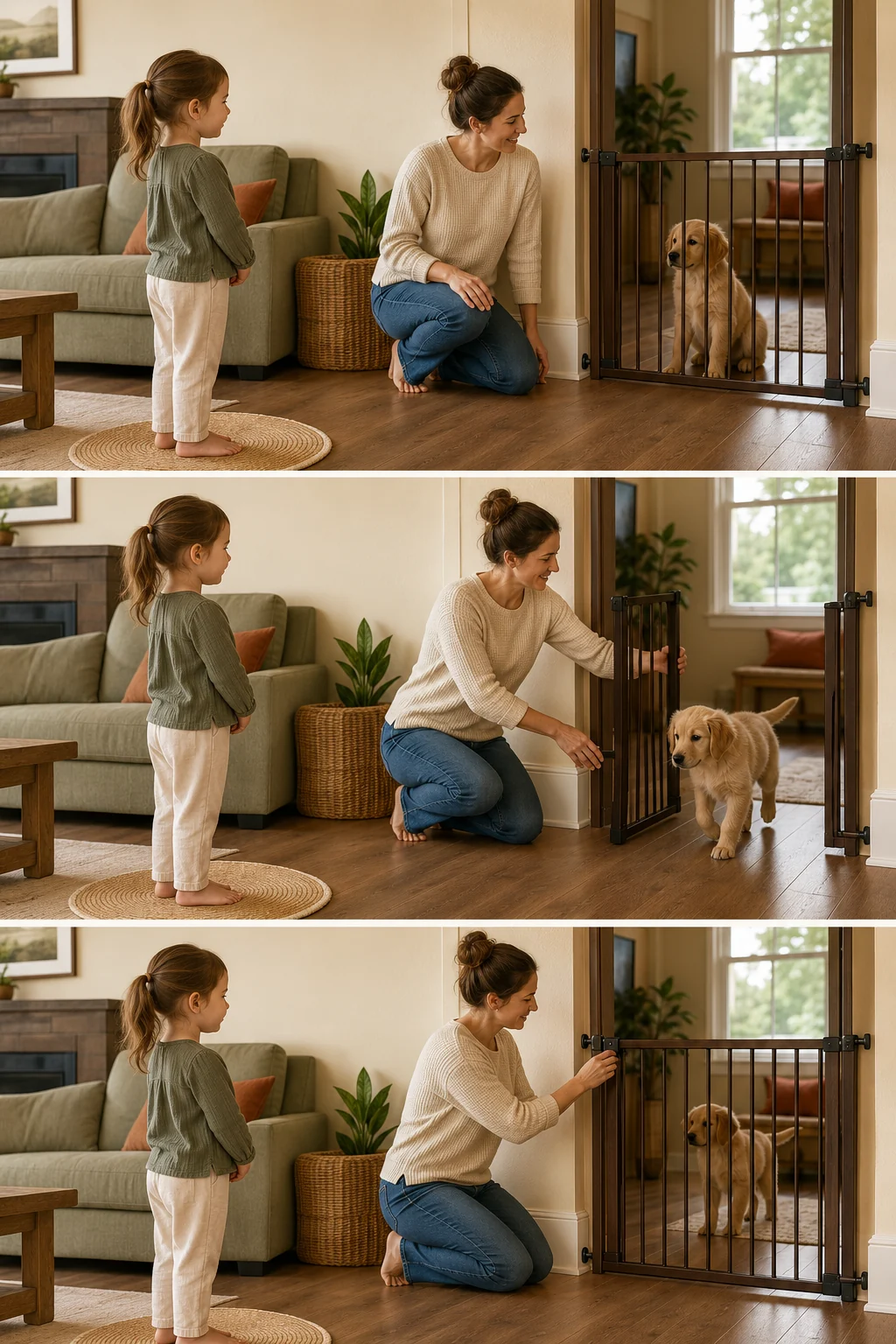
| Amber: transition | Puppy is entering or leaving the room | Position the child first, control the barrier, move the puppy, close the barrier, then release the child from the waiting spot | Stand or sit on the family’s marked waiting spot with hands to self |
| Red: puppy retreat | Puppy is resting, eating, chewing, overwhelmed, or unsupervised | Close and secure the boundary; manage all puppy care | Do not enter, reach through, call the puppy over, or take belongings |
Post the colors or matching symbols at adult eye level and child eye level, but teach the meaning through practice rather than relying on a sign. A toddler who cannot consistently follow the rules should be physically separated from the puppy, not trusted to remember a poster.
Use the same transition order every time:
- Adult says, “Waiting spot.”
- Child moves to the chosen spot and keeps hands to self.
- Adult checks that the route is clear.
- Adult opens the barrier and moves the puppy.
- Adult closes and secures the barrier.
- Adult says whether the state is green or red.
This sequence reduces rushing at the doorway and keeps a child from grabbing the puppy, collar, gate, or toys during movement.
Teach instructions a young child can actually follow
Long lectures are difficult to use in the moment. Choose a few short rules and practice them when everyone is calm.
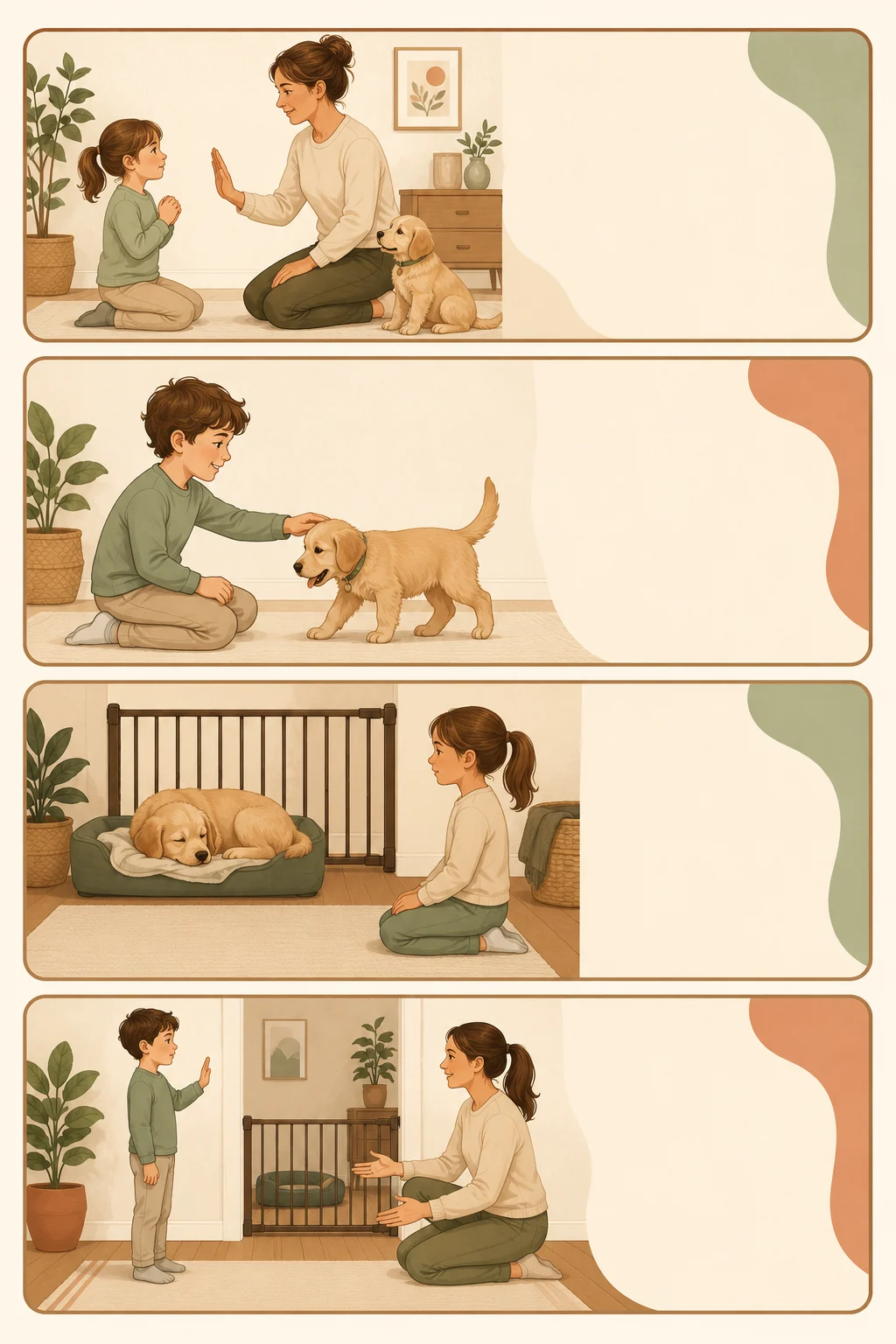
Ask first. The child waits for an adult’s “yes” before touching or playing with the puppy.
Let the puppy come closer. The child does not chase, corner, crawl after, or pull the puppy out of the retreat.
Gentle hands, low voices. No hugging, riding, squeezing, hitting, tail or ear pulling, face-to-face contact, or rough games. The ASPCA advises teaching children to respect a dog’s body, safe zones, and belongings, with adults supervising and demonstrating gentle interaction.
Sleeping, eating, or chewing means no touching. The CDC advises not disturbing a dog while it is eating or sleeping. In this room, meals and high-value chews belong in the red state with the barrier closed.
Stop, stand still, call an adult. Use this as the child’s response if the puppy jumps, mouths clothing, grabs a toy, or becomes too excited. The child should not run, scream, wrestle, or try to take an item from the puppy.
Adults should model the same rules. Do not tease, chase, physically punish, or force the puppy to interact. Do not invite a child to “test” whether the puppy will tolerate touching near food, a bed, or a favorite object.
Define active supervision before the room is used
“An adult is home” is not active supervision. For this plan, active supervision means an adult is in the same space, paying attention to both child and puppy, close enough to intervene immediately, and not occupied with cooking, a phone call, another child’s bath, a delivery, or sleep.
Switch to the red state whenever the supervising adult’s attention must move elsewhere, even briefly. This includes answering the door, carrying laundry upstairs, preparing food, using the bathroom, or helping another child. The ASPCA states that babies and young children should never be left alone with a dog.
Watch for early signs that the interaction should end: the puppy repeatedly moves away, hides, turns the head away, becomes unusually still, stiffens, growls, or cannot settle; the child becomes loud, fast, frustrated, or unable to keep hands to self. Calmly separate them. Do not punish a growl or force another interaction. Repeated fear, guarding, snapping, or aggressive behavior calls for complete separation and guidance from a veterinarian or appropriately qualified behavior professional.
For handoffs between adults, use one spoken sentence: “I am supervising now,” followed by an answer from the new adult: “I have them.” Until that exchange happens, the room remains red.
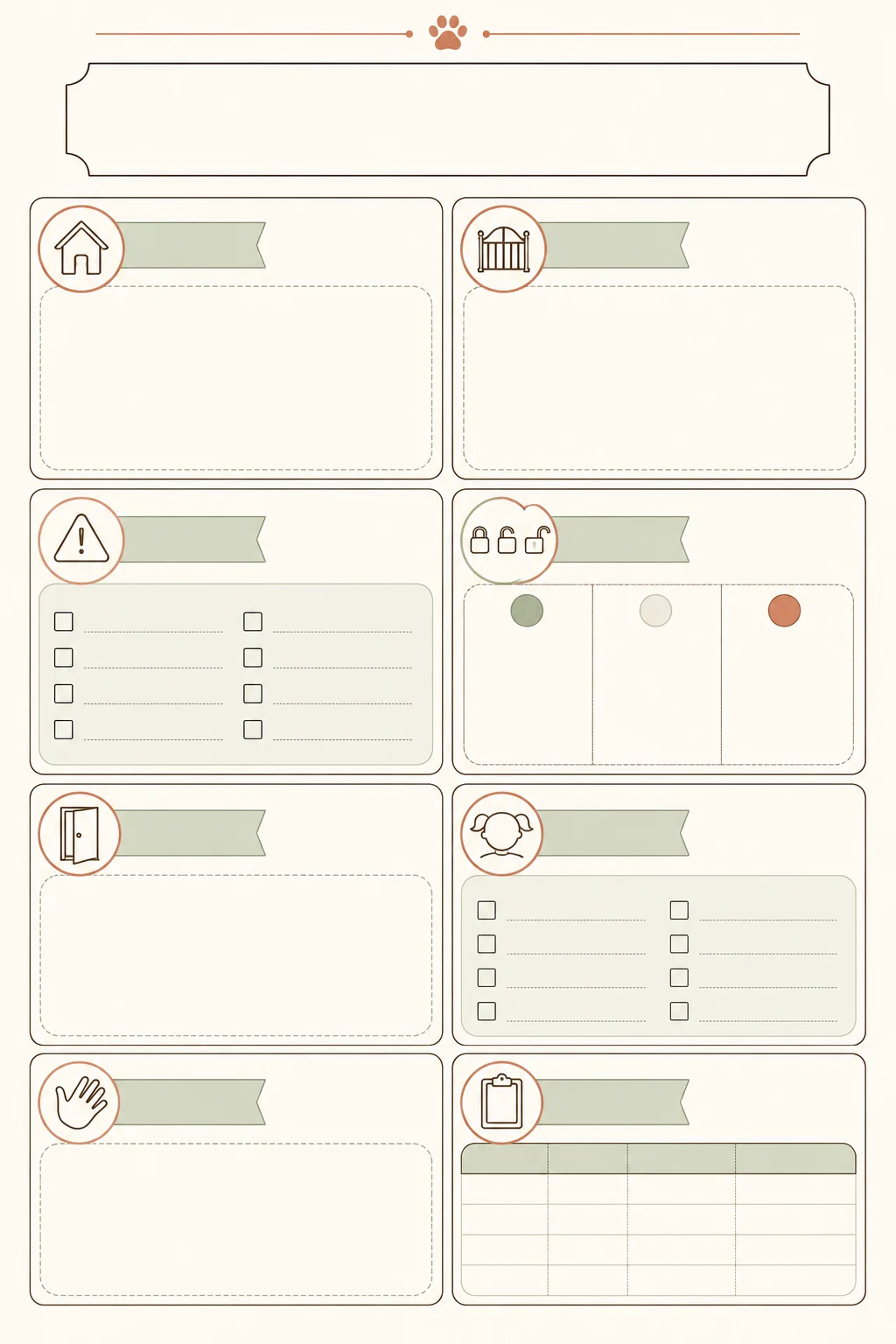
Printable puppy-safe room planning worksheet
Print or copy this worksheet and complete it before allowing shared access.
1. Room choice
- Room or gated area: ______________________________________
- Adult sightline is clear from: _______________________________
- Puppy-only retreat location: _________________________________
- Supervised family zone location: ______________________________
- Child waiting spot during transitions: _________________________
2. Boundary check
- Door, gate, or pen closes securely.
- Child cannot enter, climb over, or reach into the retreat.
- Puppy cannot squeeze through, climb, or push the barrier.
- Barrier has no sharp edges, pinch points, or unstable parts.
- Manufacturer installation directions have been followed.
- An adult can open and close it without losing control of the doorway.
3. Hazard sweep
- Cords and blind strings are inaccessible.
- Small toys, batteries, magnets, coins, and craft items are removed.
- Medicines, cleaners, trash, food, and diaper supplies are secured.
- Furniture and lamps are stable.
- Child snacks and puppy food are stored separately.
- Puppy water, bed, and approved belongings are placed out of traffic.
- The puppy has an unobstructed route away from the family zone.
4. Household states
- Green means: ______________________________________________
- Amber means: ______________________________________________
- Red means: ________________________________________________
- Who may change the room state? ______________________________
5. Transition script
- Adult cue for the child: _____________________________________
- Child’s waiting position: ____________________________________
- How the adult moves the puppy: _______________________________
- Words used after the barrier is secured: _______________________
6. Child rules
Write the exact short phrases your family will use:
Emergency phrase: “Stop, stand still, call _____________________.”
7. Supervision handoff
- Primary supervising adults: __________________________________
- Spoken handoff phrase: ______________________________________
- Automatic red-state moments: _________________________________
- Where the child goes when supervision pauses: _________________
8. Review log
| Date | What worked | What created rushing, grabbing, or stress | Change before next use |
|---|---|---|---|
| __________ | __________________ | ______________________________ | __________________ |
| __________ | __________________ | ______________________________ | __________________ |
| __________ | __________________ | ______________________________ | __________________ |
Test the plan before relying on it
First, rehearse the amber transition without the puppy. Check whether the child can reach the waiting spot, whether the adult can control the gate without stepping over toys, and whether siblings know who moves first. Then repeat with the puppy while another adult observes.
Test likely disruptions: a doorbell, a dropped child toy, a child running past the doorway, or the supervising adult needing to leave. The correct result is not that the puppy “behaves.” The correct result is that the adults can quickly return the room to red without grabbing, chasing, or leaving the child and puppy together.
Recheck the room whenever the puppy becomes taller, stronger, or more confident; whenever the child reaches a new climbing or opening skill; and whenever furniture or storage changes. Common failures include leaving the gate open “for a second,” allowing children into the retreat when the puppy is absent, storing mixed child and puppy toys in one basket, and assuming a calm puppy no longer needs separation.
A successful puppy-safe room is easy to understand on a busy day. The puppy has a protected place to rest, children have a small set of repeatable rules, and adults know exactly when to supervise, transition, or separate. The goal is not unlimited access—it is predictable, calmly managed access that protects both the puppy and the children.
Helpful visuals from this guide
Use these five visuals as quick reminders, then return to the full guide for context, limitations, and source details.
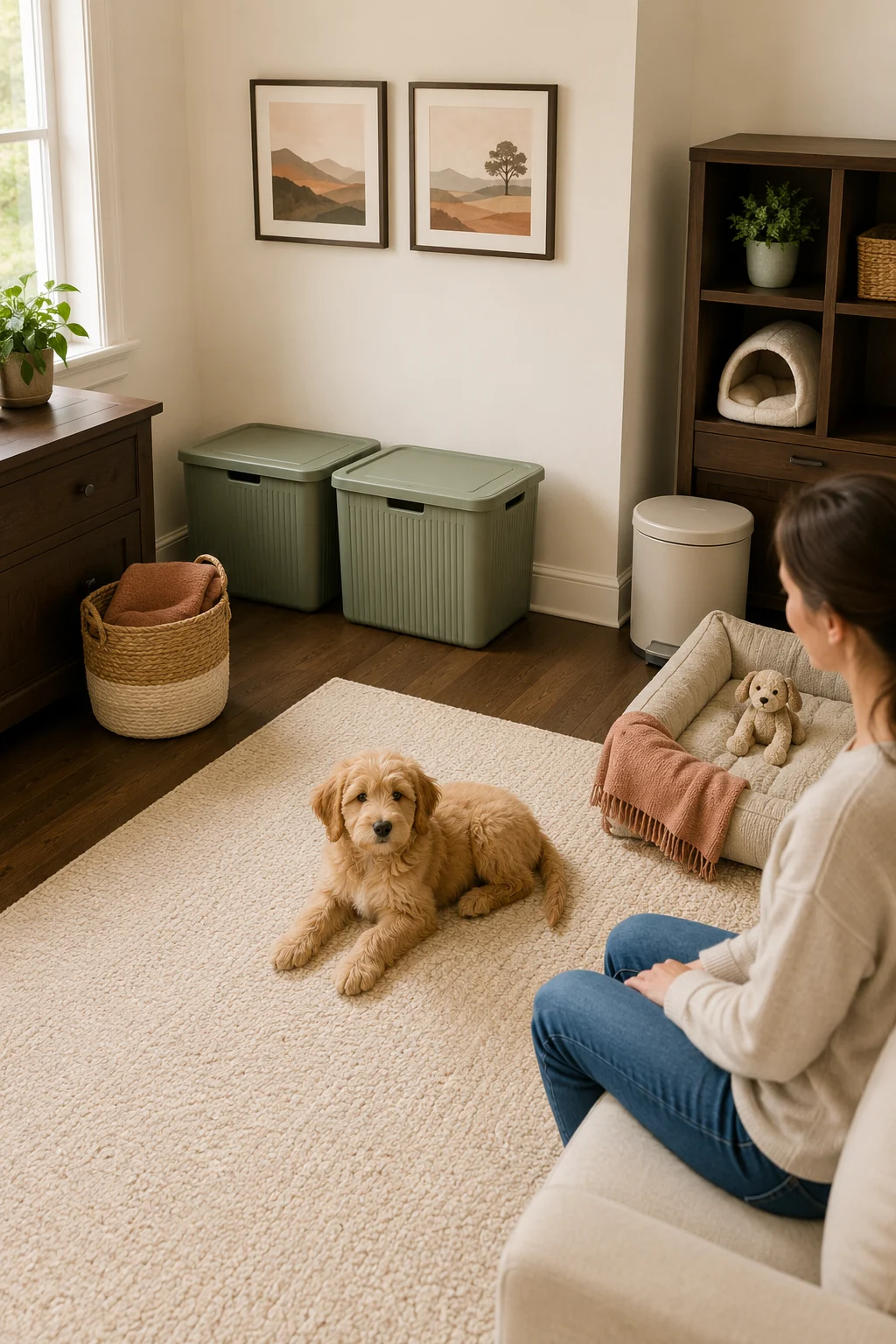
Pinterest does not let websites prefill its Title field. Each button below copies the correct title and opens that Pin. Click the Title field in Pinterest, press Ctrl + V, then save it to the board above.
Start with Pin 1 and repeat through Pin 5.
- Puppy-Safe Room Zones for Families
See a practical way to divide one room into a protected puppy retreat and a supervised family zone for homes with young children.
- Puppy-Safe Room Planning Worksheet
Use this printable-style planning structure to organize barriers, child rules, transition steps, supervision handoffs, and room reviews.
- A Calm Puppy Room Transition
This visual sequence shows how a waiting spot and adult-controlled gate can reduce rushing when a puppy enters or leaves the room.
- Simple Puppy Rules for Young Kids
Create a consistent family script for asking first, using gentle hands, leaving resting puppies alone, and calling an adult.
- Child-and-Puppy Room Hazard Sweep
Use a two-height room check to spot cords, small toys, snacks, craft pieces, unstable objects, and mixed belongings before the puppy enters.
Optional: choose all 5 images at once
Frequently asked questions
Should children ever enter the puppy's crate or pen?
No. Treat the crate, pen, or gated resting area as puppy-only space. Children should not climb in, reach through, remove belongings, or follow the puppy into that retreat.
Can a baby gate replace adult supervision?
No. A secure barrier supports separation and transitions, but it cannot monitor behavior, prevent every climb or reach, or manage a shared interaction.
Where should the puppy eat or use a special chew?
Use the protected red-state retreat with the boundary closed and children kept outside. This prevents reaching, taking, crowding, and avoidable conflict around valued items.
What should a child do if the puppy starts jumping or mouthing?
Teach the child to stop, stand still, keep hands close to the body, and call an adult. The adult should calmly separate or redirect the puppy rather than encouraging a chase.
What counts as active supervision in the puppy room?
An adult should be in the same space, attentive to both child and puppy, close enough to intervene immediately, and not absorbed in another task.
When should the family review the room setup?
Review it whenever the puppy grows or gains new skills, the child learns to climb or open barriers, or furniture and storage change. Regularly test latches, sightlines, and transition paths.
Sources & further reading
- Preventing dog bitesAmerican Veterinary Medical Association · Accessed 2026-07-31
- Dogs | Healthy Pets, Healthy PeopleCenters for Disease Control and Prevention · Accessed 2026-07-31
- Dog Bite PreventionASPCA · Accessed 2026-07-31
- Dogs and BabiesASPCA · Accessed 2026-07-31