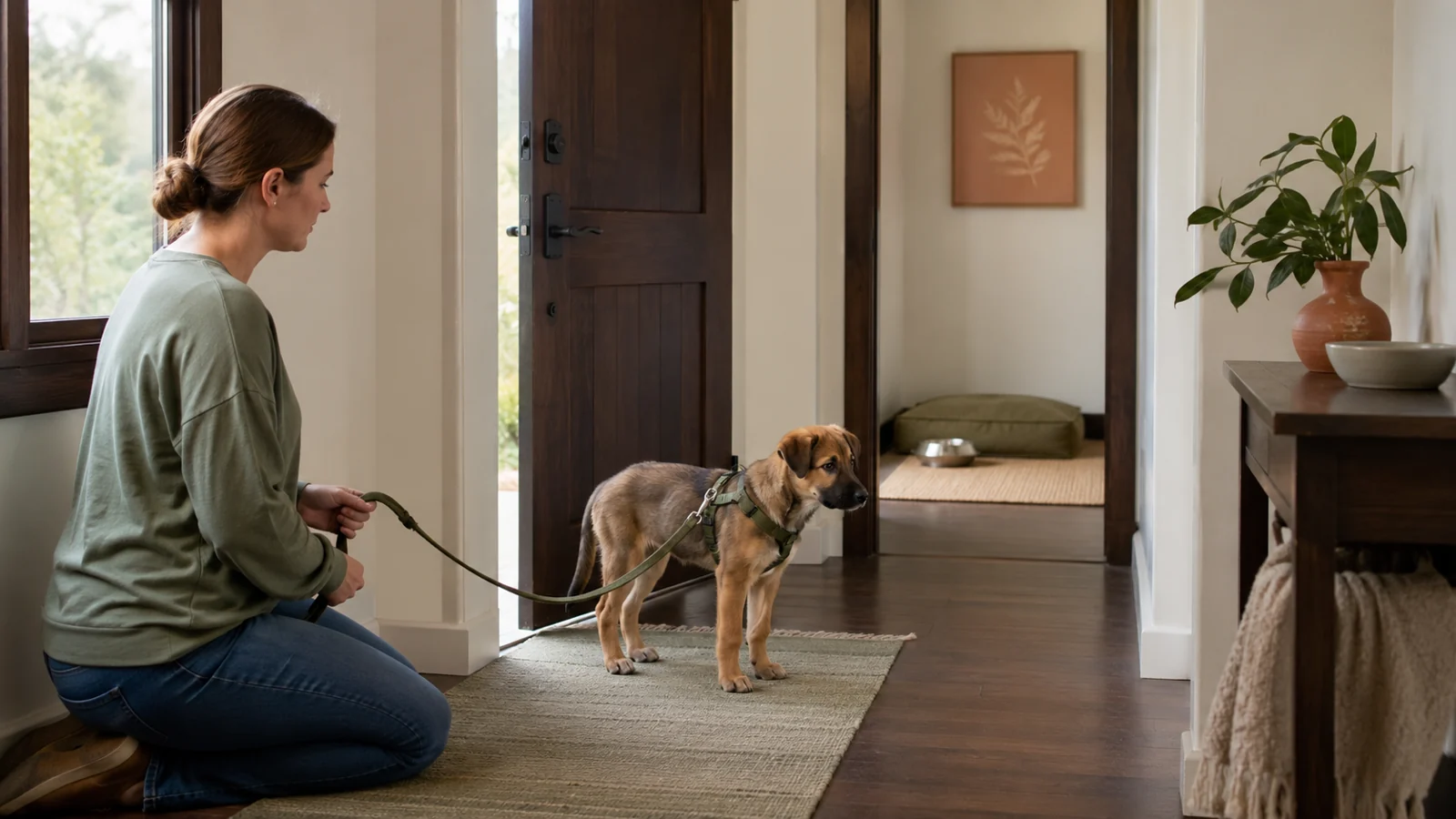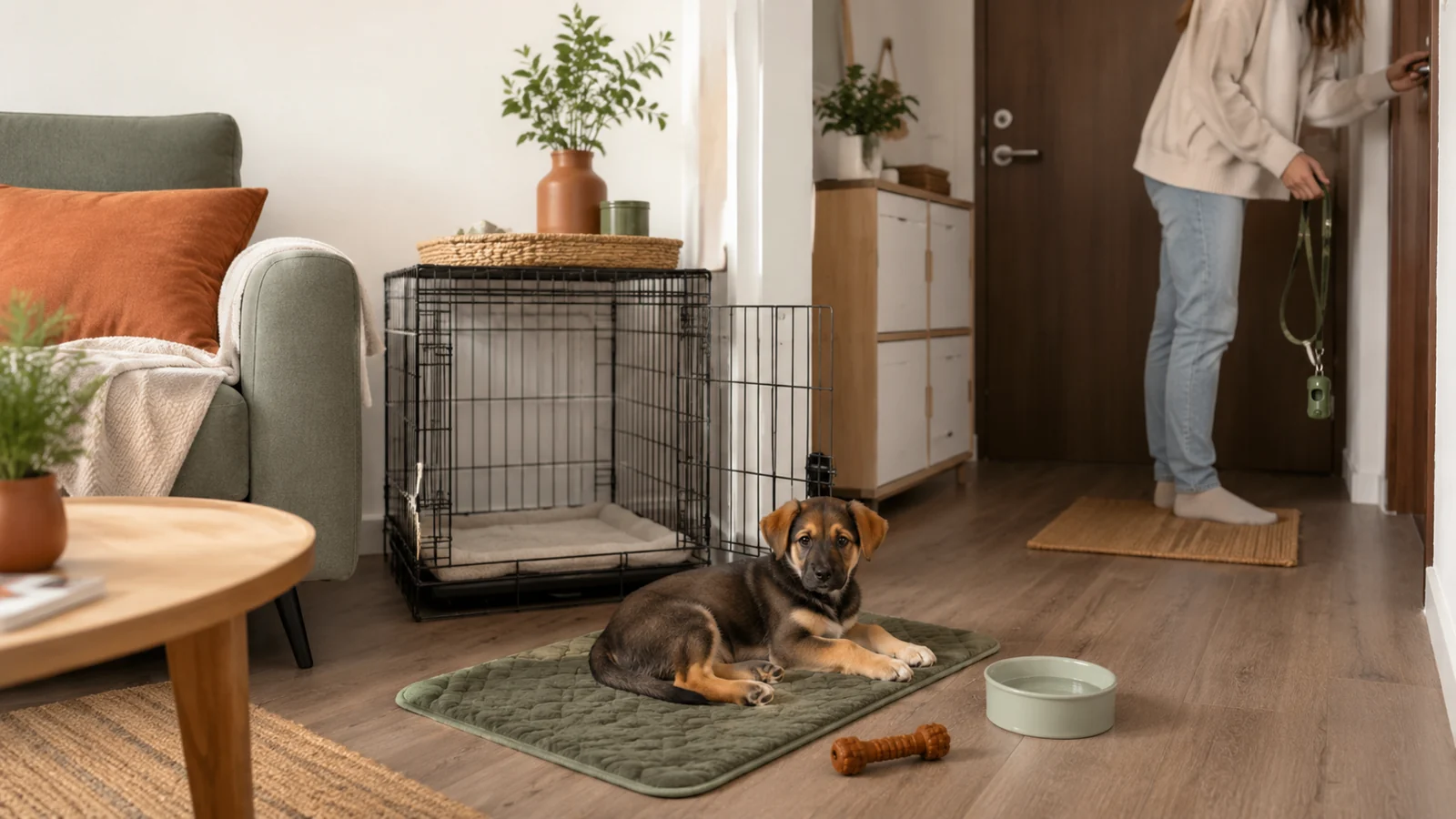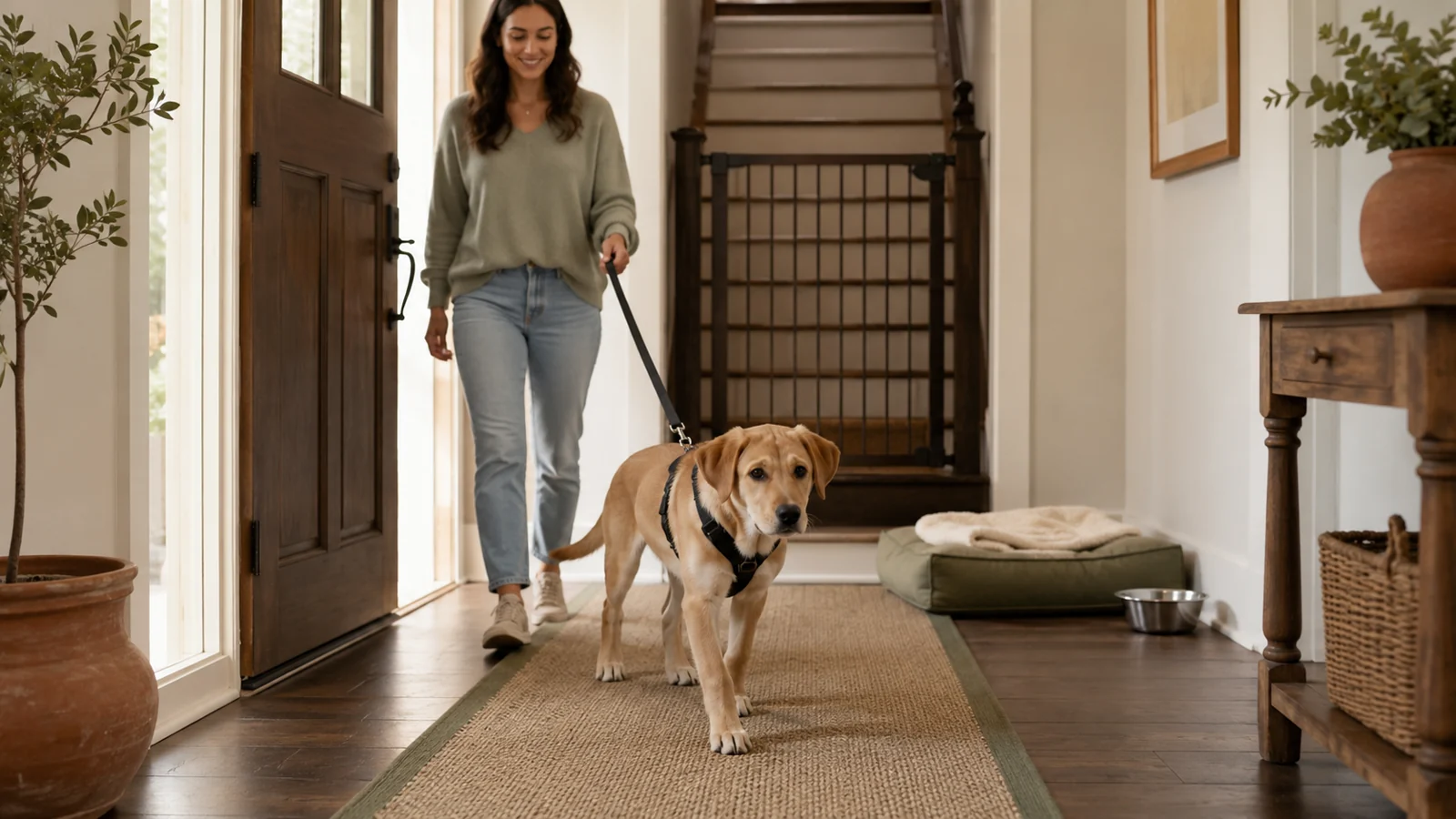
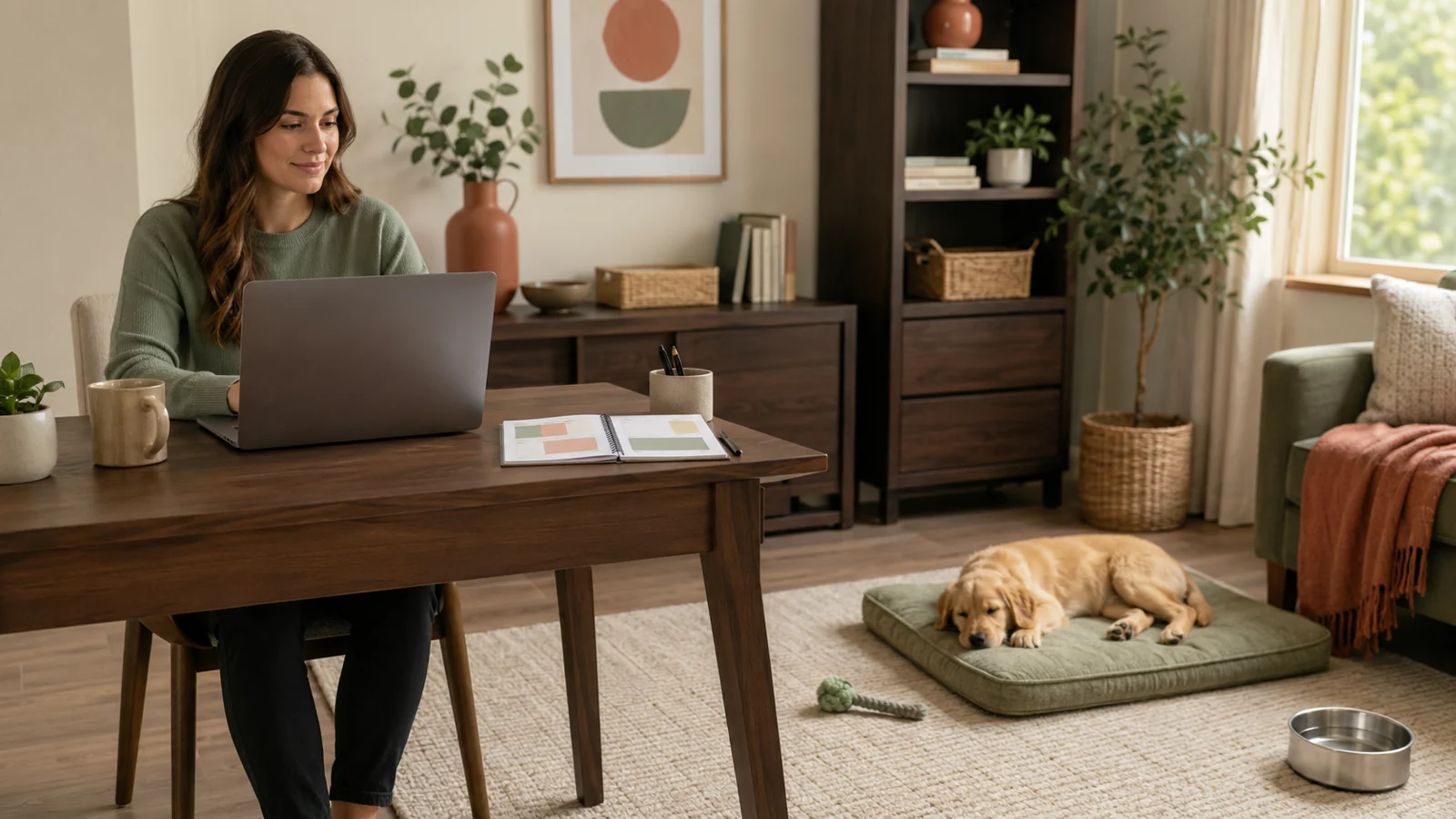
A puppy’s first work-from-home day goes more smoothly when you plan predictable care windows and predictable quiet windows before the puppy arrives. The goal is not to keep the puppy entertained beside your desk all day. It is to meet immediate needs, supervise thoughtfully, protect a few realistic work blocks, and begin teaching that your attention turns on and off calmly.
This guide stays narrowly focused on that first workday at home: calendar triage, meeting blocks, focus time, and avoiding an all-day attention loop. It is not a complete puppy-proofing guide, emergency-kit guide, medical guide, or long-term training plan.
The workday goal: predictable access, not constant access
A new puppy is learning from every interaction. VCA’s puppy training guidance explains that puppies repeat behaviors that produce useful results, including attention, play, toys, or access to interesting activities. On day one, this means your work pattern is already teaching something.
If every whine, paw, bounce, or desk-side stare immediately starts play, the puppy may learn that persistence keeps you available. The opposite extreme—expecting a newly arrived puppy to disappear quietly for hours—is also unrealistic. A better target is a simple rhythm:
- Meet a likely need: toileting opportunity, water access, a meal if due, calm connection, or brief exploration.
- Offer a clear settling activity: a safe resting place and an appropriate puppy-safe toy or chew already approved for that puppy.
- Begin a short work block: stay nearby at first, reduce interaction, and observe.
- Reconnect calmly: return attention on your schedule when possible, ideally during a quiet moment rather than at the peak of demanding behavior.
VCA notes that puppies benefit from learning to have alone time and amuse themselves, and that predictable periods of attention and inattention can support independent settling. See Separation Anxiety in Dogs. This does not mean leaving a distressed puppy to “cry it out.” It means starting with very manageable separations or low-attention periods and adjusting before the puppy becomes overwhelmed.
Build the calendar before the puppy arrives
Open your actual work calendar and label the first-day blocks by consequence, not by habit.
| Calendar label | What it means | First-day action |
|---|---|---|
| Red block | You must speak, present, lead, or make decisions | Add a care break before it, prepare a quiet activity, and create a backup plan |
| Yellow block | You should attend but can briefly mute or step away | Join from a puppy-visible area if practical and keep the agenda accessible |
| Green block | Solo work, email, admin, or movable tasks | Use for observation, short settling practice, and flexible care breaks |
Then make four edits:
- Reduce the red blocks. Move optional presentations, difficult interviews, or back-to-back calls when possible.
- Add buffers. A five- to ten-minute gap before an important meeting is more useful than an optimistic calendar with no recovery room.
- Choose one protected focus block. On the first day, one successful quiet block is more realistic than trying to preserve a normal full schedule.
- Name a fallback person. If another adult, trusted friend, or sitter is genuinely available, decide exactly which meeting they cover. Do not assume they will “help whenever.”
Before arrival, place the puppy’s resting area close enough for observation but not directly under your rolling chair, beside exposed cables, or in the path of constant household traffic. The ASPCA recommends a quiet, dedicated area where a new pet can decompress and suggests securing cords and limiting access with gates as needed; see its adoption preparation guidance. This article does not replace a full puppy-safe-room plan, but your work station still needs a simple, supervised landing place.
Run the first-day work cycle
Use a repeating cycle rather than a minute-by-minute promise. Puppy age, travel, sleep, previous routine, and individual temperament can all change the day.
Arrival and orientation
Keep the first arrival calm. Offer the designated toileting opportunity, a small amount of guided exploration, water, and the familiar meal routine if one is due. VCA recommends keeping the household quiet, providing a comfortable retreat, and giving frequent access to the designated elimination area in How To Prepare For A New Puppy.
Do not introduce the puppy to your entire workday at once. Let the first desk exposure be brief: sit down, touch the keyboard, remain boring for a moment, then calmly reconnect.
Care window
A care window can be short and purposeful:
- toileting opportunity;
- calm praise and connection;
- brief sniffing or gentle play;
- food or water according to the puppy’s established plan;
- a transition into rest.
The goal is not to exhaust the puppy. It is to meet a likely need and make the next quiet window possible.
Quiet work window
Start below the puppy’s current ability. That might mean only a few minutes of you typing while the puppy rests nearby. End or modify the block before frustration escalates. Over the day, repeat several small successes rather than demanding one long success.
Reset window
After a nap, meal, drink, or lively activity, assume another toileting opportunity may be needed. VCA’s house-training guidance advises beginning immediately, supervising closely, and watching for signals such as sudden sniffing, circling, restlessness, or pausing activity. Its suggested timing includes breaks after waking, eating, drinking, and energetic play, plus frequent opportunities while awake. Treat these as observation cues, not a guarantee that every puppy follows the same clock.
Protect meetings without ignoring the puppy
The best meeting plan begins before the call.
Ten to fifteen minutes before a red meeting
- Offer a toileting opportunity.
- Allow a brief calm interaction.
- Set up the puppy’s familiar rest option and safe activity.
- Remove preventable disruptions: dangling cords, an overflowing trash bin, squeaky toys beside the microphone, or an open doorway.
- Put the meeting link, agenda, and necessary files on screen so you are not searching while supervising.
During the meeting
Keep the puppy within the supervision arrangement you planned. Use mute strategically, but do not rely on mute as the whole plan. If the puppy begins mild attention-seeking, pause before responding automatically and look for the cause. A puppy who just woke, drank, ate, or became restless may need a break. A puppy who is safe, recently cared for, and briefly checking whether you are available may be able to settle if you stay neutral.
Do not punish vocalizing or force a puppy to remain in confinement that is causing escalating panic. Repeated screaming, frantic escape attempts, heavy drooling, self-injury risk, or inability to recover are not ordinary productivity problems; stop the exercise and seek individual guidance from a veterinarian or qualified behavior professional.
After the meeting
Avoid turning the final sentence of every call into an explosive reunion. Close the meeting, take one breath, and reconnect calmly. When practical, wait for a brief pause in jumping or vocalizing, then open the care window. This helps separate “the laptop closed” from “instant high-energy entertainment.”
Prevent the constant-attention loop
Work-from-home puppy care fails when the owner alternates between two modes: nonstop entertainment and sudden total unavailability. Use these four rules instead.
Make attention scheduled but generous. During a care window, be present. Put the phone down, interact calmly, and observe the puppy. Quality helps make the boundary believable when the window ends.
Reward the behavior you want near your desk. Quiet chewing, lying on a mat, looking away from you, or choosing to rest can receive calm praise or an appropriate reward. Avoid repeatedly paying the puppy for barking, climbing, or pawing at the chair unless you have identified a genuine unmet need.
Practice tiny changes in distance. Stand up, take one step away, return, and continue calmly. Later, move across the room briefly. The first day is about discovering the puppy’s starting point, not proving independence.
Keep your workstation boring. Do not store exciting toys in your lap, talk to the puppy through every email, or turn each camera-off moment into play. The puppy can be safely included in the room without being the center of every minute.
A useful question is: “What happened immediately before the request for attention?” The answer often tells you whether to meet a need, reduce difficulty, or wait for a quieter behavior before reconnecting.
Troubleshoot what the puppy shows you
| What you observe | Likely first check | Workday adjustment |
|---|---|---|
| Restless after waking | Toileting opportunity | Shorten the next work block and reset after the break |
| Repeated desk pawing after long interaction | Attention may still be highly available | End play more clearly and reward a calm alternative |
| Cannot settle with your chair moving | The work environment may be too stimulating | Move the resting spot slightly away while keeping supervision |
| Wakes whenever you speak on calls | Voice may predict interaction | Practice brief, low-stakes speaking while the puppy has a calm activity |
| Vocalizing escalates rather than fades | The block may be too difficult or a need may be unmet | Stop, reassess, and restart later at an easier level |
| Accidents near meeting times | Break timing or supervision may be insufficient | Add a pre-meeting toileting opportunity and shorten red blocks |
| Sleeps through planned interaction | Puppy may need rest more than stimulation | Let the puppy sleep and move the care window when practical |
Do not treat one difficult block as a verdict. Arrival day is unusually stimulating. Record what happened and make the next block easier, clearer, or better timed.
Seven-day work-from-home observation tracker
This tracker begins on arrival day and helps you refine the schedule over the next week. It is not a diagnostic scale. Use short factual notes rather than labels such as “stubborn,” “needy,” or “bad.”
Settle score:
- 0: did not settle during the attempted block;
- 1: settled briefly or needed repeated support;
- 2: settled for a useful portion of the block with little interaction.
| Day | Red meeting windows | Care offered before focus time | Longest calm work block | Settle score 0–2 | Signals noticed before interruption | What helped | One change for tomorrow |
|---|---|---|---|---|---|---|---|
| 1 — Arrival | |||||||
| 2 | |||||||
| 3 | |||||||
| 4 | |||||||
| 5 | |||||||
| 6 | |||||||
| 7 |
At the end of each day, answer three questions:
- Which work block began after the puppy’s needs were most clearly met?
- Which interruption had an identifiable trigger such as waking, drinking, activity, noise, or prolonged attention?
- What is the smallest calendar or environment change that could improve tomorrow?
After seven days, look for repeatable patterns rather than a perfect score. You may discover that calls work best after a specific care sequence, that your puppy settles better a little farther from the desk, or that a certain meeting time repeatedly collides with waking and toileting needs. Use the pattern to redesign the workday.
A realistic first-day finish line
A successful first work-from-home day is not eight uninterrupted hours or a puppy who never asks for you. It is a day in which you protected essential meetings, responded to real needs, created at least one calm work block, and learned what timing helps the puppy settle.
Keep the rhythm simple: care, transition, quiet work, observe, and reset. Your calendar should adapt to the puppy’s actual first-day capacity, while your attention remains warm, predictable, and not constantly available.
Helpful visuals from this guide
Use these five visuals as quick reminders, then return to the full guide for context, limitations, and source details.

Pinterest does not let websites prefill its Title field. Each button below copies the correct title and opens that Pin. Click the Title field in Pinterest, press Ctrl + V, then save it to the board above.
Start with Pin 1 and repeat through Pin 5.
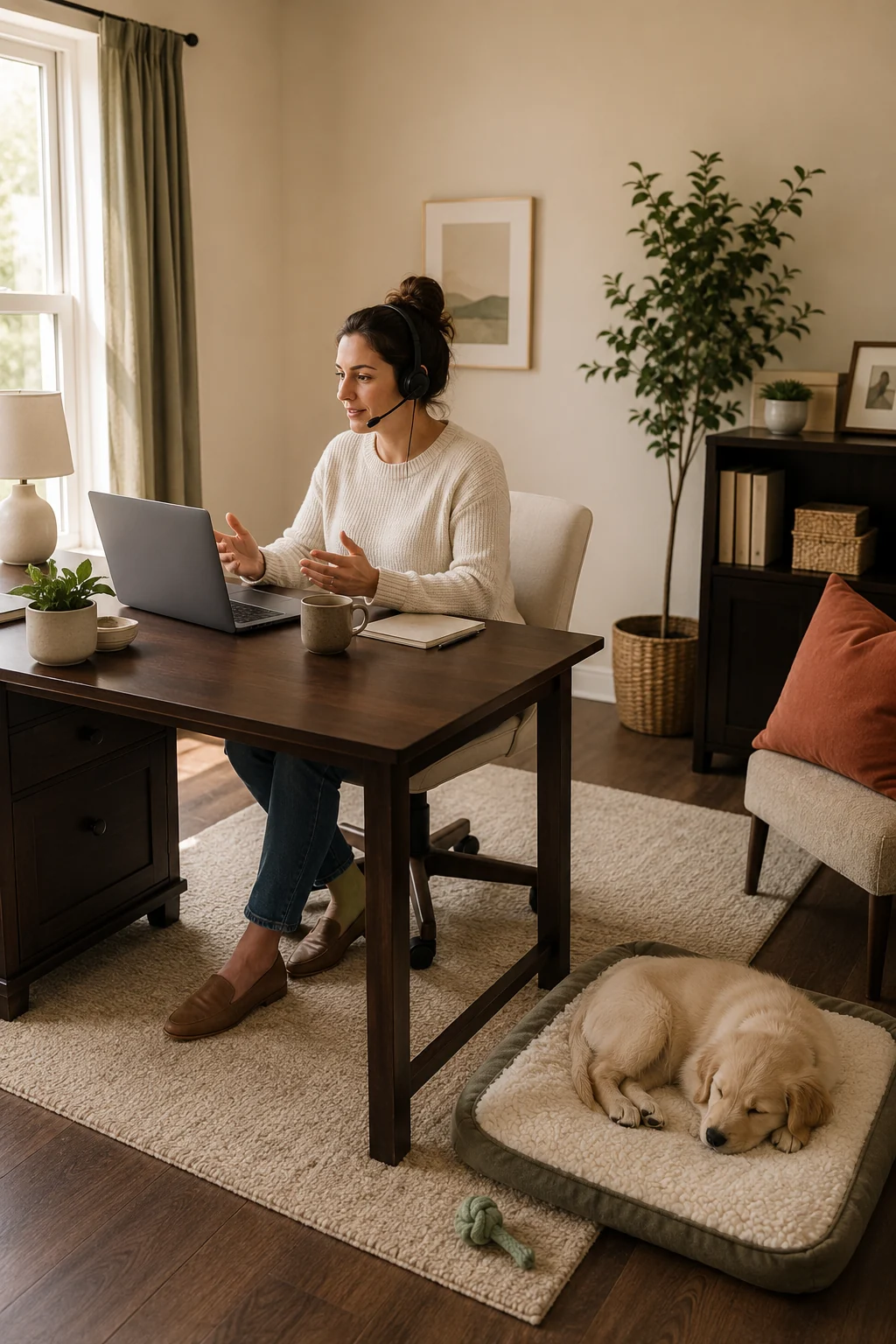
- Plan Your Puppy’s First WFH Day
A visual planning idea for dog moms balancing a new puppy, important meetings, and realistic focus time on the first day home.
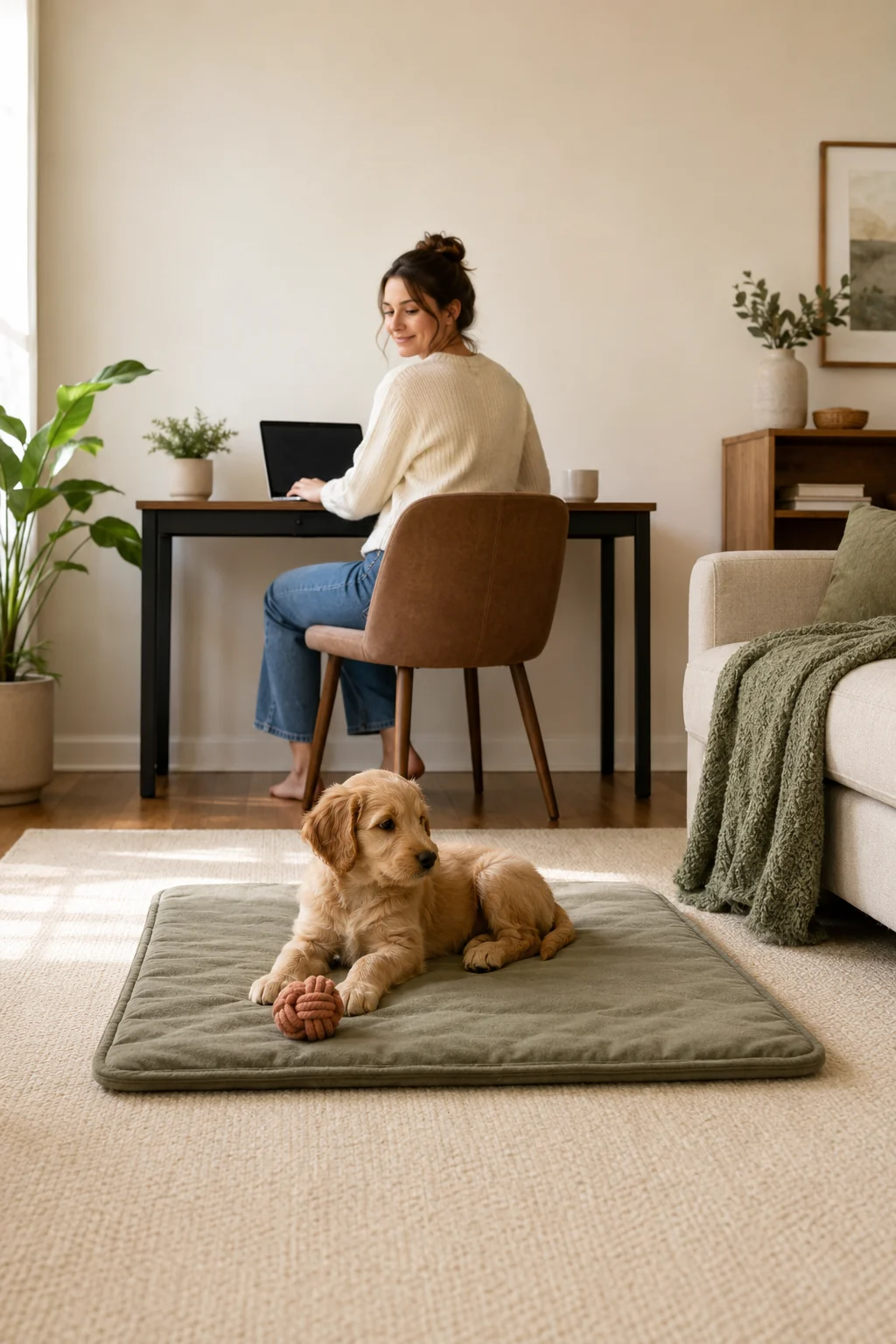
- Protect Meetings With a New Puppy
See how a work-from-home dog mom can keep a new puppy nearby, supervised, and calmly occupied during an important meeting.
- Create a Calm Puppy Focus Block
A practical visual for transitioning from puppy care into a short work session without making attention available every minute.
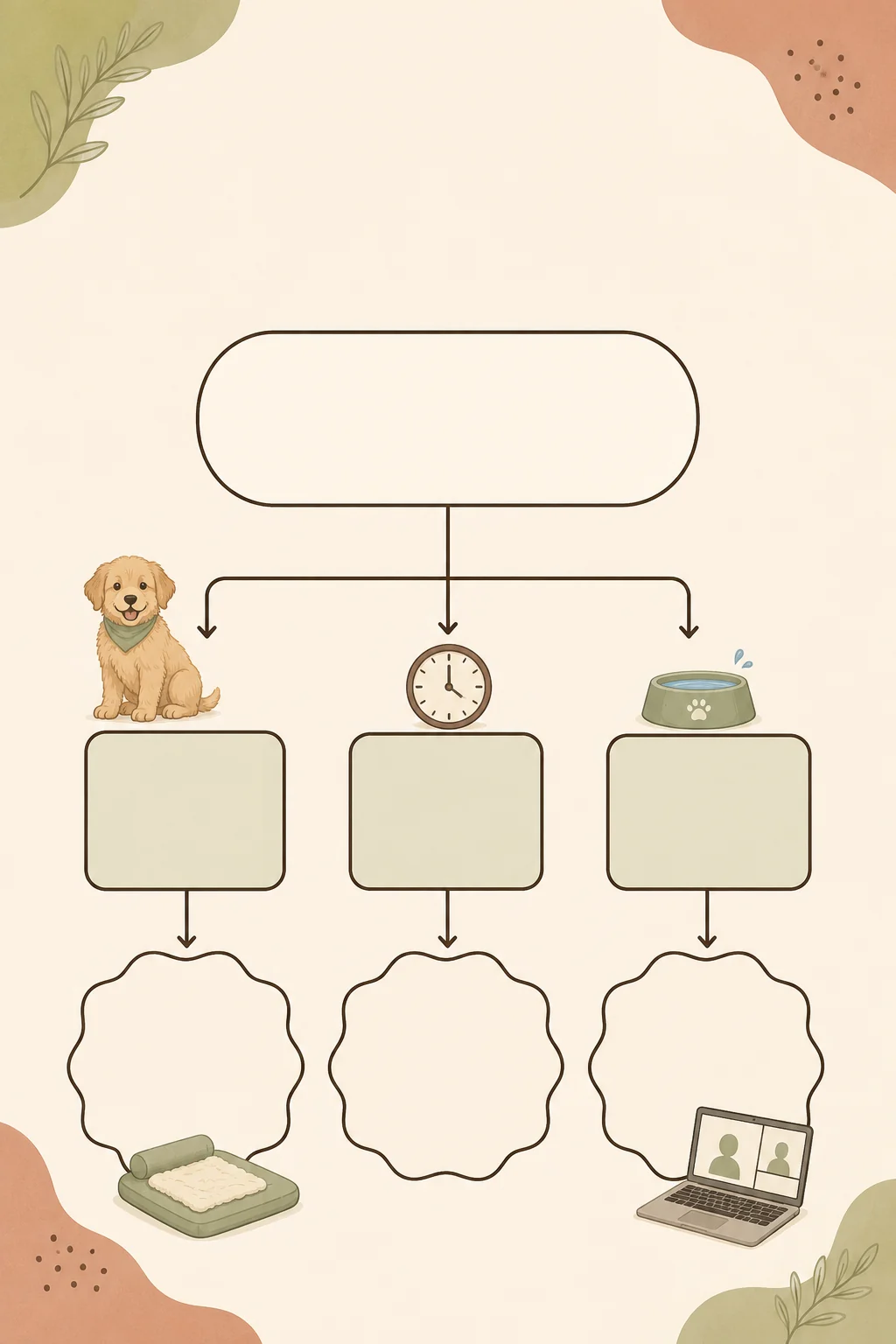
- Puppy Interruption Decision Guide
A clean decision-tree concept for work-from-home puppy interruptions, designed for accurate labels to be added manually.
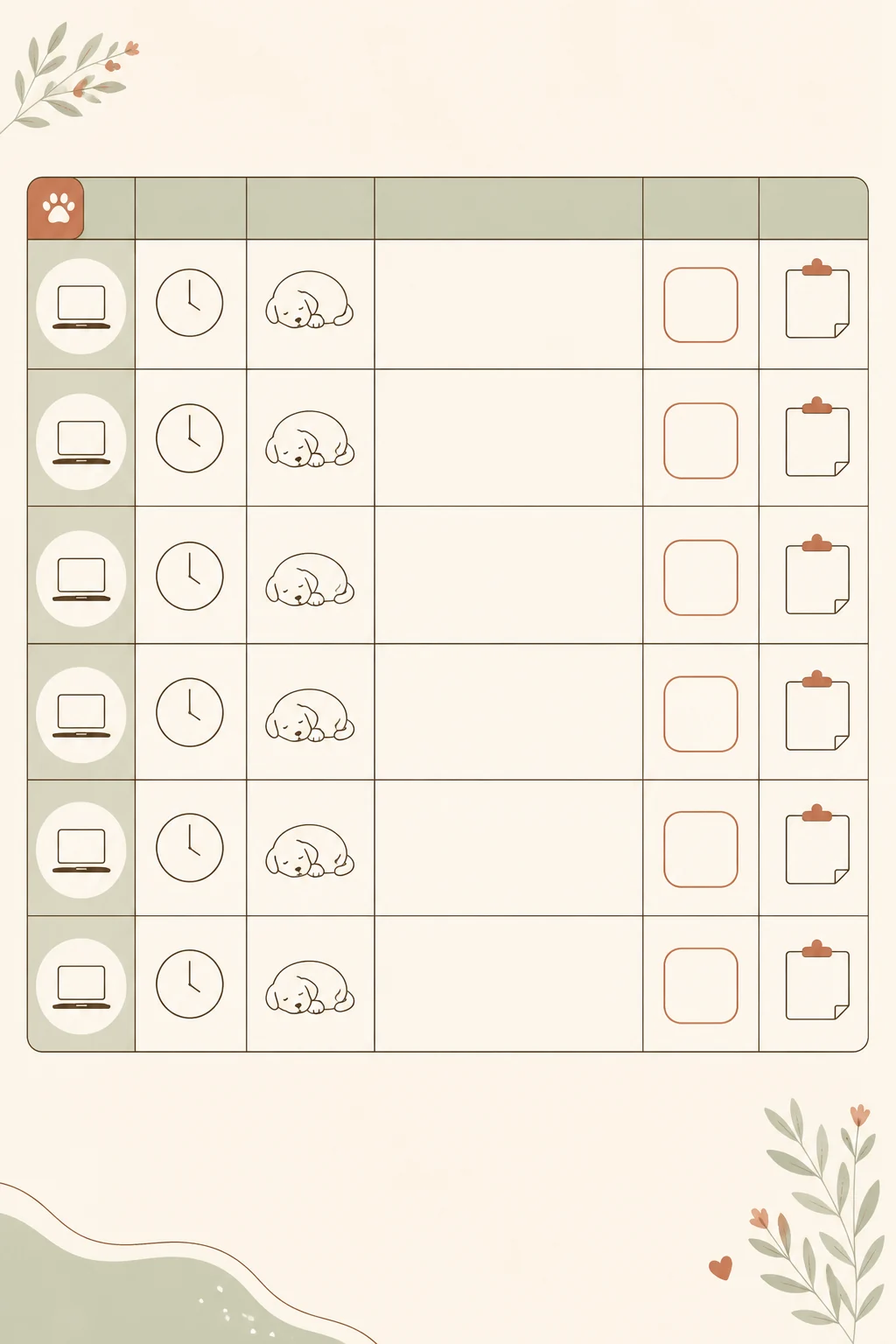
- Seven-Day Puppy WFH Tracker
A printable-style tracker concept for noting meeting windows, calm work blocks, interruption signals, and one adjustment each day.
Optional: choose all 5 images at once
Frequently asked questions
Should I take the entire first day off work?
A lighter calendar is usually more practical than pretending it is a normal workday. Move optional high-stakes meetings, add buffers, and keep at least one small focus block so you can observe what the puppy can manage.
Can the puppy stay beside my desk all day?
The puppy can be nearby when the area is safe and supervision is realistic, but constant interaction is not the goal. Alternate calm care with brief periods in which you work and the puppy rests or occupies themself.
What if the puppy whines during a meeting?
First consider timing and context: waking, eating, drinking, activity, fear, or a toileting need may matter. If needs were recently met and the puppy is safe, reduce the difficulty and reinforce a quieter alternative rather than automatically starting play.
How long should the first focus block be?
There is no universal duration for arrival day. Start with a block short enough that the puppy can succeed, record what happened, and increase only when calm settling is repeatable.
Should I ignore every request for attention?
No. A new puppy has genuine care, comfort, and supervision needs. The useful distinction is between responding to a likely need and accidentally turning every persistent behavior into immediate entertainment.
When should I get professional help?
Contact a veterinarian or qualified behavior professional when the puppy shows escalating distress, frantic escape attempts, heavy drooling, self-injury risk, repeated inability to recover, or any behavior that concerns you.
Sources & further reading
- How To Prepare For A New PuppyVCA Animal Hospitals · Accessed 2026-07-31
- Separation Anxiety in DogsVCA Animal Hospitals · Accessed 2026-07-31
- House Training for Puppies and DogsVCA Animal Hospitals · Accessed 2026-07-31
- Puppy Behavior and Training: Training BasicsVCA Animal Hospitals · Accessed 2026-07-31
- Adoption TipsASPCA · Accessed 2026-07-31