Bringing a puppy home to an apartment works best when you plan the route, rest area, potty access, and quiet periods before pickup. The goal is not to show the puppy every room, meet every neighbor, or complete a full training program. Your first-day job is smaller: help the puppy move safely from arrival to toileting, food, rest, and bedtime while accounting for elevators, shared walls, long hallways, and limited storage.
This guide stays focused on that one day. It does not replace your veterinarian’s advice about vaccination status or outdoor exposure, and it does not provide a full puppy-safe-room plan or emergency-kit list.
1. Build the apartment route before the puppy arrives
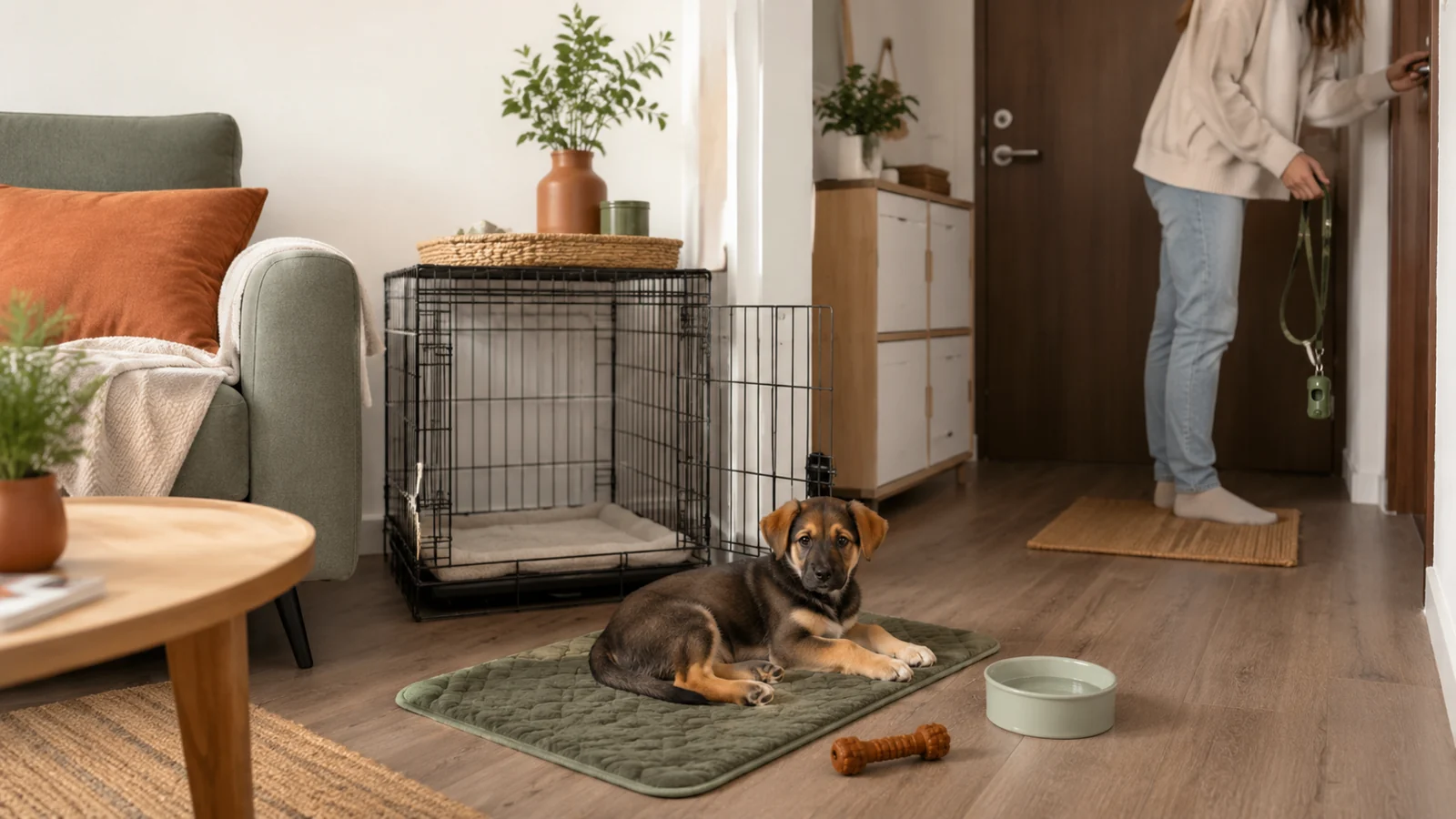
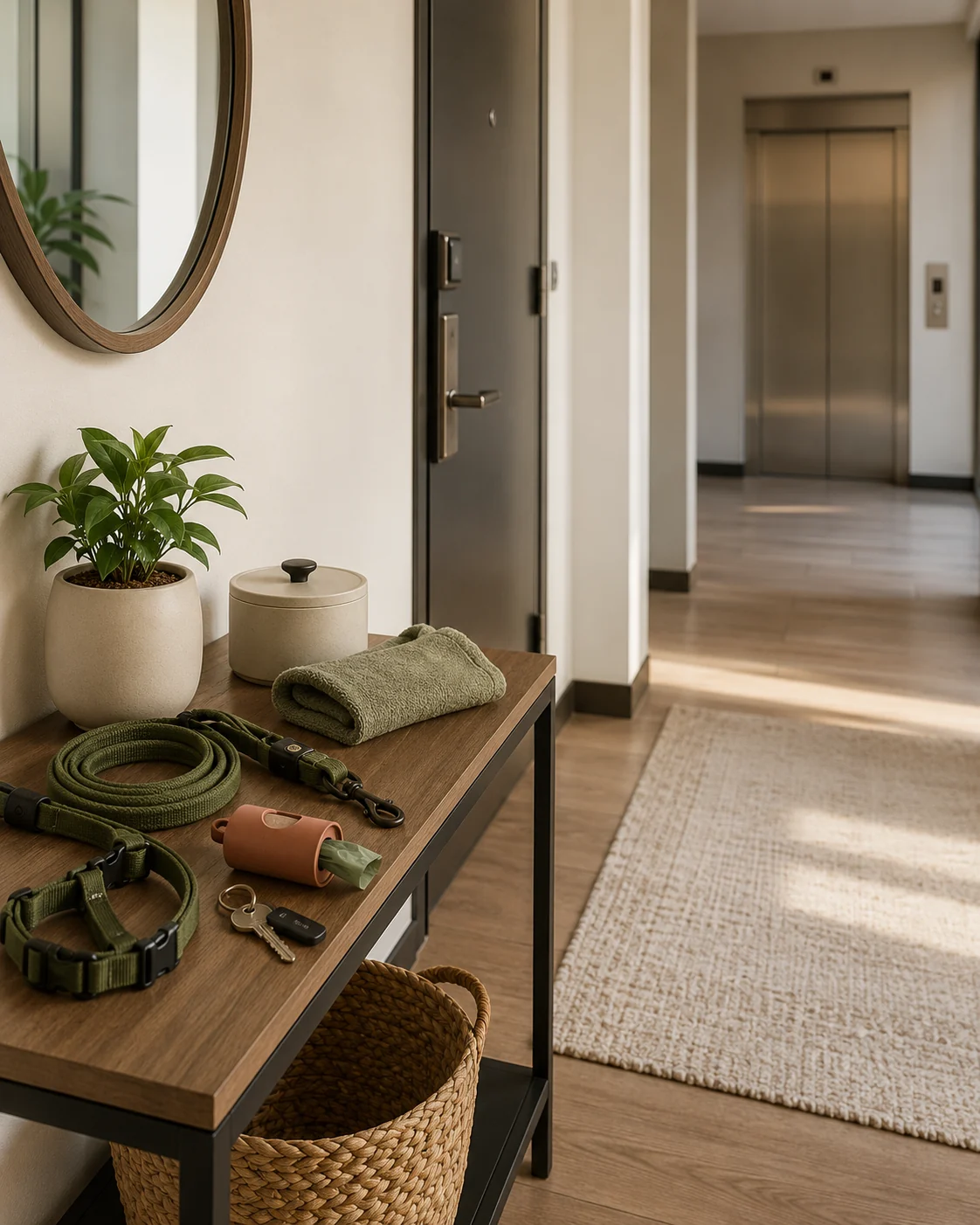
In a detached home, an owner may only need to open a back door. In an apartment, a potty trip may require a leash, keys, access fob, elevator wait, several doors, a lobby, and a walk to the approved relief area. Plan that sequence before pickup.
Walk the route once without the puppy and answer five questions:
- Which exit is permitted for pets?
- Where is the closest appropriate toileting location?
- At what times is the elevator or lobby least busy?
- What will you do if the elevator is full, out of service, or frightening?
- Where will you keep the leash, waste bags, keys, towel, and cleanup supplies?
Keep the exit kit together near the door, but out of the puppy’s reach. The purpose is speed, not decoration. A young puppy may show only a short warning—sniffing, circling, restlessness, or a sudden squat—before eliminating. VCA recommends beginning house-training when the puppy comes home and taking the puppy to the chosen location consistently; it also lists breaks after meals, drinks, naps, and active play among the times puppies often need to go. Review VCA’s housetraining guidance. (Vca)
Ask your veterinarian whether the planned outdoor surface is appropriate for your puppy’s vaccination status. The AVMA advises caution in places where dogs gather until the initial vaccination series is complete. In a large apartment complex, a heavily used dog-relief area may deserve the same question. Read the AVMA overview of canine parvovirus. (AVMA)
If your veterinarian recommends an indoor toileting option, choose its location before arrival and keep the approach consistent. Do not place it beside food, water, or the sleeping area.
2. Create one compact landing zone
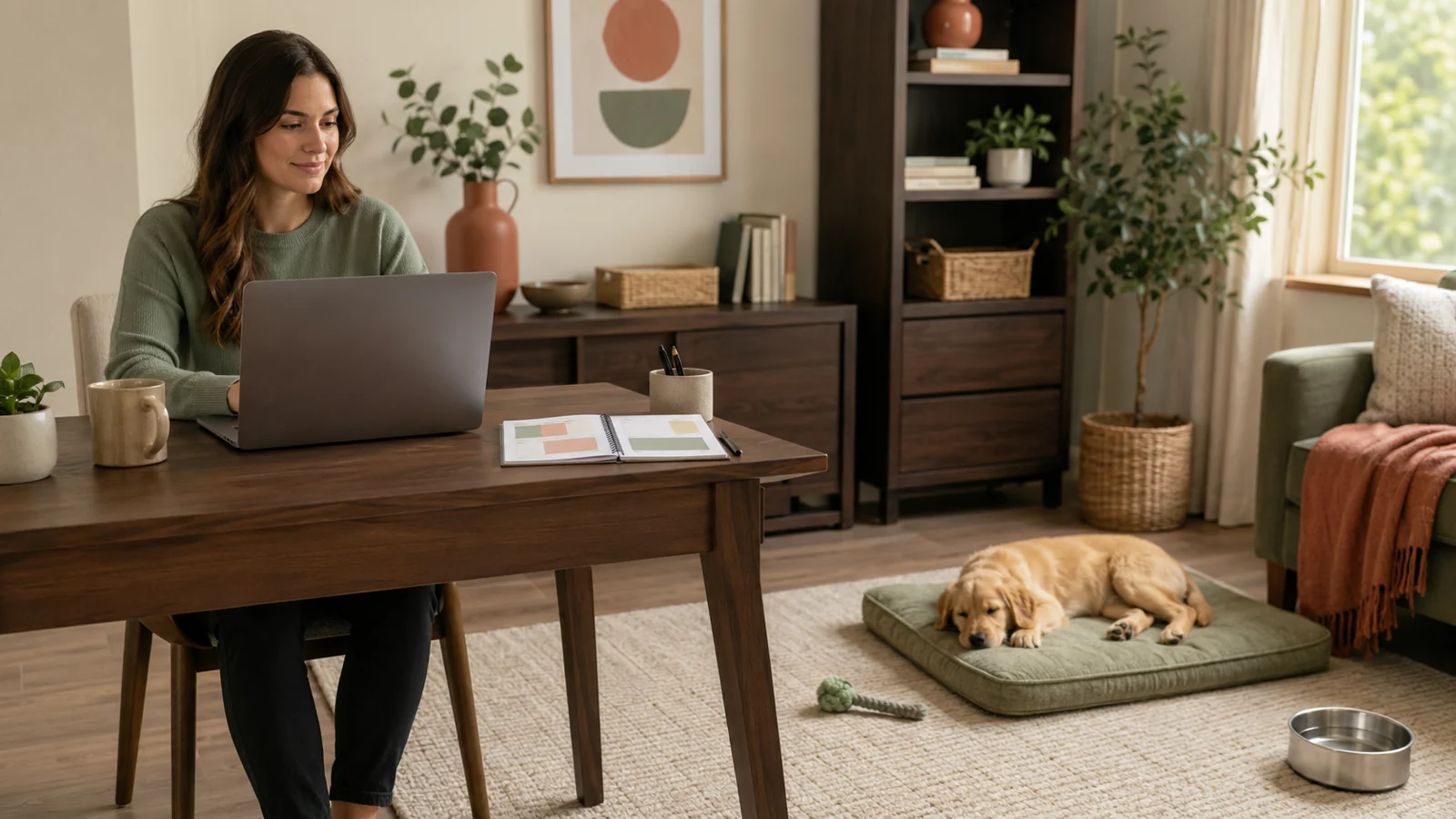
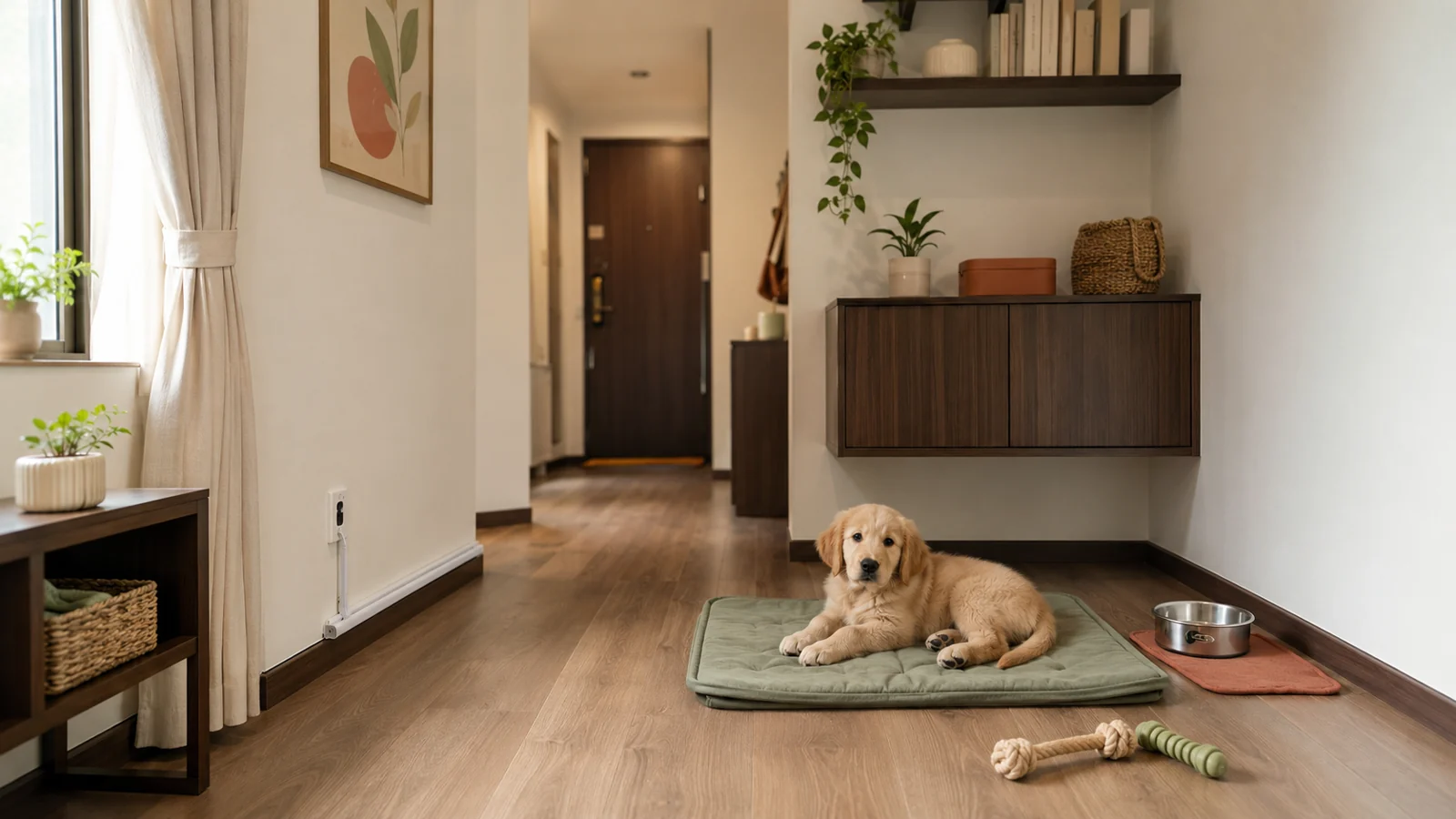
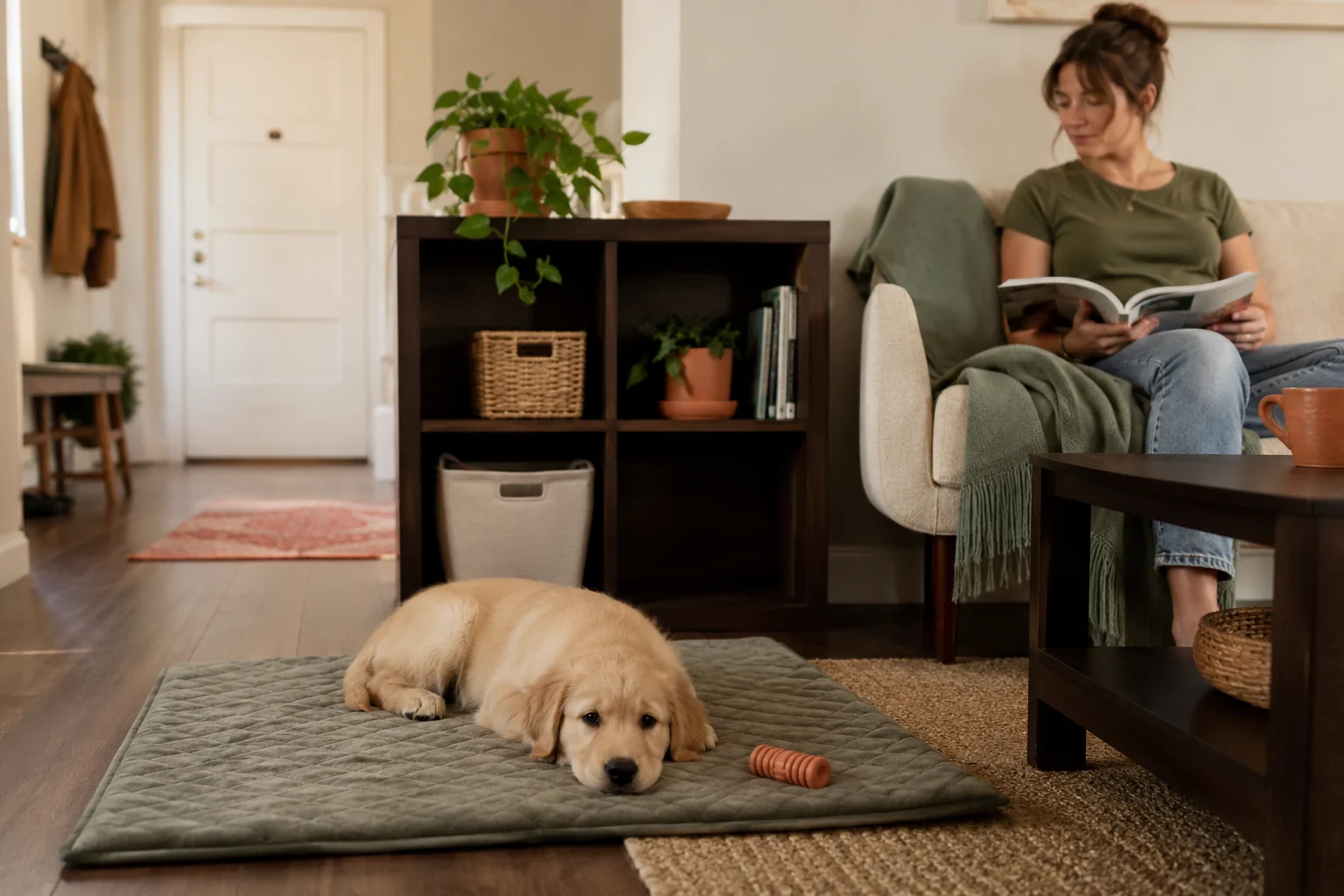
The puppy does not need the whole apartment on day one. Start with one supervised landing zone where the puppy can drink, rest, chew an appropriate toy, and stay near you without watching every hallway movement.
Choose a low-traffic spot that is:
- away from the front door when possible;
- not pressed directly against the noisiest shared wall;
- free from dangling cords and unstable objects;
- easy to clean after an accident;
- large enough for the puppy to stand, turn, rest, and reach water;
- close enough for you to notice stirring or restlessness.
The ASPCA recommends a warm, quiet resting place and lists basics such as water and food bowls, a leash, safe chew toys, a crate, and bedding. See the ASPCA’s general dog-care guidance. (ASPCA)
For a small apartment, avoid unpacking every puppy item at once. Use a simple “one in use, one stored” rule: one leash at the door, one active chew item, one washable resting layer, and one sealed container for food or supplies. This preserves floor space and reduces tempting clutter.
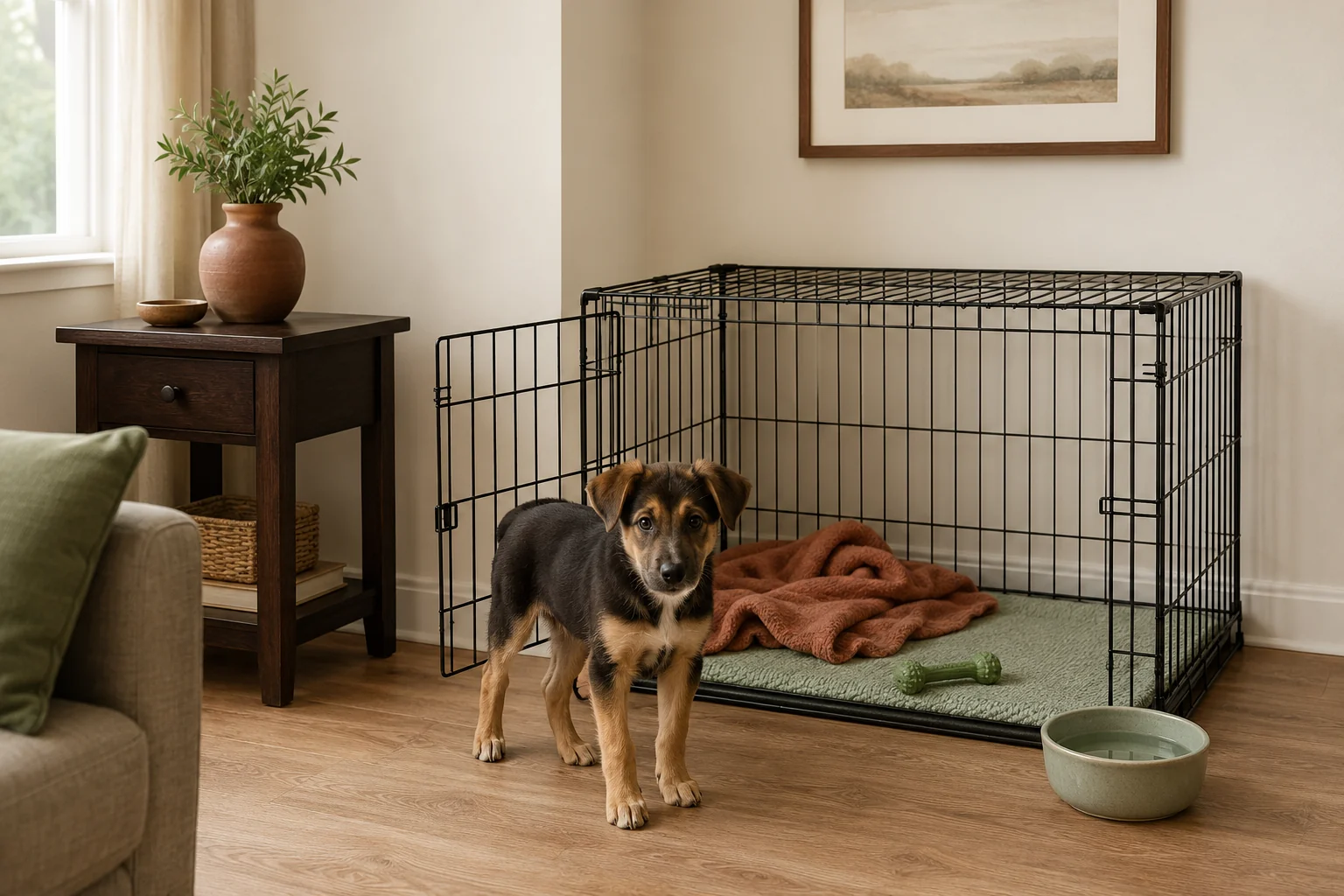
A crate or foldable pen can be part of the zone, but the first introduction should be positive and brief. VCA recommends encouraging voluntary entry and beginning with the door open, then increasing difficulty gradually. If vocalizing or escape behavior escalates rather than settling, end the session and seek professional guidance before continuing. Read VCA’s crate and confinement overview. (Vca)
3. Use a calm first-two-hours sequence
The first two hours should feel predictable, not exciting. A practical apartment sequence is:
Potty opportunity → quiet entry → water → limited exploration → rest.
First, offer the planned toileting opportunity according to your veterinarian’s guidance. Then bring the puppy directly to the landing zone. Keep the leash attached only while you are actively supervising and remove it before unattended rest so it cannot snag.
Let the puppy investigate the small zone at their own pace. Avoid a full apartment tour. If the puppy is relaxed, allow a few minutes of gentle exploration in one adjoining area, then return to the landing zone. New smells, elevator movement, door sounds, and unfamiliar flooring already provide substantial stimulation.
Offer clean water. For food, follow the schedule and food supplied by the breeder, shelter, rescue, or previous caregiver unless your veterinarian has given a different plan. VCA advises keeping the puppy’s first-day food and timing consistent with the prior routine rather than making an abrupt change during the transition. (Vca)
Expect the puppy to alternate between curiosity and sleepiness. Do not interpret sleep as a missed opportunity to play. Rest is one of the most useful first-day activities because an overtired puppy may become mouthy, frantic, vocal, or unable to settle.
Keep visitors off the schedule unless a meeting is necessary. One calm household member is easier than several people leaning over the puppy, repeating the puppy’s name, and passing the puppy around.
4. Introduce the elevator without making it a test
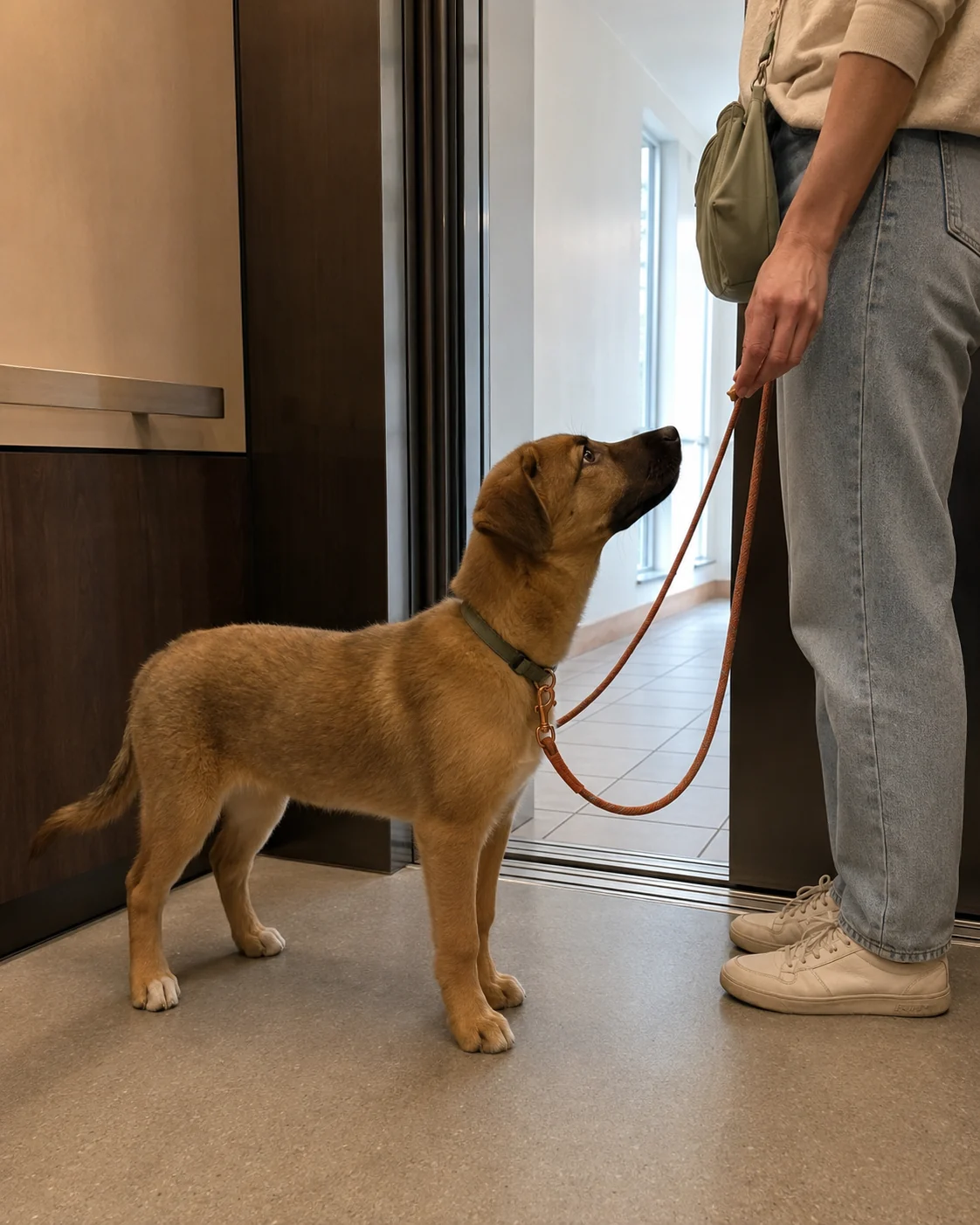
An elevator combines a closing door, vibration, mechanical sound, changing pressure, unfamiliar people, and a moving floor. On the first day, success may be as small as approaching the elevator calmly or riding one floor during a quiet period.
Use this progression only while the puppy remains comfortable:
- Stand at a distance where the puppy can notice the elevator without freezing or pulling away.
- Reward calm looking, sniffing, or checking in with you.
- Move closer only if the puppy chooses to continue.
- Enter an empty elevator if possible.
- Keep the ride short and exit before the puppy becomes overwhelmed.
Fear Free Happy Homes suggests pairing a short elevator ride with treats and a positive activity after exiting. Read the city-dog elevator example. (Fear Free Happy Homes)
Do not lure the puppy across a threshold and then trap them for a long ride. If the puppy will not take food, crouches, trembles, refuses to move, or tries to escape, reduce the difficulty. The best first-day lesson is that you notice discomfort and help the puppy leave.
For a small puppy that must be carried, support the chest and hindquarters rather than lifting by the forelegs, tail, or neck. (ASPCA)
5. Protect shared-wall quiet with management
Some first-day noise is normal. The useful goal is not “a puppy who never vocalizes”; it is a setup that prevents repeated arousal and helps the puppy return to rest.
Start by reducing triggers:
- place the landing zone away from the front door;
- close blinds if outside movement causes staring or barking;
- use furniture placement to block a direct hallway sightline;
- keep greetings in the lobby brief;
- avoid loud play near a shared wall;
- reward the puppy when they choose to lie down, chew quietly, or look at a sound and then disengage.
VCA’s training guidance emphasizes teaching the behavior you want through management, supervision, and positive reinforcement. It also recommends starting new skills in a quiet environment and teaching settling behaviors when a puppy is calm. Read VCA’s puppy training basics. (Vca)
If a hallway sound causes barking, do not shout over the puppy. Calmly increase distance from the door, guide the puppy toward the mat or resting zone, and reward the first quiet pause. The ASPCA also recommends reducing a dog’s opportunity to watch passersby and teaching an alternate location such as a mat or crate. See the ASPCA barking overview. (ASPCA)
A courteous first-day neighbor plan can be simple: avoid blocking the hallway, clean accidents promptly, do not allow greetings at elevator doors, and follow the building’s pet rules. You do not need to announce the puppy to the entire floor.
6. Keep the first evening deliberately uneventful
By evening, the puppy may be tired but unable to settle. Use a repeating loop:
potty opportunity → a few calm minutes with you → water or scheduled meal → brief chewing or gentle play → rest.
After waking, eating, drinking, or active play, prepare for another toileting trip. In an apartment, begin moving at the first signs rather than waiting for a clear signal because the route takes longer.
Keep play short and on a non-slip surface. Avoid encouraging running through the hallway or repeated jumping on furniture. End activity while the puppy is still capable of calming down.
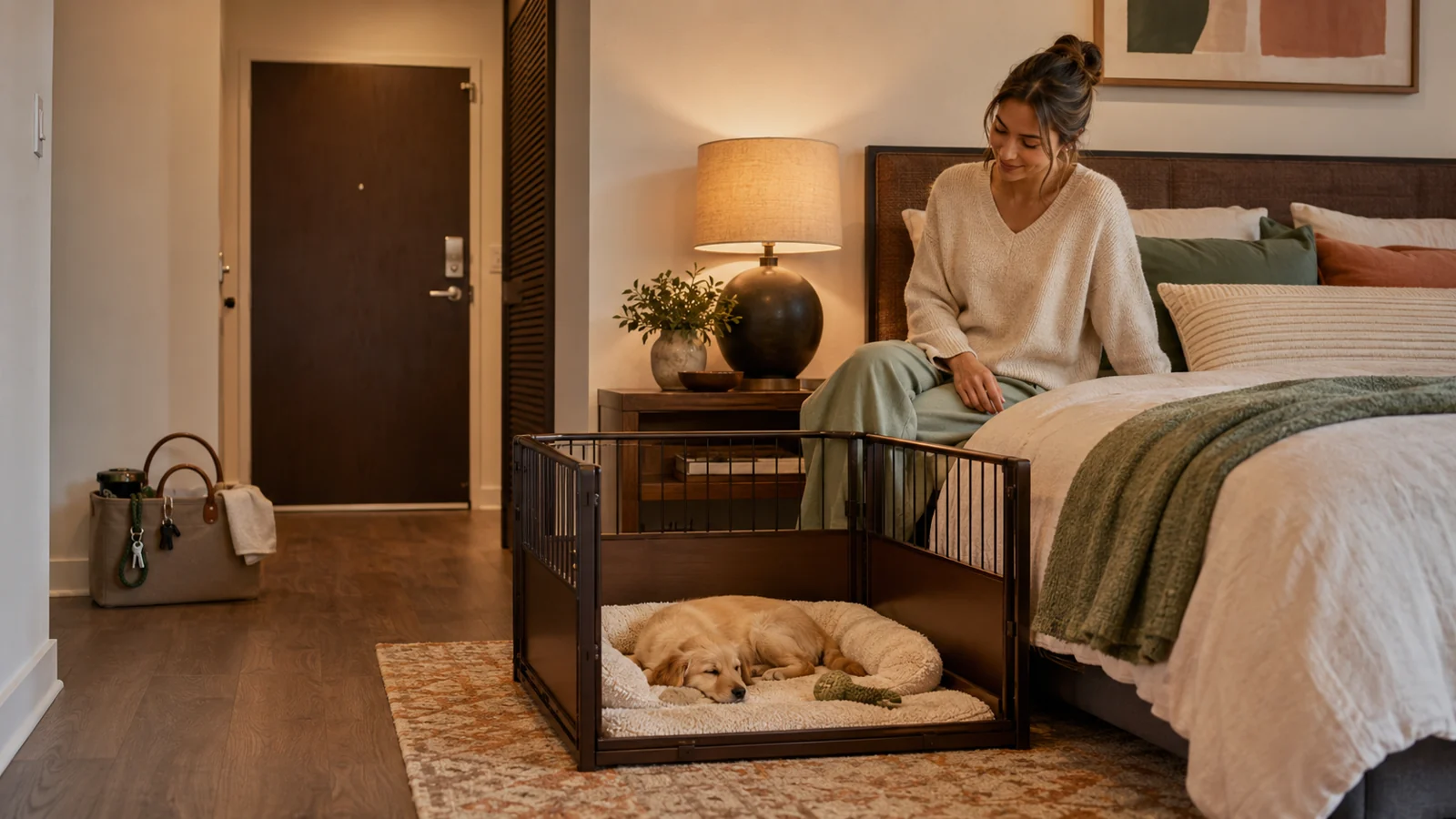
For bedtime, position the resting setup close enough for you to hear movement and respond to possible toileting needs. A familiar-smelling towel or blanket supplied by the previous caregiver may help, provided it is safe and the puppy is not shredding or swallowing it. Keep the final potty trip quiet and businesslike rather than turning it into a late-night walk.
Write down four observations before sleeping:
- food offered and approximately how much was eaten;
- water intake changes you noticed;
- toileting times and locations;
- what helped the puppy settle or what repeatedly triggered vocalizing.
This is not a diagnosis log. It is a handoff note for the next morning and a useful record if you need to ask the breeder, rescue, trainer, or veterinarian a specific question.
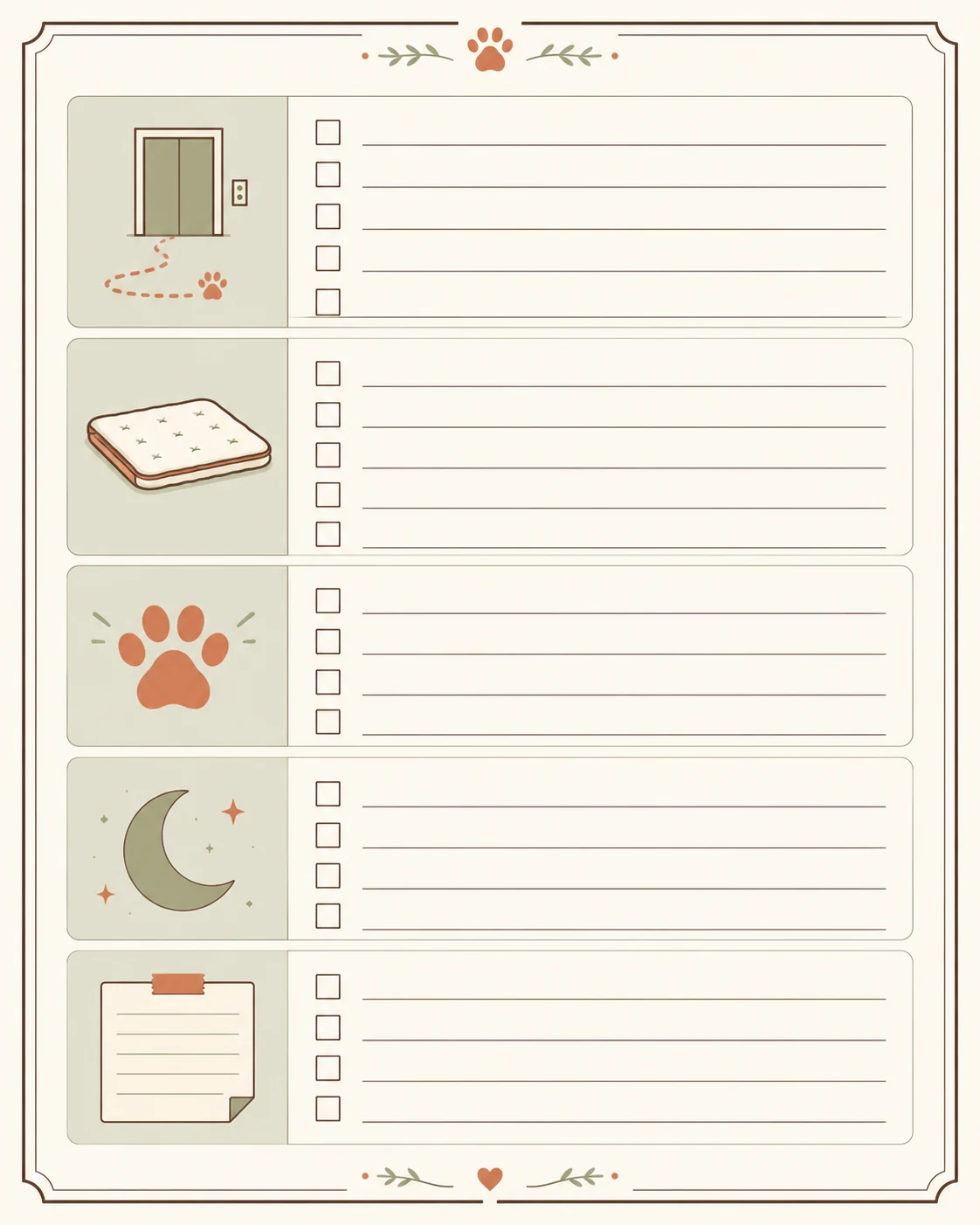
7. Apartment Puppy First-Day Setup Checklist
Use this as the promised one-page planning tool. Complete it before pickup, then keep it near the door.
Route and building
- Confirm the building’s pet entrance, elevator rules, and approved relief area.
- Walk the full apartment-to-potty route once.
- Identify the quietest likely elevator time.
- Decide what to do if the elevator is crowded or unavailable.
- Ask the veterinarian whether the outdoor surface is appropriate for this puppy.
- Put keys, access fob, leash, harness, waste bags, and towel in one grab-and-go spot.
Compact home setup
- Choose one low-traffic landing zone away from the front door when possible.
- Place a washable resting mat or safe bedding.
- Set out clean water.
- Add one appropriate chew or food toy.
- Set up an open crate or pen only if you plan a gradual, positive introduction.
- Store extra supplies in one closed container.
- Keep enzyme cleaner accessible to the adult but out of the puppy’s reach.
Arrival sequence
- Offer the planned potty opportunity before or immediately after entering.
- Bring the puppy to the landing zone instead of touring the whole apartment.
- Allow quiet sniffing and observation.
- Offer water.
- Follow the previous caregiver’s food and meal timing unless advised otherwise.
- Limit visitors and handling.
- Schedule the first rest period.
Shared walls and elevator
- Block the direct view of busy hallway or street movement if needed.
- Reward calm pauses, mat settling, and quiet chewing.
- Avoid loud play beside a shared wall.
- Try only a brief elevator exposure at a quiet time.
- Leave the elevator situation if the puppy becomes overwhelmed.
- Keep lobby greetings optional and short.
Evening and notes
- Offer potty breaks after waking, meals, drinks, and active play.
- Keep the final outing calm and brief.
- Place the sleeping setup where you can notice stirring.
- Record food, water, toileting, settling, and noise triggers.
- Prepare the exit kit again before going to bed.
- Save non-urgent training goals for another day.
Common first-day mistakes to avoid
Giving full access immediately: Too much space makes supervision and accident prevention harder.
Waiting too long to start the potty trip: Apartment doors, elevators, and hallways add time. Move when you first notice restlessness or sniffing.
Using nonstop play to “wear the puppy out”: Overstimulation can make settling and shared-wall quiet harder.
Forcing elevator exposure: A short, successful approach is more useful than a frightening long ride.
Changing food on arrival without a plan: The first day already includes major environmental change; follow the established routine unless the veterinarian directs otherwise.
Correcting fear or accidents harshly: Management, supervision, cleanup, and reward-based teaching give the puppy clearer information than punishment. (Vca)
Conclusion
A successful apartment homecoming is not measured by how much the puppy learns in one day. It is measured by whether you can move through the building, offer timely potty opportunities, provide a small predictable place to rest, and respond calmly to elevators and shared-wall sounds.
Prepare the route and landing zone before pickup. Keep the first two hours simple. Protect rest. Record what worked. By bedtime, you should have a practical map of the puppy’s needs inside your specific building—and a calmer starting point for day two.
Helpful visuals from this guide
Use these five visuals as quick reminders, then return to the full guide for context, limitations, and source details.
Pinterest does not let websites prefill its Title field. Each button below copies the correct title and opens that Pin. Click the Title field in Pinterest, press Ctrl + V, then save it to the board above.
Start with Pin 1 and repeat through Pin 5.
- Plan the Puppy Potty Route Before Homecoming
A practical visual for apartment puppy owners who need to coordinate doors, elevators, hallways, and limited outdoor access on the first day.
- A Small-Space Puppy Landing Zone
See the few essentials that help a new puppy settle in an apartment without filling the whole room with gear.
- A Gentle First Elevator Ride for a Puppy
A simple first-day approach for introducing an apartment puppy to elevator movement, doors, and hallway sounds without rushing.
- Set Up a Quieter First Night in an Apartment
Use distance, visual barriers, and calm rewards to make the first evening easier for a puppy and nearby neighbors.
- Apartment Puppy First-Day Checklist
A printable-style planning layout for the route, compact setup, arrival steps, first evening, and handoff notes.
Optional: choose all 5 images at once
Frequently asked questions
Should my puppy meet the neighbors on the first day?
Usually, the first day is easier when greetings are limited and optional. Let the puppy settle, then allow only a brief, calm introduction if the puppy is relaxed and the neighbor can follow your instructions.
What if the elevator scares my puppy?
Reduce the difficulty. Start near the elevator at a quiet time, reward calm observation, and leave. A later one-floor ride can be enough; do not force the puppy to remain when fear is increasing. (Fear Free Happy Homes)
How often should I take the puppy out on the first day?
Use the puppy's prior routine and your veterinarian's guidance, then add breaks after waking, eating, drinking, and active play. VCA notes that young puppies may need very frequent breaks while awake. (Vca)
Can I use an indoor potty area in an apartment?
It can be a planned option when outdoor access is impractical or your veterinarian advises limiting exposure, but consistency matters. Choose one location and method rather than moving it around throughout the first day. (Vca)
Where should the puppy sleep the first night?
Choose a quiet, supervised resting location near enough for you to notice stirring and possible potty needs. An open, positively introduced crate or pen can be useful, but do not continue confinement if distress escalates. (Vca)
What should I do if the puppy barks at hallway sounds?
Increase distance from the door, block the direct view when possible, calmly guide the puppy to the resting mat, and reward quiet moments. Avoid shouting, which can add more noise and arousal. (ASPCA)
Sources & further reading
- Housetraining for Puppies and DogsVCA Animal Hospitals · Accessed 2026-07-29
- Life Skills for Pets: Crate Training and Confinement for Puppies and DogsVCA Animal Hospitals · Accessed 2026-07-29
- General Dog CareASPCA · Accessed 2026-07-29
- Canine parvovirusAmerican Veterinary Medical Association · Accessed 2026-07-29
- City Dog Days: How To Make Them Fun, Not FrighteningFear Free Happy Homes · Accessed 2026-07-29