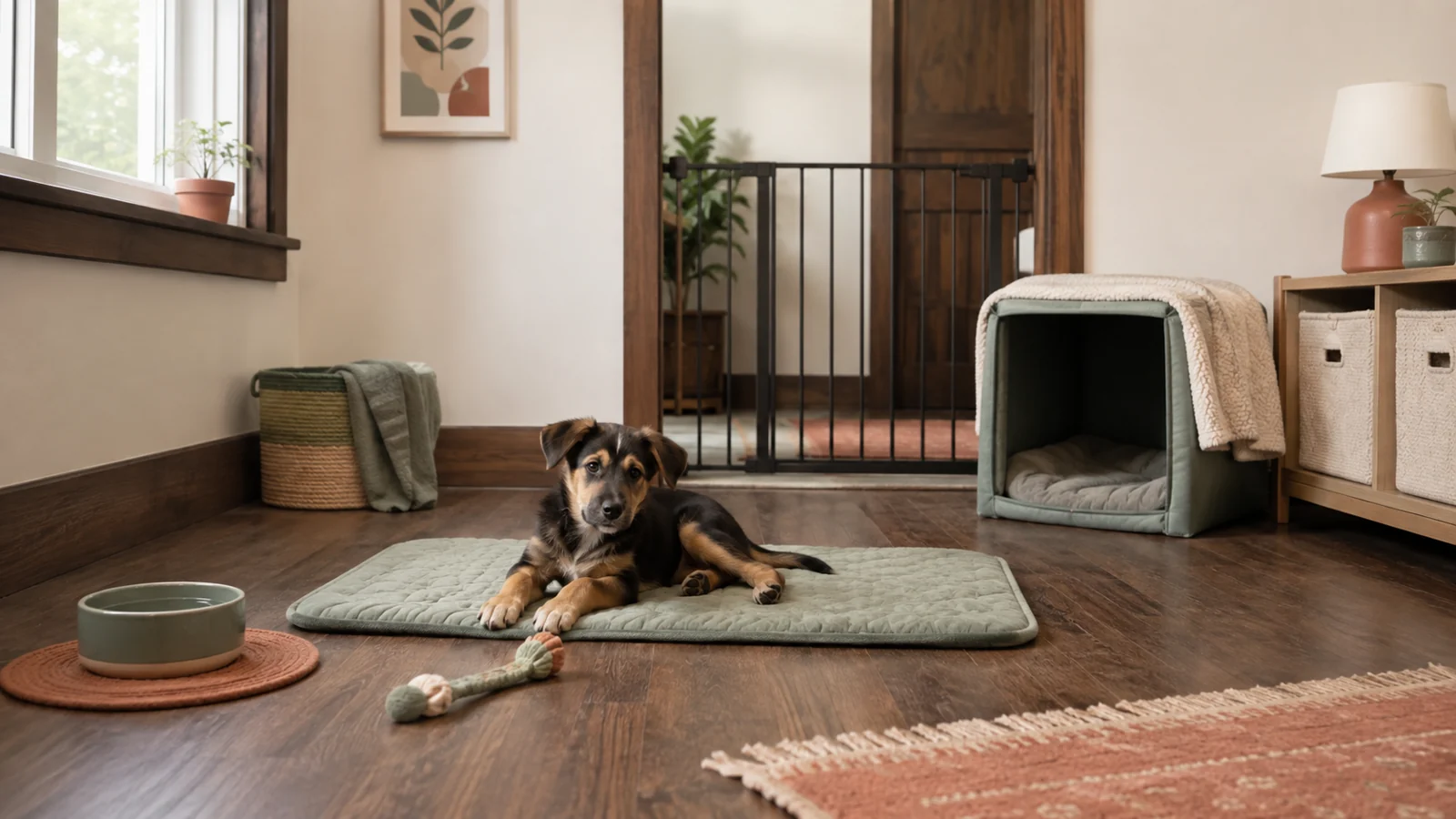
A rescue puppy’s first day should be deliberately small: preserve any confirmed routine, assume the missing details are genuinely unknown, reduce stimulation, and record what the puppy chooses to do without testing or forcing them. Your goal is not to discover the puppy’s full personality in one day. It is to create a calm baseline that makes tomorrow’s decisions better.
The ASPCA’s adoption guidance notes that newly adopted pets may feel nervous or overwhelmed by unfamiliar sounds, smells, people, and animals, and recommends routine, patience, space, and no forced interactions. VCA similarly describes the familiar 3-3-3 idea as a flexible expectation-setting framework rather than a strict clock; pets vary, and some need longer to settle (VCA’s 3-3-3 adoption overview).
Start with an uncertainty-first plan
Limited history changes the job. Instead of filling blanks with assumptions such as “she must be crate trained,” “he probably likes children,” or “she did not eat because she is picky,” label each detail as one of three things:
- Confirmed: directly documented by the rescue, foster, shelter, or veterinarian.
- Observed today: something you saw in a specific context.
- Unknown: not yet supported by reliable information.
That distinction prevents a single first-day reaction from becoming a permanent label. A puppy who freezes at the front door may be tired, unsure of the flooring, startled by a sound, or overwhelmed by the transition. Record the event without deciding what it “means” yet.
Before pickup, ask the rescue for the most recent practical facts they actually have: last meal time and food used, last elimination opportunity, current name or cue words, transport experience, sleep setup, known handling sensitivities, and any written veterinary or foster instructions. If the answer is “unknown,” write “unknown.” Do not create a routine based on what a puppy of that age would “normally” do.
Use this simple first-day rule:
When history is missing, choose the option that adds the least pressure, changes the fewest variables, and is easiest to observe.
For example, if the rescue provides the puppy’s current food but not the exact portion, keep the food familiar and confirm the feeding details rather than switching foods and adding several new treats on arrival. If the puppy’s response to visitors is unknown, skip the welcome party rather than using guests to “see how social” the puppy is.
Make the arrival smaller than you think it needs to be
The first hour should feel quiet and boring to a human. That is useful. VCA advises taking shelter-pet introductions slowly and notes that a new pet may benefit from beginning in one limited area with basic resources while becoming accustomed to the home (VCA shelter adoption guidance). This guide does not replace a full puppy-safe-room setup; it simply uses a calm starting area so the puppy is not asked to process the entire home at once.
A practical arrival sequence is:
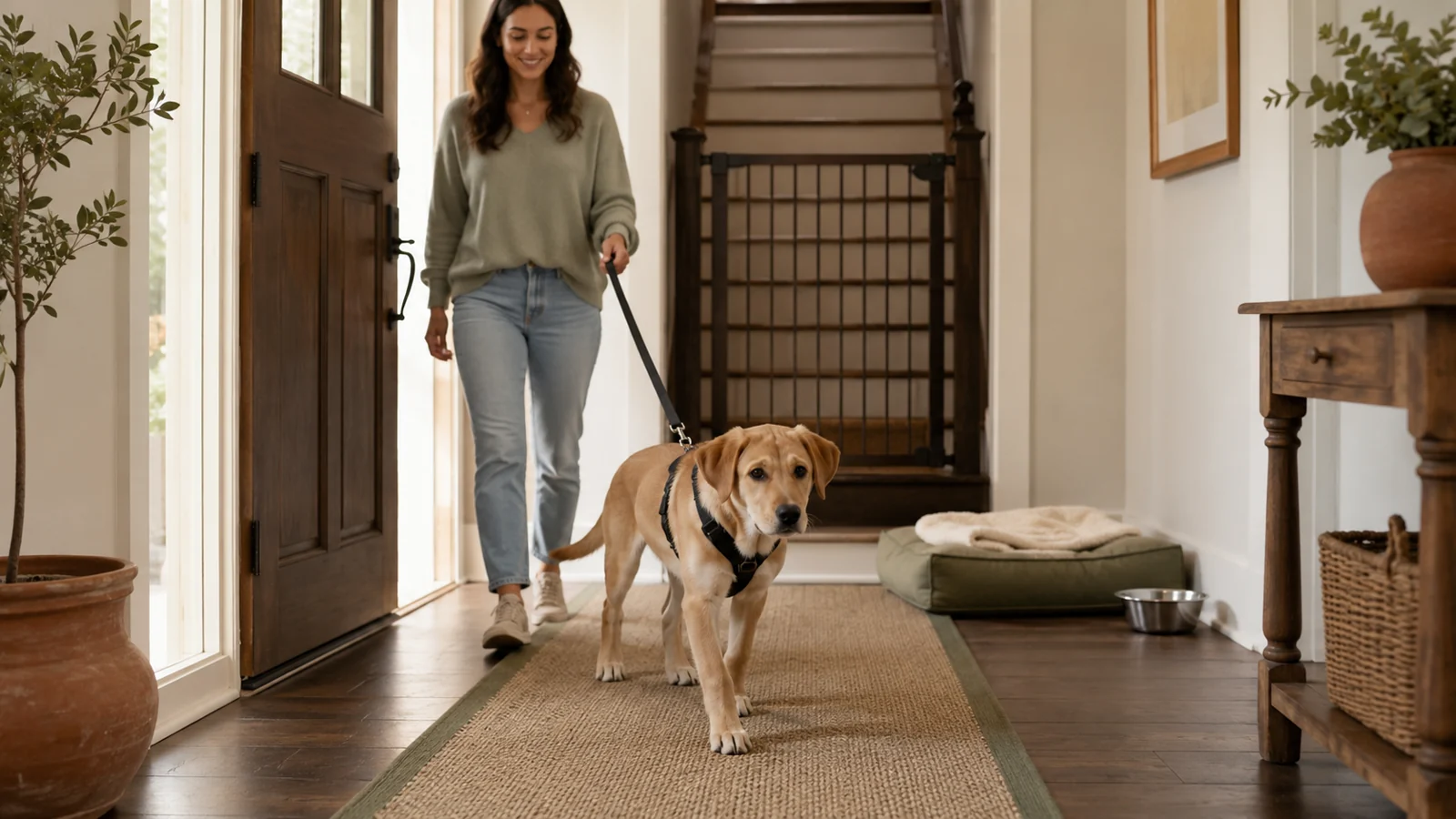
- Go directly to the planned elimination location. Keep the leash secure, the route simple, and the outing brief. Do not tour the neighborhood.
- Enter with one calm caregiver. Keep voices low and movement unhurried. Put phones, visitors, and excited greetings aside.
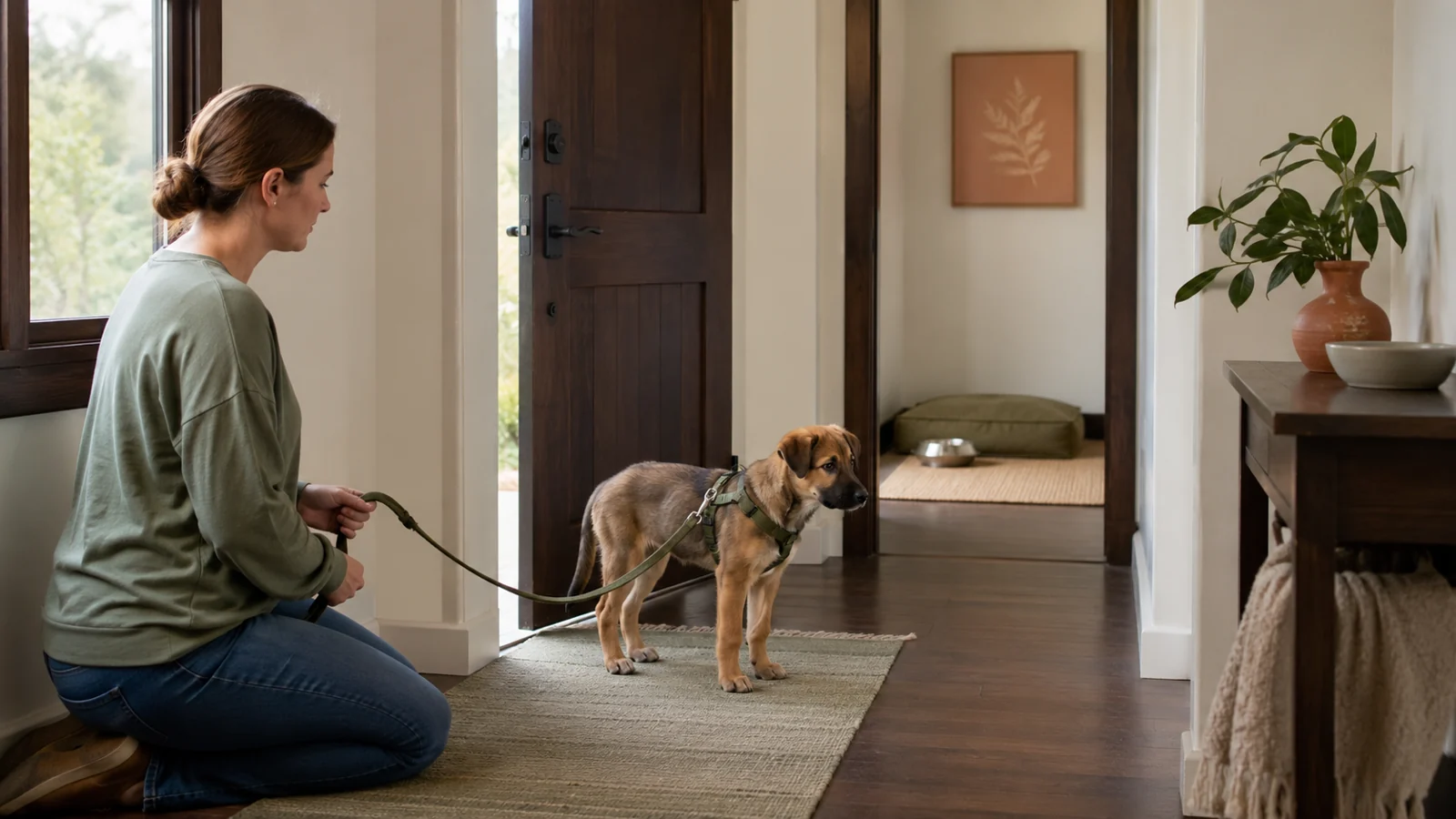
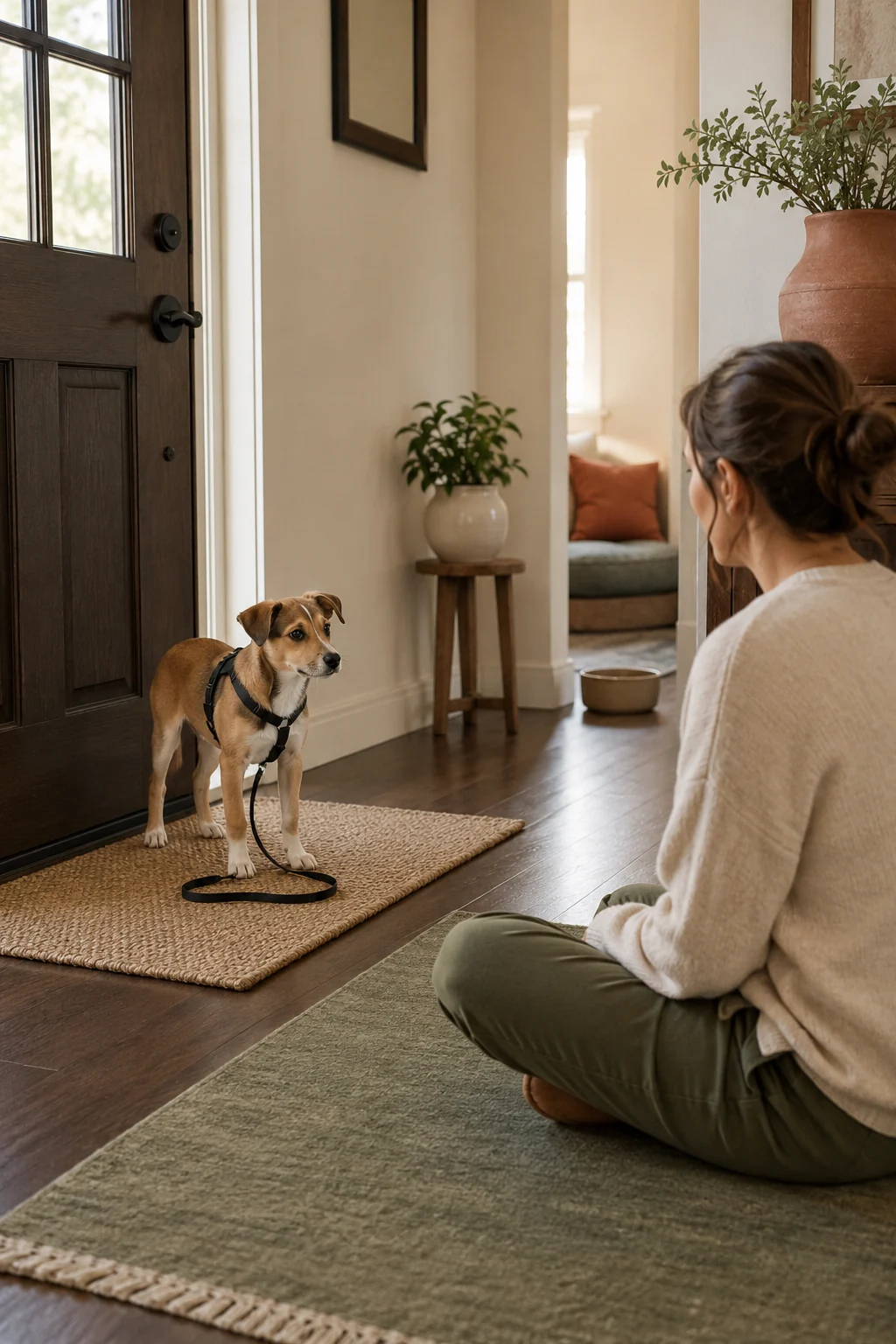
- Show the puppy water and the resting area. Then reduce your involvement. Sit sideways or at a distance and allow sniffing, watching, resting, or approaching.
- Limit the map of the house. Open only the area needed for the first part of the day. More access can come later, after you have observed how the puppy moves through the space.
- Protect rest. A rescue puppy may be tired after transport and transition even if they appear busy or restless.
A quiet resting place is a basic care need, and the ASPCA recommends a warm, quiet place away from drafts (ASPCA general dog care). Keep the setup uncomplicated: water, a comfortable resting option, secure boundaries, and only a small number of appropriate items. This article intentionally does not provide a complete room-proofing or emergency-kit checklist because those require separate coverage.
Observe without turning the day into a test
Observation is different from testing. Observation asks, “What happened when the environment was calm?” Testing asks, “What can I make the puppy tolerate so I can find out?” On the first day, use the first approach.
Record context, not personality labels. Useful notes look like this:
- “At 2:10 p.m., puppy drank after the room was quiet for ten minutes.”
- “Paused at the tile threshold; crossed after a mat was placed.”
- “Moved away when a hand reached over the head; approached again when the person sat sideways.”
- “Rested for 35 minutes after the first elimination trip.”
- “Did not take the offered toy; no conclusion yet.”
Avoid notes such as “stubborn,” “dominant,” “not affectionate,” “fully house-trained,” or “bad with men” after a single event. Those labels can cause you to apply more pressure or overlook context.
Watch four first-day categories:
| Category | What to record | What not to conclude yet |
|---|---|---|
| Approach and retreat | What distance the puppy chooses, whether they approach, pause, or move away | Whether the puppy is friendly, aloof, or bonded |
| Food and water context | What was offered, when, where, and whether the room was busy or quiet | Whether the puppy is picky or food-motivated |
| Elimination opportunities | Times, location, surface, and what happened | Whether the puppy is reliably house-trained |
| Rest and recovery | Where the puppy settles, duration, interruptions, and activity before rest | Whether the puppy has a sleep or behavior problem |
If the puppy appears acutely unwell, has an injury concern, or you are worried about their condition, contact a veterinarian or the rescue instead of trying to interpret the issue through an observation log. The log is for organizing information, not diagnosing health or behavior.
Use a cautious first-day timeline
A timeline gives predictability without pretending you know the puppy’s former schedule. Adjust it around confirmed rescue instructions, travel time, age-appropriate needs discussed with your veterinarian, and the puppy’s observed state.
Before leaving the rescue
- Collect written records and contact information.
- Confirm what the puppy ate most recently and when.
- Ask which facts are foster observations and which are estimates.
- Secure the puppy for transport using the arrangement recommended by the rescue.
- Decide who will be the single lead caregiver for arrival.
First 15 minutes at home
- Offer the planned elimination opportunity.
- Keep the route and surroundings quiet.
- Enter the limited starting area.
- Make water available.
- Avoid introductions, bathing, grooming, photo sessions, and house tours.
First one to three hours
- Let the puppy observe with minimal social pressure.
- Offer rest before play.
- Follow a confirmed meal time when available; otherwise use the rescue’s handoff guidance rather than improvising a large change.
- Record only what you can see: time, place, event, and recovery.
- Keep handling functional and gentle rather than repeatedly touching paws, ears, mouth, or body to “check tolerance.”
Remainder of the day
- Repeat simple cycles: elimination opportunity, quiet return, water access, low-key interaction if the puppy initiates, and rest.
- Keep cues consistent and use one name or cue set.
- Prevent crowding by family members.
- Delay optional novelty, visitors, errands, and social outings.
- End the evening by writing what remains unknown.
VCA’s puppy preparation guidance emphasizes a quiet household, a comfortable retreat, and opportunities to use the designated elimination spot (VCA puppy preparation guidance). Treat those as structure, not a performance target. A puppy does not need to eat, play, cuddle, explore, and sleep on your preferred timetable to have a “successful” first day.
Rescue Puppy First-Day Weekly Audit Scorecard
This scorecard audits your household process, not the puppy. Use it at the end of each day for one week to see whether your first-day plan is staying evidence-based as new information appears. Score each criterion 0, 1, or 2:
- 0 = not done or contradicted
- 1 = partly done or inconsistent
- 2 = done clearly and documented
| Audit criterion | 0 points | 1 point | 2 points |
|---|---|---|---|
| Unknowns stayed labeled as unknown | Guesses were treated as facts | Some guesses were corrected | Records clearly separate confirmed, observed, and unknown |
| Stimulation remained manageable | Puppy was repeatedly exposed or crowded | One or two unnecessary stressors occurred | Optional novelty was limited and recovery time protected |
| Choice and retreat were respected | Interaction was forced or retreat blocked | Caregiver sometimes missed withdrawal signals | Puppy could approach, pause, or move away without pursuit |
| Routine stayed simple | Many variables changed at once | Routine was partly predictable | Timing, cues, location, and caregiver actions were consistent |
| Observations included context | Notes used labels only | Some times or triggers were recorded | Notes captured time, setting, event, and recovery |
| Assumptions were updated carefully | One event became a permanent conclusion | Conclusions were revised slowly | New evidence changed the plan without overgeneralizing |
| Questions were escalated appropriately | Concerns were guessed at or ignored | Some questions were delayed | Rescue or veterinarian was contacted when their input was needed |
Use this seven-day grid:
| Day | Total out of 14 | One assumption confirmed or corrected | One pressure reduced tomorrow | Question for rescue or veterinarian |
|---|---|---|---|---|
| Day 1 | ||||
| Day 2 | ||||
| Day 3 | ||||
| Day 4 | ||||
| Day 5 | ||||
| Day 6 | ||||
| Day 7 |
Interpret the score as a process check:
- 0–5: The household is guessing or adding too much pressure. Reduce novelty and return to documented facts.
- 6–10: The plan has useful structure, but inconsistent notes or expectations may be creating confusion.
- 11–14: The household is protecting decompression and updating decisions from evidence.
Do not score appetite, affection, confidence, playfulness, or sociability as “good” or “bad.” The puppy’s job is to adjust. Your job is to make the environment understandable and to notice changes without rushing them.
Common first-day mistakes and better alternatives
Mistake: treating silence or stillness as instant calm. A puppy may be quiet while still uncertain. Better: keep pressure low and watch whether the puppy can rest, explore voluntarily, and recover after necessary transitions.
Mistake: inviting everyone to bond immediately. Better: choose one lead caregiver and let other household members be calm background presence. The ASPCA specifically advises against forcing interactions during the early adjustment period.
Mistake: testing every unknown. Better: record unknown reactions as unknown. You do not need to test vacuum cleaners, doorbells, children, other dogs, grooming, car rides, or alone time on arrival day.
Mistake: changing several things after one imperfect moment. Better: change one variable at a time. If the puppy will not cross a floor, add traction before deciding the puppy is afraid of the room. If the puppy does not eat in a busy kitchen, try a quieter context before changing food.
Mistake: using the 3-3-3 guideline as a deadline. Better: use it only to remember that adjustment unfolds over time. VCA explicitly notes that it is not a strict timeline and that individual pets may need longer.
Mistake: trying to solve future training on day one. Better: establish calm, prevent avoidable rehearsal of unwanted behavior, and gather enough information for later training decisions. This is not the day to prove that the puppy can handle every household demand.
Finish the day with a better handoff to tomorrow
A good first day does not produce a perfectly settled puppy. It produces a reliable baseline: what was confirmed, what happened in context, what remains unknown, and which pressures can be reduced. Before bed, write a five-line handoff:
- Confirmed routine details.
- What the puppy chose to approach.
- What the puppy moved away from.
- What helped the puppy rest or recover.
- Questions that require the rescue or veterinarian.
That handoff prevents tomorrow’s caregiver from starting over or turning guesses into facts. Keep the second day as simple as the evidence requires, not as busy as your excitement suggests. The most useful first-day promise you can make to a rescue puppy is not “you will love everything here.” It is “we will notice, listen, and go at a pace you can show us.”
Helpful visuals from this guide
Use these five visuals as quick reminders, then return to the full guide for context, limitations, and source details.

Pinterest does not let websites prefill its Title field. Each button below copies the correct title and opens that Pin. Click the Title field in Pinterest, press Ctrl + V, then save it to the board above.
Start with Pin 1 and repeat through Pin 5.
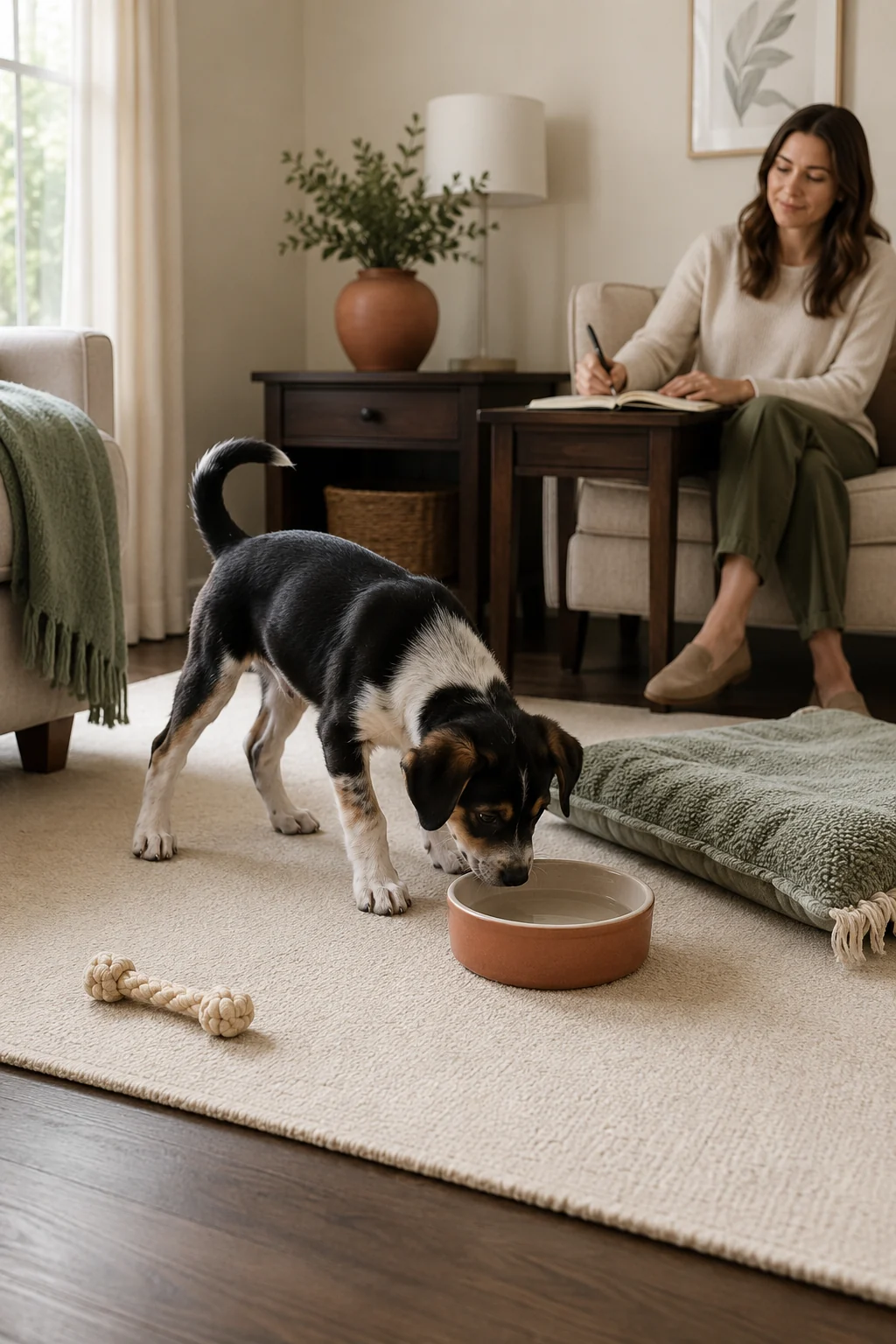
- A Calm Rescue Puppy Arrival
See what a low-pressure first few minutes can look like when a rescue puppy's prior routine is unclear.
- Rescue Puppy Unknowns Worksheet
Use a simple three-part record to organize confirmed handoff details, first-day observations, and unanswered questions.
- Observe, Don't Test, on Day One
A practical visual for recording a rescue puppy's choices without crowding, handling tests, or forced play.
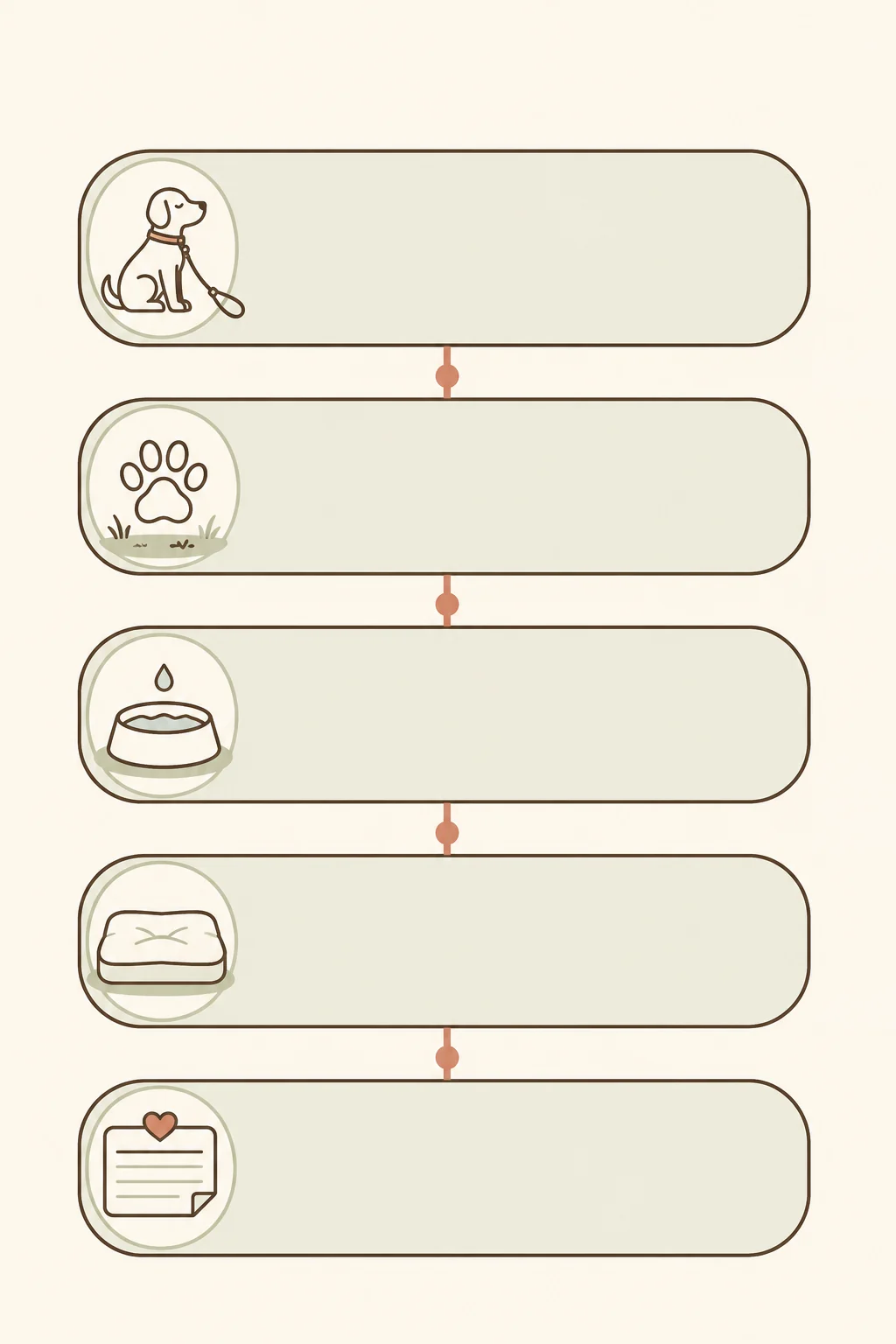
- Rescue Puppy First-Day Flow
Plan a calm arrival, observation period, rest cycles, and evening handoff without overcrowding the puppy's day.
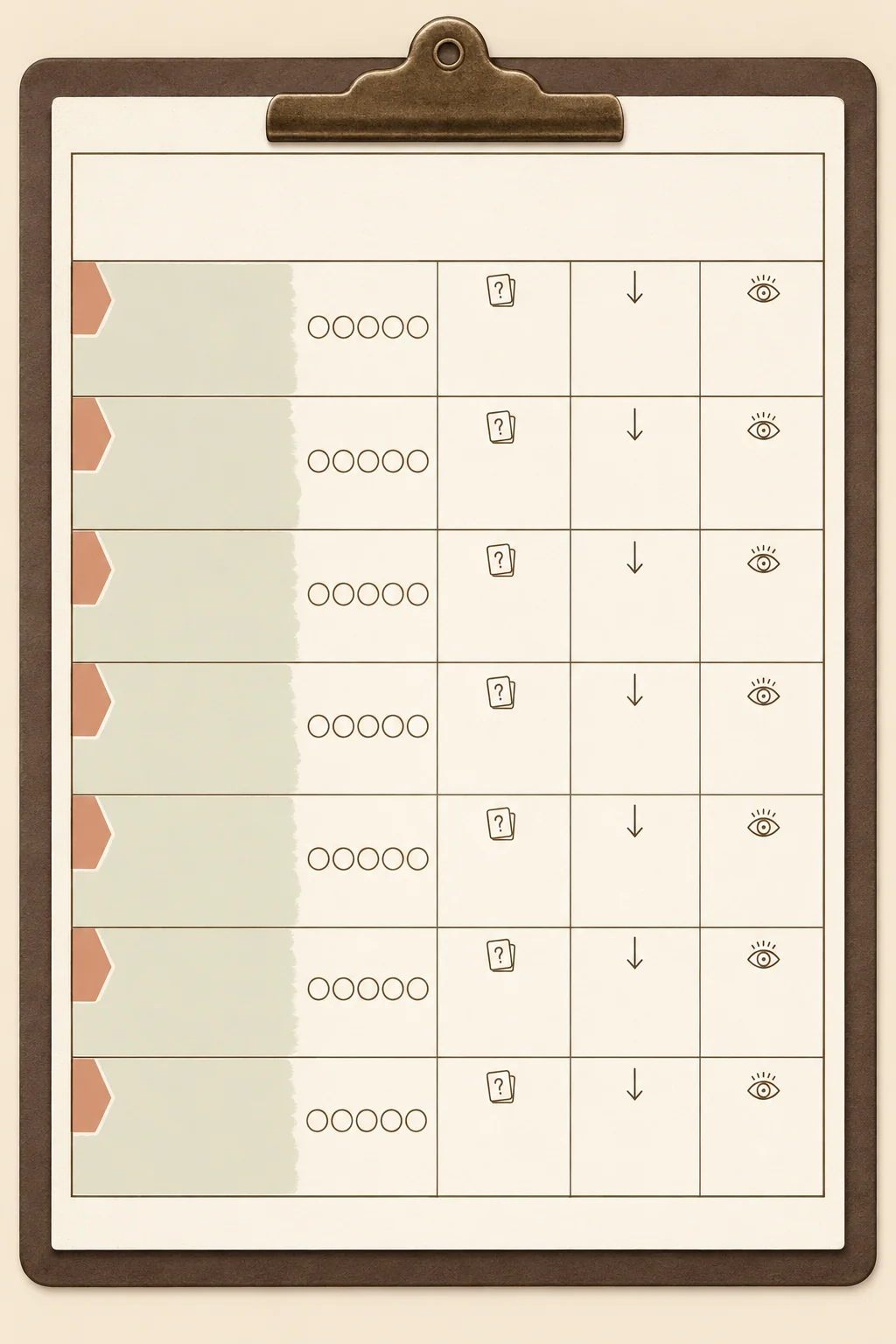
- Rescue Puppy Weekly Audit Scorecard
Track whether your first-day plan keeps unknowns labeled, pressure low, observations contextual, and questions properly escalated.
Optional: choose all 5 images at once
Frequently asked questions
Should I follow the 3-3-3 rule exactly?
No. Use it as a reminder that adjustment takes time, not as a deadline. VCA describes it as a flexible guideline, and individual puppies may settle faster or more slowly.
What if the rescue cannot tell me the puppy's routine?
Write the missing details as unknown, ask for the most recent confirmed meal, elimination, transport, and sleep information, then choose a simple low-pressure routine while you observe.
Should family and friends visit on the first day?
Usually it is more useful to keep optional visitors away so the puppy has fewer new sounds, smells, faces, and interactions to process during the initial transition.
What if the puppy does not want to cuddle or play?
Do not treat that as rejection or a permanent personality trait. Give the puppy space, protect rest, and record the context without forcing contact or play.
Can I test whether the puppy is house-trained?
Do not turn the first day into a test. Offer consistent elimination opportunities and record what happens, but avoid concluding that one success or accident proves a reliable habit.
When should I contact the rescue or a veterinarian?
Contact the rescue when handoff facts or prior routines need clarification. Contact a veterinarian when you are concerned about the puppy's health, injury, or condition rather than using the article's observation log to interpret it.
Sources & further reading
- Adoption Tips l How to Adopt l Adopt a Pet l ASPCAASPCA · Accessed 2026-07-31
- Adopting a new pet? What is the 3-3-3 adoption rule?VCA Animal Hospitals · Accessed 2026-07-31
- What to know when adopting a shelter petVCA Animal Hospitals · Accessed 2026-07-31
- How to prepare for a new puppyVCA Animal Hospitals · Accessed 2026-07-31
- General Dog CareASPCA · Accessed 2026-07-31