A puppy-safe room is a small, easy-to-check space where your puppy can rest, play with approved items, drink water, and stay out of trouble whenever you cannot provide active, eyes-on supervision. For a first-time dog mom, the goal is not to build a perfect miniature dog apartment. It is to create one repeatable system: choose a low-risk room, remove access to hazards, arrange only essential items, test every barrier, and recheck the space as your puppy grows.
This guide covers the room setup itself. It does not replace supervision, teach crate training, or provide a full first-day or first-night routine.
1. Choose the room with a beginner-friendly filter
Start with the easiest room to control, not necessarily the room you use most. A laundry room may look convenient but can contain detergents, appliance gaps, cords, and stored chemicals. A bathroom may have medicines, razors, trash, and cleaning products. A spare room may be safer only after cords, plants, furniture gaps, and small objects are addressed.
Use the C-L-E-A-R room filter before moving in any puppy supplies:
- C — Containable: The doorway can accept a securely installed gate or the door can close without trapping the puppy near hazards. Windows close and lock, and screens are intact.
- L — Low clutter: The floor and low surfaces can be cleared completely. Avoid rooms used for craft supplies, children’s toys, tools, medication, or laundry storage.
- E — Easy to clean: Prefer a stable, non-slip, washable floor or a washable floor covering that lies flat. Avoid loose rugs with chewable fringe or pads that bunch underfoot.
- A — Away from extremes: The room should not expose the puppy to direct heat, space heaters, open flames, strong drafts, or prolonged direct sun.
- R — Reachable: You can check the puppy easily and move the puppy to and from the room without navigating busy exterior doors, steep stairs, or household traffic.
Reject a room if you cannot reliably secure chemicals, medicines, trash, cords, windows, and escape routes. The AVMA household hazards guide notes that plugged-in electrical cords can cause burns or electrocution when chewed and recommends blocking access or using cord covers. The ASPCA puppy- and kitten-proofing checklist also advises securing medications, pesticides, cleaners, garbage, windows, cords, curtains, and small toys.
2. Empty the room before you furnish it
A common first-time mistake is adding a bed, bowls, toys, and a pen before inspecting the room. Reverse the order. Remove everything movable, clean the room, and then return only items that pass your safety check.
Work from floor level upward:
- Floor sweep: Pick up coins, batteries, hair ties, rubber bands, socks, tissues, plastic, wrappers, pins, children’s toys, craft pieces, and anything small enough to mouth or swallow. Check under furniture and behind doors.
- Cord sweep: Unplug and remove unnecessary cords. Route essential cords through a rigid cover or completely behind a fixed barrier. A loose cable tucked behind a chair is still accessible once the chair moves.
- Chemical and medicine sweep: Move cleaners, detergent pods, pest products, cosmetics, medicines, vitamins, and topical products to a closed cabinet outside the puppy’s reach. A high shelf is not enough if items can fall or the puppy may later learn to climb.
- Food and trash sweep: Remove human food, gum, drinks, grocery bags, compost, and open trash. Use a securely closed bin outside the room rather than assuming a lightweight lid will hold.
- Plant sweep: Identify every plant before allowing it in the room. When uncertain, remove it and compare the exact plant with the ASPCA list of plants toxic and non-toxic to dogs.
- Furniture sweep: Block narrow gaps where a puppy could become stuck. Remove unstable lamps, folding furniture, leaning mirrors, dangling tablecloths, and objects that can be pulled down.
- Window and fabric sweep: Lock windows, confirm screens are secure, and tie up blind or curtain cords. Shorten or remove drapes that pool on the floor.
- Heat and fire sweep: Remove candles, wax warmers, portable heaters, and anything hot or easy to tip.
Do not depend on bitter sprays, verbal correction, or the idea that your puppy “probably will not touch it.” Physical removal and reliable barriers are easier for a beginner to verify.
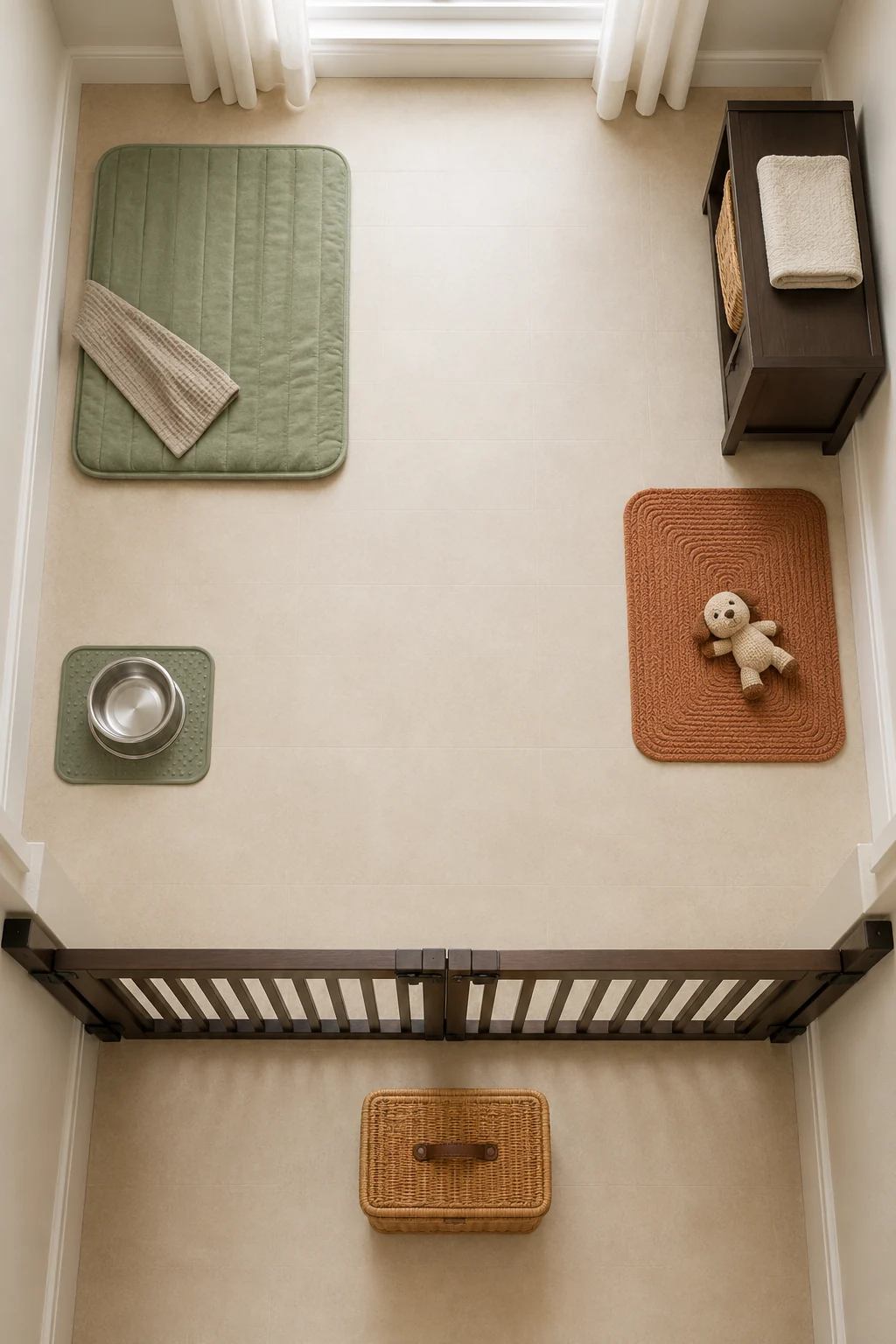
3. Build a simple four-zone layout
Once the room is empty and cleared, add only what the puppy needs in four visible zones. Keep the center open so you can see the floor quickly.
Rest zone
Place a washable bed or flat mat in the quietest part of the room, away from the door swing, direct sun, and vents. If you use a crate or exercise pen as part of the room, it should be stable, appropriately sized, and introduced positively; this article does not cover crate training. VCA notes that a carefully dog-proofed room, escape-proof crate, or collapsible pen can be used when a puppy cannot be supervised, and that confinement should be associated with rewards rather than punishment in its guidance on getting a puppy started off right.
Water zone
Use a stable water bowl on a washable, non-slip mat. Keep it away from electrical outlets and bedding. Make sure the puppy cannot flip the mat, chew its edges, or wedge the bowl against a gate. Fresh water needs and any individual restrictions should be discussed with your veterinarian; do not limit water merely to reduce cleanup.
Approved activity zone
Offer a very small number of puppy-appropriate toys or chews selected for your puppy’s current size and chewing style. Inspect them before each use and remove anything damaged, unraveling, cracked, or small enough to swallow. Do not use the safe room as storage for a large toy basket because more items make visual checks harder.
Care-station zone outside the barrier
Keep paper towels, waste bags, spare bedding, cleaner, and your written emergency contacts outside the puppy’s reach. This “outside station” prevents you from leaving cleaning chemicals or plastic supplies inside the room for convenience. The CDC guidance on cleaning and disinfecting pet supplies distinguishes routine cleaning from disinfecting, advises following product labels, and says pets should be kept away from wet disinfectants until surfaces are fully dry.
The final room should look intentionally sparse. Empty floor space is useful safety evidence, not a sign that the room is unfinished.
4. Test the setup from a puppy’s point of view
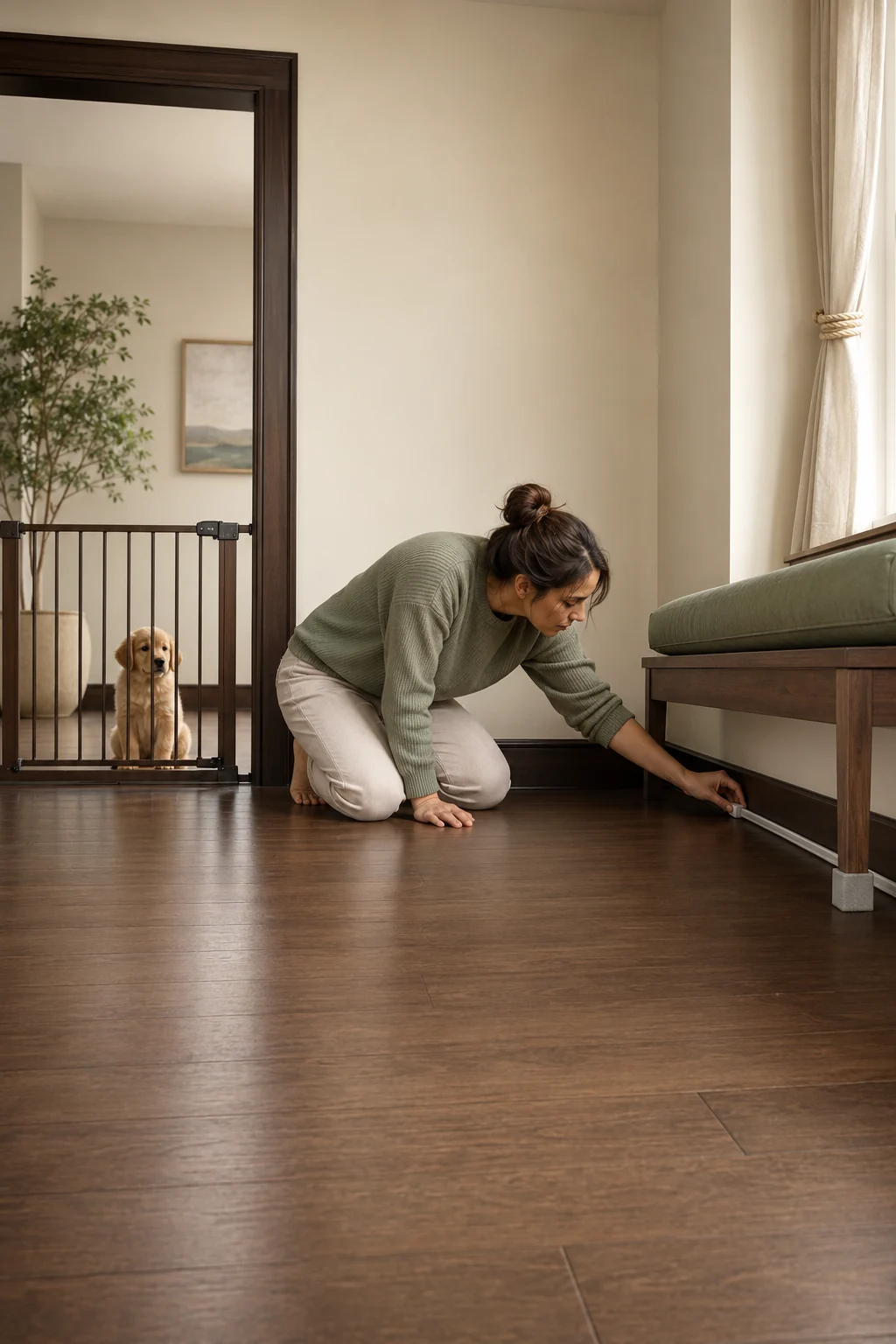
A room that looks safe while standing may fail at nose height. Perform the Kneel–Tug–Close test before your puppy uses the space.
Kneel: Get down to puppy height and scan all four walls. Look under furniture, along baseboards, behind the door, and beneath the gate. Search for shiny, dangling, soft, scented, or loose items that invite investigation.
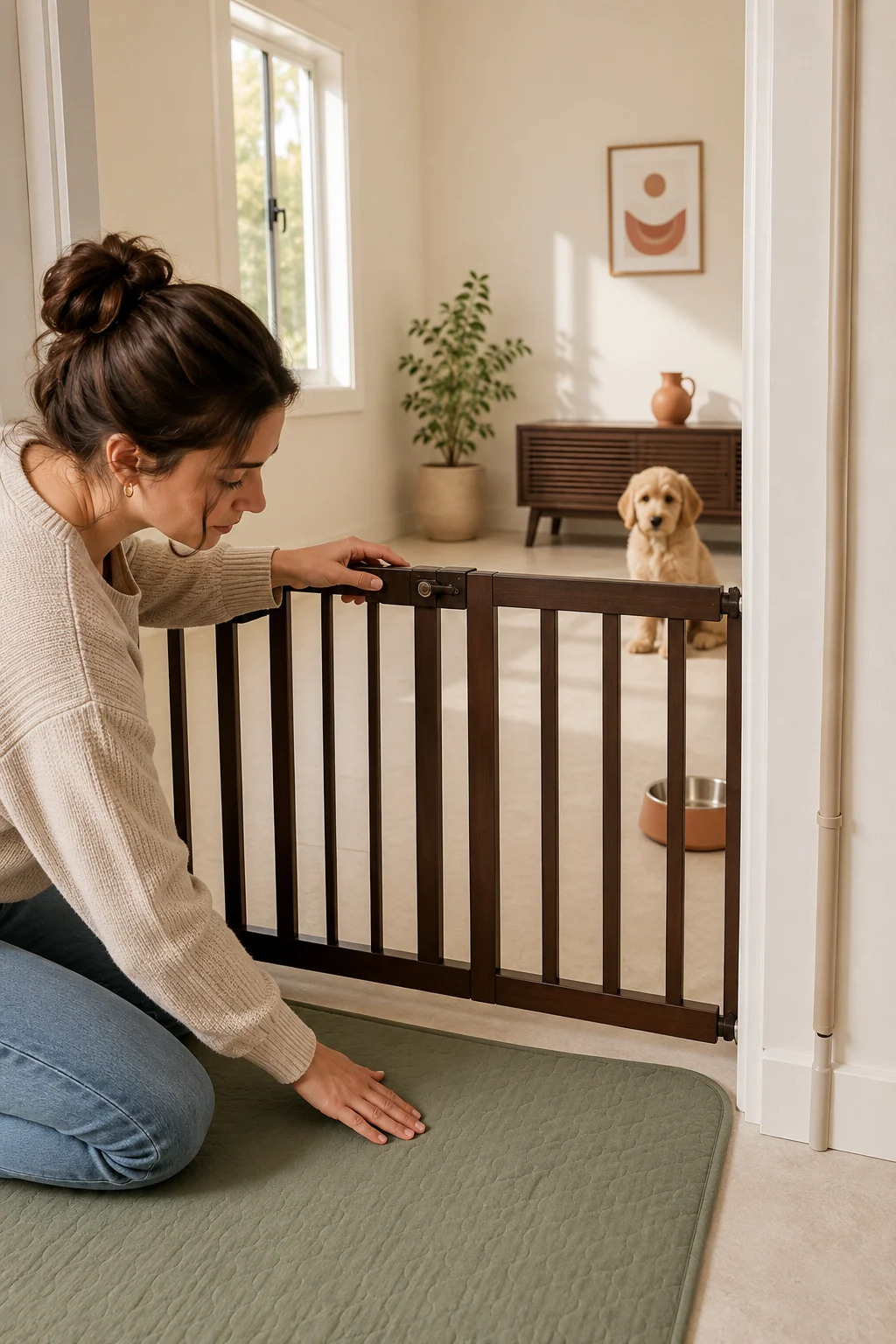
Tug: Gently pull every barrier, cord cover, mat edge, gate, bowl, furniture block, and attached object. Your test should not damage anything, but it should reveal items that slide, tip, detach, or create a gap. Check that the gate cannot be pushed aside and that no furniture can be used as a step over it.
Close: Close the room exactly as it will be used. Confirm the door or gate latches, the puppy cannot reach the latch, the door swing does not hit a bowl or bed, and all cabinets remain shut. Check ventilation and temperature without relying on an unsafe portable heater or fan cord in the room.
Then run a two-minute “empty-room observation”: stand outside the barrier and look only for access points. Ask, “What could be chewed, swallowed, climbed, tipped, trapped behind, or pulled down?” Fix every answer before adding the puppy.
A safe-room check is not permanent certification. Puppies become taller, stronger, and more skilled. Repeat the test after any room change and whenever your puppy begins reaching new surfaces or defeating a barrier.
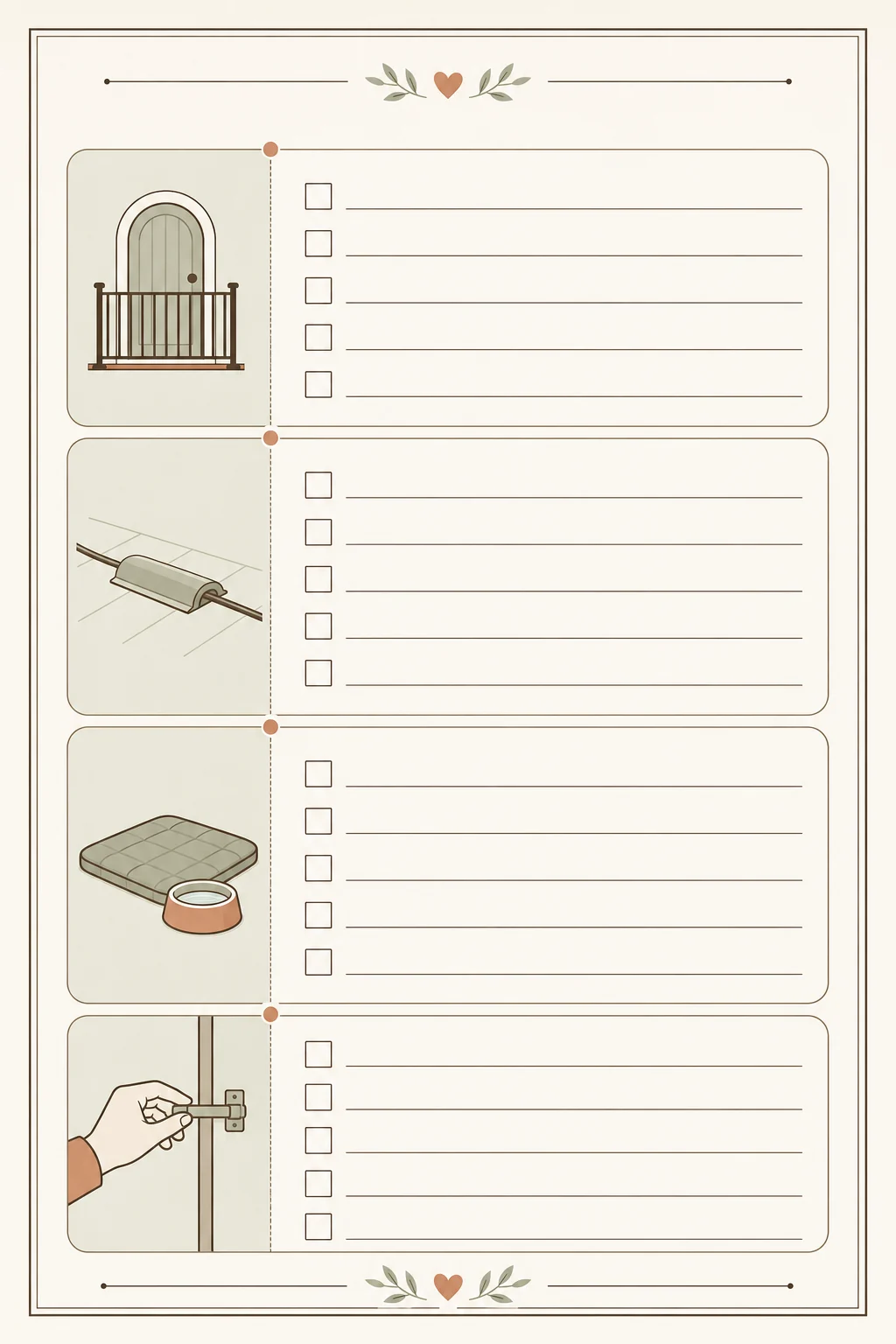
5. One-page puppy-safe room setup checklist
Copy or print this checklist and complete it in order. A box should be checked only after you physically verify it.
Room choice
- The room passes the C-L-E-A-R filter: containable, low clutter, easy to clean, away from extremes, and reachable.
- The door, gate, pen, or other boundary closes securely and cannot be pushed aside.
- Windows lock, screens are intact, and blind or curtain cords are inaccessible.
- The room has no open flame, portable heater, hot appliance, or prolonged direct-sun hazard.
- The floor provides stable footing and has no loose fringe, curled edges, or exposed padding.
Hazard removal
- The floor, corners, baseboards, furniture gaps, and area behind the door are free of small objects.
- Medicines, vitamins, cosmetics, cleaners, detergent, pest products, and chemicals are in closed storage outside reach.
- Human food, gum, drinks, grocery bags, compost, and trash are removed or securely contained outside the room.
- All plants have been positively identified and confirmed suitable for a dog-accessible space, or removed.
- Essential cords are fully blocked or protected; unused cords and chargers are removed.
- Unstable furniture, lamps, mirrors, hanging fabric, and pull-down objects are removed or secured.
- Gaps that could trap the puppy are blocked with stable barriers the puppy cannot chew or move.
Four-zone setup
- The rest zone is quiet, washable, and clear of direct heat, drafts, and door movement.
- The water bowl is stable, accessible, and separated from cords and bedding.
- Only a few intact, puppy-appropriate activity items are inside the room.
- Cleanup supplies and chemicals are stored in a care station outside the puppy barrier.
- The center floor remains open enough for a fast visual inspection.
Final test
- I completed the Kneel scan at puppy height.
- I gently tug-tested the gate, covers, mats, barriers, bowls, and furniture blocks.
- I closed and latched the room exactly as it will be used.
- I checked for anything chewable, swallowable, climbable, tippable, trappable, or pullable.
- I recorded my veterinarian’s contact details and an appropriate animal poison-control contact outside the room.
- Another adult completed an independent second look, or I repeated the full inspection after a break.
- I set a recheck trigger: after cleaning, moving furniture, adding an item, noticing chewing, or seeing the puppy reach a new height.
Pass rule: Do not use the room as an unsupervised area while any unchecked box represents an accessible hazard. “I plan to watch closely” is not a substitute for correcting the setup.
6. Use the room as a management system, not a punishment space
The room works best when it predicts calm, safe activities rather than social isolation after the puppy makes a mistake. Place the puppy there before you become distracted, not only after unwanted chewing or house-soiling. Keep arrivals and departures matter-of-fact, and pair the space with approved restful activities.
The room also does not make unlimited alone time appropriate. Your puppy’s age, temperament, comfort, elimination needs, and history affect how long the space can be used. Ask your veterinarian or a qualified behavior professional for individualized guidance if the puppy shows persistent distress, repeated escape attempts, excessive drooling, self-injury risk, or inability to settle. Those signs require more than adding stronger barriers.
For a first-time owner, use a simple review rhythm:
- Before each use: Check the latch, water, floor, toy condition, and temperature.
- After each use: Remove waste, note damage, and reset only clean, intact items.
- After any change: Repeat the Kneel–Tug–Close test.
- As the puppy grows: Reassess gate height, reach, chewing strength, furniture access, and toy suitability.
If you suspect your puppy has contacted or swallowed a potentially toxic substance, do not wait for symptoms or use this checklist to judge the exposure. Contact your veterinarian or animal poison control promptly. The ASPCA household-products guidance states that its information is general and that suspected toxic exposure should be handled by a veterinarian or poison-control service.
7. Common first-time setup mistakes
Choosing convenience over controllability: A room beside your desk is not automatically safer than a quieter room with fewer hazards. Select the space you can simplify and verify.
Using height as the only barrier: Puppies grow, climb, jump, and knock items down. Closed storage and complete room exclusion are more reliable than an open shelf.
Leaving “temporary” objects inside: Laundry baskets, delivery boxes, handbags, backpacks, and cleaning caddies can introduce food, medicine, strings, plastic, or small objects. The safe room needs a no-drop rule.
Overfurnishing the space: Decorative pillows, multiple blankets, baskets, and many toys create hiding places for damage and swallowed pieces. Start sparse and add only what remains safe in practice.
Trusting a gate without load-testing it: Pressure, latch fit, wall surface, and nearby furniture all affect whether a barrier works. Test the installed setup, not the packaging claim.
Cleaning while the puppy remains in the room: Wet cleaners and loose supplies become new hazards. Move the puppy elsewhere, follow label instructions, rinse where directed, and wait until the area is fully dry before access.
Conclusion
A first-time dog mom does not need to predict every possible puppy behavior. She needs a room that is easy to inspect and a repeatable method for catching hazards before the puppy does. Choose a room with the C-L-E-A-R filter, remove hazards before adding supplies, arrange the four zones, complete the Kneel–Tug–Close test, and use the one-page checklist after every meaningful change. The safest version of the room is simple, physically secured, and reviewed as the puppy grows.
Helpful visuals from this guide
Use these five visuals as quick reminders, then return to the full guide for context, limitations, and source details.
Pinterest does not let websites prefill its Title field. Each button below copies the correct title and opens that Pin. Click the Title field in Pinterest, press Ctrl + V, then save it to the board above.
Start with Pin 1 and repeat through Pin 4.
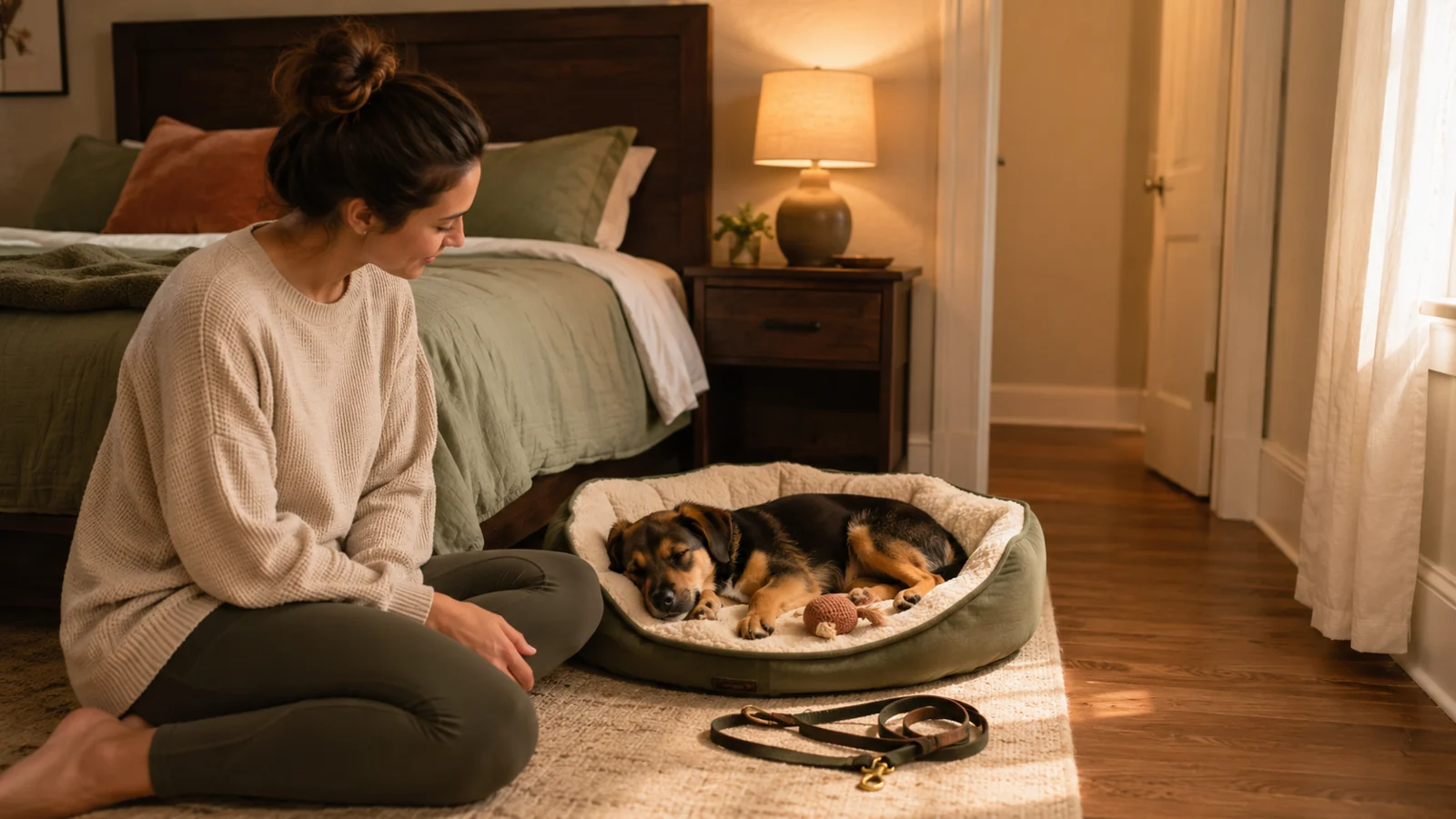
- The Puppy-Height Safety Scan
See what to inspect before adding a bed, bowl, or toys to a new puppy-safe room, especially when you are setting one up for the first time.
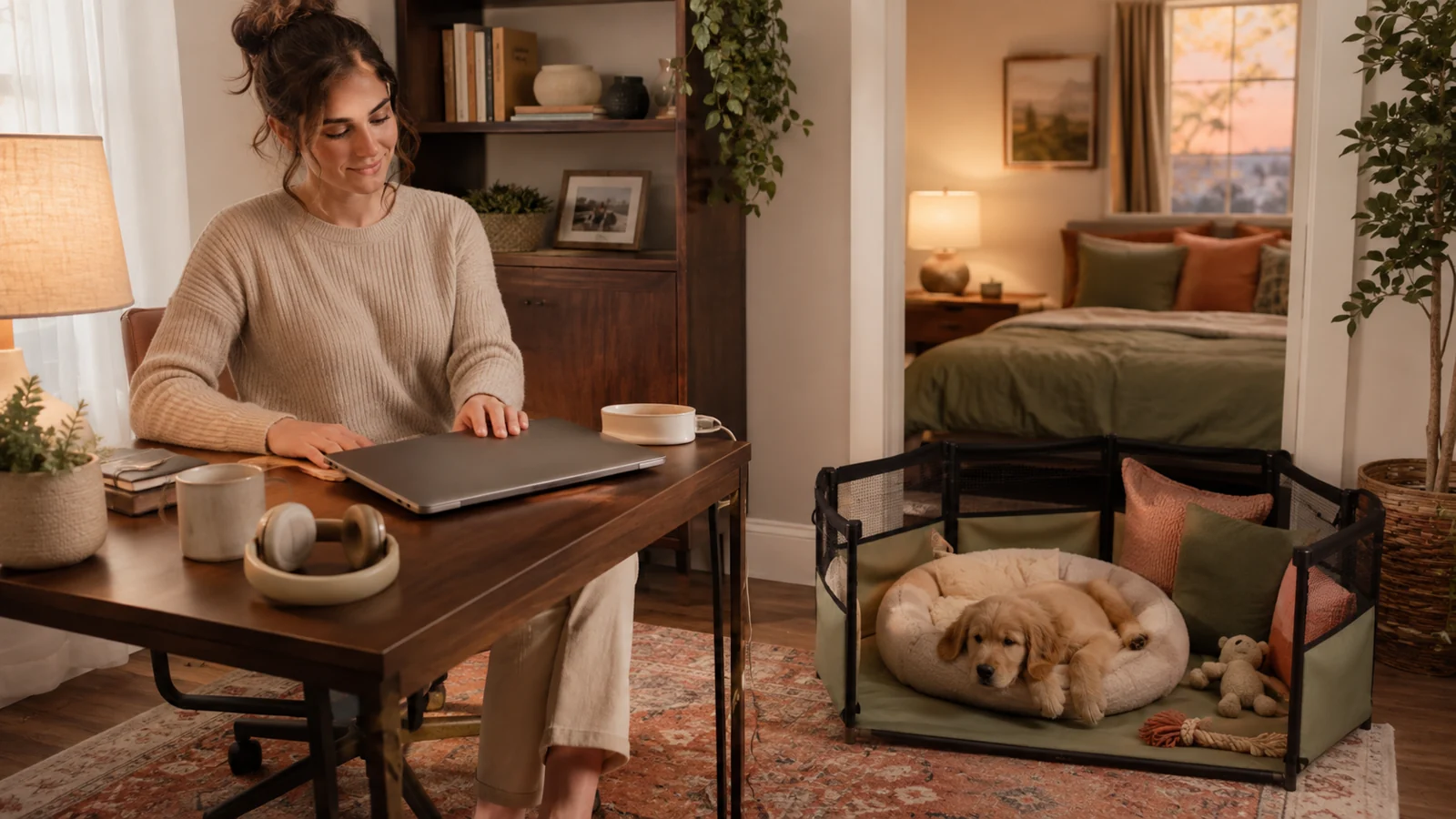
- A Simple Four-Zone Puppy Room
Use a sparse four-zone layout to separate rest, water, approved activity, and cleanup supplies while keeping the center easy to check.
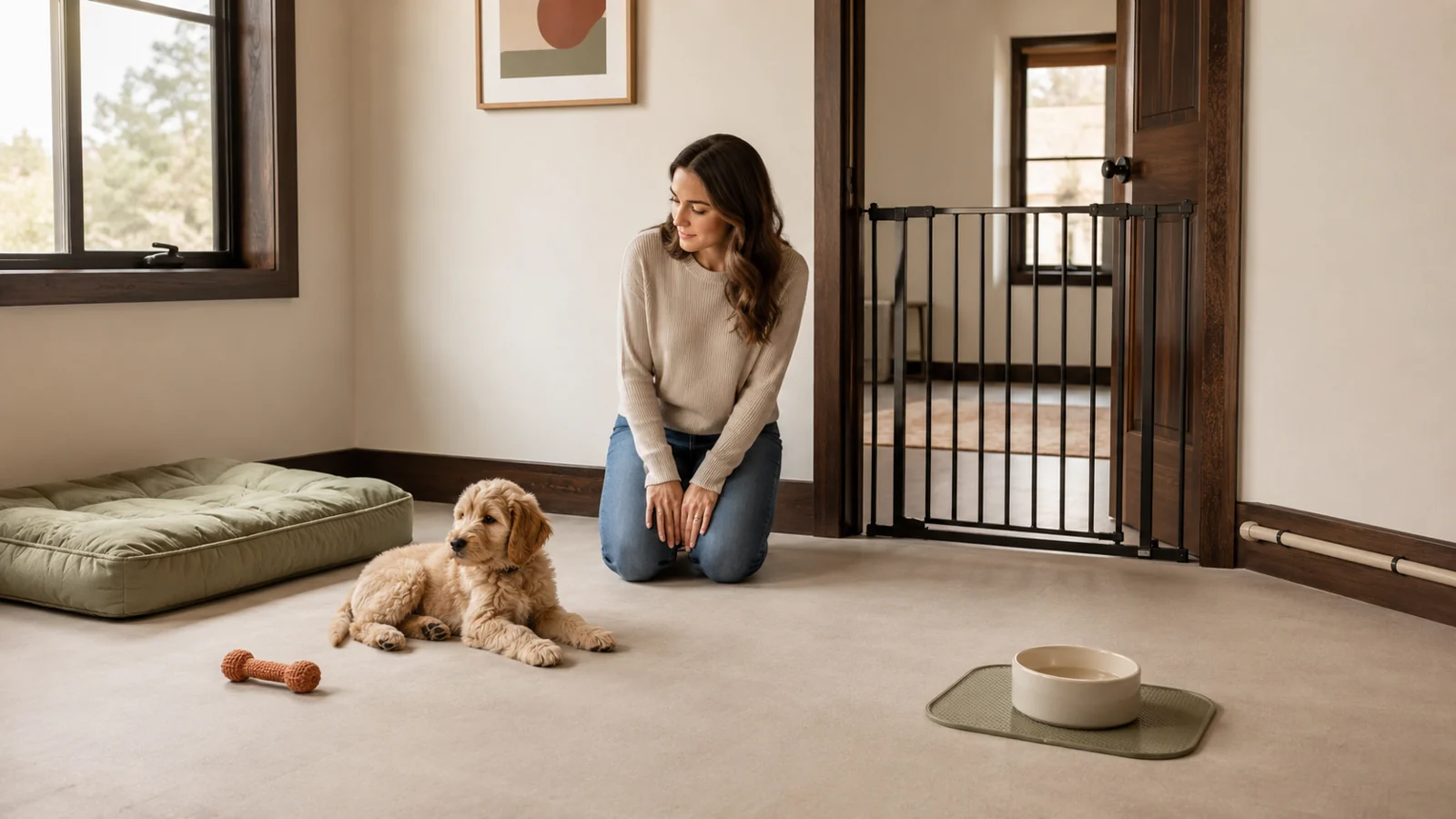
- Test the Room Before Your Puppy Does
A practical gate-and-barrier check helps first-time puppy owners find sliding, tipping, or reachable items before the room is used.
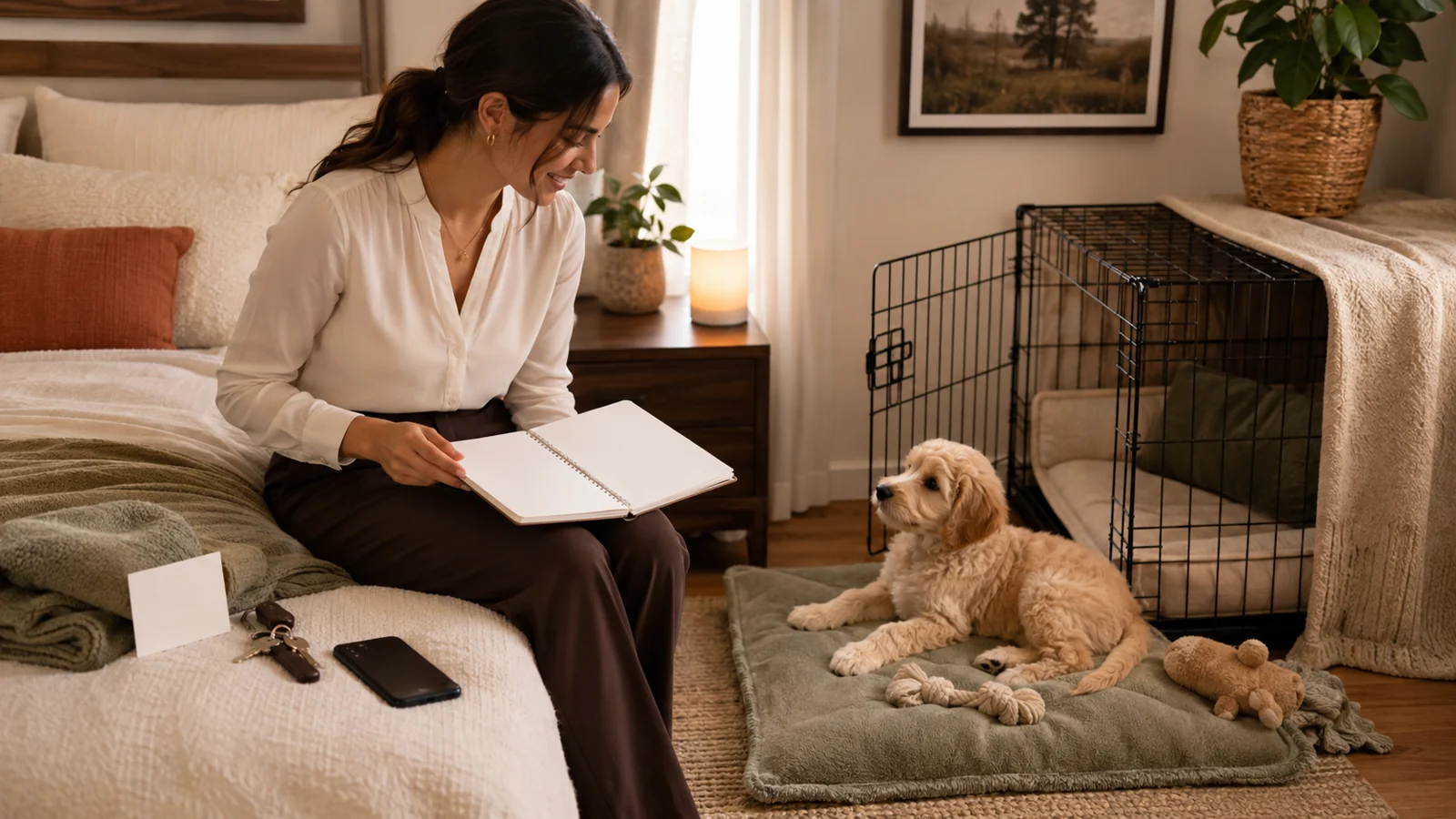
- Puppy-Safe Room Checklist
Save a one-page setup framework for choosing, clearing, arranging, and testing a puppy-safe room before use.
Optional: choose all 4 images at once
Frequently asked questions
Which room is usually easiest for a first-time puppy owner to secure?
There is no universally best room. Choose the least cluttered space with a reliable boundary, washable footing, secure windows, and no unavoidable access to chemicals, cords, food, trash, heat, or escape routes.
Can a bathroom be used as a puppy-safe room?
It can work only after medicines, cleaners, razors, trash, toilet-access risks, cords, and small objects are secured. A bathroom is not automatically safe merely because its floor is washable.
Does a puppy-safe room replace supervision?
No. It is a management layer for times when active eyes-on supervision is unavailable. You still need to check the puppy, inspect the room, and adjust the setup as behavior and reach change.
How many toys should stay in the room?
Keep only a few intact, puppy-appropriate items so damage is easy to notice. Suitability depends on the puppy's size and chewing style, and worn or small pieces should be removed promptly.
Where should cleaning supplies be stored?
Store them in closed storage outside the puppy barrier. Move the puppy elsewhere while cleaning, follow the product label, and do not restore access until treated surfaces are fully dry.
How often should I repeat the safety checklist?
Check key items before each use and repeat the full inspection after moving furniture, cleaning, adding supplies, noticing chewing, changing the barrier, or seeing the puppy reach a new height.
Sources & further reading
- Household hazardsAmerican Veterinary Medical Association · Accessed 2026-07-31
- What to Inspect When You’re Expecting a Puppy or KittenAmerican Society for the Prevention of Cruelty to Animals · Accessed 2026-07-31
- Getting Your Puppy Started Off RightVCA Animal Hospitals · Accessed 2026-07-31
- About Cleaning and Disinfecting Pet SuppliesCenters for Disease Control and Prevention · Accessed 2026-07-31
- Poisonous Household ProductsAmerican Society for the Prevention of Cruelty to Animals · Accessed 2026-07-31
- Toxic and Non-Toxic Plant List — DogsAmerican Society for the Prevention of Cruelty to Animals · Accessed 2026-07-31