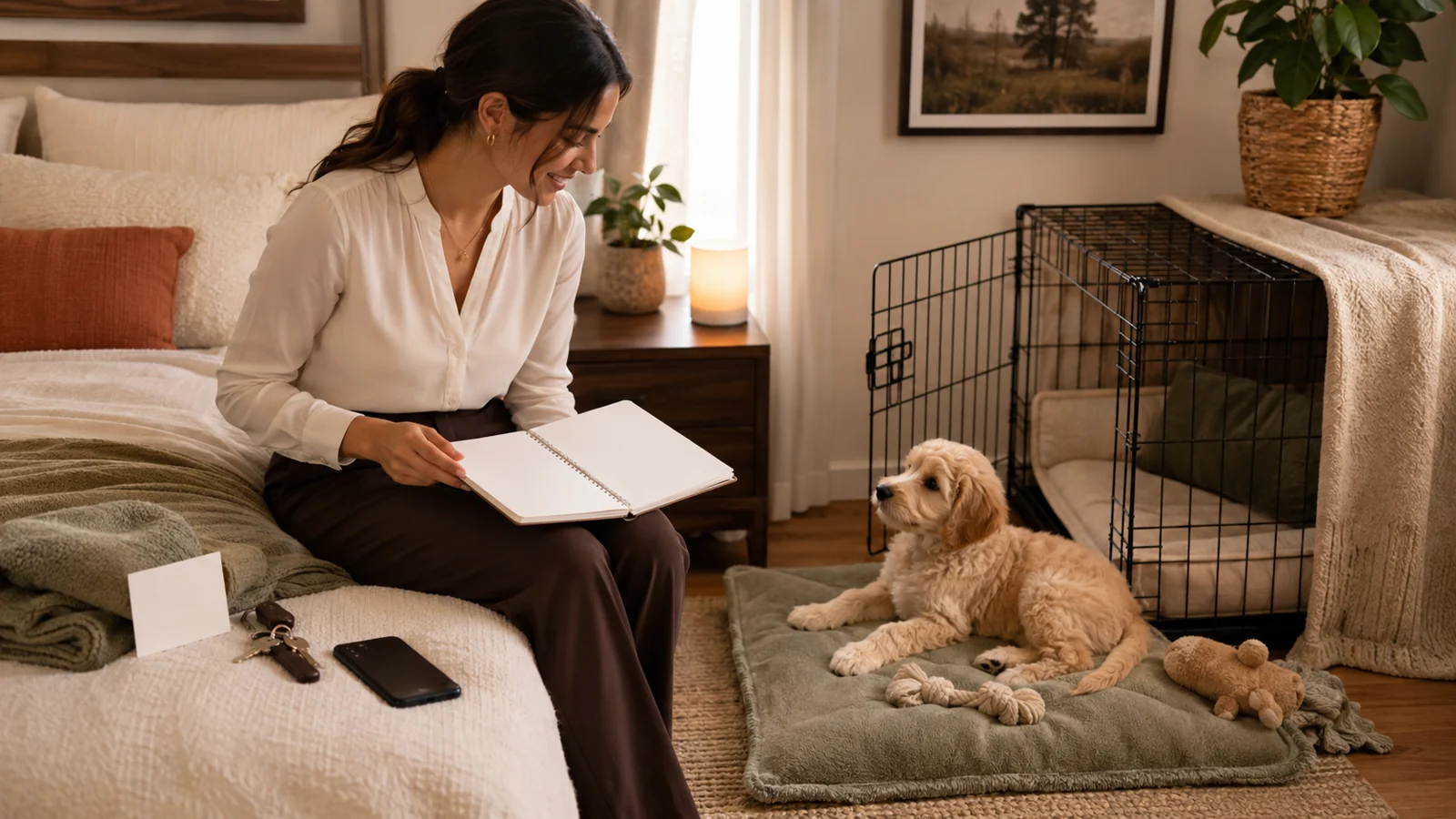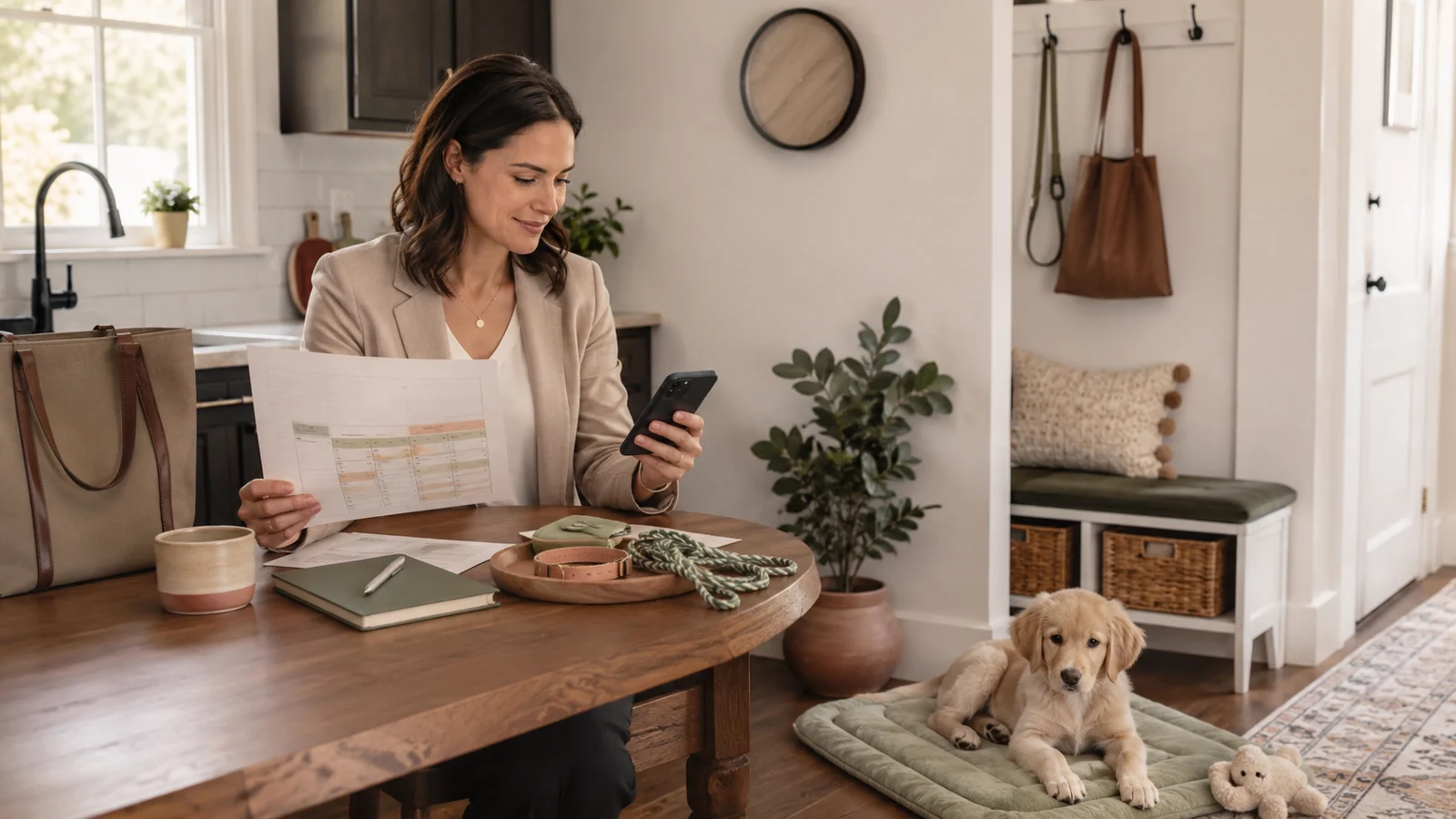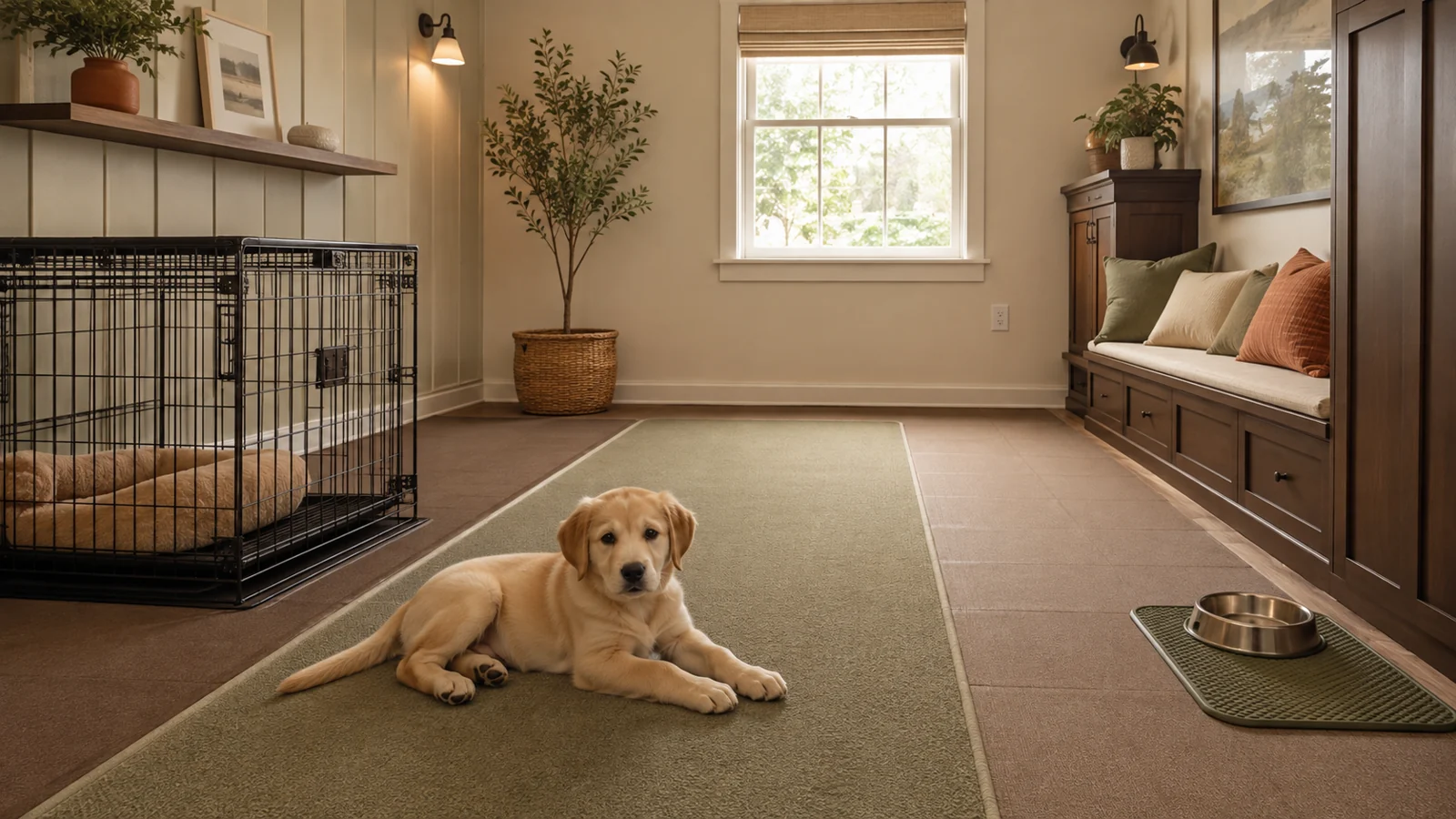
A puppy-safe room for a full-time office schedule must be planned around human care coverage first and furniture second. A closed room, pen, or crate cannot make an eight- or nine-hour door-to-door absence appropriate for a young puppy. Build the day so every alone block stays within your puppy’s currently demonstrated comfort and elimination interval, then choose the least restrictive setup that keeps the puppy secure, rested, and away from hazards.
The practical goal is not “How do I contain my puppy until I get home?” It is “How do I divide my workday into manageable, tested blocks, and what room layout supports those blocks?” The plan below stays focused on office-day confinement, caregiver handoffs, timing, and signs that the arrangement needs to change.
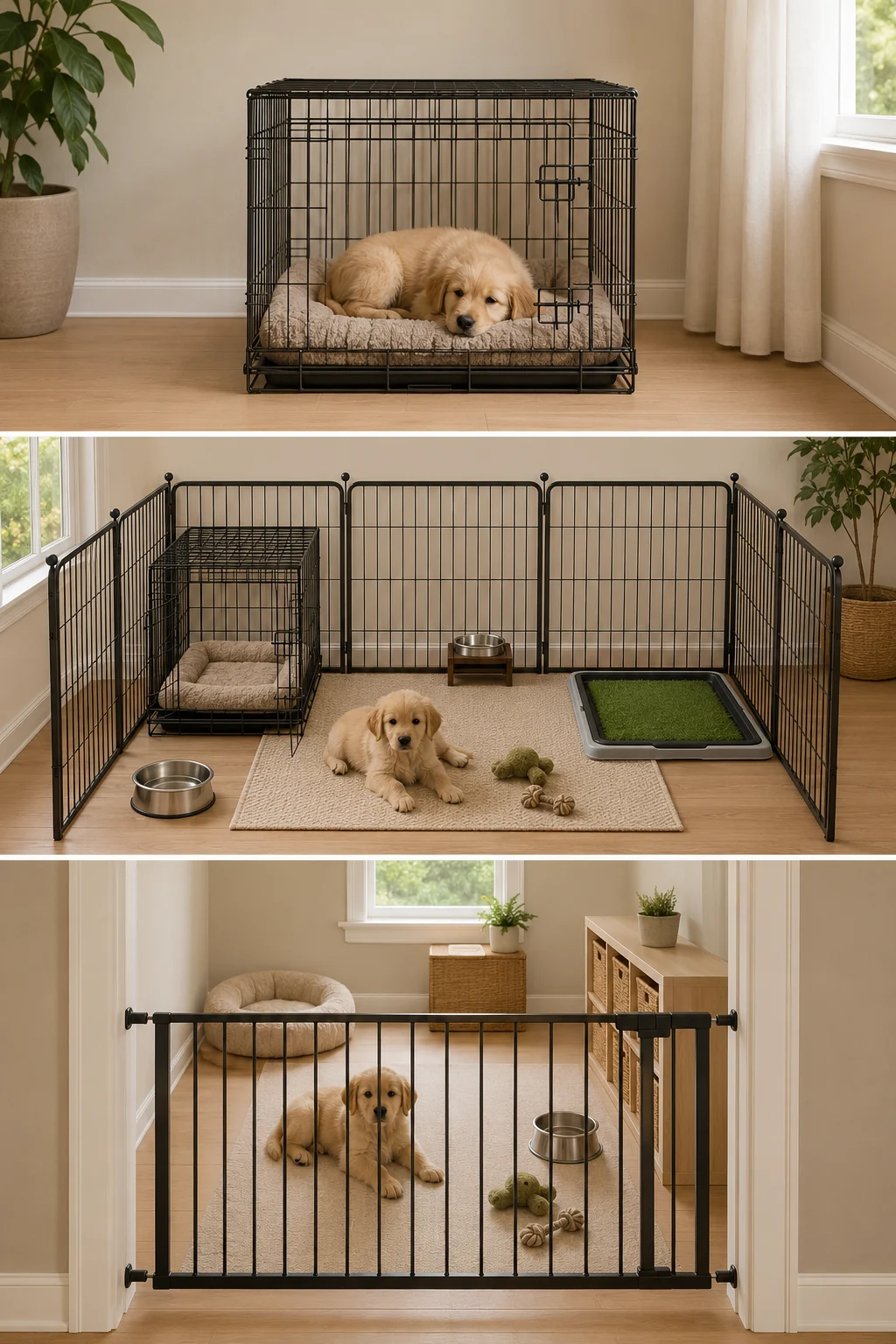
Compare the three office-day confinement options
Use the setup that matches the longest gap between people, not just the total work shift.
| Option | Best fit for an office schedule | Main limitation | Office-day rule |
|---|---|---|---|
| Closed crate | A short, already-practiced rest block for a puppy who settles calmly | Too restrictive for a long work block; some puppies become distressed or try to escape | Use only for a duration the puppy has already handled calmly, and do not treat it as an all-day solution |
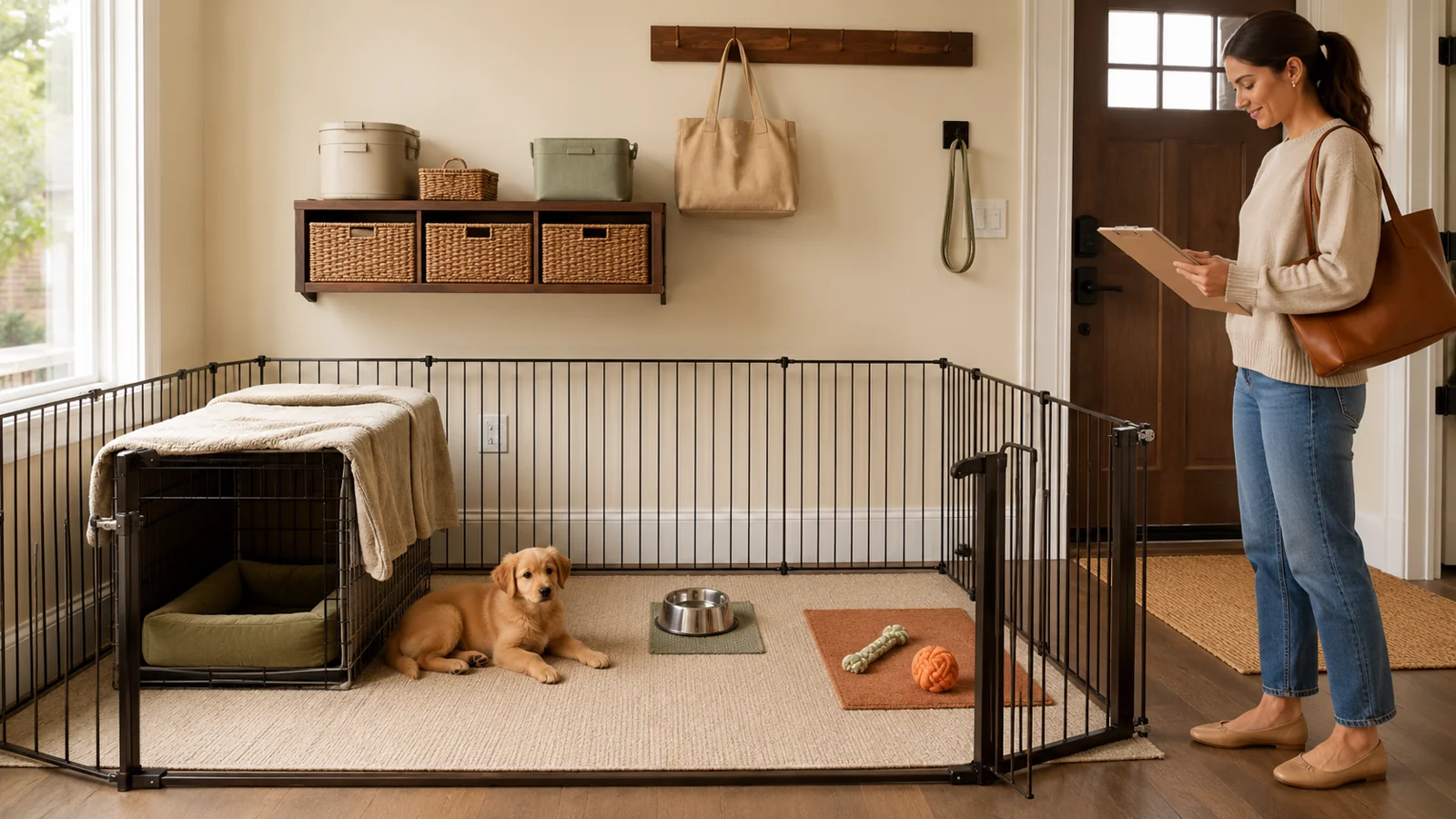
| Exercise pen with an open crate or bed | A longer management block that needs separate rest, water, play, and possibly toilet areas | Climbers, chewers, and gate-pushers may defeat it; more space does not remove the need for visits | Anchor or secure the pen, test it on camera, and schedule care before the puppy’s current limit |
| Carefully puppy-proofed room | An older or larger puppy who has outgrown a small pen but is not ready for house access | More surfaces, trim, doors, and fixtures can become chew or escape targets | Start with brief trials and expand only after repeated calm sessions |
| Sitter, family visit, walker, or suitable daycare | Any door-to-door day that exceeds the puppy’s safe, tested intervals | Requires reliable booking, access instructions, and a backup | Arrange coverage before buying room equipment |
VCA’s housetraining guidance says puppies may need elimination opportunities every one to two hours while awake and notes that puppies left longer than about three hours need a potty break or a larger setup with separate rest and toilet space. Its confinement overview also emphasizes that extended confinement is not healthy and that pens or gated rooms can provide more functional space than a crate.
Treat those time ranges as planning guardrails, not promises. Age, sleep, recent food and water, activity, house-training progress, health, and individual behavior all affect what a puppy can comfortably manage. The safest office plan uses the shortest of: your veterinarian’s guidance, the puppy’s observed elimination interval, and the longest calm alone-time trial already completed.
Build the care schedule before arranging the room
Write down the door-to-door absence, including commute, parking, delays, and errands. A nominal 8:30 a.m.–5:00 p.m. job can easily become a 7:45 a.m.–6:00 p.m. absence. That full span is the number the plan must cover.
Next, divide it into blocks. Each block ends when a responsible person arrives to provide a calm toilet opportunity, check water and the room, observe the puppy, and give the amount of interaction appropriate for that puppy. A rushed five-minute door opening is not automatically enough.
A sample plan for a very young puppy might look like this:
| Time | Person and task | Why it matters |
|---|---|---|
| 6:30 a.m. | Owner: toilet, breakfast, calm activity, another toilet chance | Starts the first block with needs met |
| 7:45 a.m. | Owner departs after the puppy is settled | Avoids leaving during peak excitement |
| 9:45 a.m. | Caregiver visit 1: toilet, water and room check, brief calm interaction | Prevents the first block from stretching too long |
| 12:15 p.m. | Caregiver visit 2: toilet, scheduled meal if applicable, supervised activity, settle again | Breaks the middle of the workday into a new block |
| 3:00 p.m. | Caregiver visit 3: toilet, check for chewing or distress evidence, reset safe enrichment | Covers the afternoon instead of asking the puppy to wait until evening |
| 5:45 p.m. | Owner returns and takes puppy out promptly | Ends the final block before other errands |
This is an example, not a universal prescription. Some puppies will need more frequent coverage; an older puppy with a long record of calm, clean trials may need less. If you cannot arrange enough visits to keep every block within the puppy’s current ability, the room plan is not ready. The answer is more coverage, temporary schedule changes, a suitable caregiver setting, or postponing long office absences—not a stronger latch.
Create a backup line in the plan: one person who can enter the home if the main caregiver cancels, your commute is delayed, the camera shows a problem, or a building issue blocks access. Give both caregivers keys or verified entry instructions before the first office day.
Divide the room into functional zones
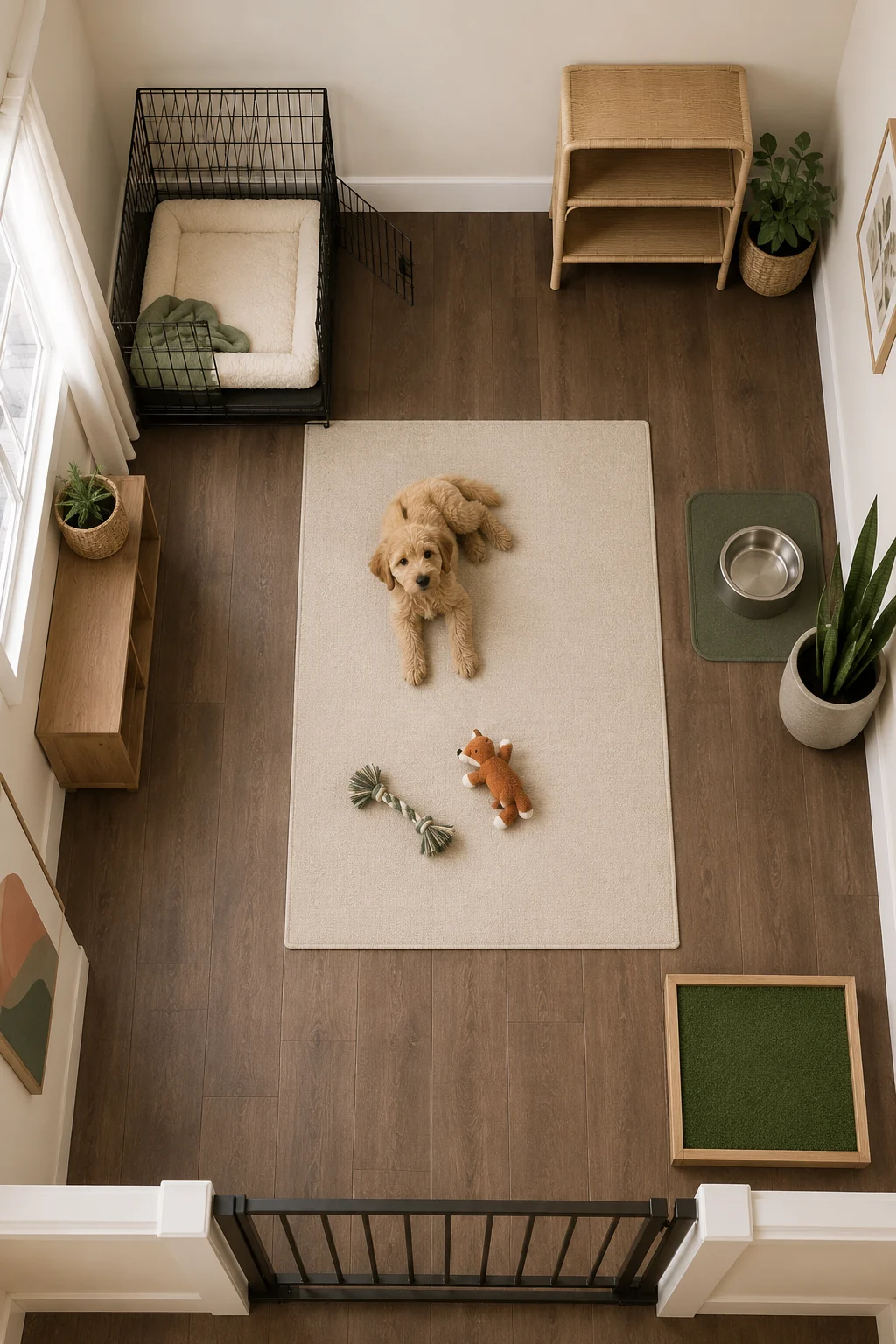
For an office schedule, the room should make a caregiver’s handoff fast and unambiguous. Use four zones:
- Rest zone: A stable bed or open crate in a quiet part of the room, away from direct sun, heating vents, cords, and the toilet area. Use only bedding the puppy has already left intact during supervised trials. A puppy who shreds or eats fabric should not be left with loose bedding just because it looks cozy.
- Water zone: A stable container placed where a spill will not soak the bed or create a slippery exit path. Do not restrict water solely to reduce accidents unless your veterinarian has given a specific reason.
- Activity zone: A small number of puppy-appropriate items that have already been tested under supervision. Avoid introducing a brand-new chew on the first full office day. Edible chews and damaged toys can create choking or ingestion risks when no one is present.
- Toilet zone, only when the schedule requires it: If a puppy must be in a pen or room longer than the puppy can reliably wait for an outdoor break, place the designated indoor substrate as far as practical from rest and water. Understand the tradeoff: an indoor toilet option may protect welfare during an unavoidable gap, but it can slow a strictly outdoor house-training plan. It does not replace caregiver visits.
Remove cables, power strips, blinds cords, trash, laundry, shoes, medicines, cleaning products, small objects, plastic bags, plants of uncertain safety, and anything that can fall if climbed. The AVMA household-hazards guidance specifically warns that chewing plugged-in electrical cords can cause burns or electrocution, so covering a cord is less reliable than blocking access or removing it entirely.
Check the lower thirty inches of the room from the puppy’s viewpoint. Kneel down and look for door stops, loose baseboard edges, cabinet gaps, vent covers, exposed fasteners, dangling fabric, reachable shelves, and gate openings that could trap a head or paw. Then repeat the check after the puppy has used the space; puppies often reveal hazards that adults overlook.
Test the exact office-day setup in stages
Do not make the first eight-hour workday the first real test. Rehearse the same room, barrier, bedding, water placement, background sound, departure routine, and caregiver entry sequence.
Use this progression:
- Begin while you are home but out of sight for a few minutes.
- Leave the home for a short, predictable errand.
- Increase only after the puppy settles, stays physically safe, and remains within the planned toilet interval.
- Test the caregiver’s arrival while you are nearby but not participating.
- Run at least one trial covering the longest planned block, not the whole workday.
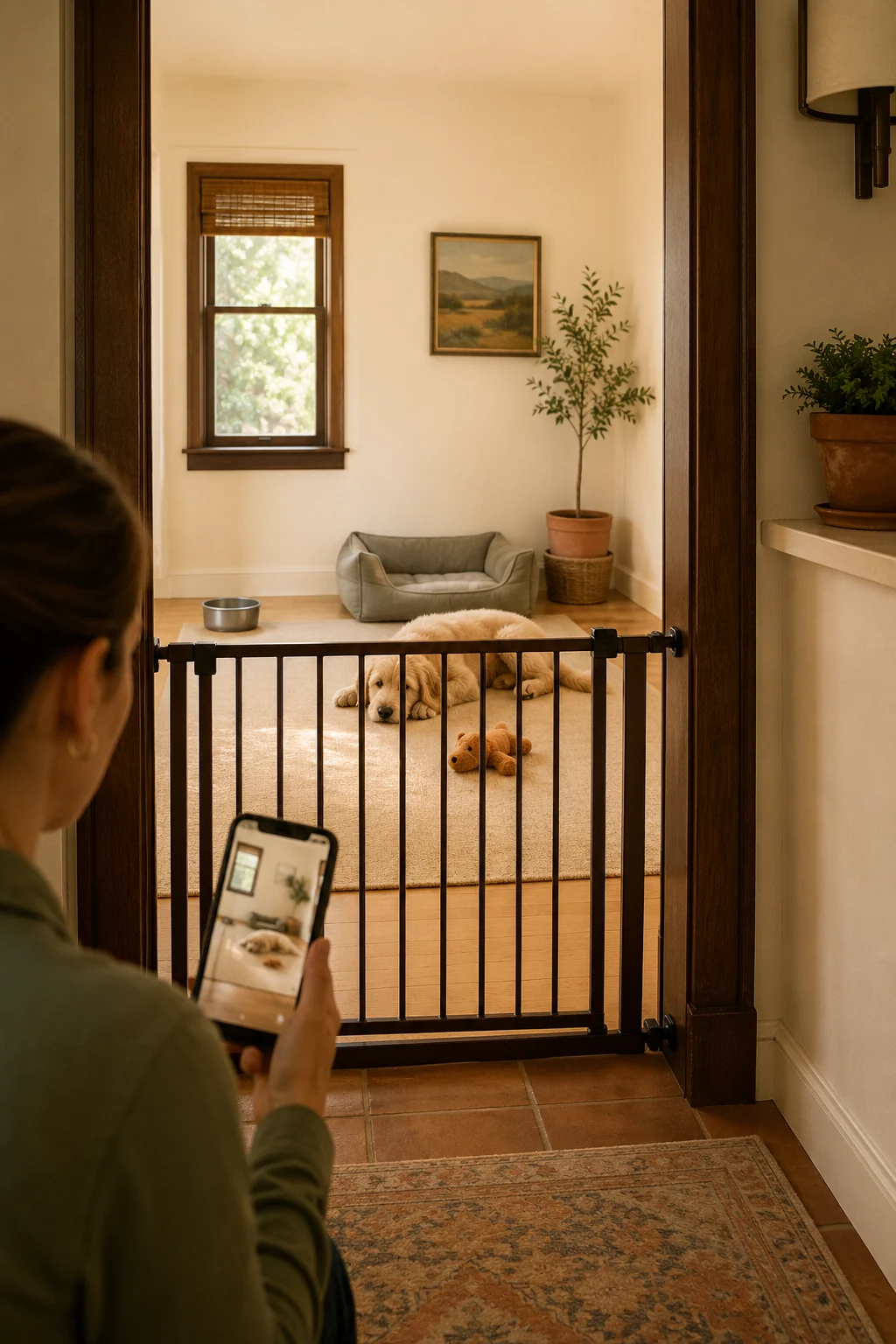
- Review video from the first minutes after departure, the middle of the block, and the period before the caregiver arrives.
A camera is an observation tool, not a substitute for care. Look for whether the puppy lies down, changes position normally, drinks, engages briefly with a safe item, and settles again. Also look for escalating barking, continuous pacing, heavy panting unrelated to heat, drooling, frantic scratching, biting at barriers, repeated escape attempts, or refusal to settle.
The ASPCA separation-anxiety resource notes that persistent vocalizing, pacing, destruction around exits, elimination, and escape attempts can be distress signs, and that crates can increase stress for some dogs. Do not diagnose from one video. If these behaviors appear, shorten the next absence, stop relying on the same confinement method, and ask a veterinarian or qualified behavior professional for guidance.
Puppy-safe room troubleshooting decision tree
Use this tree before every increase in alone time and whenever the room produces a new problem.
START: What is the longest door-to-door gap before a person reaches the puppy?
-
Is that gap longer than the puppy’s current veterinarian-guided, observed, and successfully tested interval?
- Yes: Add or move a caregiver visit earlier.
- Can reliable coverage reduce every gap to a tested interval?
- No: The office-day plan is not viable yet. Use a sitter setting, suitable daycare, family care, adjusted work arrangement, or shorter absence.
- Yes: Continue to the next question.
- Can reliable coverage reduce every gap to a tested interval?
- No: Continue to the next question.
- Yes: Add or move a caregiver visit earlier.
-
Has the puppy completed the exact planned block calmly in this setup while recorded?
- No: Run shorter trials first. Do not “test” the full block on a mandatory office day.
- Yes: Continue.
-
Does the puppy show escalating distress or dangerous escape behavior?
- Yes: End or shorten the trial safely, change from the current barrier if appropriate, and seek professional guidance. Do not solve panic with tighter confinement.
- No: Continue.
-
Is there urine or stool before the planned break, especially near the bed or water?
- Yes: Shorten the block or add an earlier visit. If a longer gap is temporarily unavoidable, use a larger separated setup with a designated toilet zone rather than a closed crate.
- No: Continue.
-
Is the puppy chewing, swallowing, climbing, tipping, or trapping any room item?
- Yes: Remove the item or access point completely, replace only with a previously tested alternative, and repeat a short camera trial.
- No: Continue.
-
Can the caregiver complete the handoff without guessing?
- No: Prepare the handoff card below and rehearse entry.
- Yes: The current block is provisionally ready. Recheck after growth, teething changes, schedule changes, or any incident.
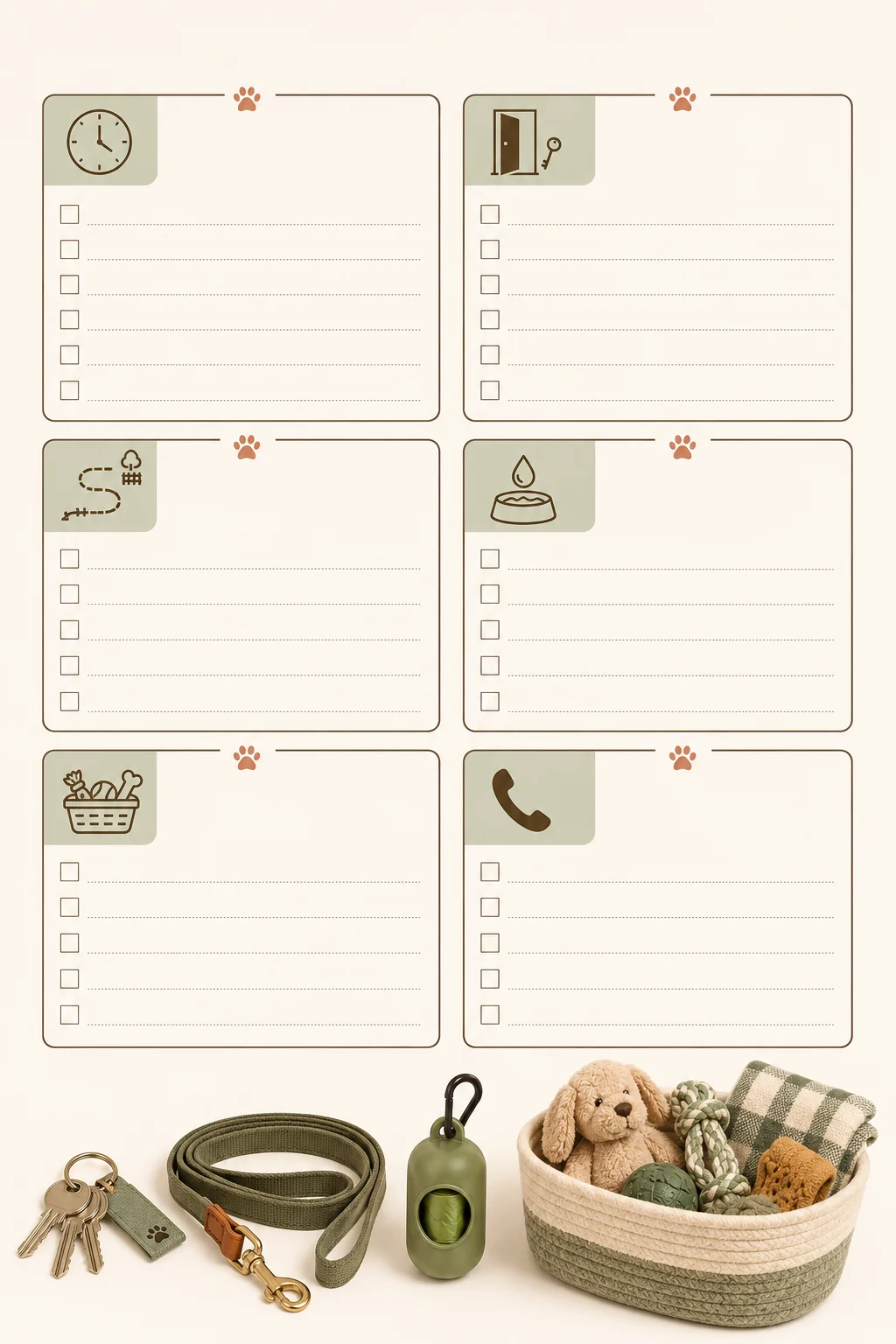
Create a one-page caregiver handoff card
Post a simple card outside the puppy area and send a digital copy. Keep it operational, not decorative:
- Puppy’s name and current date
- Planned arrival window and latest acceptable arrival time
- Entry instructions and backup contact
- Which door or gate must stay closed
- Toilet route and supplies
- Water check and refill instruction
- Approved items that may remain in the room
- Items that must be removed if damaged
- What “normal settling” looks like for this puppy
- Stop-and-call signs: escape attempt, injury, repeated vomiting or diarrhea, severe lethargy, breathing difficulty, collapse, or any behavior the caregiver considers urgent
- What to record: arrival time, elimination, water, room condition, behavior on entry, departure time
- Next scheduled person
Do not ask a caregiver to improvise feeding, add an unapproved chew, or extend the visit interval without contacting you. Consistency makes it easier to distinguish a timing problem from a room-layout problem.
Common office-schedule mistakes
Mistake: Measuring only paid work hours. Commute and delays determine the actual alone span.
Mistake: Assuming a larger room equals a longer safe absence. More floor space reduces restriction but does not meet elimination, social, or observation needs.
Mistake: Using a closed crate for the entire workday. VCA’s puppy guidance limits crate use to short periods and calls for a break or larger separated setup when the puppy is left longer.
Mistake: Buying equipment before confirming coverage. A pen, gate, camera, and bed cannot replace a person arriving on time.
Mistake: Leaving “special” enrichment untested. A toy that is safe during supervised play may be shredded or swallowed when the puppy is alone.
Mistake: Ignoring camera evidence because the room is undamaged. A puppy can be distressed without destroying anything. Watch the puppy, not just the furniture.
Mistake: Punishing accidents or damage after work. The puppy cannot connect a delayed punishment to the earlier event. Adjust timing, supervision, setup, and training instead.
The ready-for-work checklist
Before relying on the room for an office day, confirm all of the following:
- Every absence block fits inside the puppy’s current tested limit.
- Primary and backup care coverage are confirmed.
- The room has separate rest, water, activity, and—when necessary—toilet zones.
- Cords, trash, chemicals, small objects, unsafe plants, and climbable hazards are inaccessible.
- The barrier has survived supervised and recorded trials.
- Every item left with the puppy has been tested and remains intact.
- The caregiver has rehearsed entry, toilet handling, room reset, and departure.
- The camera angle shows the bed, barrier, water area, and likely pacing path without invading anyone else’s privacy.
- You have a clear response plan for distress, escape attempts, repeated accidents, damaged items, and late coverage.
- The plan will be reviewed as the puppy grows rather than treated as permanent.
A successful puppy-safe room is not the room that contains a puppy for the longest possible time. It is the room that supports a carefully divided day, gives caregivers clear handoffs, and produces repeated evidence that the puppy is safe and able to settle. When the schedule exceeds the puppy’s present ability, change the schedule or coverage first.
Helpful visuals from this guide
Use these five visuals as quick reminders, then return to the full guide for context, limitations, and source details.
Pinterest does not let websites prefill its Title field. Each button below copies the correct title and opens that Pin. Click the Title field in Pinterest, press Ctrl + V, then save it to the board above.
Start with Pin 1 and repeat through Pin 5.
- Crate, Pen, or Puppy Room for Workdays?
See the practical differences between three puppy confinement setups and why care coverage still determines whether an office-day plan is workable.
- Four Zones for an Office-Day Puppy Room
Use a simple four-zone room layout to keep resting, drinking, safe activity, and any necessary toilet area functionally separated.
- Puppy Caregiver Handoff Card
Create a clear office-day handoff sheet so every sitter or family helper knows when to arrive, what to check, and when to call.
- Test the Puppy Room Before Work
A camera trial helps you check settling, water access, chewing, and barrier safety before relying on the room for a full office schedule.
- Puppy Room Troubleshooting Flow
Use a step-by-step troubleshooting flow to decide whether to shorten the gap, add care, change the setup, or retest the room.
Optional: choose all 5 images at once
Frequently asked questions
Can a puppy stay in a puppy-safe room for my entire workday?
A safe room does not make an uninterrupted full workday suitable for a young puppy. Divide the door-to-door absence into tested blocks with reliable human care before the puppy’s current toilet or comfort limit.
Is a playpen better than a crate while I am at the office?
A pen usually provides more functional space for rest, water, movement, and a separated toilet area, but it still requires camera testing and scheduled visits. A crate is better reserved for short, calm, previously practiced rest blocks.
How many caregiver visits will my puppy need?
The number depends on the total absence and the puppy’s shortest demonstrated interval between needed toilet breaks or loss of calm. Very young puppies may require multiple visits across one office day.
Should I leave water in the puppy-safe room?
Provide access to water in a stable setup unless your veterinarian has given different instructions. Do not withhold water simply to reduce accidents, and place it where a spill will not soak bedding or block a safe path.
Can I use puppy pads while I work full time?
A separated indoor toilet area can be a temporary management option when a gap exceeds the puppy’s ability to wait, but it may complicate an outdoor-only house-training plan and does not replace caregiver visits.
What camera behavior means the room plan is not working?
Escalating vocalization, continuous pacing, heavy panting, drooling, frantic barrier biting, repeated escape attempts, or inability to settle are reasons to shorten the absence and seek professional guidance rather than tighten confinement.
What if my dog walker cancels during the workday?
Use the backup contact named on the handoff card. If no one can reach the puppy before the planned limit, leave work or activate an alternative care arrangement rather than extending the gap and hoping the room will compensate.
Sources & further reading
- Housetraining for Puppies and DogsVCA Animal Hospitals · Accessed 2026-07-31
- Life Skills for Pets: Crate Training and Confinement for Puppies and DogsVCA Animal Hospitals · Accessed 2026-07-31
- Separation AnxietyASPCA · Accessed 2026-07-31
- Household hazardsAmerican Veterinary Medical Association · Accessed 2026-07-31
- Getting Your Puppy Started Off RightVCA Animal Hospitals · Accessed 2026-07-31