Bring the puppy home with a separation-first, one-dog-at-a-time plan. Prepare individual food, water, rest, and retreat areas before arrival; meet each resident dog separately in a calm neutral space; keep early sessions short; and record how every dog responds. The goal for day one is not instant friendship. It is a quiet, manageable first experience in which each dog can eat, rest, move away, and be observed without pressure.
The most useful mindset is: manage first, introduce gradually, and stop while everyone is still coping well. VCA recommends neutral-ground introductions, separate feeding, supervision around resources, and one-at-a-time meetings when several resident dogs are involved (Getting a Second Dog). Its puppy-arrival guidance also emphasizes safe zones, separate toys and meals, and regular breaks from interaction (How to Prepare for a New Puppy). Vca+1
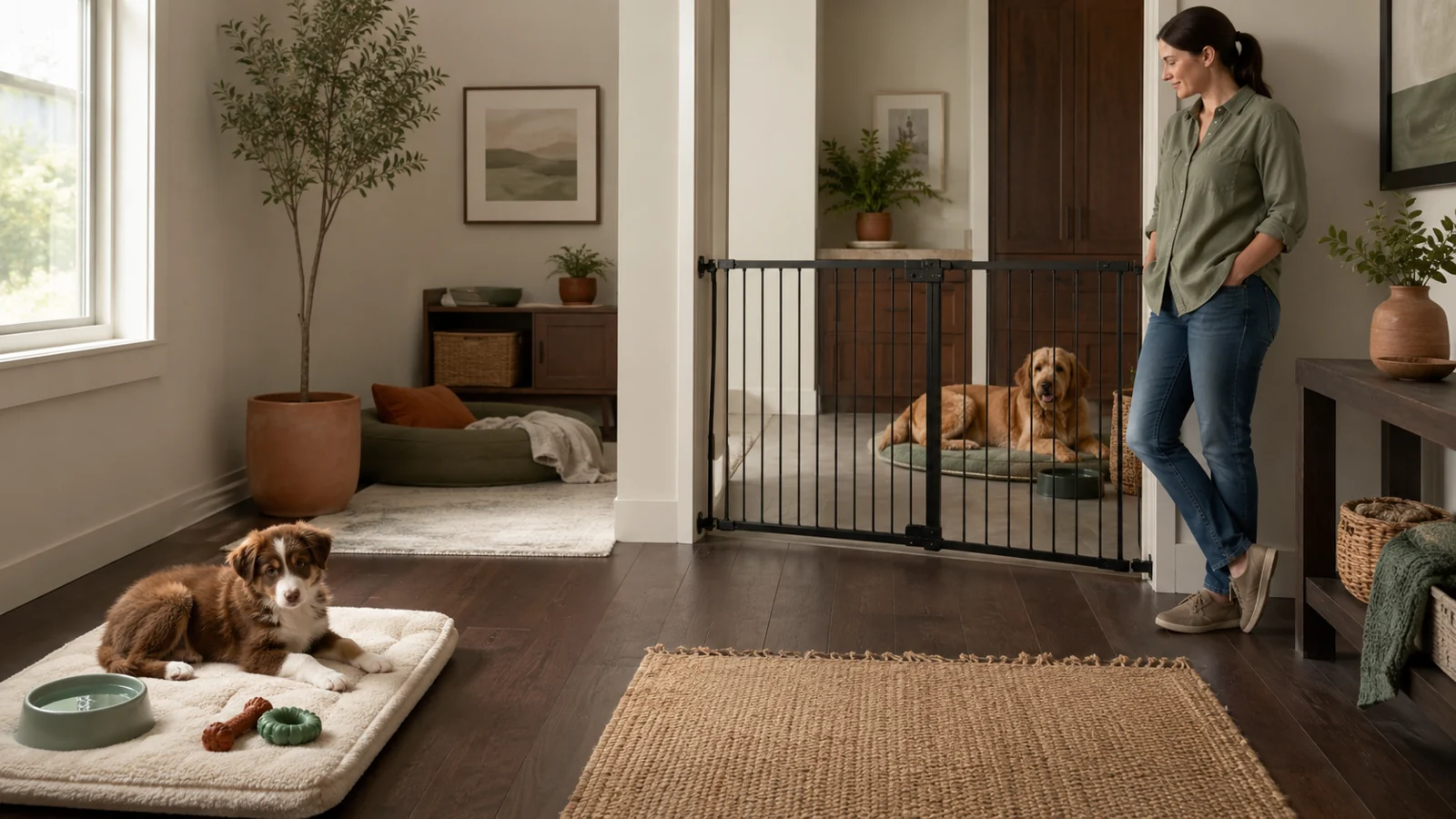
1. Set up separate resources before the puppy arrives
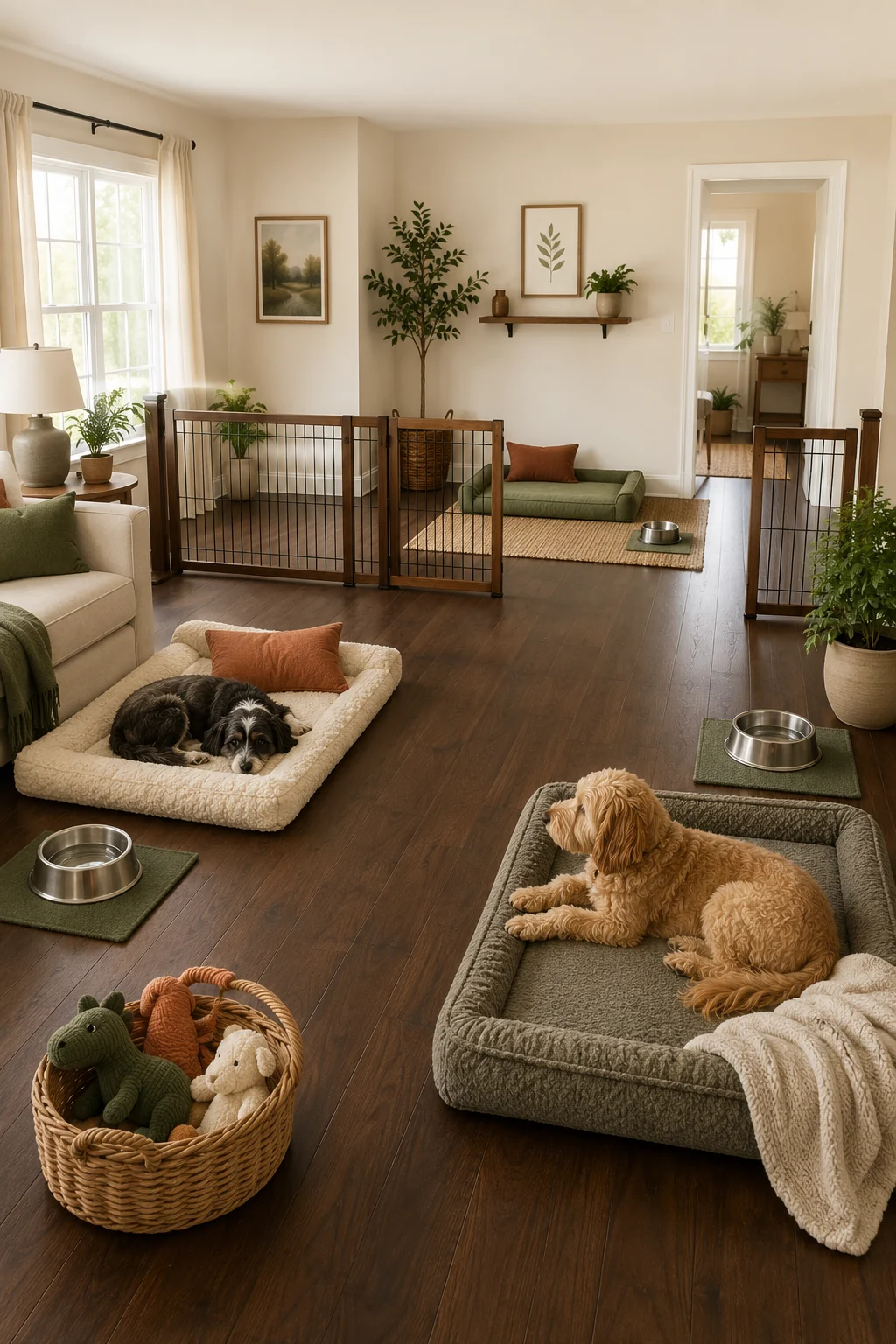
A multi-dog home becomes harder to manage when dogs must compete for access to the same bowl, bed, doorway, toy, or person. Before the puppy comes through the door, give every dog a clear place to meet basic needs without being crowded.
Prepare:
- A separate meal location for the puppy and for each resident dog.
- More than one water station, positioned so one dog cannot easily block all access.
- A dedicated resting place for each dog.
- A puppy rest area behind a gate, pen, or closed door for naps and decompression.
- A retreat area for each resident dog where the puppy will not follow.
- Leashes, gates, and helpers ready before introductions begin.
- A container for temporarily putting away favorite toys, chews, food puzzles, and other items that could create tension.
This is not a full puppy-safe-room setup. For the first day, the essential point is simply that the puppy has a controlled place to rest and every resident dog can leave the interaction. The American Veterinary Medical Association notes that an older pet should have a quiet, secure place where it can move away and rest undisturbed when a younger animal arrives (Senior Pets). AVMA Store+1
Do not assume that a resident dog who normally shares well will feel the same when a new puppy suddenly approaches a favorite bed or bowl. Reduce the number of decisions the dogs must negotiate themselves.
2. Choose the meeting order instead of introducing the whole group
When several dogs live in the home, avoid opening the door and letting the puppy meet everyone at once. Introduce resident dogs one at a time, beginning with the dog most likely to remain calm and responsive around a puppy.
A practical order is:
- The calmest, most socially flexible resident dog.
- Dogs who are neutral but need a little more space.
- Senior, easily overwhelmed, very small, highly excitable, or resource-sensitive dogs after the puppy has rested.
- Any dog with a history of serious conflict only under a plan created with a veterinarian or qualified behavior professional.
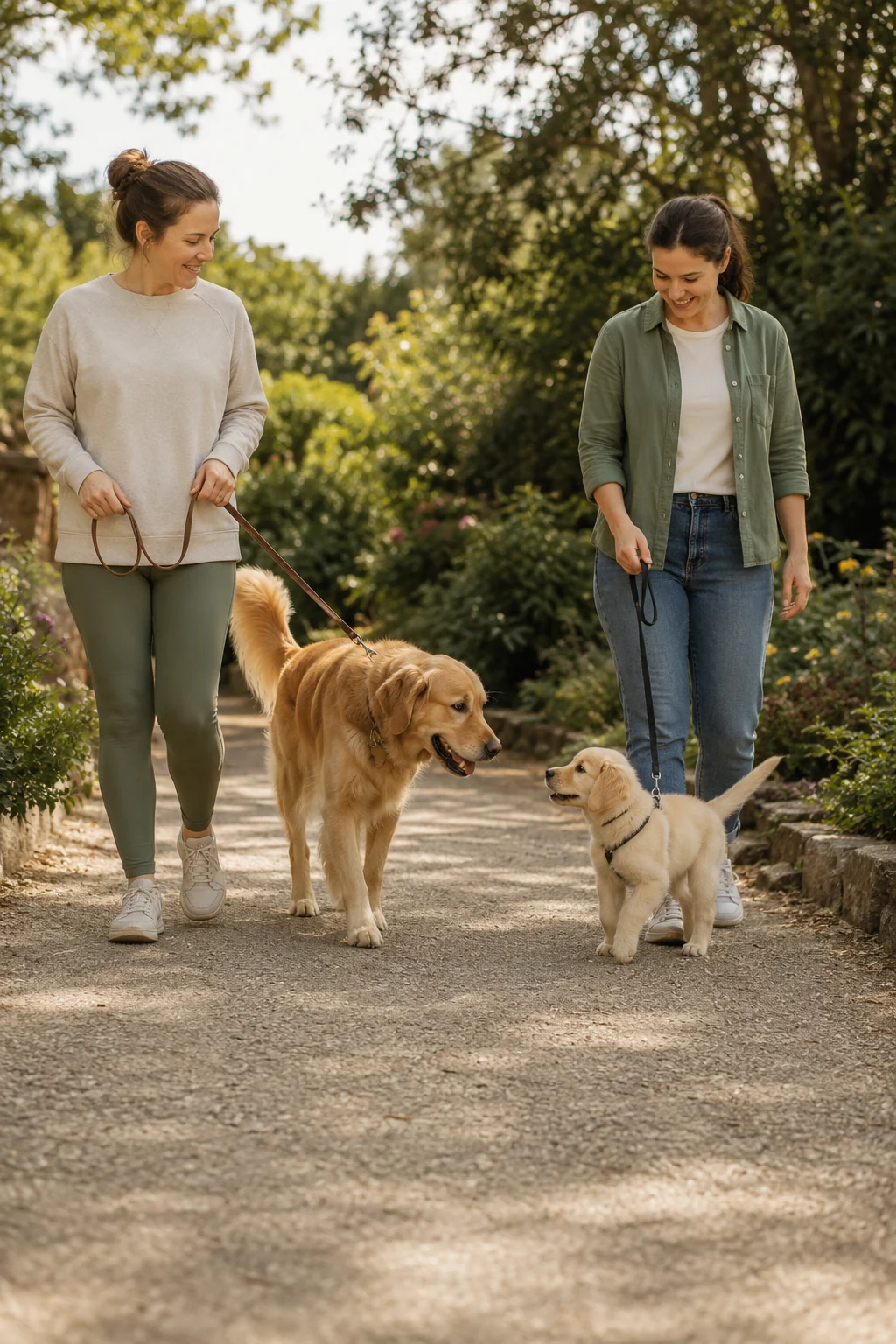
Use two adults whenever possible—one person per dog. Start in a neutral or low-territorial outdoor area that is appropriate for the puppy’s current health and vaccination status. Walk in the same direction with comfortable space between the dogs. Allow brief sniffing only when both handlers can keep the leashes loose and both dogs appear able to disengage.
A successful first meeting may look uneventful: the dogs sniff, look away, explore the ground, or ignore one another. Do not force face-to-face contact or hold the puppy close to a resident dog. Calm indifference is useful progress.
Keep the first session short. Afterward, move the puppy to the prepared rest area while the next resident dog has individual time with you. The Fear Free approach also emphasizes taking introductions slowly because pushing too quickly can damage the developing relationship (Introducing Your Dog to a New Dog: A Fear Free Approach). Fear Free Happy Homes
3. Use a simple green-yellow-red observation system
Do not judge the introduction only by whether a fight occurs. Watch whether each dog can remain loose, respond to the handler, and move away.
| Zone | What you may observe | What to do next |
|---|---|---|
| Green | Loose body, curved approach, brief sniffing, soft face, easy disengagement, exploring, resting, or calmly taking treats | Continue briefly, then end on a calm note |
| Yellow | Stiffening, repeated hard staring, persistent following, blocking movement, hiding, tucked posture, repeated mounting, frantic play, inability to settle, or one dog repeatedly seeking escape | Increase distance, redirect, separate for a break, and retry later with an easier setup |
| Red | Lunging, snapping with contact, a fight, pinning that prevents escape, or a handler who cannot safely regain control | End the interaction, separate securely, and seek professional guidance before another direct meeting |
A growl is information, not disobedience. Do not punish warning signals. VCA cautions that punishing growling or snarling can suppress communication without improving the relationship. Instead, calmly increase distance and change the setup. Vca
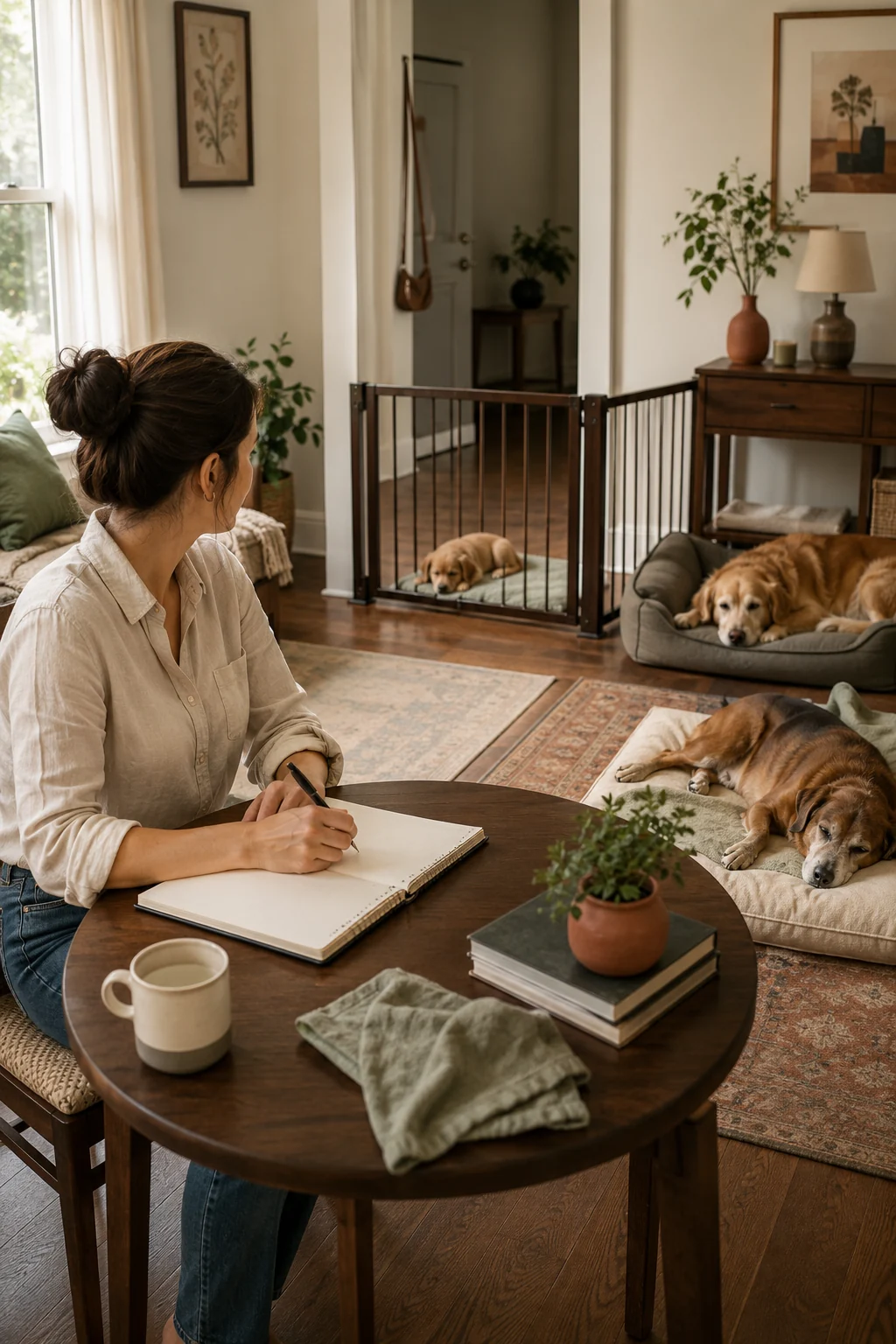
Observe each dog separately. One resident dog may be relaxed while another is overwhelmed. The puppy may also behave differently with each dog. Record the individual pairing rather than writing “the dogs did fine.”
4. Plan the first day as short cycles, not one long introduction
Puppies tire quickly, and overtired puppies often become more persistent, mouthy, noisy, or unable to respond. Resident dogs also need relief from puppy attention. Use short cycles of contact and separation.
A flexible first-day sequence:
- Arrival: Puppy eliminates in the chosen outdoor area, then meets the first resident dog in a calm, neutral setup.
- After each one-on-one meeting: Puppy rests behind a barrier; the resident dog returns to its normal space and receives individual attention.
- Midday: Repeat only the pairings that stayed in the green zone. Keep yellow-zone pairings farther apart or separated by a gate.
- Meals: Feed every dog in a separate area with doors or secure barriers between them. Pick up bowls before reopening shared areas.
- Afternoon: Allow a short supervised shared period only if the relevant one-on-one pairings were calm. A whole-group session is optional, not required.
- Evening: Reduce excitement, remove high-value items, and favor parallel calm activities over energetic play.
- Overnight: Use separate sleeping arrangements on the first night unless a qualified professional has already advised otherwise for the specific dogs.
The first day should contain more rest than social pressure. VCA specifically recommends breaks for the puppy and one-on-one attention for resident pets. Separate overnight arrangements also prevent unsupervised misunderstandings while everyone is tired.
5. Protect resources and individual relationships
Separate resources are not only bowls and beds. Human attention, doorways, couches, laps, and access to movement can also become points of friction.
On day one:
- Greet and handle dogs calmly rather than creating a crowd around the puppy.
- Give resident dogs predictable one-on-one time without the puppy present.
- Do not let the puppy repeatedly chase, climb on, bite at, or corner a resident dog.
- Do not expect an older dog to “teach the puppy a lesson.”
- Remove chews and favorite toys during early shared sessions.
- Keep food preparation and feeding physically separated.
- Use gates to prevent crowding at doors and narrow hallways.
- Interrupt by calling dogs apart, scattering them to separate stations, or calmly guiding them away—not by grabbing collars in the middle of conflict.
A resident dog choosing to leave is a good coping strategy. Protect that choice. A puppy who follows every retreat may need a leash, gate, or rest break so the older dog can truly disengage.
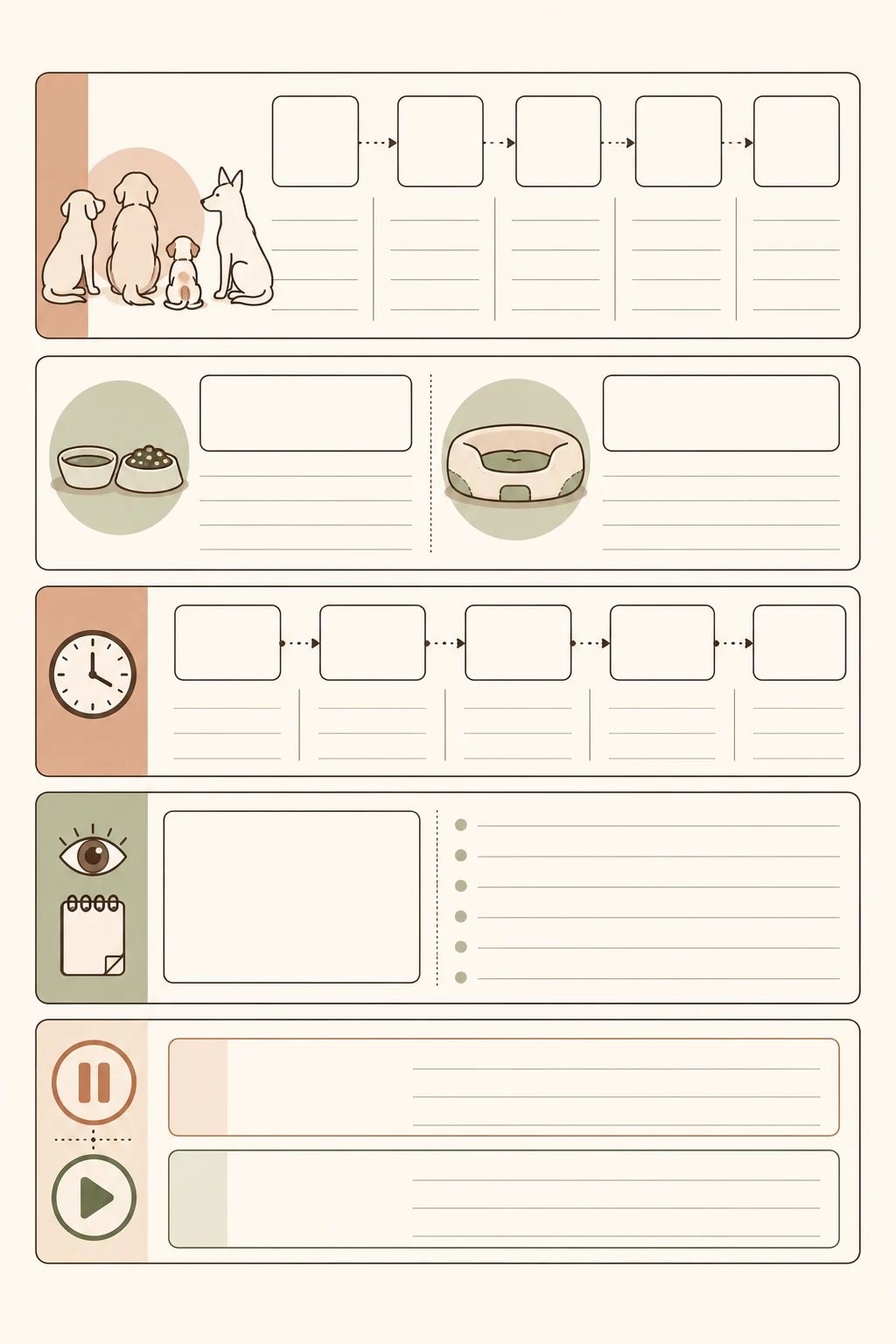
6. Puppy’s first-day multi-dog planning worksheet
Print or copy this worksheet before arrival. Fill in one row for every resident dog.
A. Dog-by-dog introduction plan
| Resident dog | Meeting order | Calm signs I know | Likely pressure points | Retreat location | Assigned handler |
|---|---|---|---|---|---|
| __________________ | _____ | __________________ | __________________ | __________________ | __________________ |
| __________________ | _____ | __________________ | __________________ | __________________ | __________________ |
| __________________ | _____ | __________________ | __________________ | __________________ | __________________ |
| __________________ | _____ | __________________ | __________________ | __________________ | __________________ |
B. Separate-resource map
Check each item only when the locations are physically ready.
- Puppy meal area: ______________________________
- Resident dog 1 meal area: ______________________
- Resident dog 2 meal area: ______________________
- Additional resident dog meal areas: _____________
- Puppy water station: ___________________________
- Resident-dog water station(s): __________________
- Puppy rest area behind barrier: _________________
- Resident dog retreat areas: _____________________
- High-value items stored at: _____________________
- Gates/leashes placed at: ________________________
C. First-day timeline
| Time | Planned activity | Dogs involved | Maximum duration | Separation/rest location afterward |
|---|---|---|---|---|
| ______ | Arrival and first meeting | __________________ | ______ | __________________ |
| ______ | Second one-on-one meeting | __________________ | ______ | __________________ |
| ______ | Meal period | All separated | ______ | __________________ |
| ______ | Calm repeat session | __________________ | ______ | __________________ |
| ______ | Optional shared session | __________________ | ______ | __________________ |
| ______ | Evening wind-down | __________________ | ______ | __________________ |
| ______ | Overnight separation check | __________________ | ______ | __________________ |
D. Individual observation log
| Pairing | Green signs | Yellow signs | Red event | What changed after distance/rest? | Next step |
|---|---|---|---|---|---|
| Puppy + __________ | __________ | __________ | __________ | __________ | __________ |
| Puppy + __________ | __________ | __________ | __________ | __________ | __________ |
| Puppy + __________ | __________ | __________ | __________ | __________ | __________ |
| Puppy + __________ | __________ | __________ | __________ | __________ | __________ |
E. Stop-or-continue decision card
Before every repeat session, ask:
- Can both dogs move away freely?
- Are food, chews, and favorite toys removed?
- Is one adult responsible for each dog?
- Did both dogs recover fully after the last session?
- Can both dogs respond to their handlers?
- Is the puppy rested rather than overtired?
- Is there a clear barrier or exit plan?
Continue briefly only when all answers are yes and both dogs are in the green zone. Pause and simplify when any answer is no or either dog enters the yellow zone. Stop direct meetings and get professional help after a red-zone event or when safe control is uncertain.
7. Common first-day mistakes
Introducing the puppy to the whole group at once. This makes it difficult to identify which pairing is uncomfortable and can create crowding.
Leaving bowls, chews, and favorite toys available. Even dogs without a known guarding history may feel differently during a major household change.
Mistaking intense play for successful bonding. Fast chasing, body slamming, repeated pinning, or one dog constantly trying to escape is not a reason to let the session continue longer.
Punishing a resident dog for communicating discomfort. Growling, looking away, moving off, or seeking a retreat should guide your management—not trigger correction.
Keeping the puppy awake for visitors and introductions. Rest is part of the introduction plan. A tired puppy is less able to regulate behavior.
Assuming day-one tolerance means unsupervised access is safe. Continue separating the dogs whenever no adult is actively supervising, including overnight.
Conclusion
A good first day in a multi-dog household is measured by clarity, recovery, and choice, not cuddling or group play. Give every dog separate resources, introduce the puppy to resident dogs individually, use short sessions, and write down what each pairing shows you. It is completely acceptable for the day to end with the dogs mostly separated. Calm, repeatable experiences create a stronger foundation than a rushed attempt at instant togetherness.
Helpful visuals from this guide
Use these five visuals as quick reminders, then return to the full guide for context, limitations, and source details.
Pinterest does not let websites prefill its Title field. Each button below copies the correct title and opens that Pin. Click the Title field in Pinterest, press Ctrl + V, then save it to the board above.
Start with Pin 1 and repeat through Pin 4.
- Set Up Separate Dog Resources Before Puppy Arrives
See a practical multi-dog layout for separate beds, water stations, and retreat spaces before your puppy’s first day home.
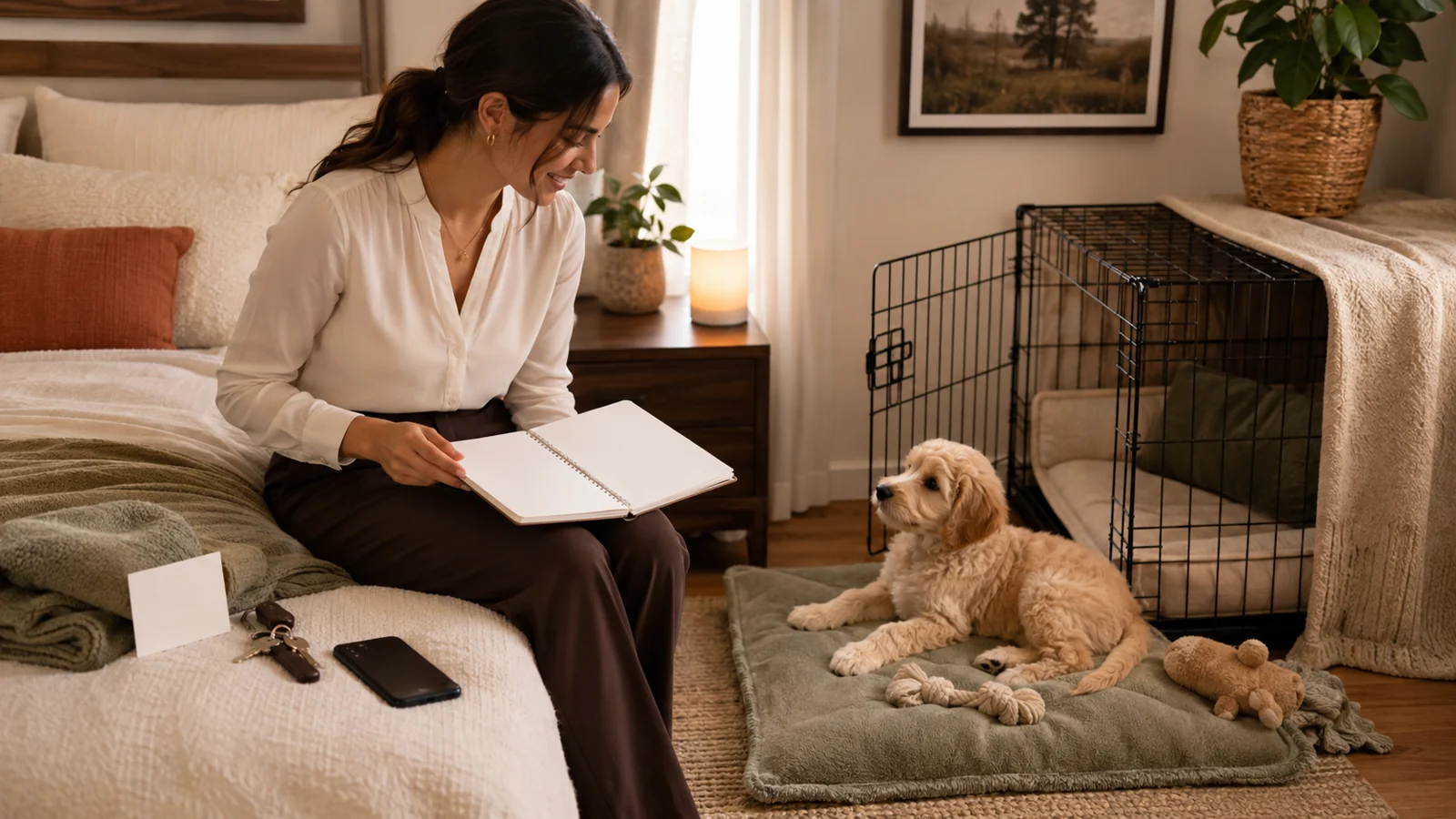
- A Calm One-on-One Puppy Introduction
Use a quiet, gradual first meeting with one resident dog at a time instead of introducing the puppy to the whole group.
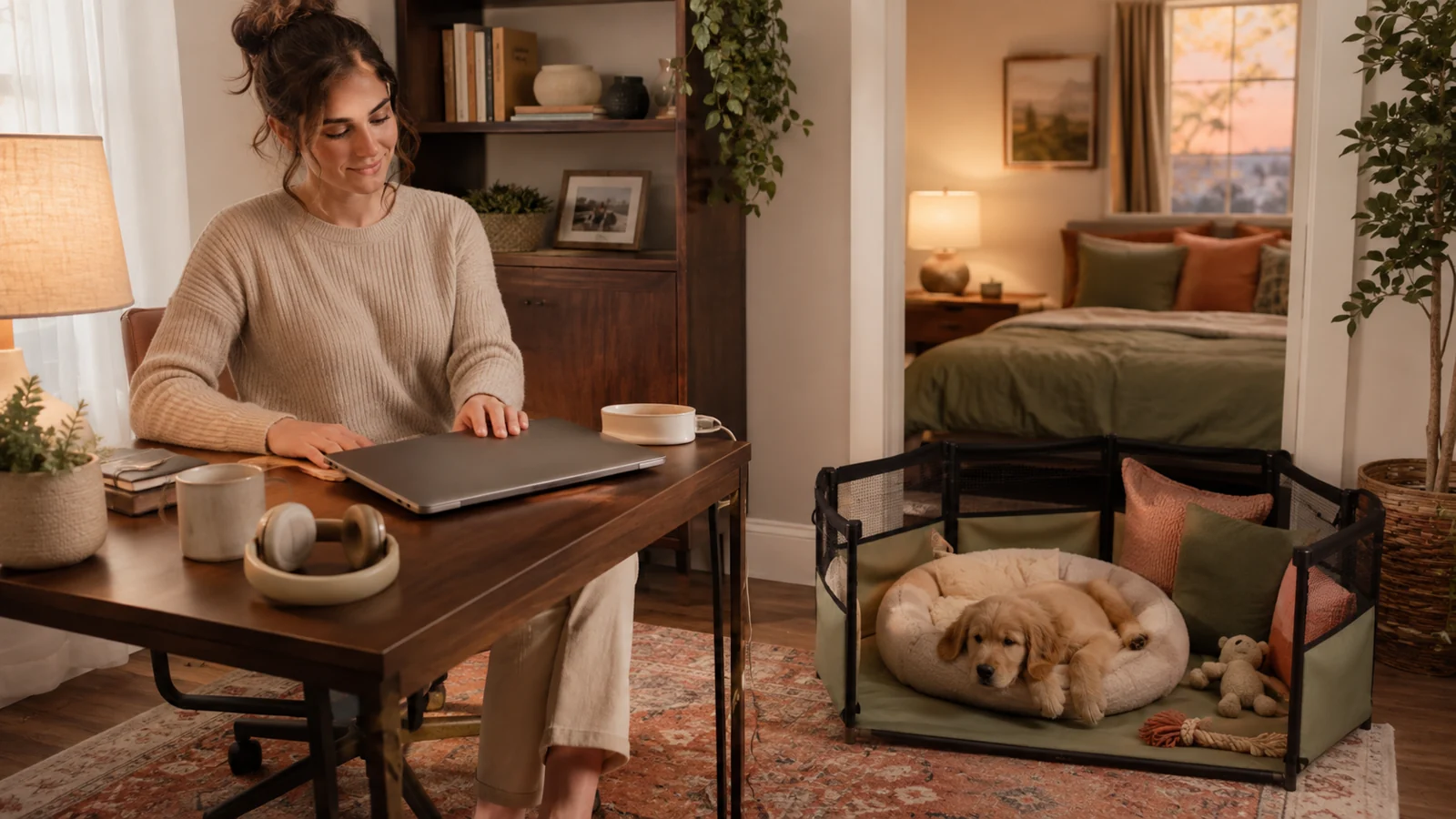
- Observe Every Puppy and Resident Dog Pairing
A first-day observation log helps you notice which pairings are calm, which need more distance, and when everyone needs a break.
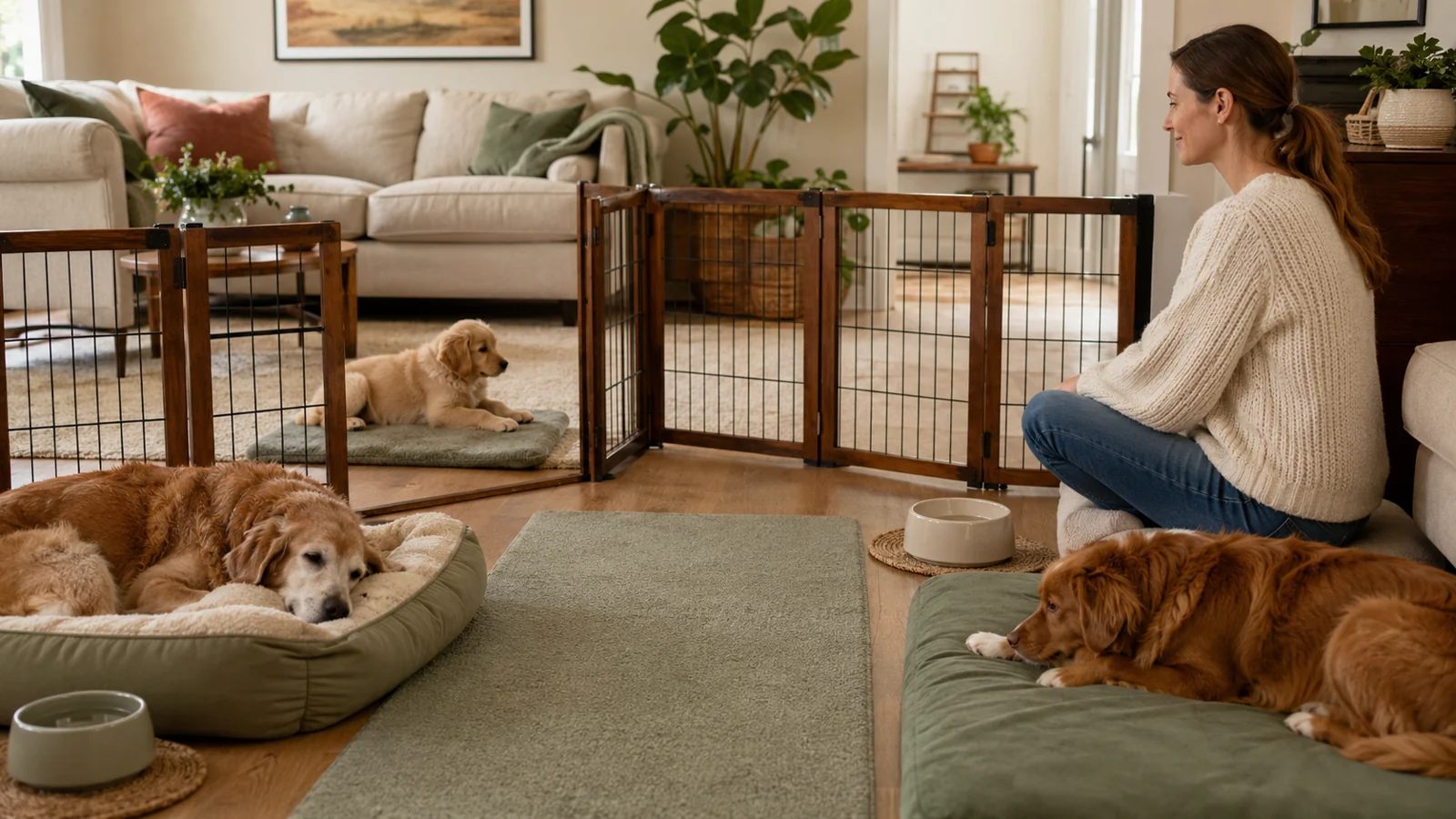
- Puppy First-Day Multi-Dog Planning Worksheet
Use the guide’s printable worksheet to plan meeting order, separate resources, rest periods, and observations for every resident dog.
Optional: choose all 4 images at once
Frequently asked questions
Should all resident dogs meet the puppy together on the first day?
Usually no. One-at-a-time meetings make it easier to prevent crowding, observe each pairing, and give a specific dog more distance or rest when needed.
What if my older dog ignores the puppy?
Calmly ignoring the puppy can be a positive first-day response. Do not force interaction; protect the older dog’s retreat and let familiarity develop gradually.
Can the puppy and resident dogs share water on day one?
Provide multiple water stations in separate locations so no dog must pass or crowd another dog to drink. Supervise access and watch for blocking or guarding.
Should I leave toys out during the first introductions?
Temporarily remove favorite toys, chews, food puzzles, and other high-value items. Reintroduce resources gradually only when calm supervision is possible.
Is growling always a sign that the introduction has failed?
No. Growling is communication, but it means the setup needs attention. Increase distance, give both dogs a break, and do not punish the warning signal.
When can the dogs be left alone together?
Not on the strength of one calm first day. Keep them separated whenever an adult is not actively supervising until their behavior is consistently predictable and a qualified professional agrees if there has been conflict.
Sources & further reading
- How to prepare for a new puppyVCA Animal Hospitals · Accessed 2026-07-31
- Getting a Second DogVCA Animal Hospitals · Accessed 2026-07-31
- Senior PetsAmerican Veterinary Medical Association · Accessed 2026-07-31
- Introducing Your Dog to a New Dog: A Fear Free ApproachFear Free Happy Homes · Accessed 2026-07-31