

Choose a puppy food by checking four things in order: the nutritional adequacy statement, the puppy’s expected adult size, the manufacturer’s ability to answer technical questions, and whether the food is practical to feed and monitor. Front-of-bag phrases, ingredient storytelling, and price do not establish that a product is suitable as a puppy’s main diet.
This guide is for a generally healthy puppy in the United States. It does not rank brands, diagnose food reactions, formulate homemade or raw diets, or replace advice from your veterinarian.
Start with the nutritional adequacy statement
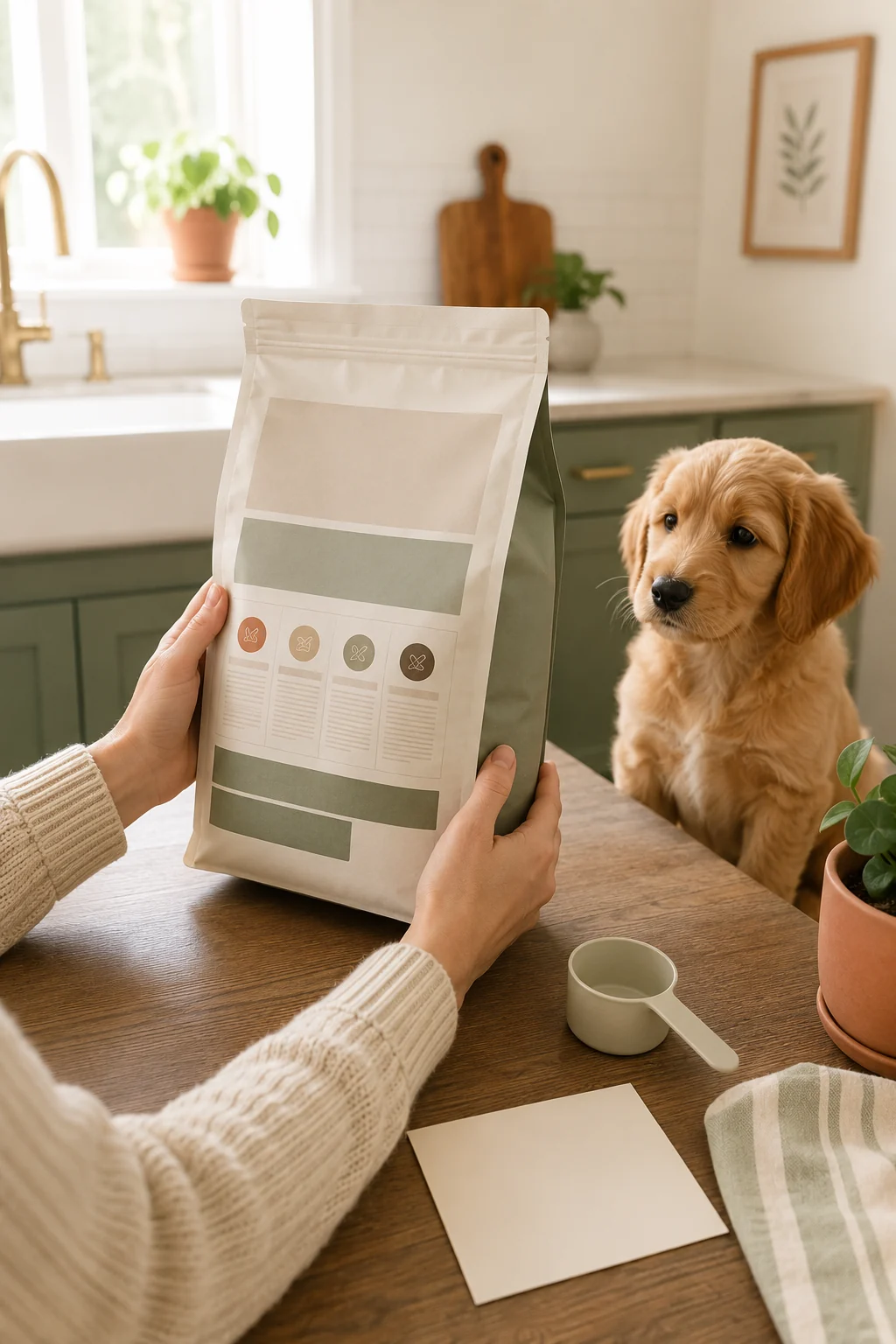
Turn the package around and find the small-print nutritional adequacy statement, often near the guaranteed analysis or feeding directions. The FDA explains that a food described as complete and balanced is intended to provide the nutrients needed when fed as the main diet. AAFCO describes this statement as one of the most important parts of the label because it connects the product to a species and life stage.
For a puppy, look for a complete-and-balanced claim for growth or all life stages. A statement for adult maintenance does not match a growing puppy. A package that says the product is for “intermittent or supplemental feeding only” should not be used as the puppy’s sole main food unless a veterinarian has given a specific reason and plan.
Common acceptable statements may say that the food:
- is formulated to meet AAFCO Dog Food Nutrient Profiles for growth or all life stages;
- has been substantiated through animal feeding tests using AAFCO procedures; or
- is nutritionally comparable to a product substantiated through AAFCO feeding tests.
These routes are not identical, but each is a recognized way to support a complete-and-balanced claim. The statement is a screening gate, not proof that one food is universally superior. The AAFCO label guide also notes that treats and snacks usually do not carry a nutritional adequacy statement, which is one reason a treat should not quietly become a large share of the puppy’s diet.
Fast label screen
- Does the statement identify the product as dog food?
- Does it say complete and balanced?
- Does it cover growth or all life stages?
- Does it avoid “intermittent or supplemental feeding only” as the main purpose?
- If the puppy may mature at 70 pounds or more, does the large-size wording fit?
If any answer is unclear, photograph the entire statement and ask the manufacturer or veterinary team before buying a large bag.
Match the food to expected adult size
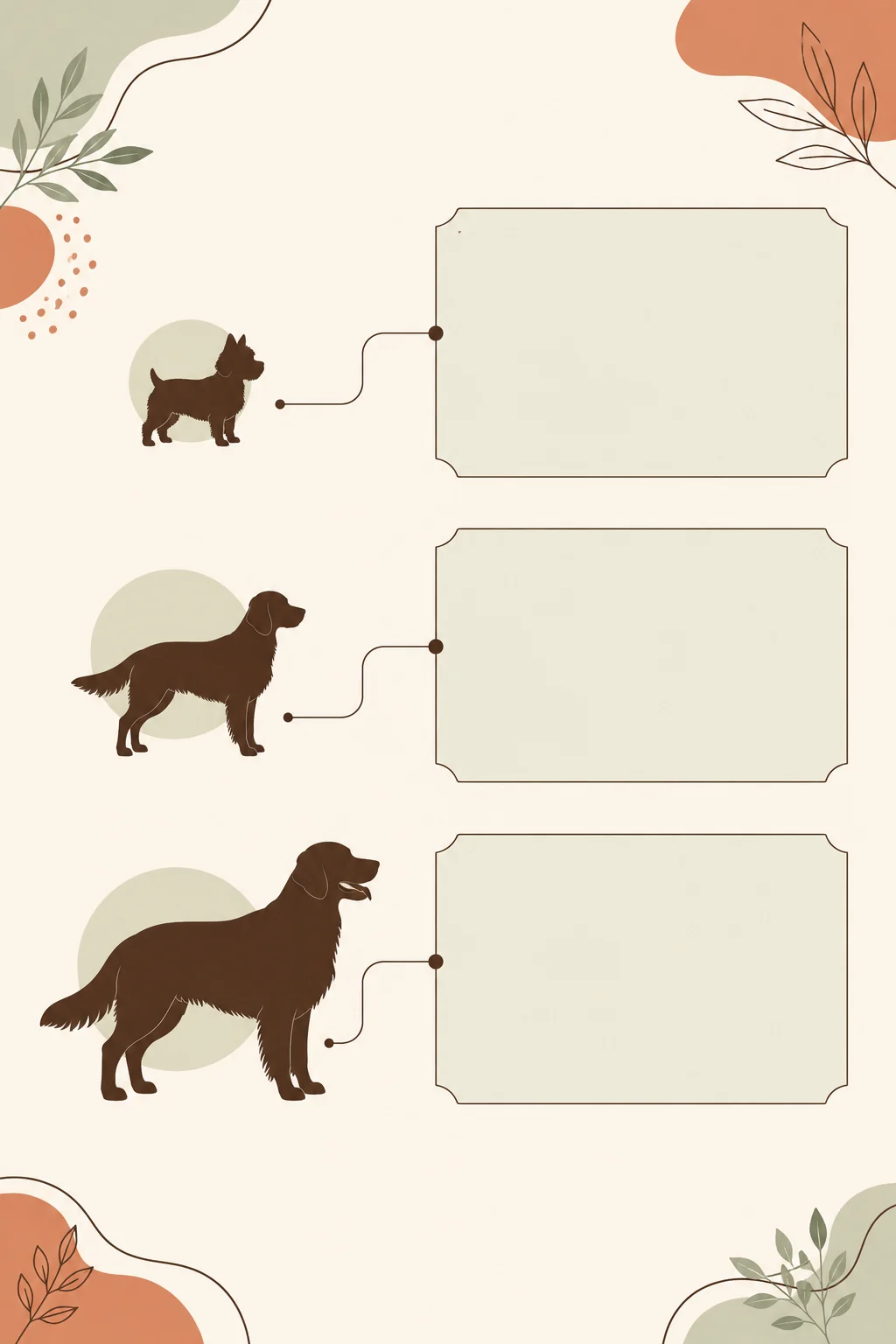
Puppies expected to weigh 70 pounds or more as adults need the large-size growth wording checked carefully. The relevant adequacy statement may say the food is suitable including growth of large size dogs (70 lb. or more as an adult). A statement that says except for growth of large size dogs is not a match for that puppy. VCA’s puppy food selection guidance highlights this distinction because large and giant puppies have different growth-related mineral constraints.
Do not guess adult size from the puppy’s current paws or one online chart. Use the best available evidence:
- known breed or breed mix;
- adult weights of the parents, when reliable;
- records from the breeder, shelter, or rescue;
- the veterinarian’s estimate based on age, current weight, body condition, and growth pattern.
When the estimate is uncertain or near the 70-pound threshold, treat that uncertainty as a reason to ask the veterinarian, not as permission to ignore the statement. Do not add calcium or other supplements in an attempt to “make” a regular puppy food appropriate for large-breed growth. That would move beyond label screening into individualized nutrition management.
“All life stages” can be acceptable for a puppy when the adequacy statement covers growth and the large-size phrase matches the puppy’s expected adult size. It does not automatically mean the food is the most practical choice, because calorie concentration and feeding directions may differ among products.
Check the company behind the formula
After a food passes the adequacy and adult-size screens, evaluate the manufacturer. This is not a popularity contest or a seal of approval. It is a transparency check based on questions in the WSAVA Guidelines on Selecting Pet Foods.
Ask the company:
- Who formulates the diet, and what are that person’s qualifications?
- Does the company employ a qualified nutritionist, and will it provide the person’s name, credentials, and employment role?
- What quality-control steps are used for ingredients and finished products?
- Is the finished food chemically analyzed, and how are nutrient targets verified?
- What product research or nutrition studies have been conducted?
- Who physically manufactures the food?
- Can the company provide a typical nutrient analysis and calorie information beyond the minimum guarantees on the package?
- Is there a working phone number or email for technical questions?
Clear, specific answers are more useful than marketing phrases such as “premium,” “holistic,” “natural-inspired,” or “ancestral.” A long ingredient list also cannot tell you by itself whether the finished food consistently meets nutrient targets, whether the company tests the final product, or whether qualified people formulated it.
A refusal to answer every question does not automatically prove a food is unsafe. However, repeated vague answers, no reachable contact method, or an unwillingness to explain who formulates and manufactures the product are reasonable reasons to pause and discuss alternatives with a veterinary professional.
Compare only the options that pass the first gates
Once two or three foods pass the core screens, compare practical fit. This is where personal circumstances matter, but the comparison should remain factual.
Check:
- calories per cup, can, tray, or gram;
- feeding directions for the puppy’s current weight and age;
- whether the package gives a measurable daily amount;
- form and storage needs;
- package size relative to freshness and available storage;
- reliable local or online availability;
- cost per day based on the label’s starting amount, not merely cost per bag;
- whether the puppy can physically eat the texture or kibble size comfortably;
- whether the manufacturer can answer remaining questions.
The AAFCO guidance on selecting pet food describes feeding directions as a starting point that may need adjustment according to the individual animal’s condition. Do not interpret the printed amount as a promise that every puppy needs exactly that quantity.
Dry, canned, and other commercial forms can each qualify if the adequacy statement and size fit are correct. Comparing crude protein percentages directly across foods with very different moisture levels can be misleading; the FDA explains that meaningful nutrient comparisons between wet and dry products may require a dry-matter conversion. For a basic shopping decision, it is often more useful to compare the adequacy statement, calories, feeding amount, manufacturer information, and practical fit than to rank foods by one guaranteed-analysis number.
Label-first puppy food comparison worksheet
Copy exact wording rather than writing “looks good.” Use Pass, Hold, or No for each candidate. “Hold” means information is missing and must be confirmed before the product becomes the main food.
| Screening item | Candidate A | Candidate B | Candidate C |
|---|---|---|---|
| Product name and form | |||
| Exact nutritional adequacy statement | |||
| Complete and balanced? | |||
| Covers growth or all life stages? | |||
| Large-size wording, if relevant | |||
| Expected adult-size match | |||
| Calories per cup, can, tray, or gram | |||
| Label starting amount for current weight/age | |||
| Nutritionist name, credentials, and role | |||
| Diet formulator and qualifications | |||
| Quality-control and finished-product testing | |||
| Research information available | |||
| Manufacturer versus distributor identified | |||
| Technical contact works | |||
| Typical nutrient analysis available | |||
| Storage and package-size fit | |||
| Reliable availability | |||
| Estimated daily cost from label starting amount | |||
| Unanswered questions | |||
| Final status: Pass, Hold, or No |
Decision rule
- Mark No if the food lacks a complete-and-balanced claim for growth or all life stages.
- Mark No for a puppy expected to reach 70 pounds or more when the statement excludes growth of large-size dogs.
- Mark Hold when the statement is unreadable, adult size is uncertain, or important manufacturer answers are missing.
- Among the Pass options, choose the one that is practical to obtain, measure, store, and feed consistently.
- Keep the completed worksheet and package photo. They make veterinary questions more specific than asking, “Is this brand good?”
Use a seven-day feeding observation log
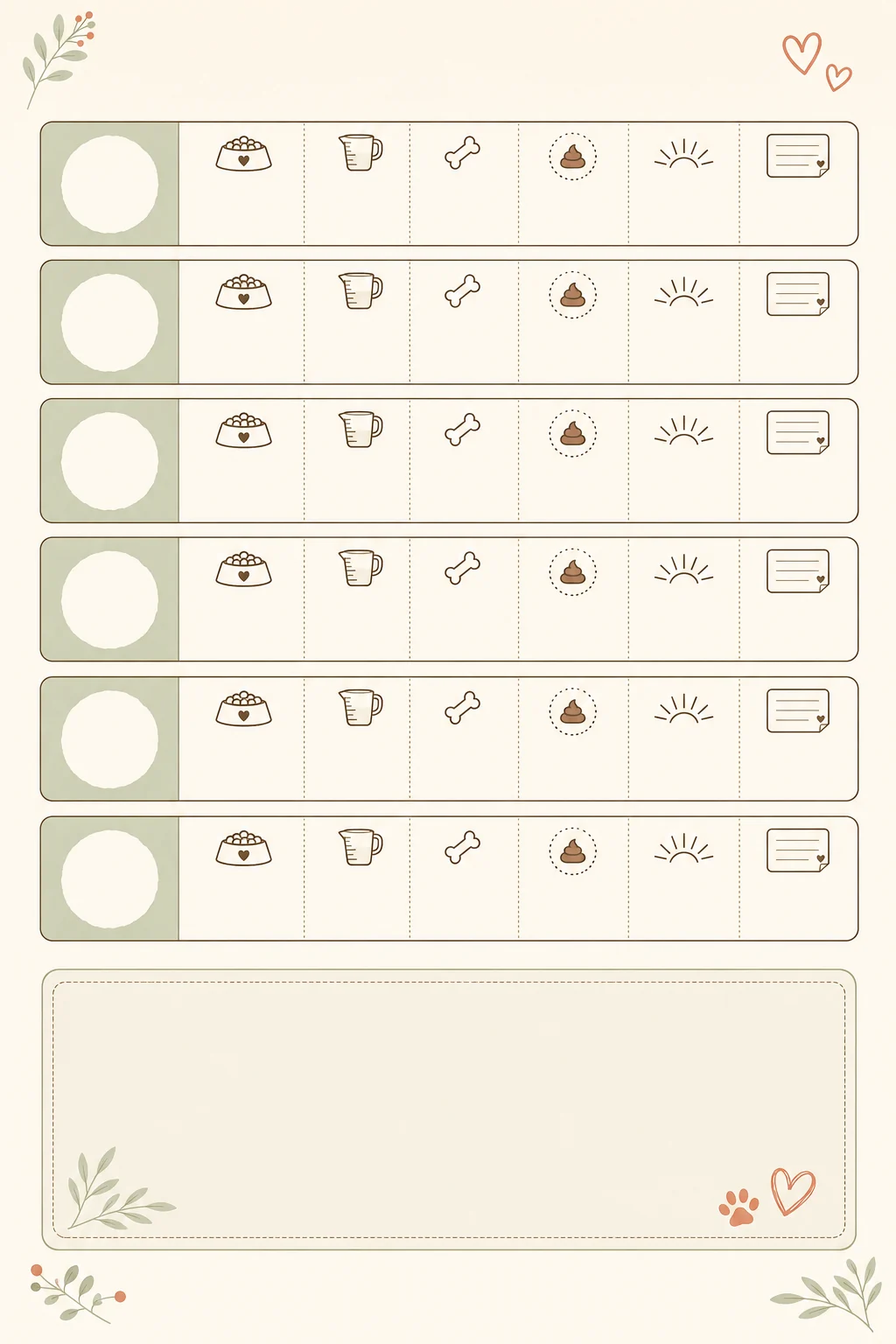
A seven-day log does not prove long-term nutritional success and cannot diagnose an allergy or intolerance. Its purpose is to record immediate observations, reduce memory errors, and create a useful handoff for the veterinary team.
Use the same measuring tool each day. Record all food, treats, toppers, chews, and accidental extras. If the puppy is changing from another diet, follow the transition plan recommended for that puppy by the veterinarian or the food manufacturer rather than improvising a rapid switch.
| Day | Main food and measured amount offered | Amount eaten | Treats/toppers/extras | Stool notes | Vomiting or regurgitation | Appetite and energy | Skin/ear observations | Questions or changes |
|---|---|---|---|---|---|---|---|---|
| 1 | ||||||||
| 2 | ||||||||
| 3 | ||||||||
| 4 | ||||||||
| 5 | ||||||||
| 6 | ||||||||
| 7 |
Write observations, not diagnoses. Useful entries include “ate about three-quarters,” “one soft stool,” “vomited once after eating quickly,” or “less playful than usual.” Avoid labels such as “food allergy” unless a veterinarian has diagnosed one.
Contact a veterinarian promptly when a puppy is lethargic, refuses food, vomits, or has blood in the stool; VCA’s puppy diarrhea guidance advises veterinary assessment for those warning signs. Seek urgent care for collapse, breathing difficulty, severe weakness, repeated or continuous vomiting or diarrhea, or other rapid deterioration. Do not keep trialing foods to solve an acutely ill puppy’s symptoms.
For longer-term monitoring, bring the package, worksheet, log, and the puppy’s weight history to routine visits. Growth rate and body condition are better assessed over time with the veterinary team than by judging the bowl or the front of the bag.
Common mistakes that make labels harder to compare
Starting with the ingredient list. Ingredients matter, but the list alone does not reveal finished-product nutrient consistency, quality control, calorie density, or life-stage suitability.
Assuming “puppy” on the front is enough. The small-print adequacy statement is the stronger screening evidence.
Missing the large-size exception. A food may cover growth generally while excluding puppies expected to weigh 70 pounds or more as adults.
Treating price as a nutrition score. A higher or lower price does not replace the adequacy statement, manufacturer answers, or observation.
Changing several variables at once. New food, multiple toppers, new treats, and table scraps make a seven-day log difficult to interpret.
Using one normal week as proof of perfection. Short-term acceptance and stool observations cannot establish long-term growth adequacy or rule out medical problems.
The bottom line
A confident puppy-food decision begins on the back or side of the package. First confirm complete-and-balanced nutrition for growth, then match the large-size wording to expected adult weight. Next, ask who formulates and tests the food, compare only qualified options on practical facts, and record what happens after feeding. When the label, adult-size estimate, or puppy’s response is unclear, pause and take the package photo, worksheet, and observation log to the veterinary team.
Helpful visuals from this guide
Use these five visuals as quick reminders, then return to the full guide for context, limitations, and source details.


Pinterest does not let websites prefill its Title field. Each button below copies the correct title and opens that Pin. Click the Title field in Pinterest, press Ctrl + V, then save it to the board above.
Start with Pin 1 and repeat through Pin 5.
- Start With the Puppy Food Adequacy Statement
A practical visual reminder for new dog moms to turn the package around and check life-stage suitability before comparing marketing claims.
- Match Puppy Food to Expected Adult Size
Use this size-first visual as a planning aid before checking whether a growth statement includes large-size dogs.
- Questions to Ask a Puppy Food Company
A brand-neutral research scene showing the practical questions new puppy owners can ask about formulation, quality control, and manufacturing.
- Puppy Food Label Comparison Worksheet
A structured comparison layout for screening up to three puppy foods by adequacy, adult-size fit, manufacturer answers, and practical feeding details.
- Seven-Day Puppy Feeding Observation Log
A simple visual log for recording meals, extras, stool, appetite, energy, and questions during the first week with a selected food.
Optional: choose all 5 images at once
Frequently asked questions
Is an all-life-stages food acceptable for a puppy?
It can be acceptable when the nutritional adequacy statement says complete and balanced for all life stages and its large-size growth wording matches the puppy’s expected adult weight.
Should I choose the food with meat listed first?
The first ingredient alone cannot establish life-stage adequacy, finished-product testing, calorie density, or formulation expertise. Use it only as one piece of the full label and manufacturer review.
Does a higher price mean a puppy food is better?
No. Price does not replace a complete-and-balanced growth statement, appropriate adult-size wording, transparent manufacturing answers, practical feeding details, or veterinary monitoring.
Can wet and dry puppy foods both be complete and balanced?
Yes. Either form can qualify when its adequacy statement covers growth and the expected adult size. Compare calories, feeding amounts, storage, and moisture differences rather than one percentage alone.
What should I do if I do not know my puppy’s expected adult weight?
Ask the breeder, shelter, rescue, or veterinarian for the best estimate. When the puppy may be near the large-size threshold, confirm the appropriate label wording before selecting a main food.
Can seven normal days prove that the food is right long term?
No. A seven-day log records immediate acceptance and visible changes, but long-term suitability also depends on growth rate, body condition, health history, and veterinary assessment over time.
Sources & further reading
- Reading LabelsAssociation of American Feed Control Officials · Accessed 2026-07-31
- Selecting the Right Pet FoodAssociation of American Feed Control Officials · Accessed 2026-07-31
- “Complete and Balanced” Pet FoodU.S. Food and Drug Administration · Accessed 2026-07-31
- WSAVA Global Nutrition Committee: Guidelines on Selecting Pet FoodsWorld Small Animal Veterinary Association · Accessed 2026-07-31
- How to Choose the Right Puppy FoodVCA Animal Hospitals · Accessed 2026-07-31
- What to do when your puppy has diarrheaVCA Animal Hospitals · Accessed 2026-07-31